
Since 1 January 2026, a jury in a new Scottish criminal trial has had two verdicts to choose from, guilty or not guilty. For nearly three hundred years before that it had three. The third, “not proven”, acquitted the accused just as surely as “not guilty”, but it carried a shadow: the jury was not saying you were innocent, only that the case against you had not been made. Sir Walter Scott, who sat as a sheriff, called it “that bastard verdict” in his journal.
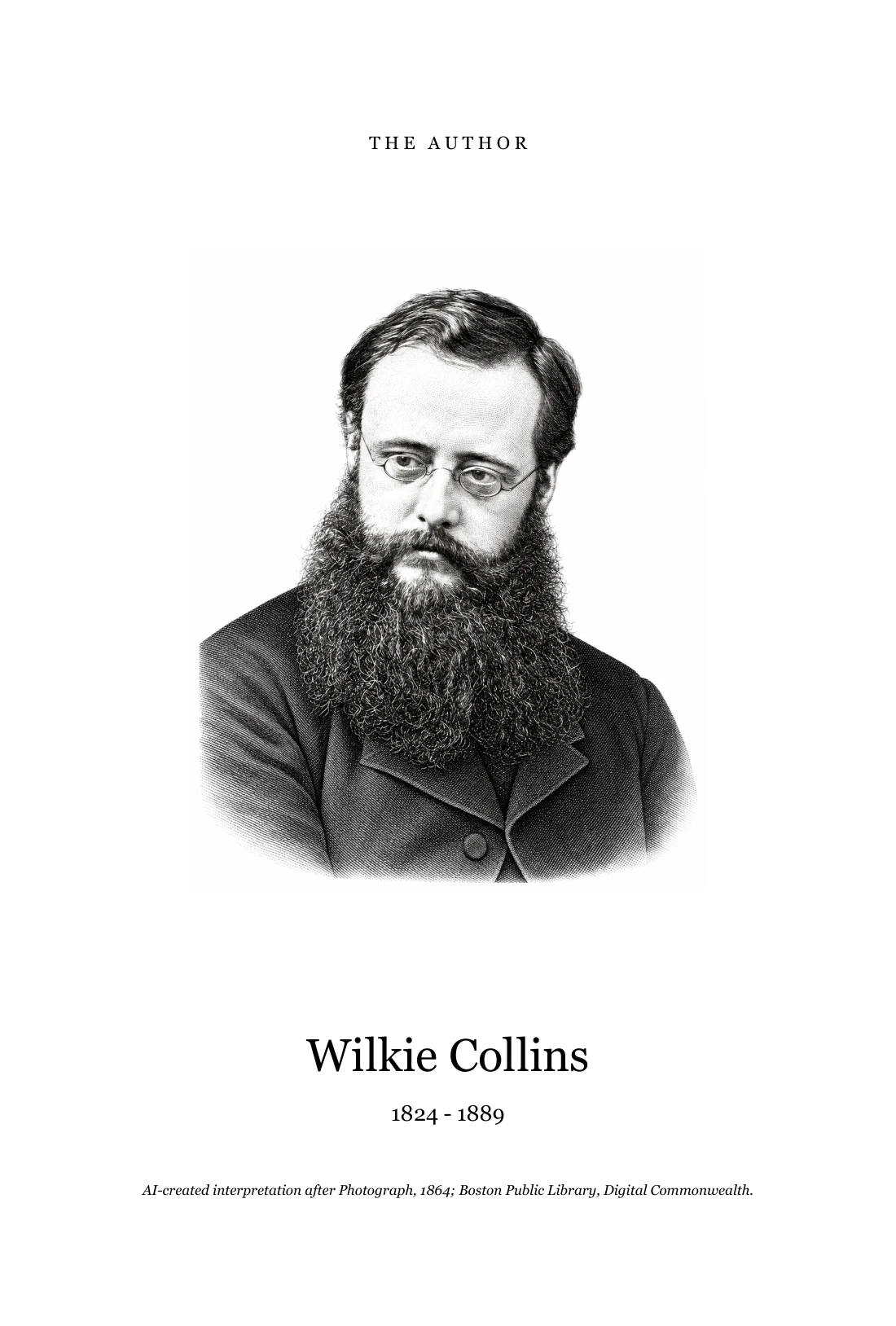
In 1875 Wilkie Collins published The Law and the Lady, a novel about a man who has to live under that shadow, and a woman who decides to lift it. It is an early example of a full-length detective novel in which a woman does the detecting, and she is not a professional or a spinster sleuth but a bride.
What is The Law and the Lady about?
Valeria Brinton marries Eustace Woodville in a dreary little ceremony, in spite of his mother’s opposition to the match. Within days of the honeymoon, small things start to go wrong. Valeria discovers that her husband has married her under a false name. He is really Eustace Macallan, and three years earlier, in Scotland, he was tried for the murder of his first wife, who died of arsenic poisoning. The jury returned the verdict of Not Proven.
Eustace believes that the world will always think him guilty, and that sooner or later his wife will too. Valeria’s answer is to set out to prove the case the Scottish court could not. She reads the full report of the trial, which Collins reproduces as a long section of the novel, and then goes to find the witnesses herself.
What the Law has failed to do for you, your Wife must do for you.
Valeria, writing to her husband, in Wilkie Collins’s *The Law and the Lady* (1875)
Her plan, as she tells him in the same letter, is “to change that underhand Scotch Verdict of Not Proven into an honest English Verdict of Not Guilty”.
She has looked the term up, too. Ogilvie’s Imperial Dictionary, she reports, defines Not Proven as a verdict indicating only that, in the jury’s opinion, “there is a deficiency in the evidence to convict the prisoner”, whereas Not Guilty “imports the jury’s opinion that the prisoner is innocent”. And the letter gives the book its title: “the Law and the Lady have begun by understanding one another.”

Is The Law and the Lady a detective novel?
Very much so, though Collins plays it as a sensation novel too, with secrets, a buried past and some of the oddest characters he ever invented. Chief among them is Miserrimus Dexter, a brilliant, theatrical, unstable man who uses a wheeled chair, lives with his devoted cousin Ariel in a rambling old house, and knew the Macallans well. Every scene with him is unpredictable, and he is one of the reasons the book is remembered.
No spoilers here. What can be said is that Valeria is a genuine investigator rather than a heroine things happen to. She questions witnesses, reads the evidence, makes deductions and acts on them, against the advice of nearly every man she knows. She is a descendant of Marian Halcombe in Collins’s The Woman in White, but this time the woman is in charge of the inquiry from start to finish.
Why did Scotland have a “Not Proven” verdict?
History rather than design. For a period from the late seventeenth century, Scottish juries were asked only whether the facts alleged were proven or not proven. In 1728 a jury in a murder trial insisted on its right to find a defendant “not guilty”, and from then on both forms of acquittal were available. Over time “not guilty” became the usual one, and “not proven” came to sound like a reproach.
It was still in use when Collins wrote, and it had a famous recent example. In 1857 the Glasgow trial of Madeleine Smith, accused of poisoning her lover with arsenic, ended in a verdict of not proven on the charge of murder, and the case was never forgotten. After decades of argument, the Scottish Parliament passed a law in September 2025 removing the verdict, and since the start of 2026 it has no longer been available in new trials.
The Law and the Lady
1875. A bride, a false name, a trial for poisoning and the verdict nobody can live with. Collins’s wife-turned-detective in one of his most entertaining late novels.
The Moonstone
1868. The stolen Indian diamond and the many narrators who try to explain its loss. Often called the first full-length English detective novel.
The Woman in White
1860. The novel that did most to start the sensation craze, with Marian Halcombe, one of Victorian fiction’s great female investigators.


If The Law and the Lady is your first Collins, follow it with The Moonstone and read our post on why it is often called the first detective novel. For the wider story, see Wilkie Collins, Dickens’s friend and the king of the sensation novel and female detectives in classic fiction.
The first chapter of The Law and the Lady, “The Bride’s Mistake”, is the place to start. By the end of it, you will know something is wrong, and Valeria will not.
Questions readers ask
What does “Not Proven” mean in The Law and the Lady?
It is the Scottish verdict given at Eustace Macallan’s trial for poisoning his first wife. It acquitted him, but implied that the jury thought the case against him unproved rather than false, which is why he feels he cannot clear his name.
Who is the detective in The Law and the Lady?
Valeria Brinton, the narrator, who discovers her new husband’s past and investigates the case herself to prove him innocent.
When was The Law and the Lady published?
It was serialised in The Graphic from 1874 and published as a book in 1875.
Is the Not Proven verdict still used in Scotland?
No. A 2025 Act of the Scottish Parliament removed it, and since 1 January 2026 only guilty and not guilty verdicts are available in new trials.
 No Name680 pages · $27.99
 Armadale754 pages · $29.99
 The Dead Secret350 pages · $18.99
 Man and Wife576 pages · $24.99