
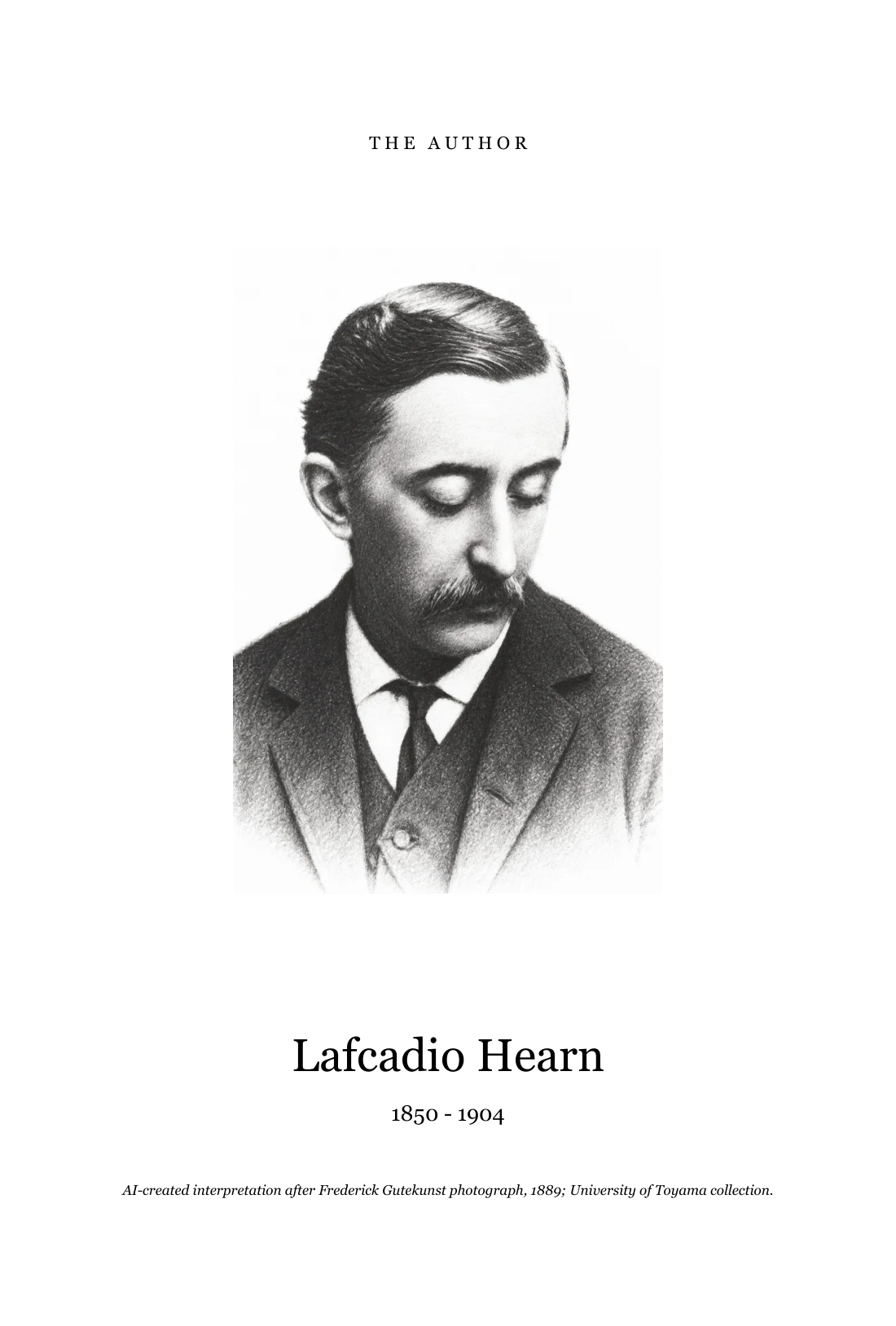
Kwaidan is the old spelling of kaidan, the Japanese word for a ghost story or a tale of the strange. It is also the title of one of the last books Lafcadio Hearn saw published. Houghton Mifflin brought it out in Boston in April 1904, and by the end of September Hearn was dead of heart failure in Tokyo, aged fifty-four.
In a short note dated Tokyo, 20 January 1904, he explained where the stories came from. Most of them, he wrote, “have been taken from old Japanese books”, and he named several. One, “Yuki-Onna”, was “told me by a farmer of Chōfu”. Another was a personal experience. What he did not say was how much he owed to his wife.
Who was Lafcadio Hearn?
Hearn was born in 1850 on Lefkada, one of the Ionian islands, then a British protectorate. His father, Charles Bush Hearn, was an Anglo-Irish army medical officer; his mother, Rosa Cassimati, was Greek, from the island of Kythera. When Lafcadio was two, he and his mother were sent to live with his father’s family in Dublin, and within a few years both parents had left him in the care of a great-aunt. At sixteen an accident at school cost him the sight of his left eye, and for the rest of his life he posed for photographs in profile.
At nineteen he emigrated to the United States and became a newspaper reporter, first in Cincinnati and then in New Orleans, where he lived for about a decade. A stint as a correspondent in Martinique followed, and in 1890 he went to Japan. He never left.
- 1850
Born on Lefkada to an Anglo-Irish father and a Greek mother
- 1852
Sent with his mother to live with his father’s family in Dublin
- 1869
Emigrates to the United States, later reporting in Cincinnati and New Orleans
- 1890
Arrives in Japan and takes a teaching post in Matsue
- 1896
Becomes a Japanese citizen as Koizumi Yakumo, and begins teaching at Tokyo Imperial University
- 1904
Kwaidan is published in April; Hearn dies in Tokyo in September

How did a Greek-Irish writer come to retell Japanese ghost stories?
Through a school, a marriage and a lifelong appetite for the uncanny. In Matsue, a castle town on the Sea of Japan, Hearn taught English and married Koizumi Setsu, the daughter of a samurai family. When he became a Japanese citizen in 1896 he took her family name, Koizumi, and the given name Yakumo.
Setsu had loved stories since childhood, and she became his chief source. She told him folk legends and explained what she had read in old Japanese books, and Hearn asked her not just to read them out but to tell them in her own words. Scholars now describe her as one of his main partners in the work. Hearn then retold the tales in his own English: spare, musical and unhurried, with an ear for the moment when an ordinary scene tips into the uncanny.
More than seven hundred years ago, at Dan-no-ura, in the Straits of Shimonoséki, was fought the last battle of the long contest between the Heiké, or Taira clan, and the Genji, or Minamoto clan.
Lafcadio Hearn, Kwaidan, “The Story of Mimi-Nashi-Hōïchi”
Which Kwaidan stories should you read first?
The book holds seventeen short tales, followed by three essays on butterflies, mosquitoes and ants. Begin with these:
- “The Story of Mimi-Nashi-Hōïchi”: a blind musician is summoned night after night to perform the story of a sea battle for an audience of the drowned. A priest paints holy text over his whole body to hide him from them, and the title tells you what gets missed.
- “Yuki-Onna”: the farmer’s tale of a snow woman who spares a young woodcutter on one condition. Hearn admits he did not know whether it had ever been written down in Japanese.
- “Mujina”: an old merchant hurrying up a dark slope in Tokyo stops to comfort a weeping girl, and then she turns round. Only a few pages long, and perhaps the most quietly terrifying thing in the book.
- “Rokuro-Kubi”: a priest who was once a samurai spends the night in a woodcutter’s hut and finds his hosts are not what they seem. Grisly and funny at once.
- “The Dream of Akinosuké”: no ghost at all, but a man who lives a whole life in a nap under a cedar tree. Hearn noted it was certainly from a Chinese source.
Kwaidan: Stories and Studies of Strange Things
1904. Seventeen ghost stories and three insect studies, retold in English from old Japanese books and spoken tales. Short enough to read one a night.
The Book of Tea
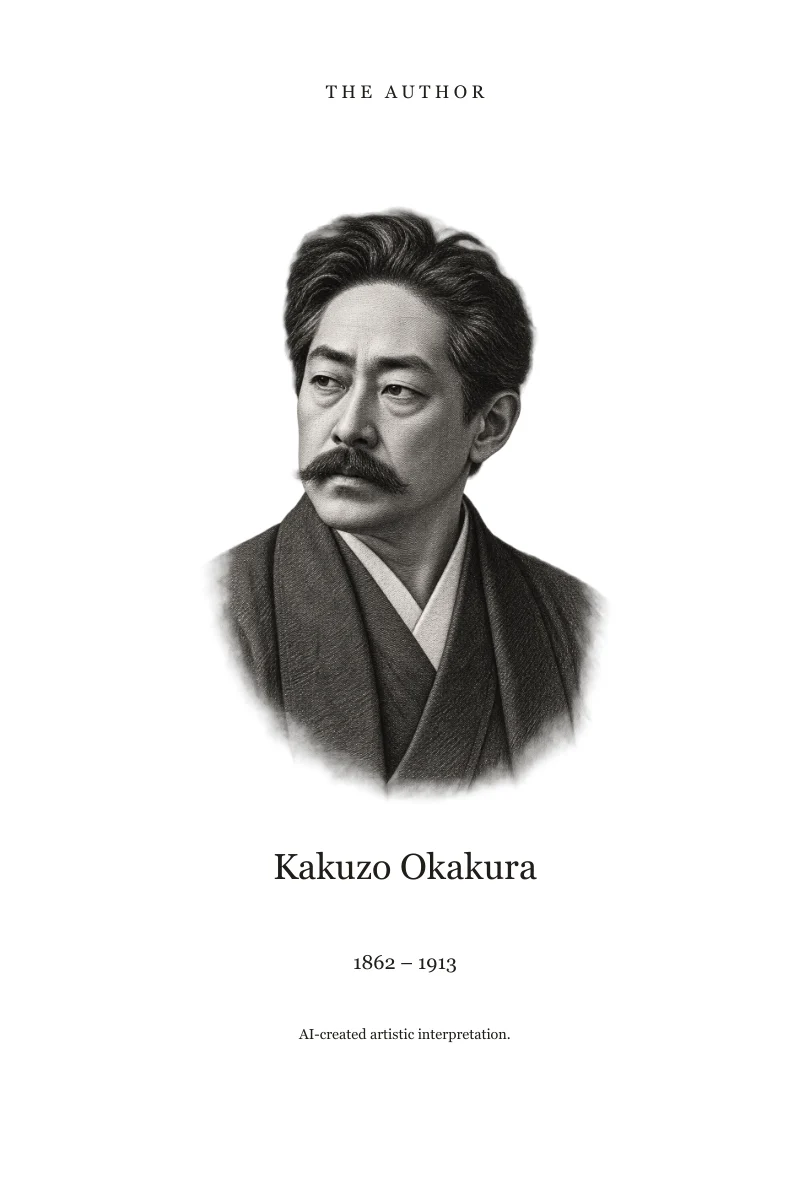
1906. Okakura Kakuzō’s essay on the tea ceremony, written in English for Western readers. The calm counterpart to Hearn’s haunted Japan.
Japanese Fairy Tales
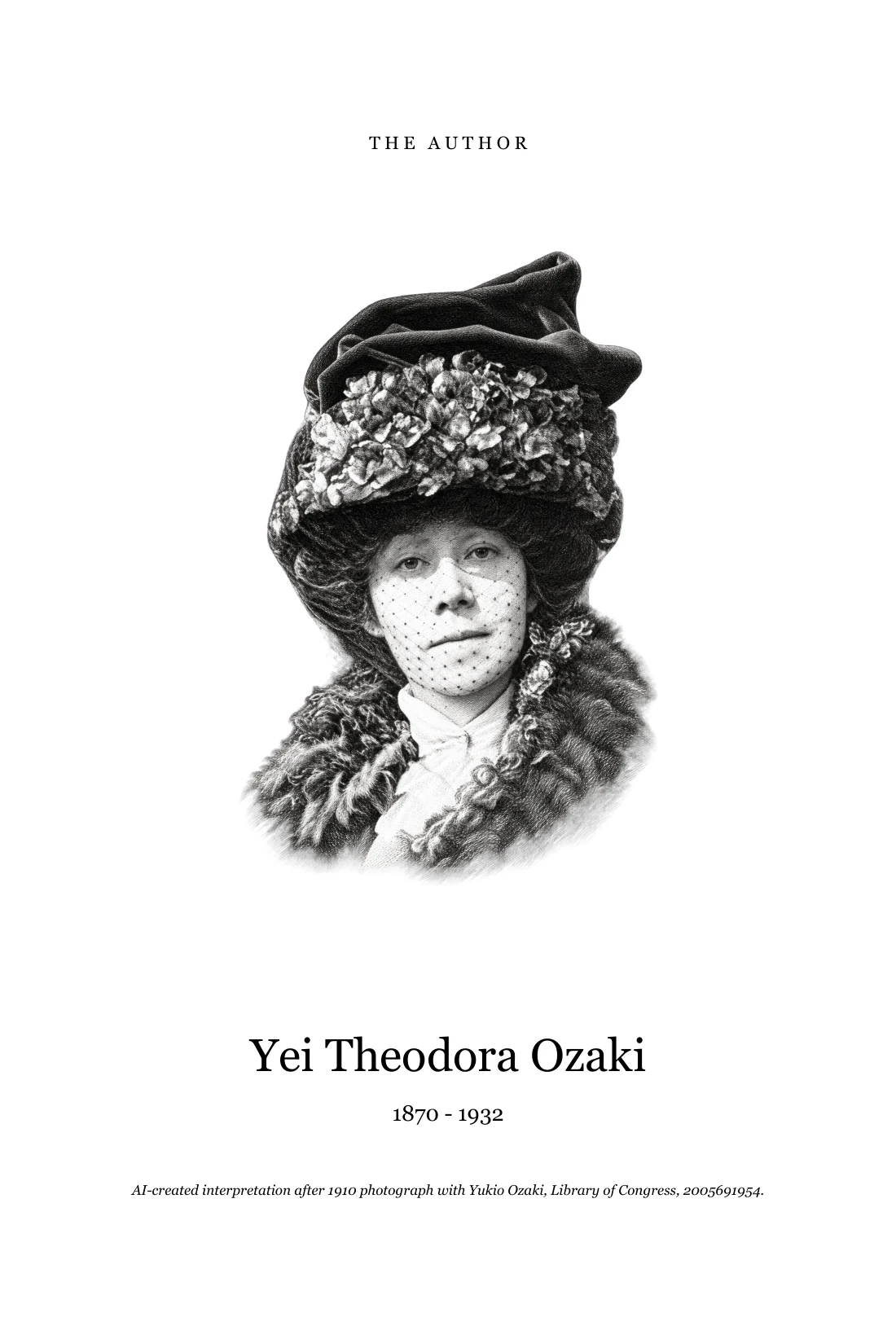
Traditional Japanese tales retold in English by Yei Theodora Ozaki, among them Urashima Taro, the fisher lad who comes home to find three hundred years have passed.



More strange tales
For the philosophy behind the Japan Hearn loved, read The Book of Tea: a whole philosophy in a teacup. For more stories to read by lamplight, see The best classic ghost story collections and The golden age of the English ghost story, and for young readers, Japanese fairy tales for children.
Then turn out the main light. One story a night is the right dose of Kwaidan, beginning with Hōïchi; listen for the sound of a biwa from the direction of the sea.
Questions readers ask
What is Kwaidan by Lafcadio Hearn?
A 1904 collection of Japanese ghost stories and strange tales, retold in English by Lafcadio Hearn from old Japanese books and oral legends, followed by three short essays on insects.
Was Lafcadio Hearn Japanese?
He became a Japanese citizen in 1896, taking the name Koizumi Yakumo. He was born on the Greek island of Lefkada to a Greek mother and an Anglo-Irish father, and grew up in Dublin.
What does kwaidan mean?
Kwaidan is an old romanised spelling of the Japanese kaidan, meaning a ghost story or tale of the strange and supernatural.
Is the film Kwaidan based on the book?
Partly. Masaki Kobayashi’s 1964 film adapts four of Hearn’s stories, two of them from Kwaidan, including “Hoichi the Earless” and “The Woman of the Snow”.