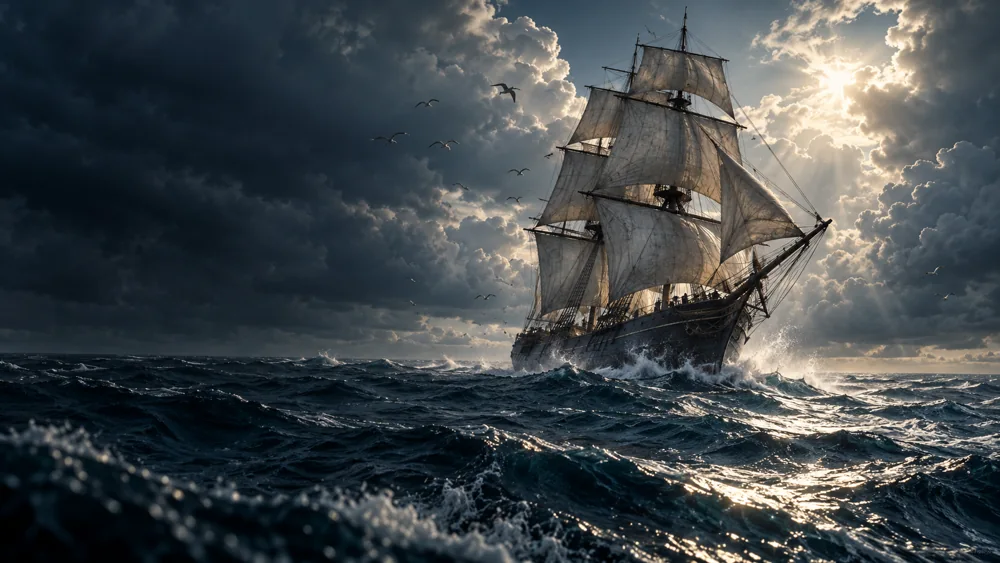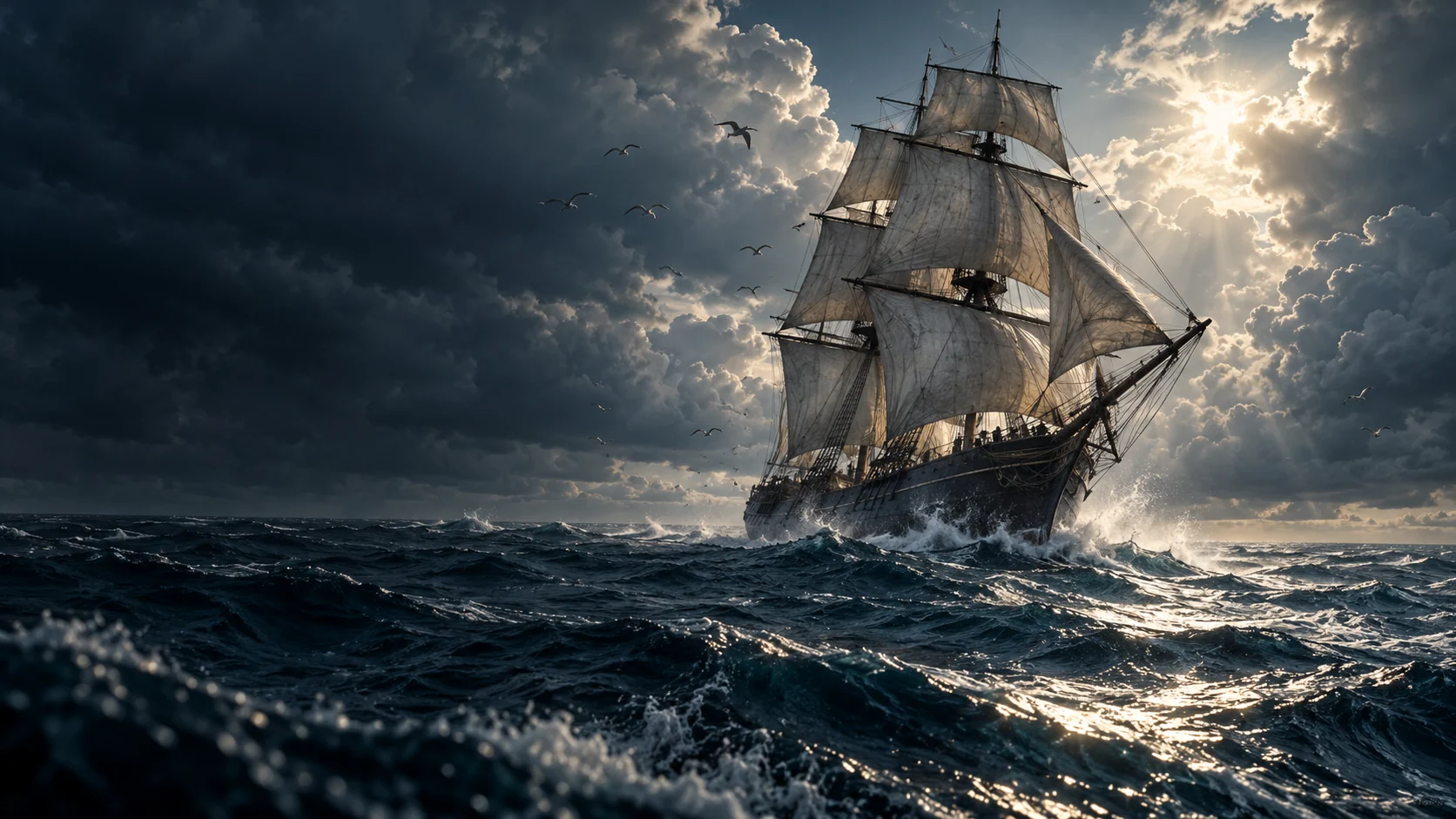

Yes, Moby-Dick has a true story behind it, or rather two. On 20 November 1820, the whaleship Essex, out of Nantucket, was hunting sperm whales in the Pacific, thousands of miles off the coast of South America. A huge bull whale, behaving like nothing her crew had seen, swam straight at the ship and rammed her, then turned and struck again. The Essex was holed below the waterline and soon rolled over, filling with water.
The twenty men escaped into three small whaleboats. Fearing the islands nearest to them, they chose to sail for South America instead, a voyage that took them months. Starvation followed, and the survivors were eventually forced to eat the bodies of men who had died. Only eight of the twenty lived.
How did Herman Melville know about the Essex?
The first mate, Owen Chase, published an account of the disaster in 1821, and it became one of the most famous sea stories of its day. Herman Melville went to sea on the whaler Acushnet in 1841, and he later recorded that during his voyage he met Chase’s son on another ship, who lent him a copy of his father’s narrative. Melville said that reading it at sea, not far from where the Essex went down, affected him deeply.
He never forgot it. In Moby-Dick, his narrator Ishmael cites the Essex by name in the chapter “The Affidavit”, as proof that a whale really could sink a ship. Melville wanted his readers to know that the most unbelievable part of his novel had already happened.

Was Moby Dick a real whale?
Not exactly, but he had a famous ancestor. Whalers in the early nineteenth century told stories of a huge white sperm whale that haunted the waters off Mocha Island, near Chile, and fought back when attacked. In 1839 the writer Jeremiah N. Reynolds published an article about him called “Mocha Dick: or The White Whale of the Pacific”.
Melville combined the two: a white whale of legend, and a real whale that had deliberately destroyed a ship. Add his own years at sea, an enormous range of reading and a captain driven past reason, and you have the raw material of Moby-Dick.
What is Moby-Dick actually like to read?
Not what most people expect. The opening is one of the friendliest in literature, and the early chapters, as Ishmael arrives in New Bedford and meets the harpooner Queequeg, are warm and very funny:
Call me Ishmael.
Herman Melville, Moby-Dick (1851)
Then the voyage begins, and the book opens out into something stranger: an adventure, a tragedy, an encyclopedia of whaling and a meditation on obsession, all at once. Some chapters are pure drama; others stop the story to describe the anatomy of the whale or the ropes in a whaleboat. Readers who give themselves permission to skim a few of the latter, and come back to them later, usually enjoy the book far more.
It is long, at a hundred and thirty-five chapters plus an epilogue, but the chapters are often very short. A few a night will take you to the end in a season. It also reads differently once you know the Essex story; without giving anything away, you will notice where Melville’s memory of that wreck surfaces.
One honest note: Moby-Dick was a commercial failure when it appeared in 1851, and Melville died in 1891 largely forgotten. Its reputation as one of the great American novels dates from a revival in the 1920s.
Where to go next
If you are about to start, our guide How to read Moby-Dick (and why the whale chapters matter) will help you pace it. For more stories of ships and storms, see the greatest sea stories ever written; Poe’s strange voyage The Narrative of Arthur Gordon Pym of Nantucket, which also sets out from Nantucket, makes a fine companion. And if a long book is your project for the year, Melville belongs on a classics reading challenge for 2027.
Whatever your plan, start with three words. Open Moby-Dick, and let Ishmael take you down to the water.
Questions readers ask
Is Moby-Dick based on a true story?
Partly. It was inspired by the sinking of the Nantucket whaleship Essex, rammed by a sperm whale in the Pacific in 1820, and by tales of a real white whale nicknamed Mocha Dick.
What happened to the whaleship Essex?
A sperm whale rammed and sank the Essex in November 1820. The crew spent months adrift in small boats, and only eight of the twenty men survived.
Was Moby-Dick a success when it was published?
No. It sold poorly and received mixed reviews in 1851. Its reputation as a great American novel grew only after a revival of interest in Melville in the 1920s.
 Bartleby, the Scrivener44 pages · $9.99