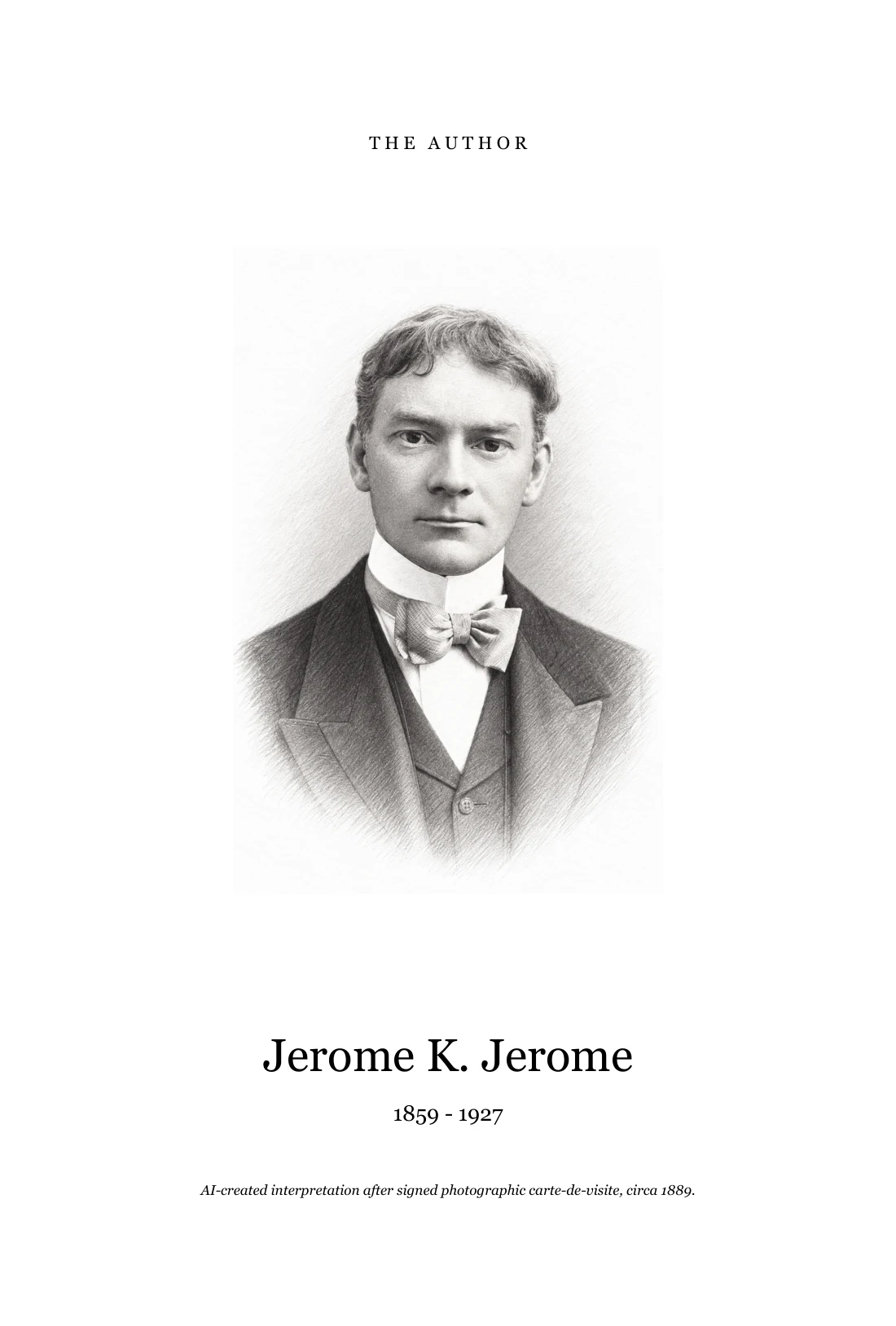
When Jerome K. Jerome began writing Three Men in a Boat in the late 1880s, he planned something quite respectable: a book about the Thames, its villages, its history and its scenery, to be called The Story of the Thames. There would be some humorous episodes along the way, but the purpose was description and information.
It did not work out. The humorous episodes kept growing, the history kept shrinking, and the finished book, published in 1889, is a comic masterpiece with a guidebook buried somewhere inside it. It has never been out of print, and people still row the route it describes.
How Three Men in a Boat stopped being a travel guide
Jerome wrote the book for a magazine called Home Chimes, where it was serialised in 1888 and 1889. He later recalled that he had meant the history and scenery to be the substance of the work, and the comic stories only the relief. The editor, it is said, felt otherwise, and cut much of the historical material, keeping the jokes.
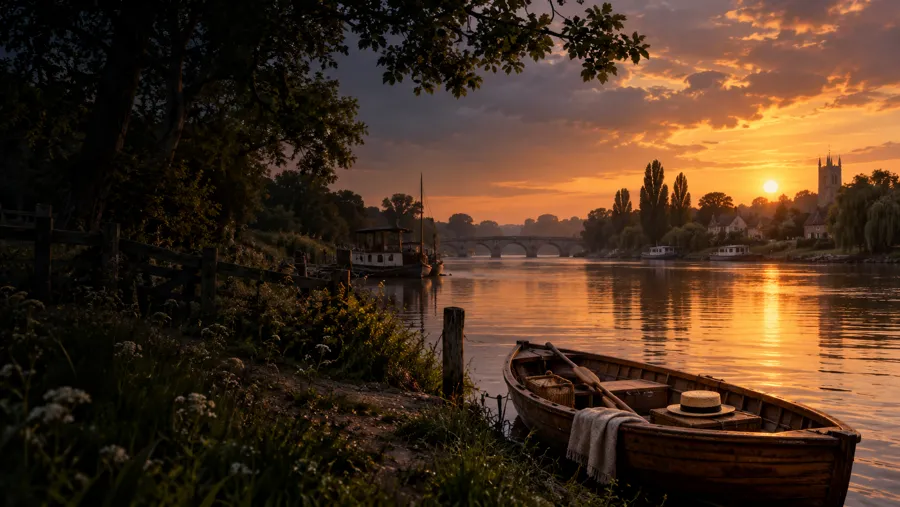
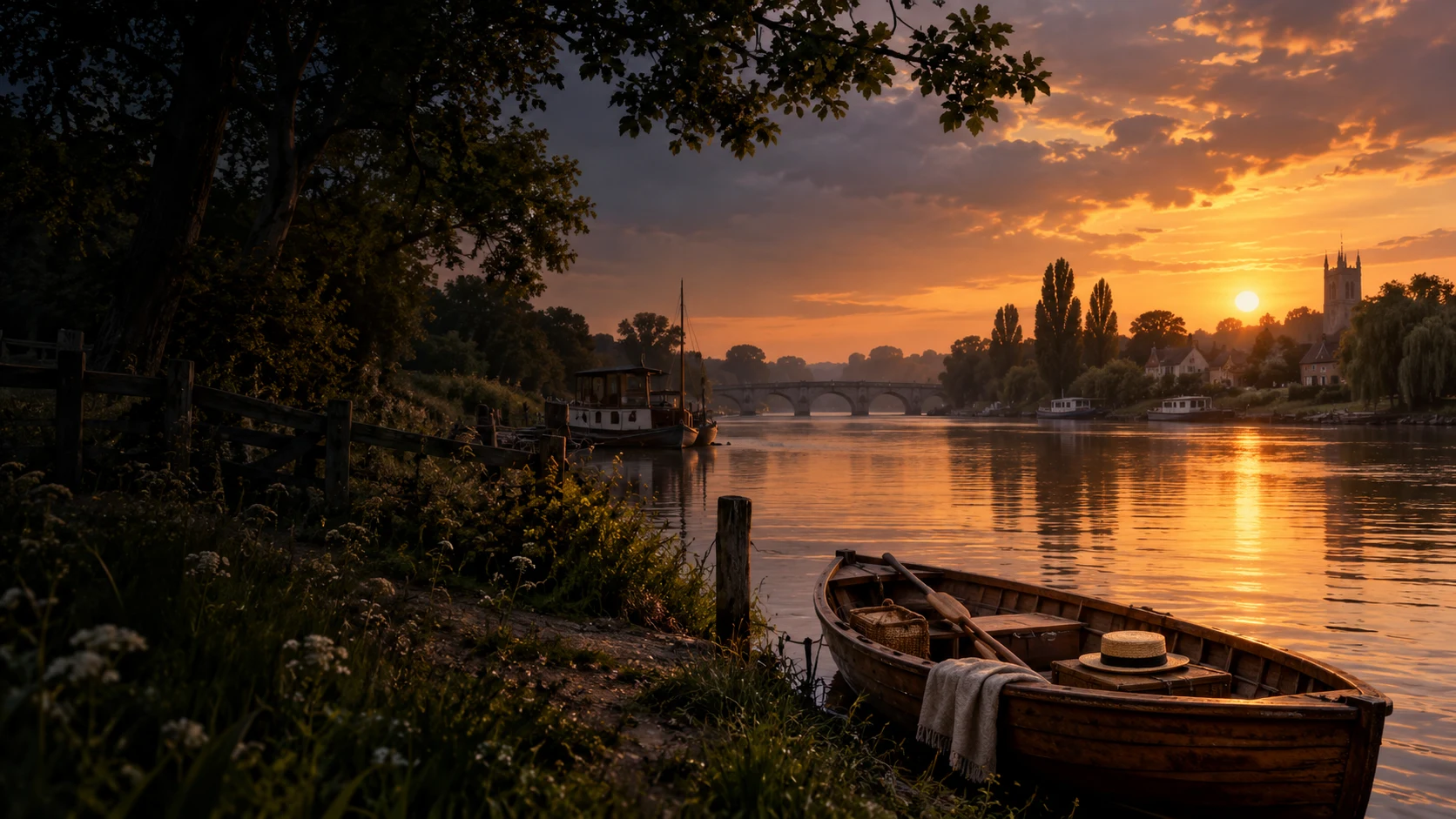
Some of the guidebook survives, and it is easy to spot: a passage about Magna Carta at Runnymede, notes on the churches and inns along the bank, set pieces of purple description about the river at sunset. Jerome often punctures them himself, breaking off a lyrical paragraph to report that it has started raining or that Harris has fallen into something.
The chief beauty of this book lies not so much in its literary style, or in the extent and usefulness of the information it conveys, as in its simple truthfulness.
Jerome K. Jerome, preface to Three Men in a Boat (1889)
Is Three Men in a Boat a true story?
Partly. The three men are based on Jerome himself and two real friends, George Wingrave and Carl Hentschel, the original of Harris, and the three did take boating trips on the Thames together. Jerome had also spent his honeymoon on the river not long before he wrote the book. The route, from Kingston upstream past Hampton Court, Runnymede, Henley and Marlow towards Oxford, is real, and so are most of the places they stop.
The adventures are another matter. Jerome took real experiences and exaggerated them shamelessly, and the book’s most famous episodes, the tin of pineapple with no opener, Harris lost in the Hampton Court maze, the attempt to make an Irish stew from everything left in the hamper, are comic set pieces rather than reporting. Montmorency, the dog of the subtitle, is generally said to have been invented.
Why is it still so funny?
Because Jerome writes about things that have not changed at all. Packing, and forgetting to pack the one thing you need. Being convinced you have every disease in a medical dictionary except housemaid’s knee. The impossibility of getting up on time, the misery of putting up a canvas tent in the rain, the friend who is an expert on everything. The book was written in 1889 and reads like a message from friends.
Jerome’s voice is the secret: chatty, self-mocking and endlessly digressive. A story about cheese leads to a story about a train journey, which leads back to the river two pages later. Some readers find the digressions are the best part.
Three Men in a Boat
1889. J., George, Harris and Montmorency take a boat up the Thames from Kingston towards Oxford. The guidebook that turned into a comic classic.
The Diary of a Nobody
1892. The diary of Charles Pooter, a London clerk of boundless self-importance. Another Victorian comic classic that still reads fresh.
Travels with a donkey in the Cevennes
1879. Robert Louis Stevenson and a stubborn donkey called Modestine cross the hills of southern France. Travel writing at its most charming.



Who will enjoy it?
Almost anyone with a sense of humour. It is short, the chapters are easily dipped into, and it makes an excellent book for holidays, train journeys and reading aloud to someone who will laugh in the right places. Teenagers often enjoy it as much as adults; there is nothing in it to put off a younger reader except the occasional Victorian vocabulary.
If it makes you laugh, try The funniest classic novels, and if you love its gentle, unhurried mood, Cosy classics: comfort reads for a quiet night in. For more journeys that are as much about the travellers as the places, see Classic travel writing.
And if you have ever wanted to row from Kingston to Oxford, take Jerome as your guide. He did, after all, mean to be one. Start with three men and a dog in a room in London, all feeling seedy and in need of a change, and open Three Men in a Boat.
Questions readers ask
Was Three Men in a Boat meant to be a travel guide?
Yes. Jerome K. Jerome planned a serious book about the Thames called The Story of the Thames, with comic episodes as light relief. The comedy took over, and much of the historical material was cut.
Is Three Men in a Boat a true story?
Partly. The three men are based on Jerome and two of his friends, and the Thames route is real, but the comic incidents are heavily exaggerated or invented.
Where does Three Men in a Boat take place?
On the River Thames, mainly between Kingston and Oxford, passing places such as Hampton Court, Runnymede, Henley and Marlow.