

Authors
Where to begin with the writers behind the classics.
All authors articles
49–72 of 110
 Authors · 4 min read
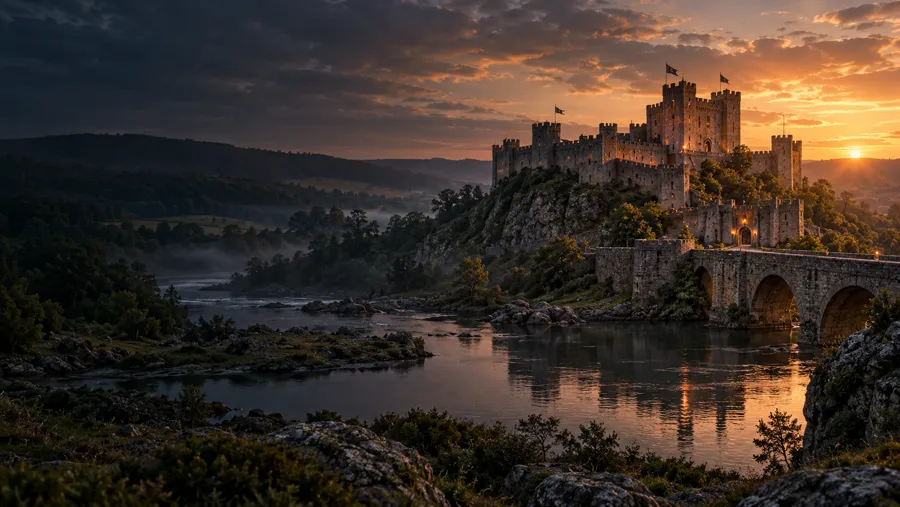
Did you know Walter Scott is credited with inventing the historical novel?
Walter Scott began a novel about the Jacobite rising, showed a friend the first chapters, got a poor review and put it away in an old desk. Years later he went looking for fishing tackle and found it again. The book was Waverley, and historical fiction has never been the same.
 Authors · 3 min read
Did you know the creator of Winnie-the-Pooh wrote a detective novel?
In 1922, four years before a bear of very little brain made him immortal, A. A. Milne published a murder mystery. The Red House Mystery has a country house, a locked room, a missing host and an amateur detective, and it is a great deal of fun.
 Authors · 4 min read
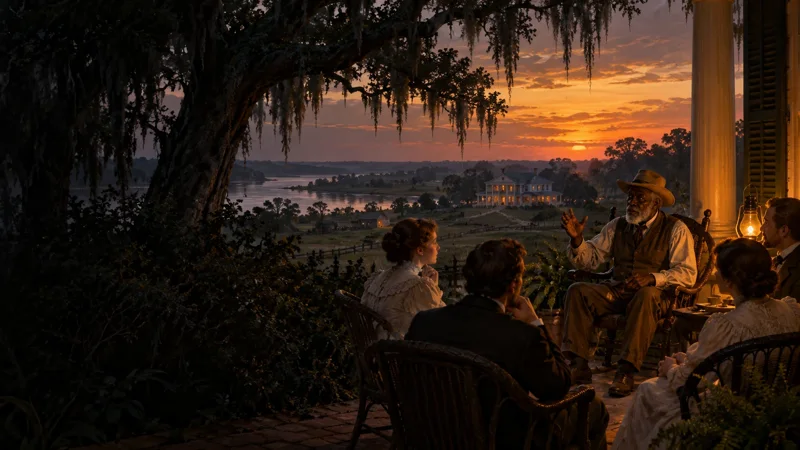
Charles W. Chesnutt: where to start
When Houghton Mifflin announced The Conjure Woman in 1899, its advertisements did not mention that the author was Black. Chesnutt’s friends made sure the world found out, and a century later he is recognised as one of the founders of African American fiction.
 Authors · 3 min read
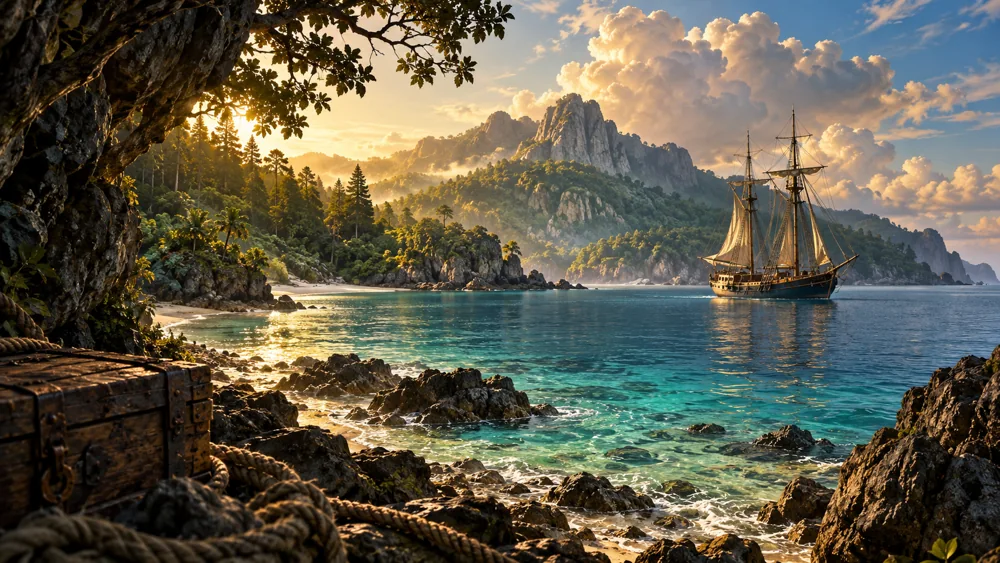
Where to start with Robert Louis Stevenson
Pirates, a man with two faces, a boy on the run in the Highlands and a book of poems generations learned by heart. Stevenson packed it all into a life of just forty-four years.
 Authors · 4 min read
Balzac’s Human Comedy: where to start
Ninety-one finished novels and stories, dozens more left as sketches, and a cast of thousands who wander from one book to the next. The Human Comedy looks impossible to begin. It is not, if you open the right door.
 Authors · 4 min read
Did you know Joseph Conrad didn’t learn English until his twenties?
One of the great prose writers in English was a Polish sailor who barely spoke the language before he was twenty. Joseph Conrad learned it on British ships, wrote his first novel in it in his thirties, and never lost his accent.
 Authors · 4 min read
Rafael Sabatini: the master of the swashbuckler
In a churchyard at Adelboden, in the Swiss Alps, Rafael Sabatini’s grave carries a single sentence: the first line of his most famous novel. It is the best introduction to him anyone could write.
 Authors · 3 min read
Did you know Oscar Wilde wrote fairy tales?
The wittiest man in Victorian London also wrote some of the saddest, most beautiful fairy tales in English. Oscar Wilde’s nine stories about swallows, giants, nightingales and statues have been read aloud to children for well over a century, and they were never only for children.
 Authors · 4 min read
Lord Dunsany, the fantasist who shaped Lovecraft and caught Tolkien’s eye
Somewhere above the gods sits a drummer who must never stop, because if he does, the god who dreams the world will wake. That image opens Lord Dunsany’s first book, and the writers who read it never quite forgot it.
 Authors · 4 min read
Did you know the author of The Thirty-Nine Steps became Governor General of Canada?
In 1935 Alfred Hitchcock’s The 39 Steps reached cinemas, and the man who had written the novel was raised to the peerage and sent to Ottawa as the King’s representative. John Buchan spent his last years as Governor General of Canada, and kept writing to the end.
 Authors · 4 min read
Charlotte Brontë’s four novels, in order
There are four Charlotte Brontë novels, and they can be read in two orders: the order she wrote them and the order the world received them. The first she finished was the last to reach print, two years after her death.
 Authors · 4 min read
Did you know H. G. Wells predicted the atomic bomb?
Thirty-one years before Hiroshima, a novelist described cities destroyed by bombs powered by the atom, and gave them the name we still use.
 Authors · 4 min read
How to start reading James Joyce
Between 1905 and 1914 James Joyce sent Dubliners out eighteen times, to fifteen different publishers. One Dublin printer burned the sheets. The book that nearly never appeared is still the best way into his work.
 Authors · 4 min read
Where to start with Chekhov
Chekhov practised medicine, wrote hundreds of short stories, reinvented the theatre and died at forty-four. For a new reader, the best of it is short. Here is where to begin.
 Authors · 5 min read
Wilkie Collins before The Woman in White: Hide and Seek and The Dead Secret
A deaf circus foundling, a dying lady’s confession and a locked room in a Cornish house. Wilkie Collins was rehearsing for The Woman in White for most of the 1850s, and the rehearsals are well worth seeing.
 Authors · 4 min read
Did you know Mark Twain’s pen name comes from his years as a riverboat pilot?
“Mark twain” was a cry Samuel Clemens heard a thousand times on the Mississippi, the leadsman’s shout that the water was two fathoms deep. When the river career ended, he kept the phrase and made it the most famous pen name in American letters.
 Authors · 4 min read
Where to start with E. M. Forster
E. M. Forster published his fifth novel, A Passage to India, in 1924. He lived for another forty-six years and never published a sixth. The shelf is short, which makes choosing where to begin all the more important.
 Authors · 4 min read
Did you know the designer William Morris helped invent the fantasy novel?
He is remembered for wallpapers, tapestries and beautiful books. In the last years of his life William Morris also wrote a shelf of prose romances that set fantasy free of our world for good, and Tolkien and C. S. Lewis both read them closely.
 Authors · 4 min read
Where to start with G. K. Chesterton
Chesterton wrote around eighty books and thousands of essays, and he could turn a lamp post or a piece of chalk into an argument. The G. K. Chesterton books to begin with are the ones where that habit of mind meets a story.
 Authors · 4 min read
William Hope Hodgson: sea horror and the Night Land
Before he wrote a word of fiction, William Hope Hodgson was a sailor, a photographer of storms and a bodybuilder who ran his own gym. Then he wrote some of the strangest horror in English.
 Authors · 5 min read
Did you know Charles Dickens wrote travel books? Pictures from Italy and more
Between the novels, Charles Dickens crossed the Atlantic, lived for a year in Genoa and spent nights tramping London’s streets until dawn, and he wrote it all down. His travel books are the closest thing we have to Dickens talking in his own voice.
 Authors · 4 min read
Did you know the creator of the Scarlet Pimpernel also invented an armchair detective?
Four years before the Scarlet Pimpernel reached the page, magazine readers knew Baroness Orczy for a pale, nervous old man in a London teashop who solved murders without leaving his seat.
 Authors · 4 min read
R. Austin Freeman, the doctor who invented the inverted mystery
Almost every episode of Columbo shows you the murder before the detective arrives. The idea was not new. A London doctor tried it in a magazine story more than half a century earlier, and called the result an experiment.
 Authors · 4 min read
George Gissing: the novelist of money and writers
His characters count every shilling, because Gissing did too. The Victorian novelist who wrote most honestly about writing for a living sold his best book outright and watched it go into a second printing without him.