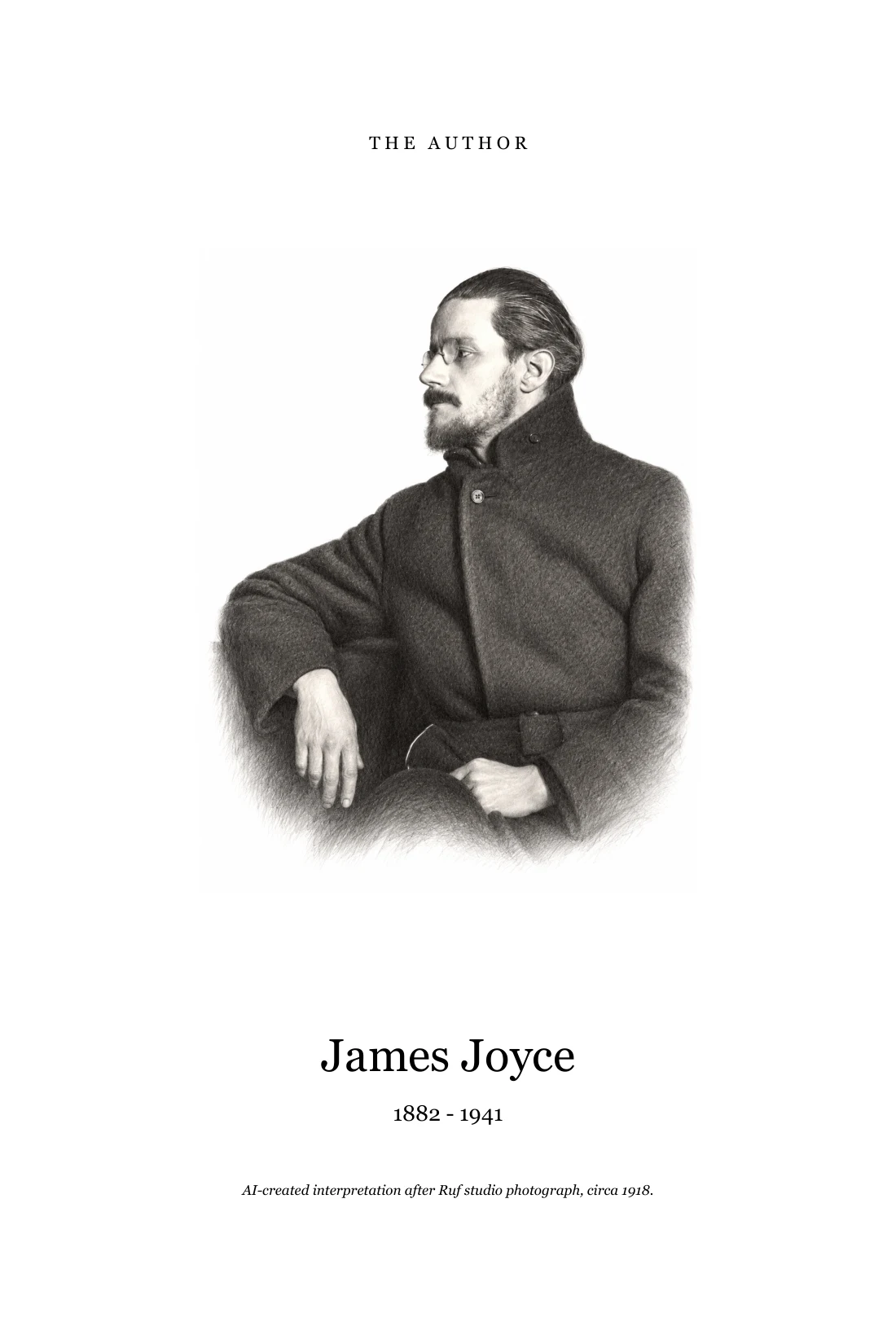
The simplest James Joyce reading order is also the right one: read the books in the order he published them. Start with Dubliners (1914), fifteen short stories that ask nothing of you except attention. Then read A Portrait of the Artist as a Young Man (1916), a short novel about growing up. Then, when you are ready, Ulysses (1922). Each book prepares you for the next, and several characters walk from one into another.
James Joyce did not set out to be difficult. He set out to be exact, about Dublin, about the way people think, and about the sound of the city’s voices. The difficulty grew as his ambitions did, which is why it helps to follow him one step at a time.
The James Joyce reading order
- $13.99
Dubliners
1914. Fifteen stories of Dublin life, moving from childhood to maturity and public life and ending with “The Dead”, one of the finest stories in English. Plain on the surface, and very hard to forget.
- $14.99
A Portrait of the Artist as a Young Man
1916. Stephen Dedalus grows from an infant hearing his father’s bedtime story into a young man who rejects home, faith and nation to become a writer. The style grows up with him.
- $19.99
Ulysses
1922. A single day in Dublin, 16 June 1904, with Stephen, the advertising canvasser Leopold Bloom and his wife Molly. Funny, frank, enormous and unlike anything before it.


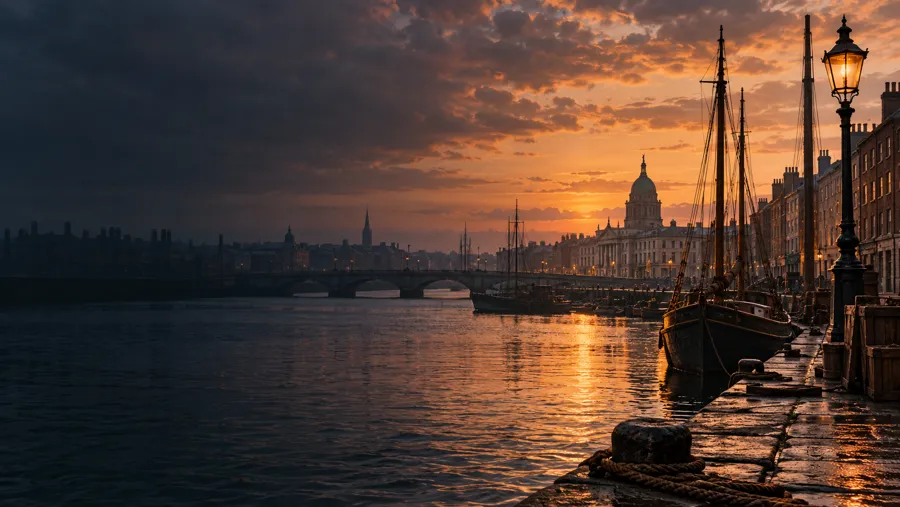
Step one: Dubliners
Dubliners has the most troubled history of any of Joyce’s books. The London publisher Grant Richards accepted it, then backed away when his printer refused to set some passages. A Dublin firm, Maunsel, took it on in 1909 and lost its nerve too, partly for fear of libel, since Joyce used real streets, shops and pubs. When Joyce offered to buy the printed sheets and publish them himself, the printer refused, and the sheets were destroyed. Joyce rescued a single copy. Grant Richards finally published the book in June 1914.
The stories are arranged by age, from three narrated by boys to tales of middle life and public life, and the last and longest, “The Dead”, gathers everything up at “the Misses Morkan’s annual dance” on a snowy winter night. Its final sentence is the one passage of Joyce that almost everyone who reads it remembers.
His soul swooned slowly as he heard the snow falling faintly through the universe and faintly falling, like the descent of their last end, upon all the living and the dead.
James Joyce, “The Dead”, Dubliners (1914)
Step two: A Portrait of the Artist as a Young Man
A Portrait began as something much bigger. In 1904 Joyce started a long, realistic autobiographical novel called Stephen Hero; after twenty-five chapters he abandoned it and rebuilt the material as a compact five-part novel. Ezra Pound arranged for it to be serialised in The Egoist in 1914 and 1915, and it appeared as a book in New York in 1916.
This is where Joyce’s method changes. The novel opens in baby language, “Once upon a time and a very good time it was there was a moocow coming down along the road”, and its prose matures as Stephen does, through the terrors of a Jesuit boarding school, a crisis of faith, and a slow decision to leave Ireland. By the end Stephen is announcing his programme.
I will not serve that in which I no longer believe, whether it call itself my home, my fatherland, or my church: and I will try to express myself in some mode of life or art as freely as I can and as wholly as I can, using for my defence the only arms I allow myself to use—silence, exile and cunning.
James Joyce, A Portrait of the Artist as a Young Man (1916)
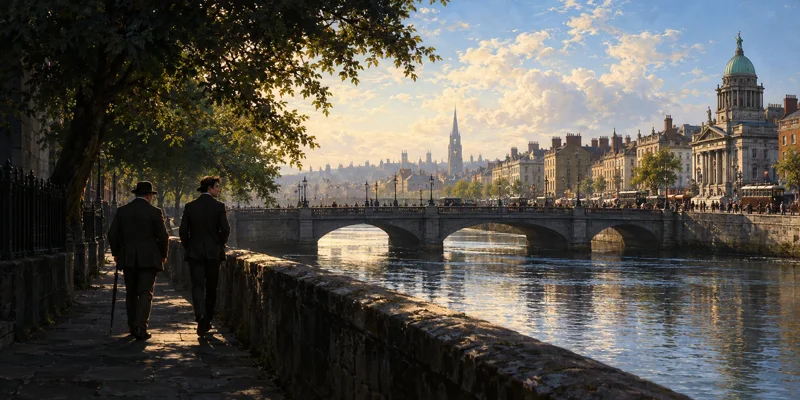
Step three: Ulysses
You will recognise people when you get there. Stephen Dedalus is the hero of the first three episodes, still the prickly young man of A Portrait, and many of the Dubliners from the stories turn up in passing. Leopold Bloom, who arrives in the fourth episode, is the reason most readers end up loving the book.
Ulysses was serialised in an American magazine, The Little Review, from 1918 until an obscenity prosecution stopped it, and Sylvia Beach published the whole novel in Paris on 2 February 1922, Joyce’s fortieth birthday. It is long, and its eighteen episodes change style again and again, so go in with a plan. Our guide How to read Ulysses without giving up has one, and How long is Ulysses? tells you what you are taking on.
Do you have to read Dubliners before Ulysses?
No, but it makes a real difference. Dubliners teaches you the city and its talk, and A Portrait teaches you Stephen; together they take perhaps a week of evenings, and they turn the first chapters of Ulysses from a wall into a door. If you only have time for one, read A Portrait.
What about Finnegans Wake? Joyce began it in 1923 and published it in 1939, two years before he died. It is written in a language of his own invention, full of puns drawn from many tongues, and it is a book for after the others, if at all. For where Joyce sits among his contemporaries, see Modernism explained in four books, and for his countrymen, Irish classics for St Patrick’s Day.
Whatever you plan, a single story is enough to begin. “Araby”, a boy’s errand to a bazaar in Dubliners, takes ten minutes to read, and in it you will hear the voice that runs through everything Joyce wrote.
Questions readers ask
What order should you read James Joyce in?
Read him in publication order: Dubliners (1914), A Portrait of the Artist as a Young Man (1916) and Ulysses (1922). Finnegans Wake (1939) is best left until last.
What is the easiest James Joyce book to start with?
Dubliners. Its fifteen short stories are written in a clear, realistic style, and they introduce the Dublin of his later books.
Should I read A Portrait of the Artist before Ulysses?
Yes, if you can. Stephen Dedalus, the hero of A Portrait, opens Ulysses, and knowing his story makes the first three episodes much easier to follow.