
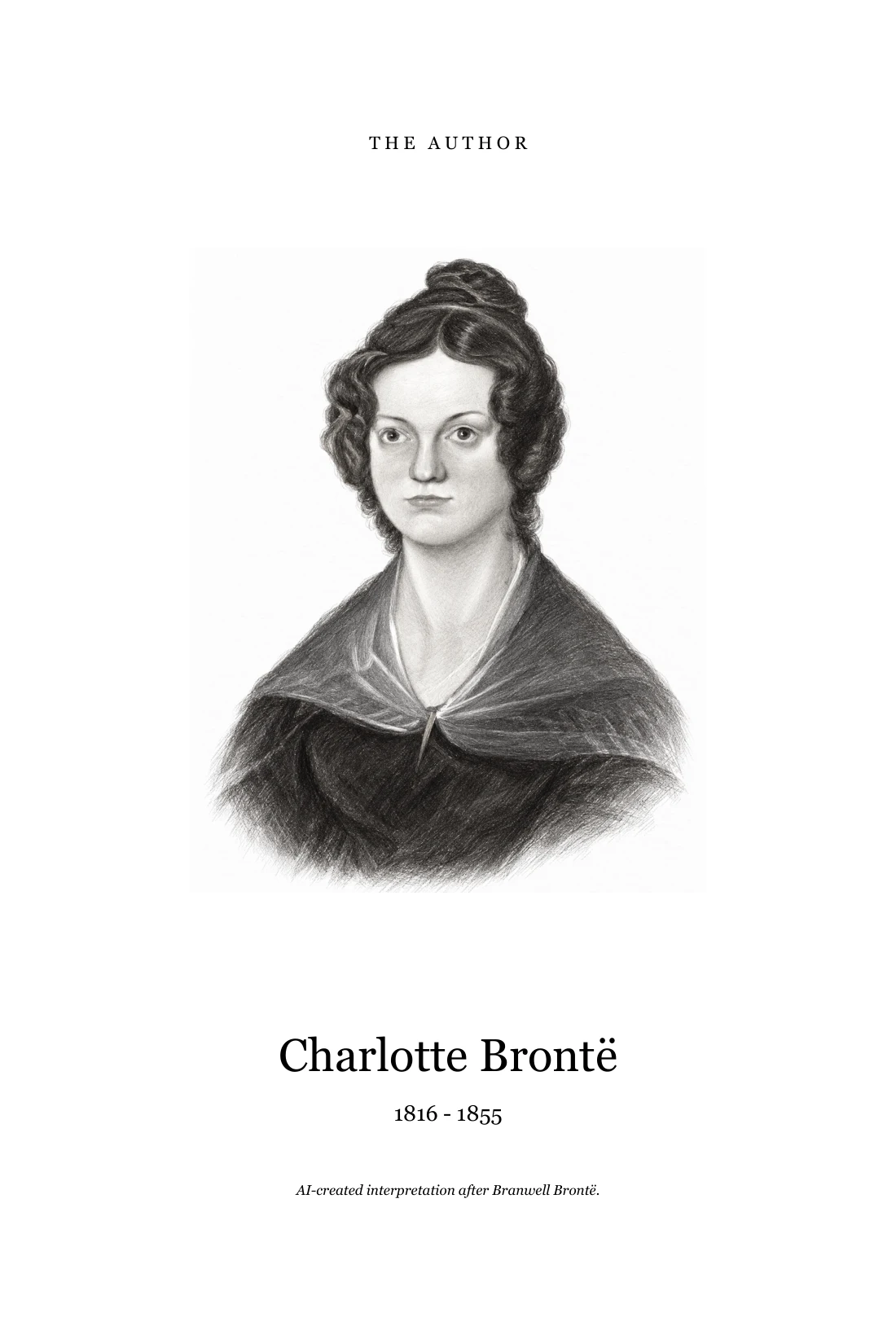
In July 1847 a brown paper parcel arrived at the London offices of Smith, Elder & Co. It contained a novel called The Professor by an unknown “Currer Bell”, and the parcel itself told the story of its travels: the names of other publishers it had been sent to were still on the wrapping, simply crossed out. George Smith remembered noticing them. He turned the book down too.
But his firm wrote back at length, and asked whether Currer Bell had anything longer. Charlotte Brontë did. She had begun Jane Eyre the previous summer, and within weeks it was on its way to London. It was published that October and made her famous, while The Professor waited in a drawer for ten years.
It declined, indeed, to publish that tale, for business reasons, but it discussed its merits and demerits, so courteously, so considerately, in a spirit so rational, with a discrimination so enlightened, that this very refusal cheered the author better than a vulgarly-expressed acceptance would have done.
Charlotte Brontë, quoted in Elizabeth Gaskell, The Life of Charlotte Brontë (1857)
How many novels did Charlotte Brontë write?
Four complete novels: The Professor, Jane Eyre, Shirley and Villette. She had begun a fifth, Emma, but wrote only about twenty pages before her death in 1855, and the fragment was published in 1860. Here are the Charlotte Brontë novels in both orders.
- Order written: The Professor (1846), Jane Eyre (1846–47), Shirley (1848–49), Villette (1851–52).
- Order published: Jane Eyre (1847), Shirley (1849), Villette (1853), The Professor (1857, after her death).

The Charlotte Brontë novels in order of writing
- $15.99
The Professor
Written 1846, published 1857. William Crimsworth escapes a bullying brother in a northern mill town and becomes a teacher in Brussels. Plain and deliberately unromantic, and the first draft of material she would later make extraordinary.
- $21.99
Jane Eyre
1847. An orphan who will not be crushed, a governess post at Thornfield Hall and an employer with a secret. The most compulsive of the four, and the one to read first.
- $25.99
Shirley
1849. Yorkshire in 1811–12, with mill owners, machine-breakers and two very different heroines. Her most social novel, written through the year she lost her brother and both her sisters.
- $23.99
Villette
1853. Lucy Snowe, reserved and alone, teaches at a girls’ school in a foreign city modelled on Brussels. Her most daring book, and many critics’ choice as her best.


Which Charlotte Brontë novel should you read first?
Jane Eyre, without question. It is the most famous for good reason: the voice grips from the first page, and the story moves through a cruel childhood, a grim charity school and a strange house full of secrets with the force of a thriller. Gaskell tells us that Charlotte began it in Manchester in the late summer of 1846, in lodgings where she was nursing her father after an operation on his eyes. The Professor had come back from yet another publisher on the very day of the operation.
Then read Villette. It returns to the Brussels material of The Professor, this time seen through a woman’s eyes, and it is darker, stranger and more inward than Jane Eyre. George Eliot thought it a still more wonderful book. Most literary historians see its prickly hero, M. Paul Emanuel, as closely based on Constantin Heger, who ran the Brussels school where Charlotte studied and taught in the early 1840s. Its ending is famous for being open to interpretation, so avoid spoilers.

Shirley, the forgotten middle novel
Shirley is the least read of the four, and it deserves better. It is set during the Luddite unrest in the Yorkshire textile trade, when hungry workers smashed the machines that were taking their jobs, and it asks hard questions about what work and independence mean for women. Charlotte began it in 1848. By the time she finished, Branwell had died in September 1848, Emily that December and Anne the following May. The novel she published in October 1849 was written partly out of that grief.
And The Professor?
Read it last, as the world did. In a preface written before her death, Charlotte explained what she had been trying to do: write about a hero who earned every shilling and never had a stroke of luck, an experiment that publishers, she noted drily, did not care for. It was published in 1857, the same year as Gaskell’s biography, with the approval of her widower, Arthur Bell Nicholls, whom she had married in June 1854.
For the story of the pseudonyms, see Did you know the Brontë sisters first published as Currer, Ellis and Acton Bell?, and for the youngest sister’s two novels, Anne Brontë: the forgotten Brontë sister. The whole family’s output is gathered in The Brontës of Haworth.
Whichever order you choose, begin with the girl behind the curtain in the window seat at Gateshead, reading about birds while the rain comes down. Open Jane Eyre, and you will see why the firm that turned down The Professor said yes to this one.
Questions readers ask
How many novels did Charlotte Brontë write?
Four: The Professor, Jane Eyre, Shirley and Villette. She left a fragment of a fifth, Emma, which was published after her death.
What order should I read Charlotte Brontë’s novels in?
Start with Jane Eyre (1847), then Villette (1853), Shirley (1849) and finally The Professor, which she wrote first but which was published only in 1857, after her death.
Why was The Professor published after Charlotte Brontë died?
Publishers rejected it repeatedly in 1846–47. After Jane Eyre’s success it stayed unpublished, and it finally appeared in 1857, two years after her death, with her husband’s approval.