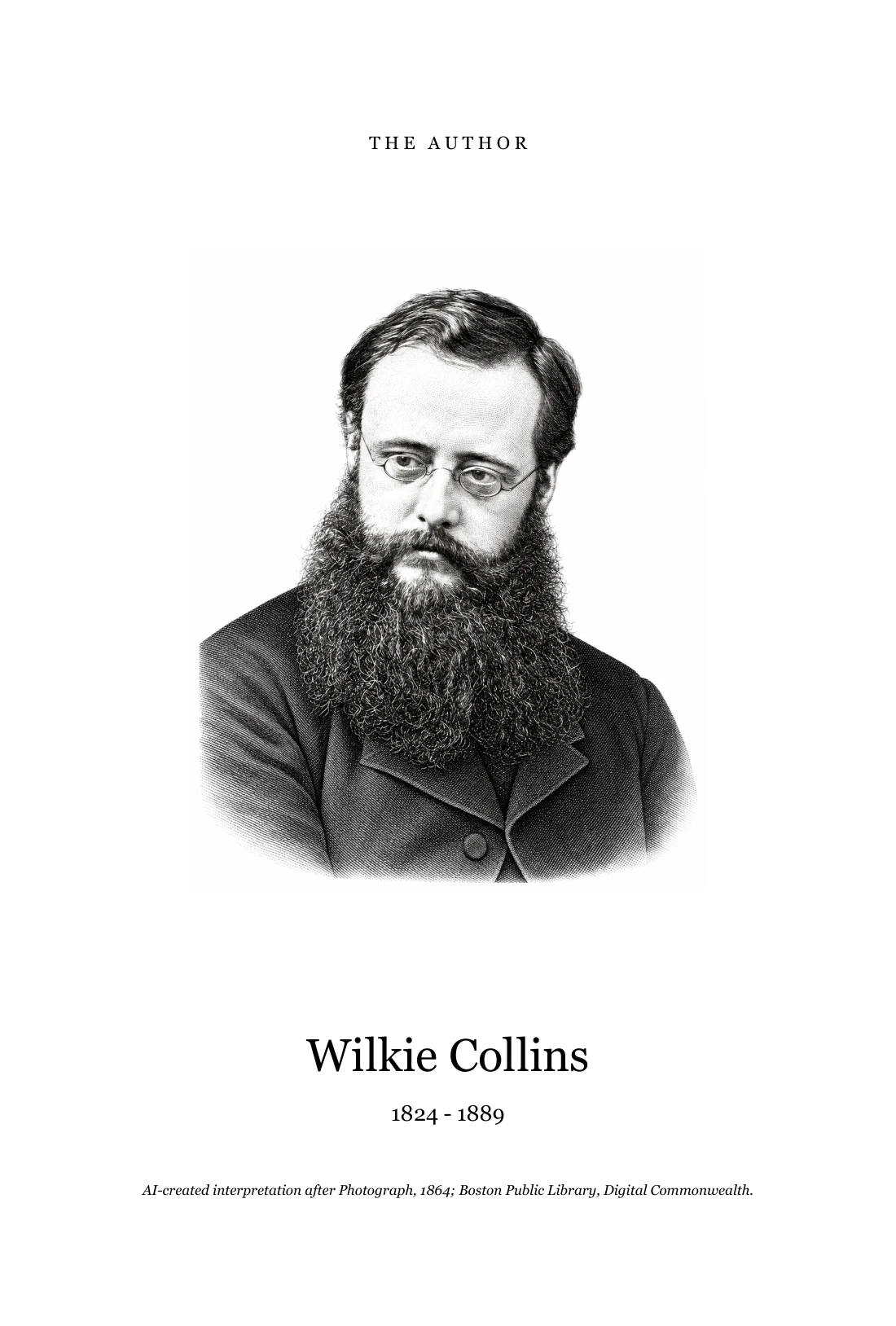
Wilkie Collins was candid about the failure of his third novel. Hide and Seek came out in June 1854, just as Britain went to war in the Crimea, and readers had other things on their minds. Seven years later, introducing a revised edition, he set out exactly how badly it had done.
The demand among the booksellers was just large enough to exhaust the first edition, and there the sale of this novel, in its original form, terminated.
Wilkie Collins, preface to the revised edition of Hide and Seek (1861)
By then, of course, he was famous. The Woman in White had made Wilkie Collins a sensation in 1860, and readers were curious about what he had written before it. The answer is a decade of apprenticeship. Of the Wilkie Collins early novels, two show the sensation novelist taking shape: Hide and Seek, his first novel built around a hidden truth, and The Dead Secret, the novel Dickens ran in Household Words in 1857.
- 1846
Enters Lincoln’s Inn to study law, at his father’s insistence, after five years as a tea merchant’s clerk.
- February 1850
Antonina, a historical novel about the fall of Rome, is his first published novel.
- March 1851
The painter Augustus Egg introduces him to Charles Dickens.
- November 1852
Basil, a darker contemporary story of a secret marriage, is published.
- June 1854
Hide and Seek is published, dedicated to Dickens.
- October 1856
Collins joins the staff of Dickens’s weekly, Household Words.
- January–June 1857
The Dead Secret is serialised in Household Words.
- November 1859
The Woman in White begins in All the Year Round.
What did Wilkie Collins write before The Woman in White?
Four novels, plus stories, plays and a travel book. Antonina was a historical romance of the fall of Rome. Basil moved into modern London, with a young gentleman who falls for a draper’s daughter he glimpses on an omnibus and marries her in secret. Then came the two books below, in which Collins found the subject that would make him: secrets kept inside respectable families, and the people who set out to uncover them.
- $20.99
Hide and Seek
1854. A painter, a reckless young man, a gold-rush wanderer back from America and a deaf girl the household calls Madonna. Warm, funny and full of London, with a family mystery quietly assembling underneath.
- $18.99
The Dead Secret
1857. A dying woman in a Cornish house makes her maid write down a secret and swear never to destroy it, or take it away. Years later the young heiress of the house comes home, and someone is determined she will not find the room where it is hidden.
- $24.99
The Woman in White
1860. Where the apprenticeship led: a midnight meeting on a London road, an heiress in danger, Count Fosco and a whole novel told by its witnesses.



Hide and Seek: Madonna, the circus and a painter’s house
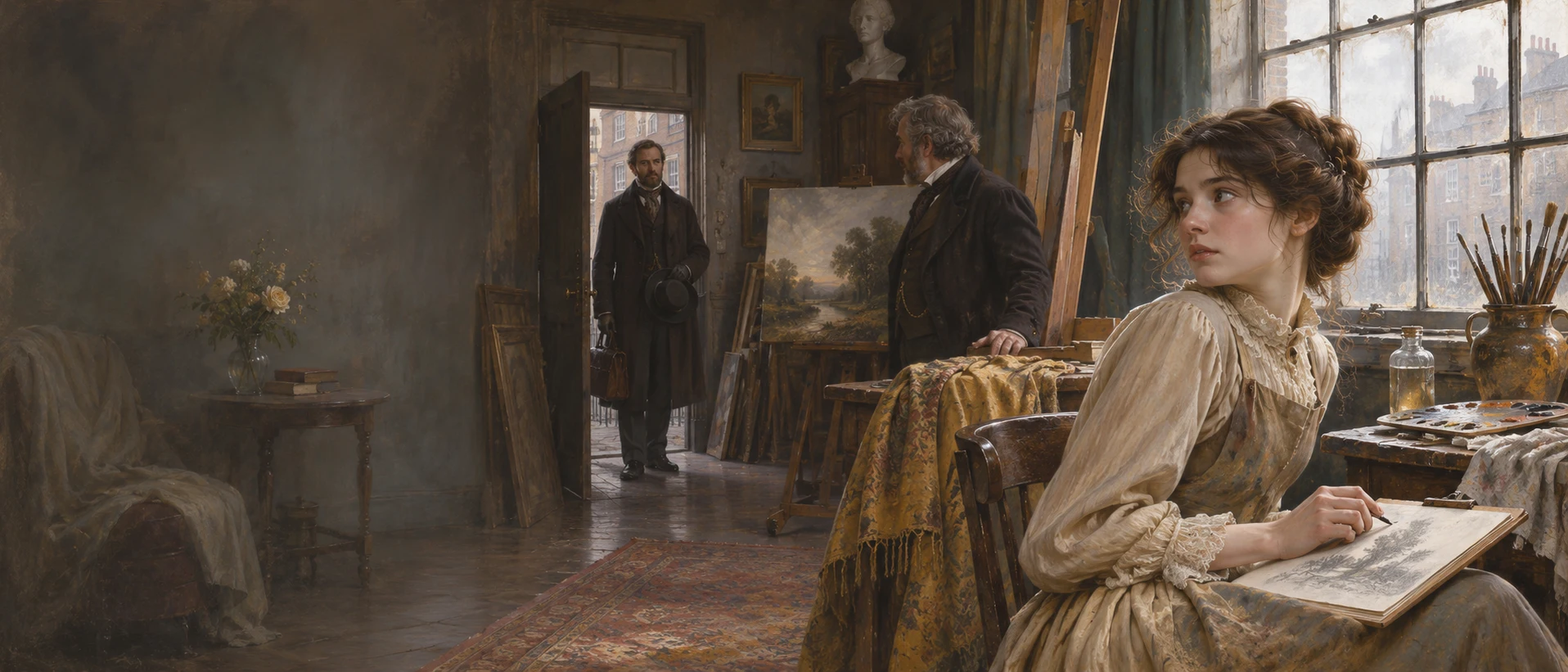
Hide and Seek begins in the comfortable home of Valentine Blyth, a kind-hearted and not very successful painter, and moves out into a London of cheap theatres, lodging houses and a travelling circus. It was there that the girl at its centre was found. A circus bill that catches Blyth’s eye advertises her in red letters as “The Mysterious Foundling”, a star turn between the acts.
…the above wonderful Deaf and Dumb Female Child will appear between the first and second parts of the evening’s performances.
Wilkie Collins, Hide and Seek (1854)
A fall from a horse has left her unable to hear or speak, and the Blyths take her in and raise her; they call her Madonna, for her likeness to the faces in Italian paintings. Collins read medical authorities on deafness caused by injury to draw her, and she is one of several characters with severe disabilities in his fiction.
Around her he arranges a mystery whose pieces the reader can see sooner than the characters: a hair bracelet, an old family scandal, and Mat Grice, a battered wanderer home from years in the Americas with a fortune from the California goldfields and a question to answer. Collins was proud of it, and dedicated it to Dickens “as a token of admiration and affection”. Critics have seen his own father in the stern, religious Mr Thorpe, and his own wasted years in a tea merchant’s office in young Zack Thorpe’s.
The Dead Secret: Dickens’s magazine and a Cornish house
By 1856 Collins was on the staff of Household Words, and in January 1857 Dickens began running his next novel in it, in weekly parts until June. Collins had walked through Cornwall in 1850 and written a travel book about it, Rambles Beyond Railways, and he set the new story at Porthgenna Tower, a great house on the county’s west coast. It opens in the servants’ kitchen, after midnight, with a death expected upstairs.
“Will she last out the night, I wonder?”
Wilkie Collins, The Dead Secret (1857)
What the dying Mrs Treverton tells her maid, Sarah Leeson, is the secret of the title, and Collins makes the hiding of it the engine of the book. Then he jumps forward years, to Rosamond, heiress of Porthgenna, newly married to a blind young man named Leonard Frankland, coming home to a house where a frightened stranger has warned her away from one particular room. We will not say what is in it. Many readers guess before Rosamond does; the suspense lies in how, and at what cost, she finds out.
The book is a bridge. Its themes, a hidden identity, a damaged woman haunted by what she knows, a family name under threat, come back on a grander scale in The Woman in White, and the haunted Sarah Leeson looks ahead to the obsessed, desperate women of his later novels.

Should you read the early Collins novels first?
Not necessarily. The Woman in White stands on its own, and our guide Wilkie Collins: Dickens’s friend and the king of the sensation novel sets out the great sequence of the 1860s. But if you have already read it and The Moonstone, these two are the natural next step, and they are more relaxed and more humorous than the famous books. The story of the novel that made him a star is told in Did you know The Woman in White caused a merchandise craze?, and the magazine world that carried all of them is in Victorian serial novels.
If you want one, choose by mood. For warmth and comedy, go to Valentine Blyth’s studio in Hide and Seek. For a shiver, go down to the kitchen at Porthgenna, a little after midnight, and open The Dead Secret.
Questions readers ask
What was Wilkie Collins’s first novel?
His first published novel was Antonina, or The Fall of Rome (1850), a historical romance. An earlier novel, Iolani, was rejected by publishers and stayed unpublished in his lifetime.
What order did Wilkie Collins write his early novels in?
Antonina (1850), Basil (1852), Hide and Seek (1854) and The Dead Secret (1857), followed by The Woman in White (1859–60).
Is The Dead Secret a sensation novel?
It is often counted among the earliest. Published in Household Words in 1857, it has the genre’s hidden identities, blackmail and family secrets, a few years before The Woman in White made the form famous.
Who is Madonna in Hide and Seek?
Madonna is the nickname of the novel’s heroine, a girl left deaf and unable to speak by an accident while performing in a travelling circus, who is taken in and raised by the painter Valentine Blyth and his wife.
 The Moonstone454 pages · $21.99
 No Name680 pages · $27.99
 Armadale754 pages · $29.99
 Man and Wife576 pages · $24.99