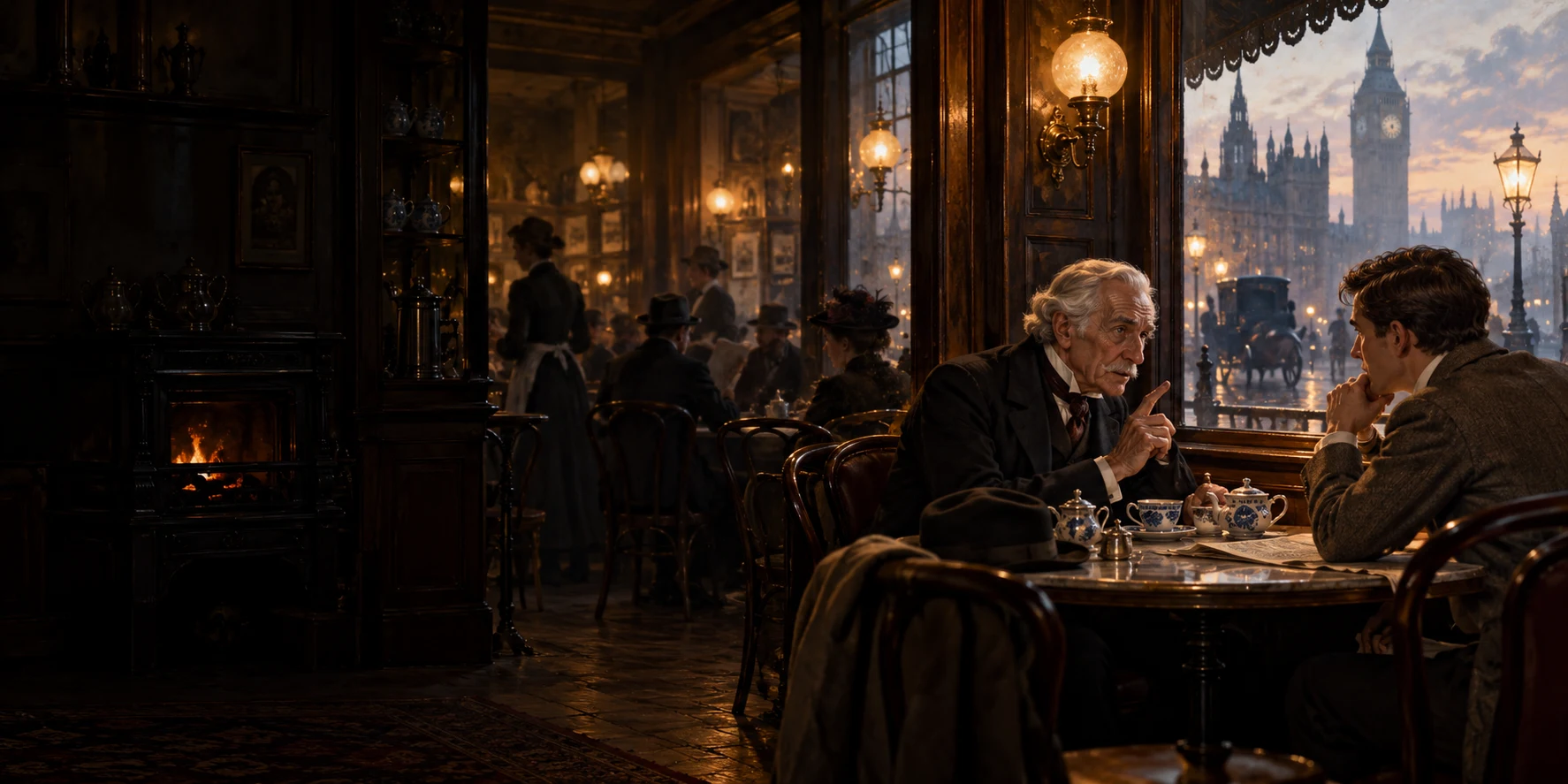
He has no name. He sits at the same marble-topped table in an A.B.C. tea-shop, drinks milk, eats cheesecake, and fidgets endlessly with a piece of string, tying it into ever more elaborate knots while he explains to a young woman journalist exactly how the police have got it wrong. Baroness Orczy called him simply the Old Man in the Corner, and he first appeared in The Royal Magazine in 1901.
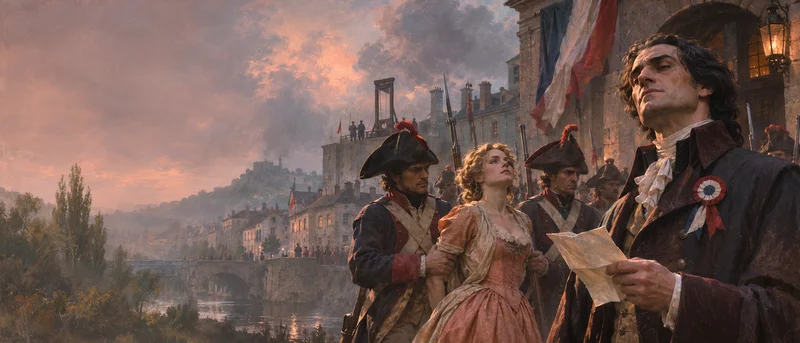
The Pimpernel came later: the play opened in 1903 and the novel was published in 1905. By then her teashop detective had already given her what her first novel had not: a following. If you know the Baroness Orczy books only through Sir Percy Blakeney, her detectives are the other half of the shelf.
Who is the Old Man in the Corner?
He is one of the first armchair detectives, a type that would become a fixture of crime fiction. He never visits a crime scene. He reads the newspaper reports, attends the occasional inquest, and reasons his way to the answer from what everybody else has also seen. His listener, Polly Burton of the Evening Observer, is sceptical, irritated and unable to stay away.
“Mysteries!” he commented. “There is no such thing as a mystery in connection with any crime, provided intelligence is brought to bear upon its investigation.”
Baroness Orczy, The Old Man in the Corner (1909)
What makes the stories unusual is his attitude. He is not interested in justice, only in being right, and he takes an almost childish pleasure in the failures of Scotland Yard. Polly, and the reader, often finish a case knowing the truth while the guilty party walks free. It gives the series a sly, unsettling edge that the more upright detectives of the period lack.

Lady Molly of Scotland Yard
In 1910 Orczy tried something bolder. Lady Molly of Scotland Yard is a book of twelve cases solved by the head of the Yard’s “Female Department”, narrated by her devoted assistant, Mary Granard. It was popular enough to reach a fifth edition within the year. British police forces did not appoint women officers until 1915, so Lady Molly was a detective ahead of the real thing.
Mary is a partisan narrator, and her first page sets the tone. “We of the Female Department are dreadfully snubbed by the men,” she complains, “though don’t tell me that women have not ten times as much intuition as the blundering and sterner sex.” Lady Molly proves her right by noticing the domestic details that her male colleagues overlook. We look at her alongside her rivals in Female detectives in classic fiction.
The Baroness Orczy books to start with
The Old Man in the Corner
1909. Twelve cases from London, York, Liverpool, Edinburgh, Dublin and Brighton, all reasoned out over a tea-shop table. Read the stories in order; the last one rewards it.
Lady Molly of Scotland Yard
1910. Twelve investigations by a woman who leads Scotland Yard’s female department, from a village murder in Kent to a castle in Brittany. Brisk, melodramatic and great fun.
The Scarlet Pimpernel
1905. An English fop who seems too foolish to be dangerous smuggles aristocrats out of Revolutionary Paris. The book that made her famous, and one of the great disguise stories.
The Elusive Pimpernel
1908. Sir Percy’s old adversary Chauvelin returns with a new trap, and this time Marguerite is drawn into the danger. A return to the original pair, and the place to go next.



Where do the detectives fit in her career?
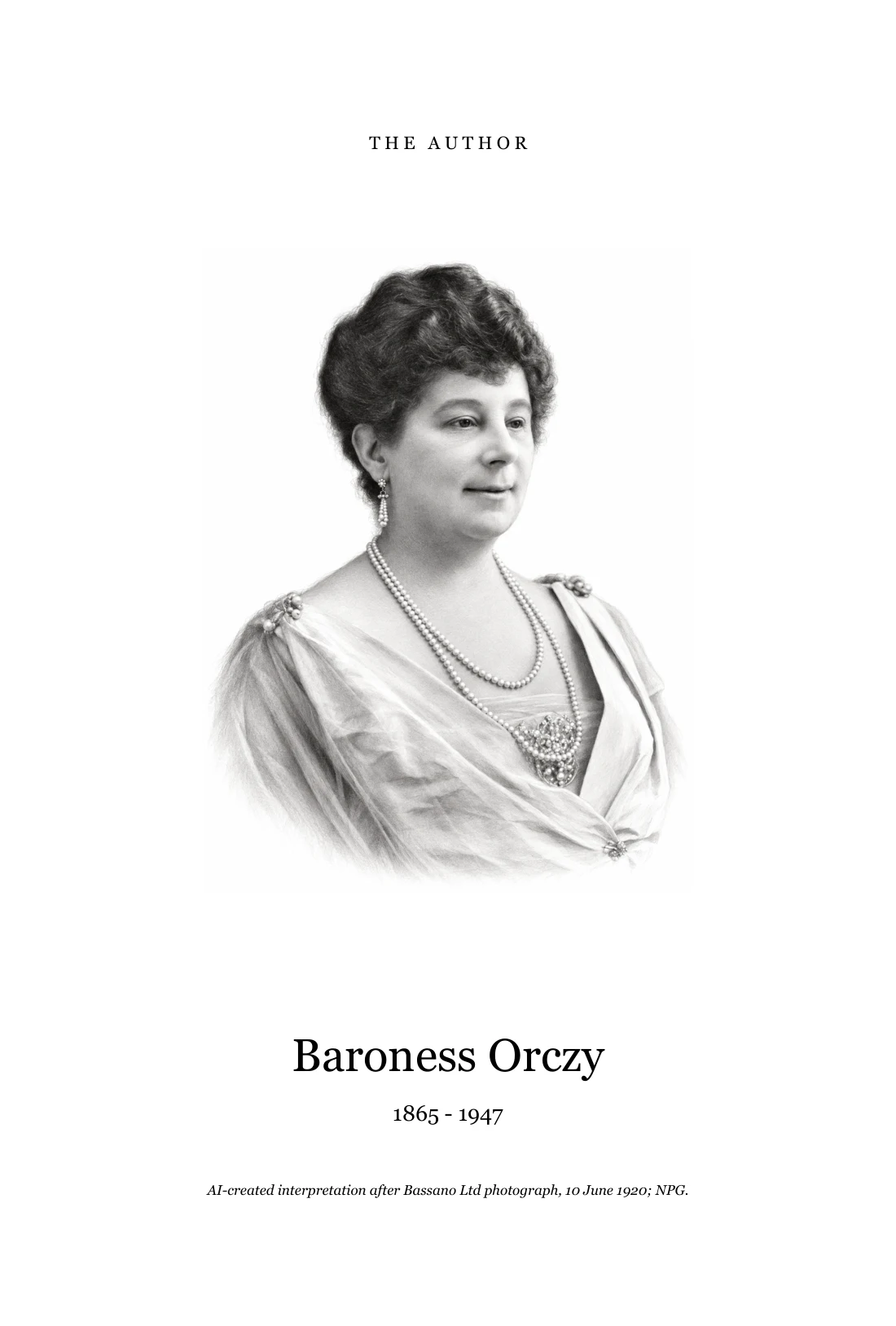
Orczy was born in Hungary in 1865 and came to London with her family at fourteen. She trained as an artist, married the illustrator Montagu Barstow, and began writing after the birth of their son in 1899. Her first novel failed. The detective stories in The Royal Magazine were her first real success, and The Scarlet Pimpernel, which found no publisher until the stage version became a hit, made her rich. The story of that play is told in Did you know The Scarlet Pimpernel was on stage before it was in print?
She never gave up crime. Alongside a long run of Pimpernel sequels she wrote further detective books, among them Skin o’ My Tooth (1928), which gathered stories first written for The Windsor Magazine in 1903, and in 1930 she was one of the founding members of the Detection Club, alongside Agatha Christie and Dorothy L. Sayers.
The Pimpernel is the better-known creation, but the Old Man is the more modern. Both are men who hide a sharp mind behind a foolish manner, and both love to outwit the authorities. The rhyme everyone remembers from the novel, “We seek him here, we seek him there”, could almost be Polly Burton’s complaint about her infuriating companion.
For more of the detectives who followed Arthur Conan Doyle’s lead, see Books like Sherlock Holmes. As for the original armchair reasoner, order a pot of tea and try to beat him to the answer in “The Fenchurch Street Mystery”, the first case in The Old Man in the Corner.
Questions readers ask
What detective did Baroness Orczy create?
She created the Old Man in the Corner, an armchair detective who solves crimes from a London tea-shop, first published in 1901, and Lady Molly of Scotland Yard (1910), one of the earliest female detectives in fiction.
What order should I read the Old Man in the Corner stories in?
Start with The Old Man in the Corner (1909), which collects the earliest stories, then The Case of Miss Elliott (1905) and Unravelled Knots (1925). Within the first book, read the stories in order.
Was Baroness Orczy a member of the Detection Club?
Yes. She was among the founding members of the Detection Club in 1930, with writers including Agatha Christie and Dorothy L. Sayers; G. K. Chesterton was its first president.