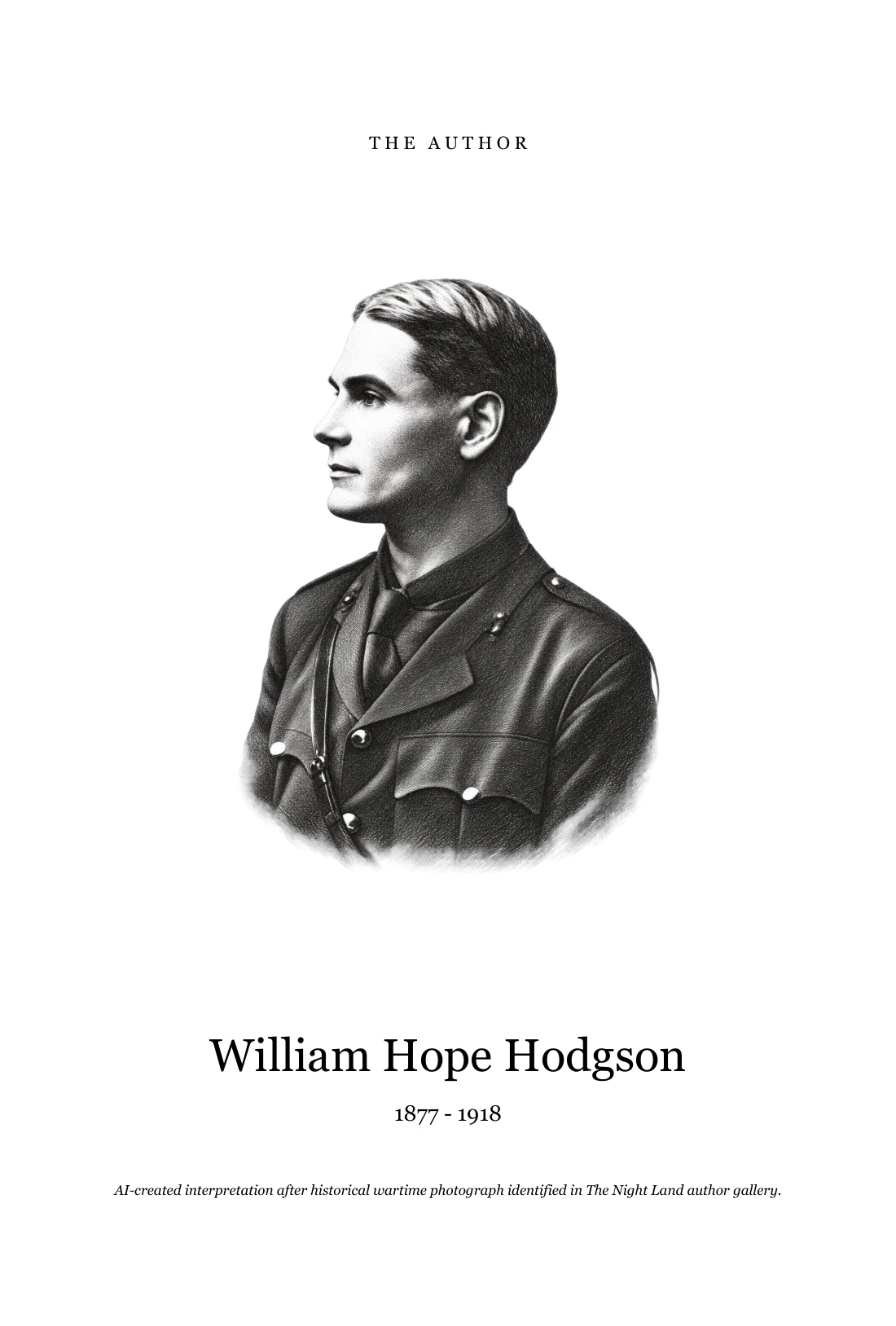
Look at what else came out in 1908. Kenneth Grahame’s The Wind in the Willows. L. M. Montgomery’s Anne of Green Gables. E. M. Forster’s A Room with a View. G. K. Chesterton’s The Man Who Was Thursday, which is strange in its own way, but cheerfully so. And from the publishers Chapman and Hall, a novel by a former merchant seaman called William Hope Hodgson that began as a fishing trip and ended somewhere beyond the end of time.
The House on the Borderland is not the best-known novel of its year, but it has a fair claim to be the strangest. In a short book it shifts from a ghost story to a siege, then to a vision of cosmic time that few novels of any decade have dared. Then it closes back down into a single room and a single, horrible night.
What is The House on the Borderland about?
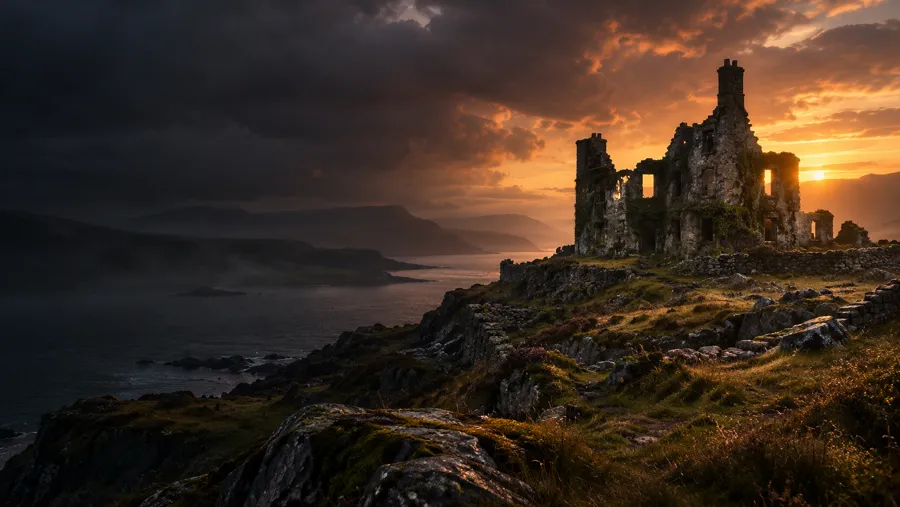
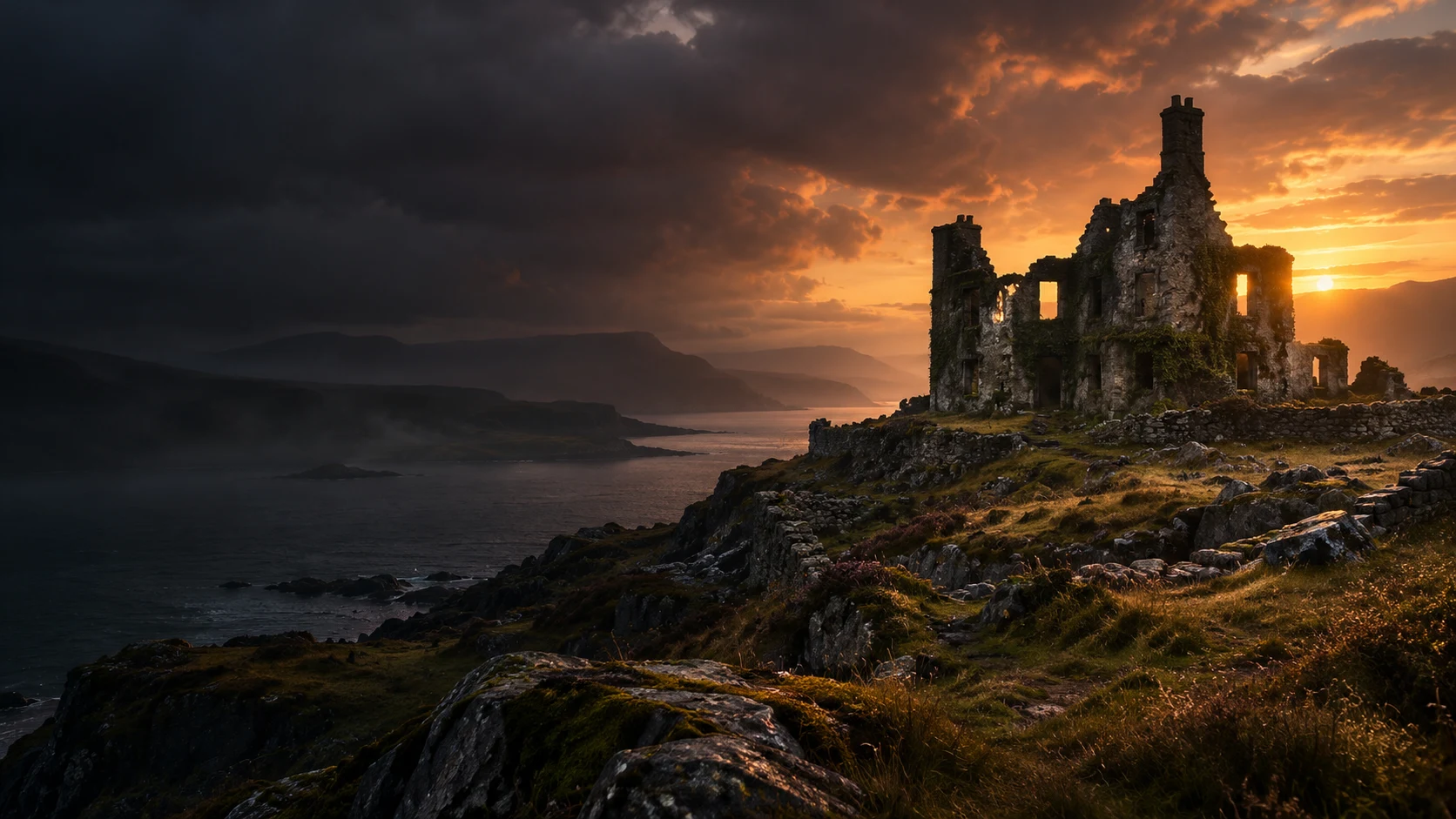
Two friends, Tonnison and Berreggnog, take a fishing holiday near the tiny village of Kraighten in the west of Ireland. Exploring the river, they find a great chasm and, on a spur of rock above it, a few ruins. In the ruins is a battered, damp notebook. They sit down and read it, and the rest of the novel is that manuscript.
I am an old man. I live here in this ancient house, surrounded by huge, unkempt gardens. The peasantry, who inhabit the wilderness beyond, say that I am mad.
William Hope Hodgson, The House on the Borderland, “The Plain of Silence”
The writer, known only as the Recluse, lives alone with his sister and his dog, Pepper, in a house with an evil name. One night the candles burn green and then red, and he is carried in spirit to a vast plain ringed by mountains, where an immense copy of his own house stands in an arena, ringed by mountains carved with monstrous gods. Back at home, pallid pig-faced creatures climb out of a pit in the grounds and lay siege to the house. He fights them off with his gun.
That would be enough for most novels. Hodgson is barely halfway through.
Why is it so strange?
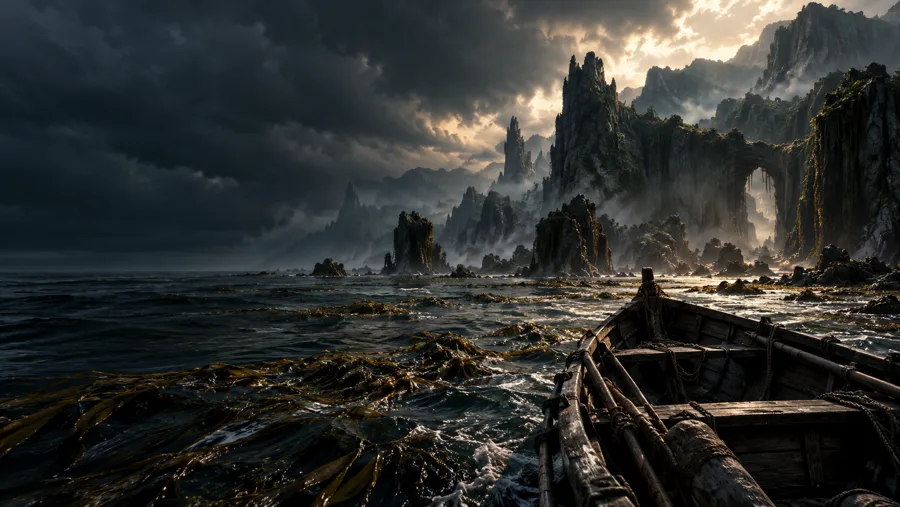
Because of what happens next. Sitting at his window one night, the Recluse notices that time is speeding up. Days pass in minutes, then in seconds. The sun becomes a streak across the sky, the house decays around him, and his faithful dog crumbles into dust. He goes on watching, through millions of years, until the sun itself goes dark and a vast green star rises over the dead solar system. The chapter titles alone tell the story: “The Slowing Rotation”, “The Green Star”, “The End of the Solar System”, “The Dark Sun”.
Hodgson wrote this in the age of steamships and gaslight, and he wrote it without any of the scientific apparatus of H. G. Wells’s time traveller. There is no machine and no explanation. A lonely old man simply stays in his chair while the universe runs down in front of him, and then, somehow, finds himself back in his study, on an ordinary night, with something coming up from the cellar.
Who was William Hope Hodgson?
Hodgson was born in Essex in 1877 and ran away to sea at thirteen. He was brought back, but later served a four-year apprenticeship as a cabin boy and spent years as a sailor, winning a Royal Humane Society medal in 1898 for rescuing a shipmate from shark-infested waters off New Zealand. Back on land he opened a physical culture school in Blackburn, and in 1902 famously handcuffed the escapologist Harry Houdini on stage, so tightly that Houdini complained of being injured.
He turned to fiction in 1904 and wrote fast: four novels between 1907 and 1912, sea stories by the dozen and the cases of Carnacki, a detective of the supernatural. He joined up in the First World War, was commissioned in the Royal Artillery, and was killed by a shell near Ypres in April 1918, aged forty.
Who has admired it?
Its reputation has been carried mainly by other writers. H. P. Lovecraft came across Hodgson’s novels in 1934 and praised them at length in his study of supernatural fiction. Clark Ashton Smith admired him too. And Terry Pratchett, writing about it for the 1988 anthology Horror: 100 Best Books, described the novel as the starting point of his own universe as a reader, and later writer, of science fiction and fantasy.
The House on the Borderland
1908. A haunted house, a siege by swine-things and a journey to the death of the sun, all inside one recluse’s diary. Hodgson’s most concentrated nightmare.
The Boats of the Glen Carrig
1907. Hodgson’s first novel. Shipwreck survivors in two lifeboats drift past a land of sobbing cries into a weed-choked sea where giant crabs are only one of the dangers.
The Night Land
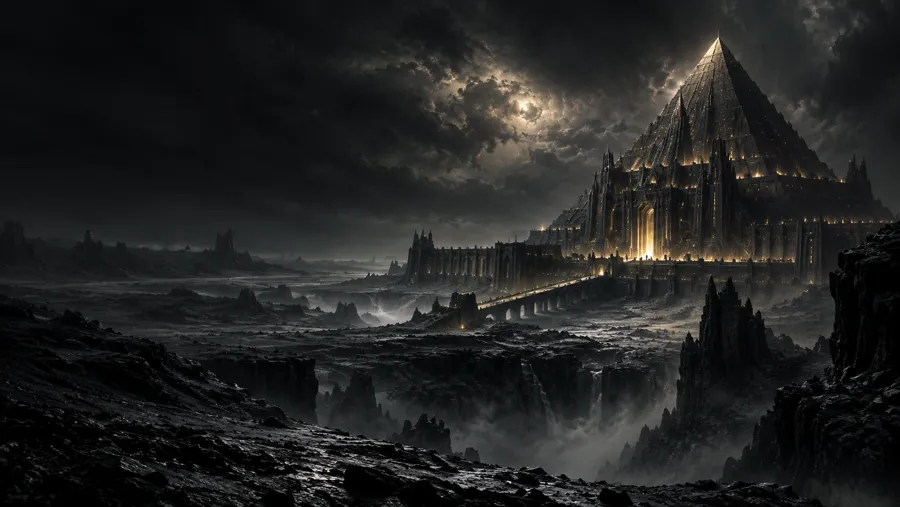
1912. Millions of years ahead, the sun has gone out and the last humans shelter in the Last Redoubt, a gigantic metal pyramid. Long, eccentric and unforgettable, in an invented archaic style.


Further down the borderland
Hodgson’s whole career is the subject of William Hope Hodgson: sea horror and the Night Land. For the writer who championed him, see Did you know The Call of Cthulhu was first rejected by Weird Tales? and The authors who influenced H. P. Lovecraft, and for more in the same uneasy vein, Weird fiction before Lovecraft. Another 1908 book with an island and a mystery at its heart is in The Blue Lagoon: the novel behind the film, though you will find it rather gentler.
Start with the fishing trip. Open The House on the Borderland, follow the two friends down to the river, and wait for the candles to change colour.
Questions readers ask
What is The House on the Borderland about?
Two men on holiday in the west of Ireland find a manuscript in some ruins. It is the diary of a recluse whose house is besieged by pig-like creatures from a pit, and who experiences visions of other worlds and of the end of the solar system.
When was The House on the Borderland published?
It was published in 1908 by Chapman and Hall in London. It was William Hope Hodgson’s second novel, after The Boats of the Glen Carrig in 1907.
Did Lovecraft like William Hope Hodgson?
Yes. H. P. Lovecraft discovered Hodgson’s novels in 1934 and praised The House on the Borderland and his other work at length in his essay on supernatural horror.
Is The House on the Borderland scary?
In places, very. The siege by the swine-things and the final chapters are genuinely frightening, but the long middle section is closer to awe than terror.