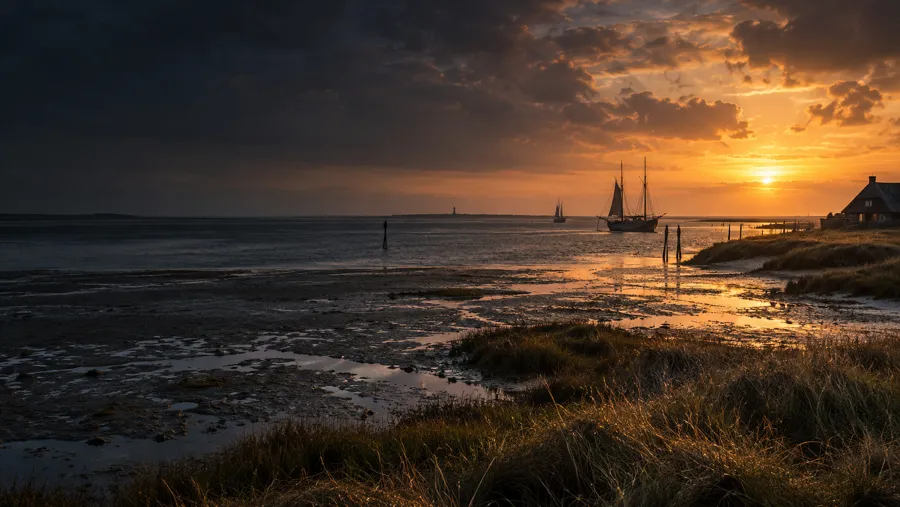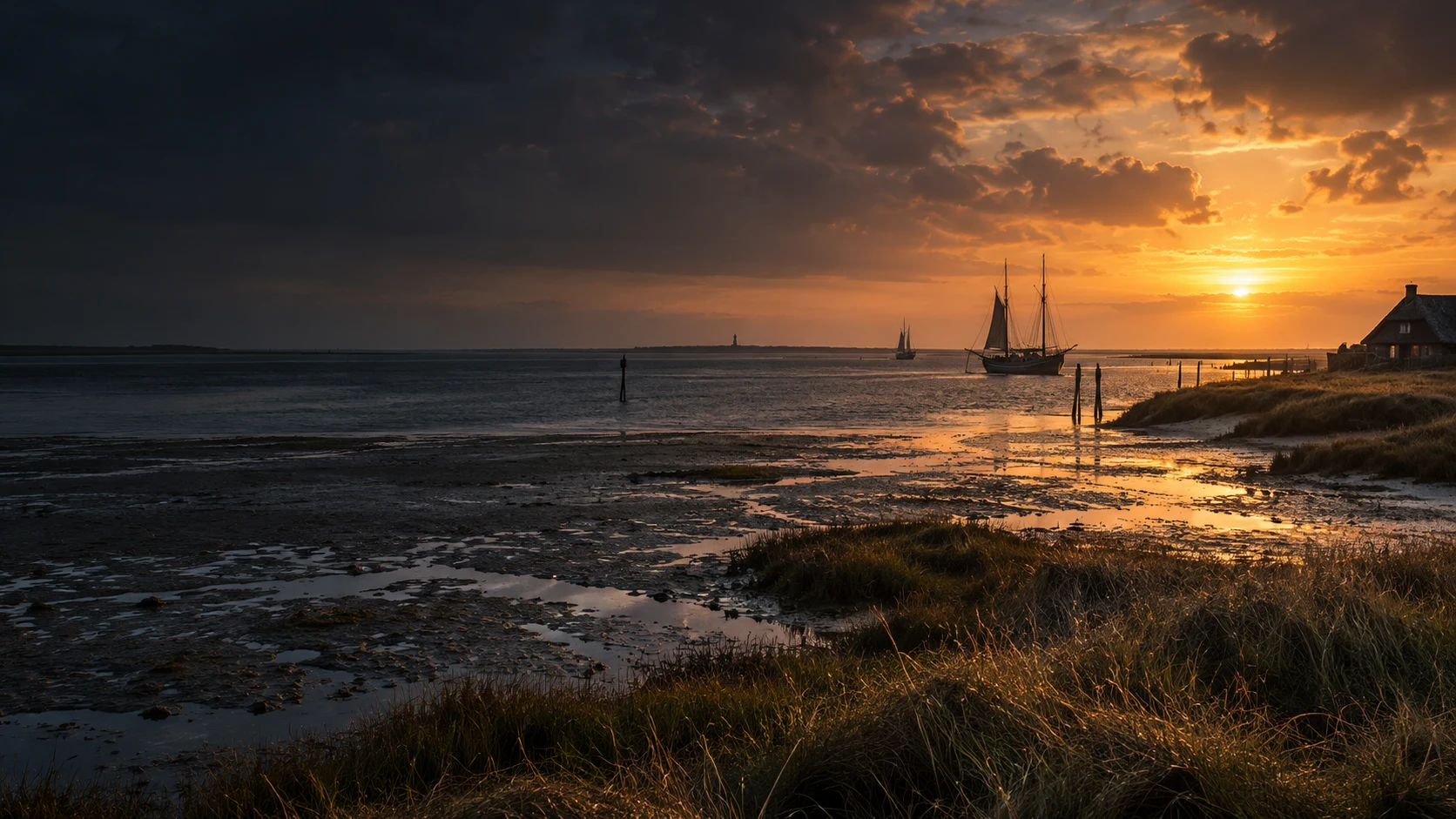
Did a novel really change British naval policy? That is one of the claims most often made for The Riddle of the Sands, and the honest answer is: not quite, though it tried very hard. Erskine Childers published it in May 1903 as a warning that Britain’s North Sea coast lay open to a German surprise attack, and he wrapped that warning in one of the best sailing adventures ever written.
Childers described it as a story with a purpose, and the purpose is never hidden. The book has a preface by a fictional “editor”, an epilogue setting out the invasion plan in sober detail, and a postscript dated March 1903 that comments on what the government had done while the book was being printed.
What is The Riddle of the Sands about?
Carruthers, a bored young man with a promising future in the Foreign Office, is stuck in London in September when everyone fashionable has left. A letter arrives from Davies, an old acquaintance, inviting him to the Baltic for some sailing and duck-shooting. Carruthers expects a comfortable yacht with a crew. He finds the Dulcibella, a small, cramped boat that Davies sails himself, and an earnest host who seems to have something on his mind.
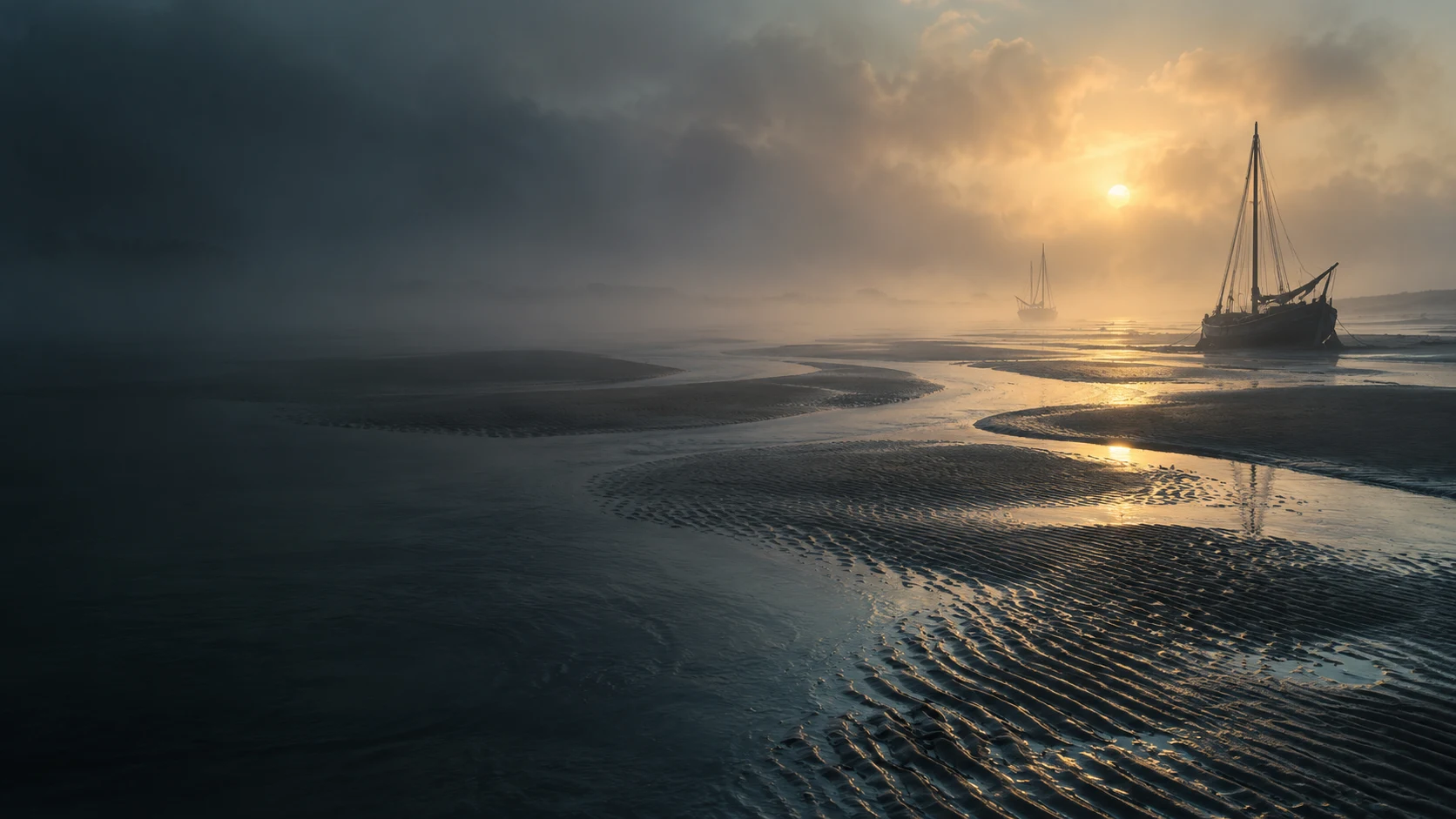
That something is a suspicion. Davies has been charting the shallow channels behind the Frisian Islands off Germany’s North Sea coast, and he believes he was nearly drowned there on purpose. What follows is part detective story and part seamanship manual, as the two men creep among the sands in fog and tide, trying to work out what the Germans are hiding and who is helping them.
Childers knew those waters. He sailed them himself in his own small yacht, the Vixen, and entries from the log of a Baltic cruise in 1897 found their way, almost unchanged, into the novel. The tides, soundings and groundings are real, and they are where much of the suspense lives.
Did The Riddle of the Sands change British naval policy?
This is where the legend outruns the facts. Winston Churchill later credited the book as a major reason the Admiralty set up new naval bases in the north, at Rosyth, Invergordon and Scapa Flow. But the purchase of land for a base at Rosyth on the Firth of Forth was announced in Parliament on 5 March 1903, two months before the novel came out. The book has also been credited with creating the Royal Naval Volunteer Reserve, yet a government committee had already come out in favour of a volunteer reserve before the novel appeared, as Childers’s own postscript notes.
Childers himself knew this. His postscript, written while the book was in the press, notes the new measures — and refuses to be satisfied.
A site on the Forth has been selected for a new North Sea naval base—an excellent if tardy decision; for ten years or so must elapse before the existing anchorage becomes in any sense a “base”.
Erskine Childers, The Riddle of the Sands, Postscript (March 1903)
What the novel did do was put the danger into a form ordinary readers could feel. It made the case for preparedness vividly, at the very moment the government was beginning to act, and Childers’s biographer Andrew Boyle called it a powerful contribution to the debate on British military unpreparedness. Davies, the patriot of the piece, gives the argument in a single breath.
We’re a maritime nation—we’ve grown by the sea and live by it; if we lose command of it we starve.
Erskine Childers, The Riddle of the Sands, Chapter X
The author’s own story
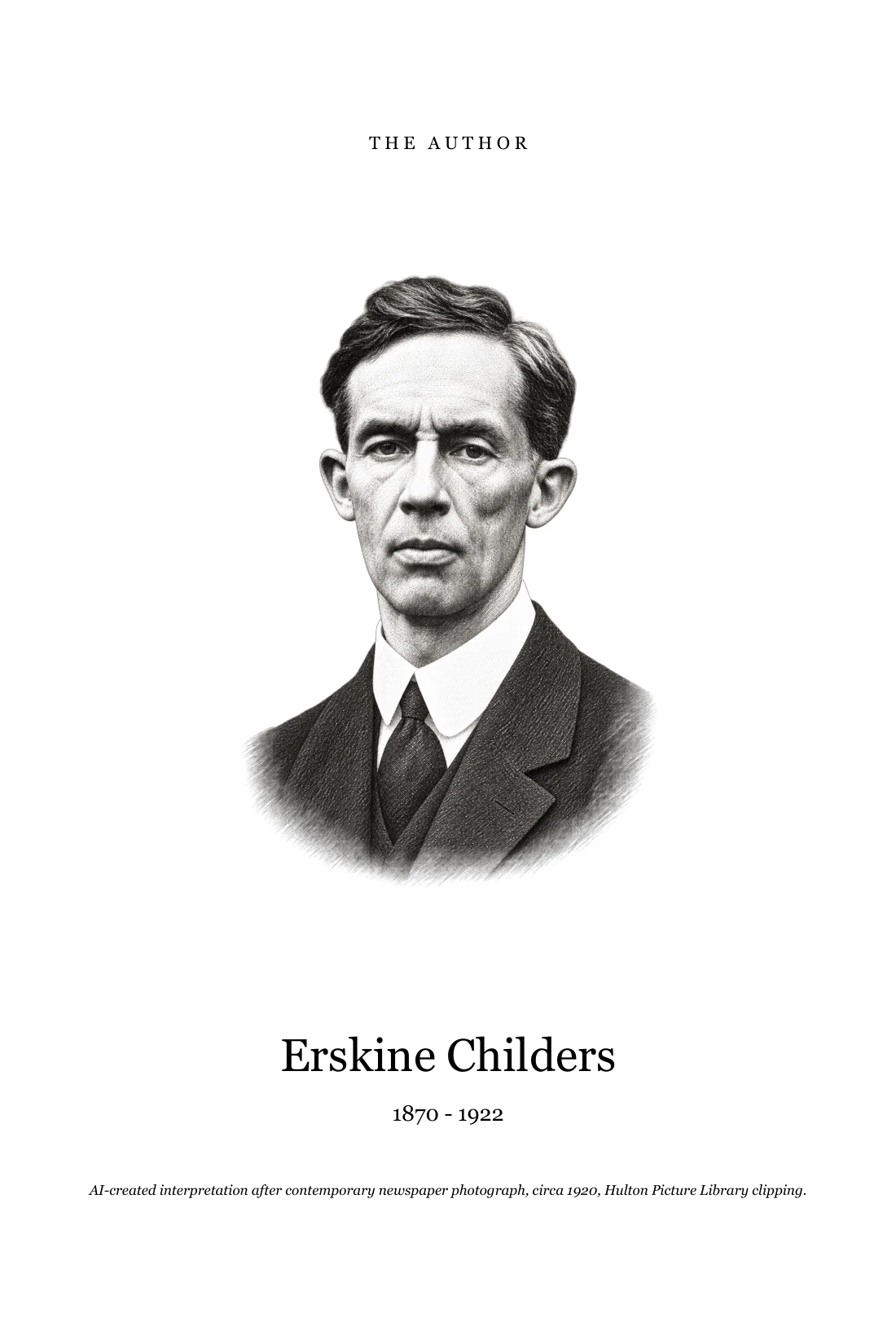
Childers’s life took a turn no reader of 1903 could have imagined. Born in London in 1870 into an Anglo-Irish family, he served in the Boer War and worked as a clerk in the House of Commons. In time he became a committed Irish nationalist and then a republican. During the Irish Civil War he was arrested by the Free State and tried by a military court, and on 24 November 1922 he was executed by firing squad at Beggars Bush Barracks in Dublin. He is said to have shaken hands with each member of the squad first.
His son, Erskine Hamilton Childers, went on to become President of Ireland from 1973 to 1974.
Is The Riddle of the Sands hard to read?
The sailing detail puts some readers off at first, and the opening chapters move at the pace of a small boat in a light wind. Stay with it. Once Carruthers stops complaining and starts learning, the book becomes absorbing, and the charts Davies pores over make the puzzle feel real. It was filmed in 1979 with Michael York as Carruthers and Simon MacCorkindale as Davies.
If you enjoy amateurs blundering into international intrigue, go on to Richard Hannay in order: from The Thirty-Nine Steps to Mr. Standfast and John Buchan. For the classic war stories that followed the invasion scares, see Classic war novels.
Start with Carruthers in his London chambers, dressing for dinner with nowhere to go. One letter later he is bound for the Baltic, and so are you.
Questions readers ask
What is The Riddle of the Sands about?
Two Englishmen sailing a small yacht among the Frisian Islands uncover German preparations for a surprise invasion of England. Erskine Childers published it in 1903 as a warning about British unpreparedness.
Did The Riddle of the Sands lead to new naval bases?
Churchill later credited it with influencing the Admiralty, but the Rosyth base was announced in March 1903, before the novel was published in May. The book helped keep the issue in the public eye rather than causing the decision.
Is The Riddle of the Sands the first spy novel?
It is often described as one of the first modern spy novels and it has been hugely influential in spy fiction.
What happened to Erskine Childers?
Childers became an Irish republican and was executed by the Irish Free State on 24 November 1922, during the Irish Civil War.