Picture the book as its first readers met it: three volumes from Smith, Elder & Co. of London, and on the title page the words Jane Eyre. An Autobiography. Edited by Currer Bell. No “novel”, no “a tale”, no author in the ordinary sense. Whoever Currer Bell was, he or she was presenting the text as the memoir of a real woman, simply prepared for the press.
So the answer to the question of Jane Eyre’s original title is Jane Eyre: An Autobiography, and the book still carries that subtitle in many editions today. It was, of course, a novel, written by Charlotte Brontë at the parsonage in Haworth. But the frame was chosen with care, and it explains a great deal about why the book struck its readers so hard.
Jane Eyre’s original title: why “an autobiography”?
Partly because that is exactly what it reads like. Jane narrates everything herself, from the age of ten, locked in the red-room at Gateshead, to the end of the book, when she writes that she has “now been married ten years”. There is no narrator above her, no wiser voice to correct her. We see only what she sees and judge only through her.
Partly because the device was an old and respectable one. English fiction had long dressed itself as true testimony. The first edition of Robinson Crusoe in 1719 claimed on its title page to be “Written by Himself”, and the pretence that a story was a found document or a real memoir lent it authority. Brontë’s “Edited by” put her one step behind her heroine, as if she had merely corrected the spelling.
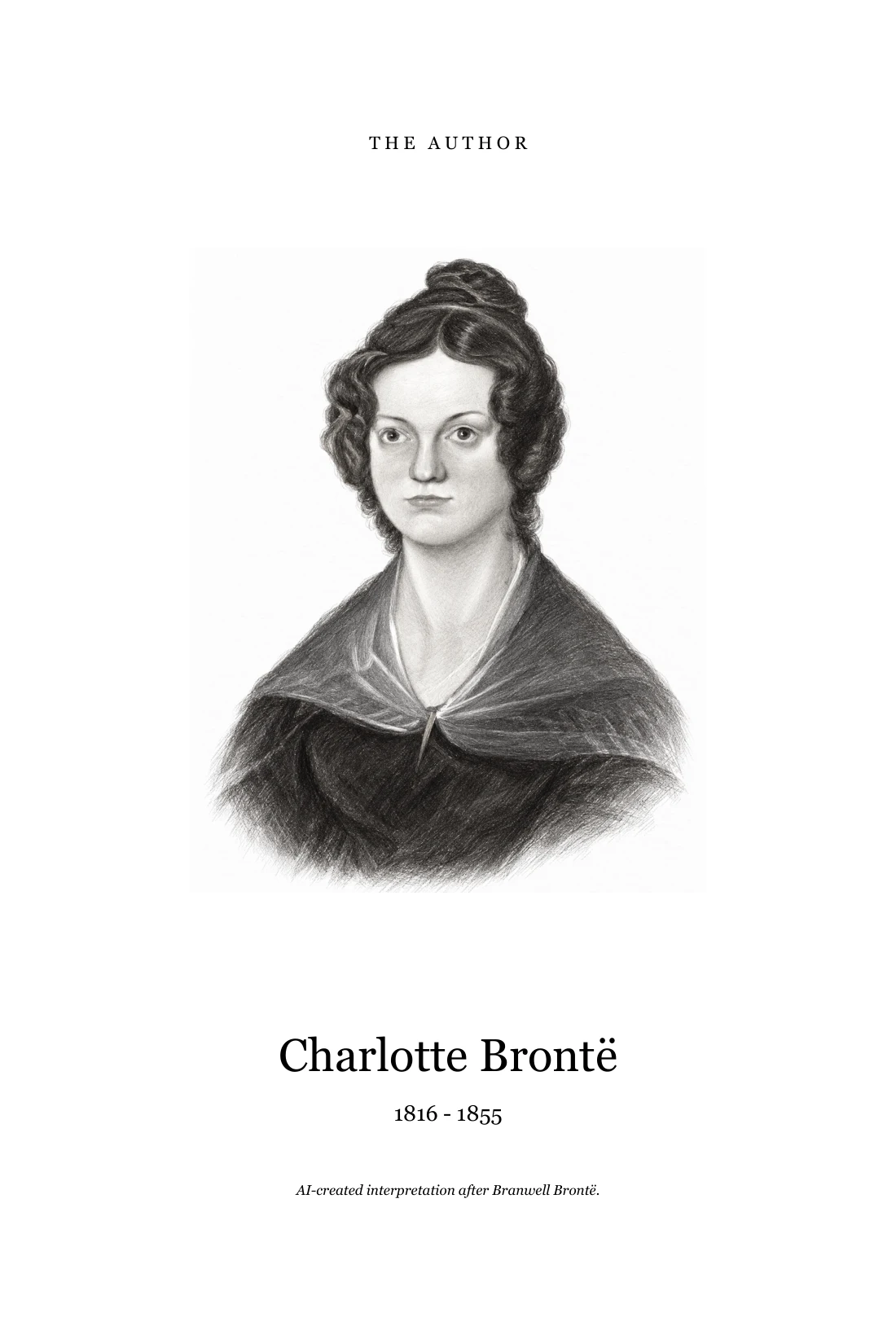
And partly because of the pseudonym. The sisters had already chosen to publish as Currer, Ellis and Acton Bell to keep their sex and their lives private. Calling the book an autobiography edited by Currer Bell gave a second veil: the voice belonged to Jane, and the person behind it was not even claiming to have invented her.
Was any of Jane Eyre really autobiographical?
More than Brontë let on at the time. Lowood, the charity school where Jane is starved and frozen, was modelled on the Clergy Daughters’ School at Cowan Bridge, where Charlotte and her sisters were sent as small girls. Her two eldest sisters, Maria and Elizabeth, fell ill there and died at home in 1825. The pious, penny-pinching Mr Brocklehurst is generally taken to be a portrait of the clergyman who ran it, the Reverend William Carus Wilson.
Charlotte’s friend and first biographer, Elizabeth Gaskell, was in no doubt about the most painful of these borrowings. Helen Burns, Jane’s gentle friend at Lowood, “is as exact a transcript of Maria Bronte as Charlotte’s wonderful power of reproducing character could give.” Brontë had also worked as a governess, and she knew what it was to be a clever, plain, poor young woman in a world that did not want to hear from one.
Do you think, because I am poor, obscure, plain, and little, I am soulless and heartless?
Charlotte Brontë, Jane Eyre, chapter XXIII
How did readers react?
The book was an immediate success, and the autobiographical frame was part of the shock. Reviewing it, the critic George Henry Lewes wrote that “it reads like a page out of one’s own life”. Others were alarmed by the same intimacy. In the Quarterly Review, Elizabeth Rigby called it “pre-eminently an anti-Christian composition”, troubled by a heroine who insists, in her own voice, on the worth of her own feelings.
Brontë answered the doubters in the preface to the second edition, dated December 1847. “Conventionality is not morality,” she wrote. “Self-righteousness is not religion.” She dedicated that edition to William Makepeace Thackeray, whose Vanity Fair she admired, and in a note to the third edition in April 1848 she explained that her “claim to the title of novelist” rested on Jane Eyre alone. Whatever else rumour was crediting to Currer Bell, it was not hers.
Jane Eyre
1847. An orphan’s life from the red-room to Thornfield and beyond, told in a voice that argues with you. A voice that made the first-person novel feel newly dangerous.
Villette
1853. Brontë’s last finished novel returns to the first person, but its narrator, Lucy Snowe, is guarded and evasive where Jane is candid. Drawn from Charlotte’s own lonely years in Brussels.
The Professor
Written before Jane Eyre and rejected by publishers, published only after Brontë’s death. A male teacher narrates his own Brussels story, a first try at the voice she perfected.


Read more about the Bells
The story of the three Bells is told in full in Did you know the Brontë sisters first published as Currer, Ellis and Acton Bell?, and the critics’ very different response to Emily’s novel in Did you know Wuthering Heights baffled its first reviewers?. For the rest of Charlotte’s work, see Charlotte Brontë’s four novels, in order, and if you want to plan your reading, How long is Jane Eyre?.
Then read it as the first buyers did, as a woman’s own account of her life. Open Jane Eyre at the first line, “There was no possibility of taking a walk that day”, and let her tell it.
Questions readers ask
What was the original title of Jane Eyre?
Jane Eyre: An Autobiography. The first edition of October 1847 presented the book as “edited by Currer Bell”, the pen name Charlotte Brontë used.
Is Jane Eyre a real autobiography?
No, it is a novel. But Charlotte Brontë drew on her own life, especially for Lowood School, which was based on the school at Cowan Bridge where two of her sisters fell fatally ill.
Why did Charlotte Brontë use the name Currer Bell?
She and her sisters chose sexually ambiguous pen names to protect their privacy and to avoid the prejudice they expected critics to show towards women writers.
 Shirley590 pages · $25.99