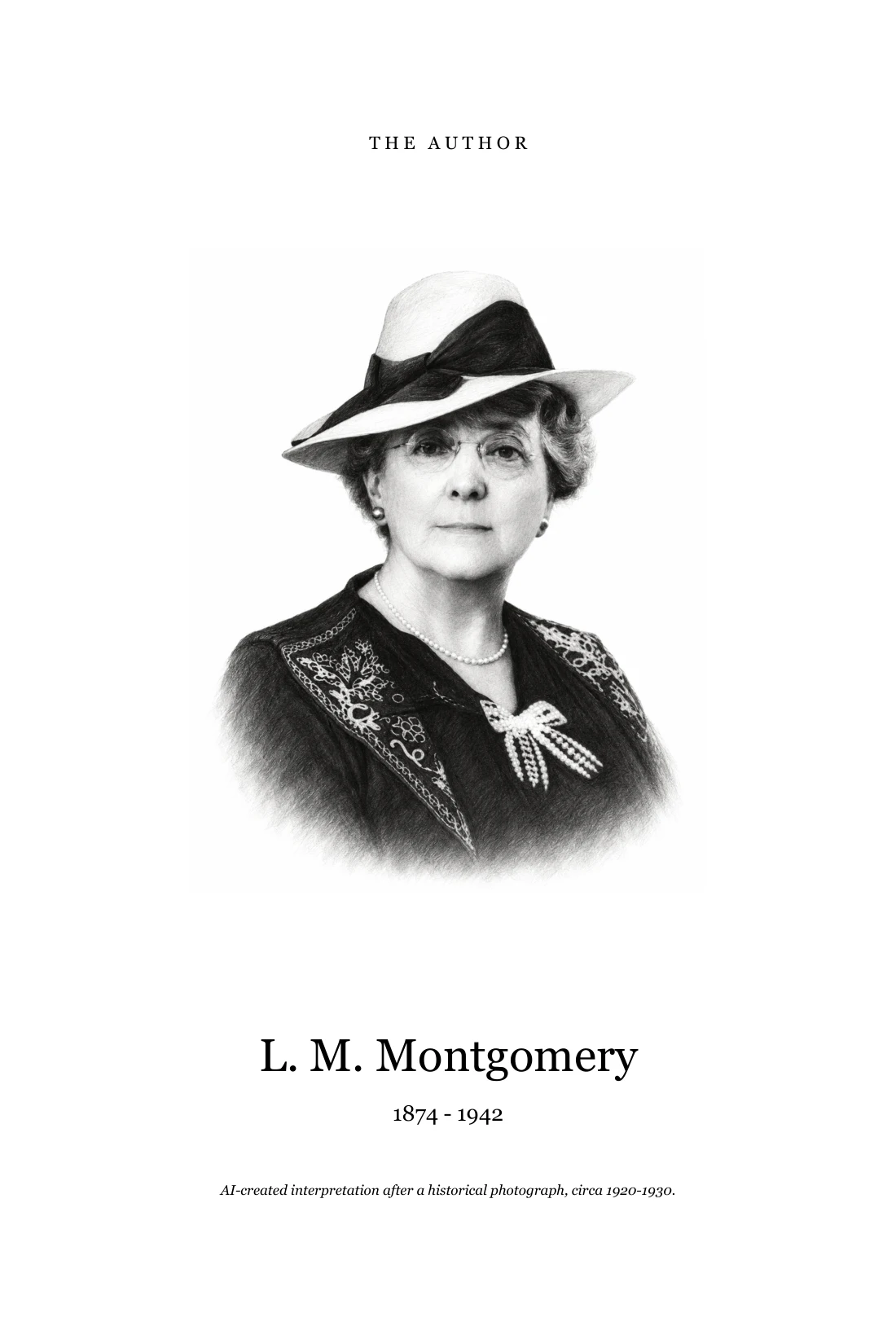
The Golden Road is dedicated to someone most readers have never heard of: “Aunt Mary Lawson who told me many of the tales repeated by the Story Girl.” It is a small acknowledgement with a large meaning. The ghost stories, family scandals and old-country legends that Sara Stanley tells in these two books were, at least in part, stories L. M. Montgomery had heard as a girl herself, retold for a new audience.
The pairing is simple. The Story Girl came out in 1911 and its sequel, The Golden Road, in 1913. There are no more. Montgomery took the same group of children through a year and a half on a Prince Edward Island farm and then let them grow up and scatter.
What is The Story Girl about?
One May morning, thirteen-year-old Beverley King and his younger brother Felix leave Toronto to spend a long stay on the old King homestead at Carlisle, while their father travels for business. Waiting for them are their cousins Felicity, Cecily and Dan; the hired boy, Peter Craig; a tearful neighbour, Sara Ray; and their fourteen-year-old cousin Sara Stanley, whom everyone calls the Story Girl.
She is not pretty, Beverley notes, especially next to the beautiful and capable Felicity. But when she begins to talk, nobody looks anywhere else. Across a summer and autumn she tells the cousins about the legends of the old orchard, the proud princess who married Death, a ghostly bell and a great deal more, while the children quarrel, dread the measles, wonder what is shut up in Cousin Rachel Ward’s blue chest and try to discover what God looks like.
Beverley tells it all as a grown man looking back, and the books are full of that double vision: the children’s jokes and disasters on the surface, an adult’s tenderness underneath.
“Once upon a time we all walked on the golden road. It was a fair highway, through the Land of Lost Delight; shadow and sunshine were blessedly mingled, and every turn and dip revealed a fresh charm and a new loveliness to eager hearts and unspoiled eyes.”
Foreword, The Golden Road (1913)

The Golden Road: the sequel to The Story Girl
The Golden Road begins on a wild November evening around the kitchen fire, when the cousins decide to produce their own newspaper. Our Magazine, with its etiquette column, its personals and its fiercely contested fiction, runs through the book and gives Montgomery a perfect excuse for parody. Dan is put in charge of etiquette and announces he can do it as well as “that idiot in the Family Guide”; the Story Girl is to supply personals for every issue, inventing them if need be, while Felicity is soothed with the household department. Winter brings new characters and a run of comic catastrophes, and spring brings change.
It is the more wistful of the two. The Story Girl’s absent father, an artist who lives in Europe, is a growing presence, and by the end of the book childhood is clearly over. The final chapters, which we will leave you to read, are among the most affecting pages Montgomery wrote.
- $15.99
The Story Girl
1911. A summer on the King farm, seen through the eyes of a boy from Toronto. Episodic and very funny, with Sara Stanley’s tales threaded between the children’s own adventures.
- $14.99
The Golden Road
1913. The following year, from a stormy November to the next autumn. The cousins start a newspaper, a winter passes, and the golden road of childhood reaches its end.


Should you read The Story Girl before The Golden Road?
Yes. The second book picks up where the first leaves off and introduces nobody you need to know already, but it assumes you care about the cousins, their feuds and their private jokes. Read alone, The Golden Road’s ending loses much of its force.
Why are these books less famous than Anne?
Partly because there is no single heroine to follow through a lifetime. The Story Girl is the centre of attention but not the narrator, and Montgomery never wrote her adult life. Partly, too, because the books are gentle and episodic, closer to a collection of linked stories than a novel with one plot.
In her 1917 memoir, The Alpine Path, Montgomery called The Story Girl “my own favourite among my books”. She wrote it around 1910, the last book she wrote in her old home in Cavendish before her marriage and move to Ontario, and the book has the quality of something written in farewell to a place.
What to read next
If the King cousins win you over, Montgomery’s story collections share their mood; see Chronicles of Avonlea for the best of them, and Beyond Anne: L. M. Montgomery’s other heroines for Emily, Valancy and the rest. And for the girl who started it all, the Anne of Green Gables books in order.
The Story Girl’s first recorded words, quoted on the opening page, are about roads: she likes them because you can always wonder what is at the end. Start at the beginning of hers with The Story Girl.
Questions readers ask
What is the sequel to The Story Girl?
The Golden Road, published in 1913. It follows the same cousins through the following year on the King farm and is the only sequel.
Is The Story Girl connected to Anne of Green Gables?
No. The Story Girl and The Golden Road have their own characters and are set in Carlisle, not Avonlea. The television series Road to Avonlea combined them with Anne’s world.
Who is the Story Girl?
Sara Stanley, a fourteen-year-old cousin of the narrator, Beverley King. She is famous among the children for her gift for telling stories, many drawn from family history and old legends.
 Anne of Green Gables258 pages · $15.99
 The Blue Castle212 pages · $14.99
 Anne of Avonlea244 pages · $15.99
 Anne of the Island228 pages · $14.99