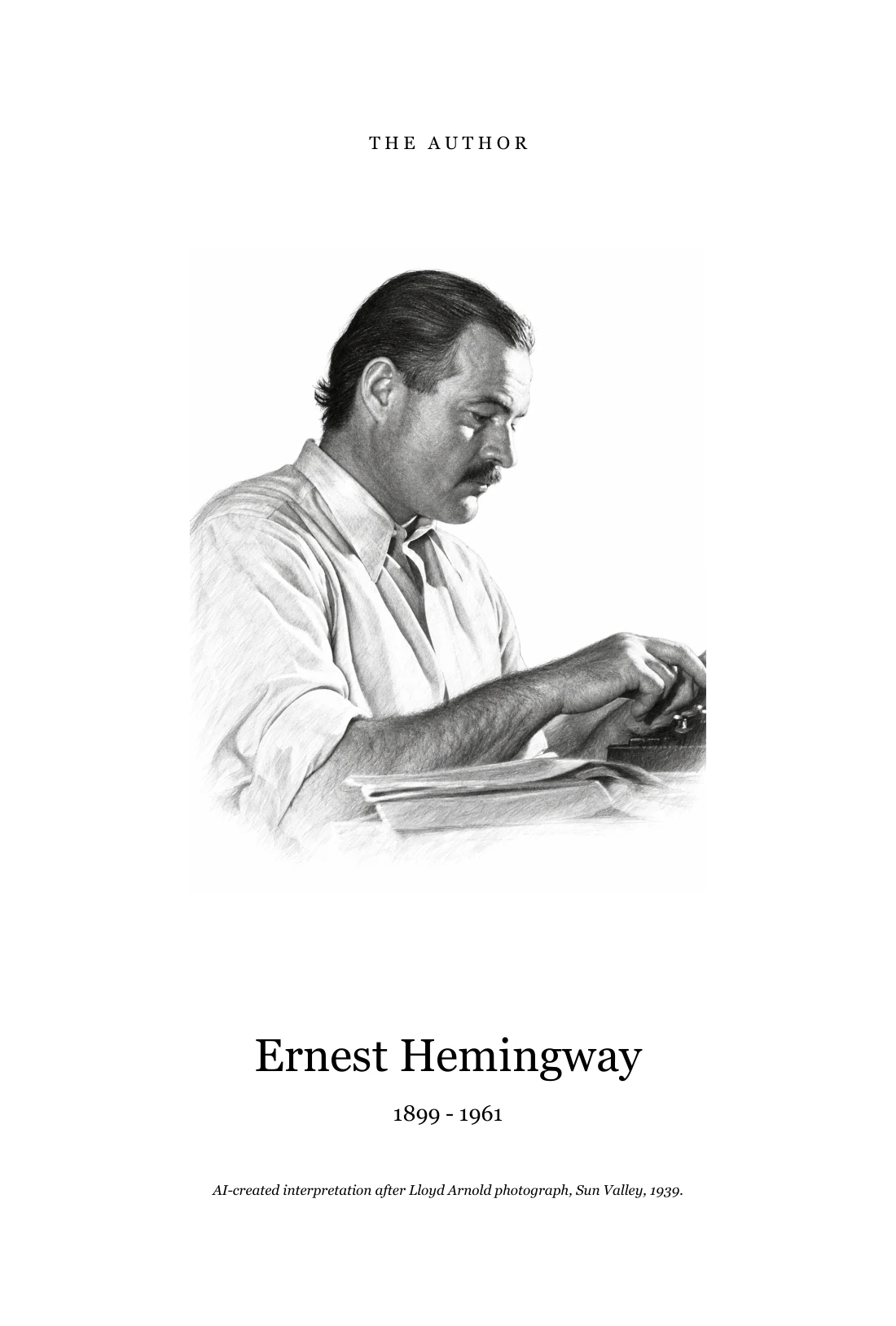
Almost everything in The Sun Also Rises had happened, more or less, to Hemingway and his friends in the summer of 1925, and several of those friends were not pleased to recognise themselves. He began writing it on his twenty-sixth birthday, 21 July, a few days after leaving the bullfighting festival in Pamplona, and had a full draft by 21 September.
It is usually described as Ernest Hemingway’s first novel, with one footnote. In May 1926, five months before it appeared, Scribner’s published The Torrents of Spring, a short comic parody of Sherwood Anderson that Hemingway wrote in about ten days. Most readers treat that as a squib, and The Sun Also Rises, published on 22 October 1926, as the real beginning. Three years later A Farewell to Arms became his first bestseller.
- July 1918
Working as a Red Cross ambulance volunteer, Hemingway is badly wounded by a mortar shell at Fossalta di Piave, Italy.
- 1918
In hospital in Milan he falls for Agnes von Kurowsky, an American nurse.
- July 1925
He goes to the San Fermín festival in Pamplona with a party of friends, then starts writing.
- May 1926
The Torrents of Spring, a parody novella, is published by Scribner’s.
- Oct 1926
The Sun Also Rises is published in New York; it appears in London in 1927 as Fiesta.
- May–Oct 1929
A Farewell to Arms is serialised in Scribner’s Magazine, and the book follows on 27 September.
The Sun Also Rises: Hemingway’s first major novel
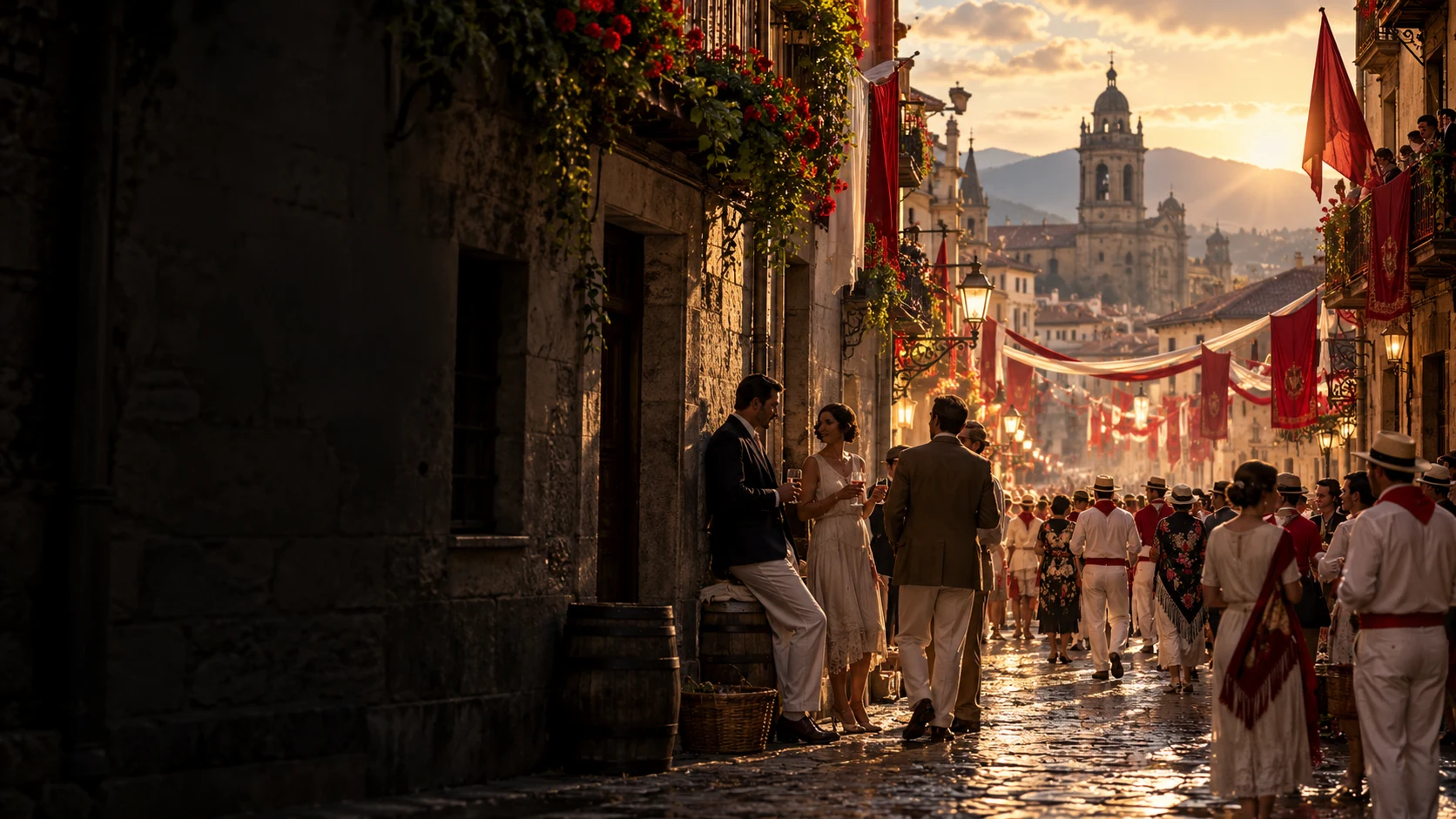
The narrator, Jake Barnes, is an American newspaperman in Paris, carrying a war wound that has made love impossible for him. He is in love anyway, with Lady Brett Ashley, who is engaged to someone else and fascinated by everyone. The two of them, with a drifting group of drinkers and hangers-on, travel to Spain for the fishing and the fiesta, and the week in Pamplona turns jealous, drunken and violent.
Readers in 1926 recognised the people. Brett was based on Duff, Lady Twysden, and the hapless Robert Cohn on the writer Harold Loeb. The opening line is a perfect sample of the book’s deadpan malice:
Robert Cohn was once middleweight boxing champion of Princeton.
The Sun Also Rises (1926)
What made the novel famous was the style. Short declarative sentences, dialogue stripped of explanation, emotion conveyed by what people order to drink or refuse to say. It sounds easy until you try it, and a generation of writers did. The book carries a line from Gertrude Stein as its epigraph, “You are all a lost generation,” and the phrase has been attached to Hemingway’s contemporaries ever since.
A Farewell to Arms: the war novel
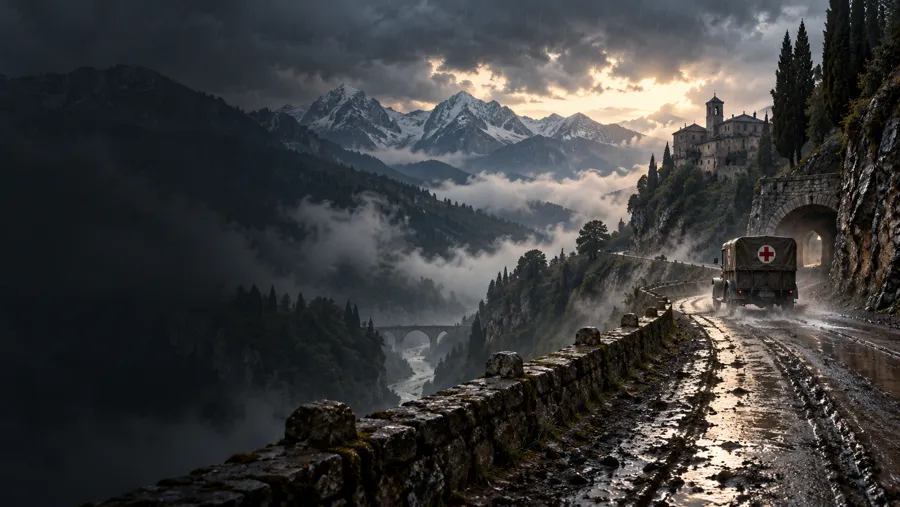
If the first book is about the hangover of the war, the second is the war itself. Frederic Henry is an American lieutenant in the Italian army’s ambulance service. Wounded, he falls in love with an English nurse, Catherine Barkley, and the novel follows them from the hospital in Milan to the long, chaotic Italian retreat after Caporetto and beyond.
Some of it is autobiography. Hemingway was a Red Cross volunteer on the Italian front, he was wounded in July 1918, and Catherine owes something to Agnes von Kurowsky, the nurse he fell for in Milan. The retreat is not: Hemingway did not see it, and built it from reading and research. The opening shows how far his style had come in three years:
In the late summer of that year we lived in a house in a village that looked across the river and the plain to the mountains.
A Farewell to Arms (1929)
He worked on the ending obsessively. Interviewed by The Paris Review in 1958, he said he had rewritten the last page thirty-nine times, and a 2012 edition printed dozens of alternative endings from his manuscripts. Its last page is best met unprepared.
Should you start with The Sun Also Rises or A Farewell to Arms?
- $13.99
The Sun Also Rises
1926. Paris cafés, a Spanish trout stream and a week of bulls and bad behaviour in Pamplona. The book that made Hemingway’s style famous, and the funnier of the two.
- $15.99
A Farewell to Arms
1929. A love affair on the Italian front and one of the great retreat sequences in fiction. Hemingway’s first bestseller, and his most romantic book.


Read them in order. The Sun Also Rises is shorter on plot and longer on atmosphere, and its people are hard to like, which is partly the point. A Farewell to Arms is more conventionally gripping, with a love story at its centre, and many readers find it the more moving book. Read together, they show the same voice applied to peace and to war, and the comparison is half the pleasure.
Both novels reached the screen. A Farewell to Arms was filmed in 1932 with Gary Cooper and Helen Hayes, directed by Frank Borzage, and again in 1957 with Rock Hudson and Jennifer Jones. The Sun Also Rises followed in 1957, with Tyrone Power as Jake and Ava Gardner as Brett.
Who else to read alongside Hemingway
Hemingway’s Paris was full of writers. F. Scott Fitzgerald, who championed him to their shared editor at Scribner’s, is covered in F. Scott Fitzgerald’s early books in order. The writer Hemingway mocked in The Torrents of Spring, Sherwood Anderson, had given him letters of introduction to writers in Paris at the start of his career; see Sherwood Anderson and the small-town story.
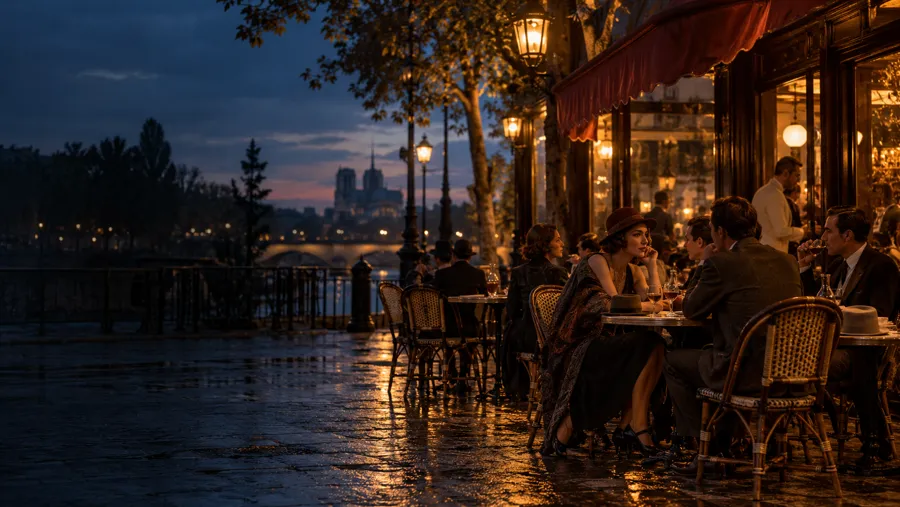
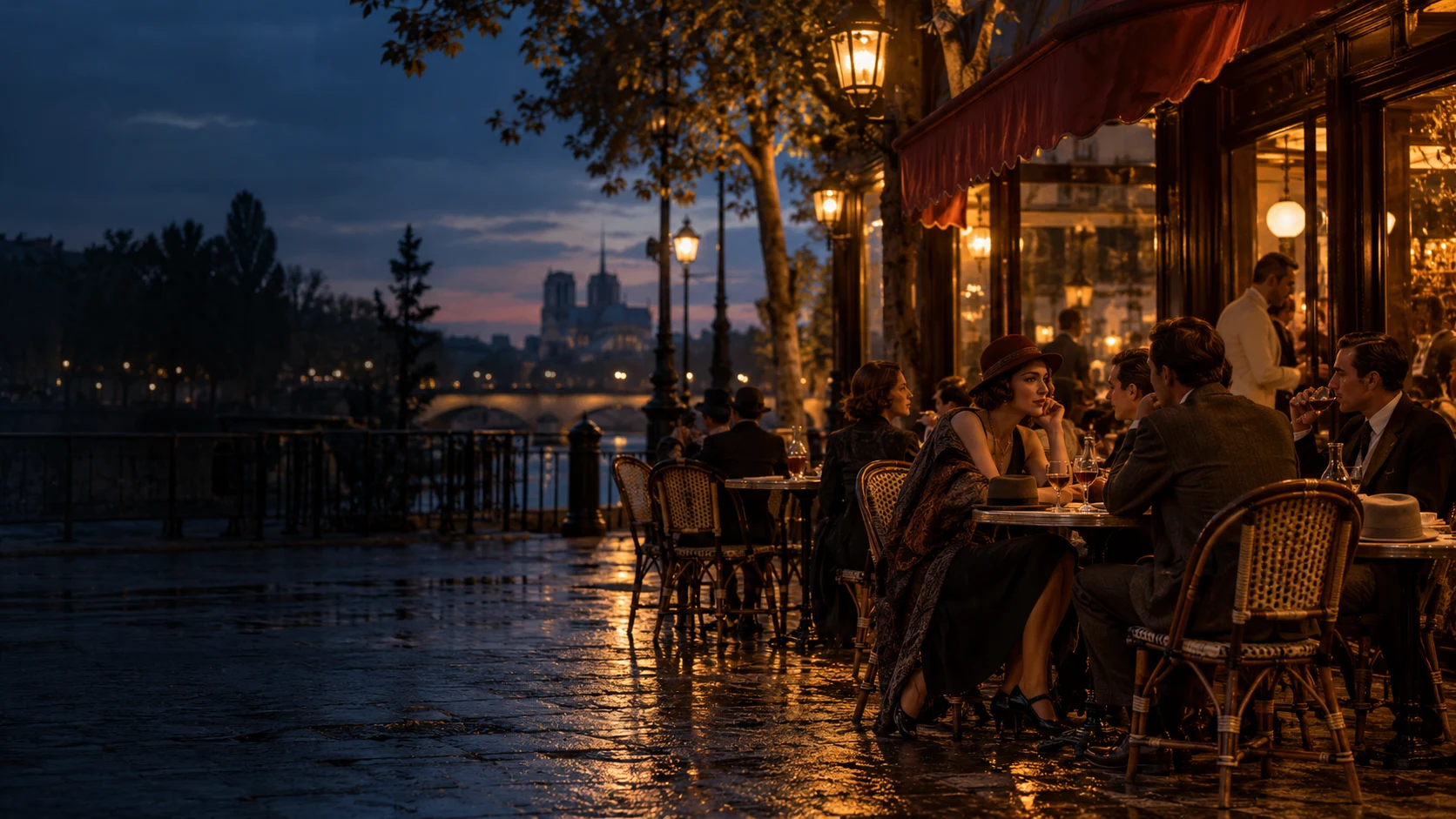
Meet Jake Barnes in a Paris café, with an evening ahead, a drink in hand and a friend who is about to make everything worse. The Sun Also Rises is a short book, and it will change the way you notice sentences.
Questions readers ask
What was Hemingway’s first novel?
The Sun Also Rises (October 1926) is generally regarded as Hemingway’s first full-length novel. He had published the short parody The Torrents of Spring five months earlier, but it is usually classed as a novella.
Is A Farewell to Arms based on a true story?
Partly. Hemingway served as a Red Cross ambulance volunteer in Italy, was wounded in 1918 and fell in love with a nurse in Milan. The retreat from Caporetto, however, was something he researched rather than witnessed.
Should I read The Sun Also Rises or A Farewell to Arms first?
Read The Sun Also Rises first. It came first, it is shorter, and it shows the style in its purest form; A Farewell to Arms then applies it to a war and a love story.
Why is The Sun Also Rises called Fiesta?
Fiesta was the title used for the first British edition, published in London in 1927. It was also Hemingway’s working title while he was writing the book.
 Men Without Women128 pages · $11.99