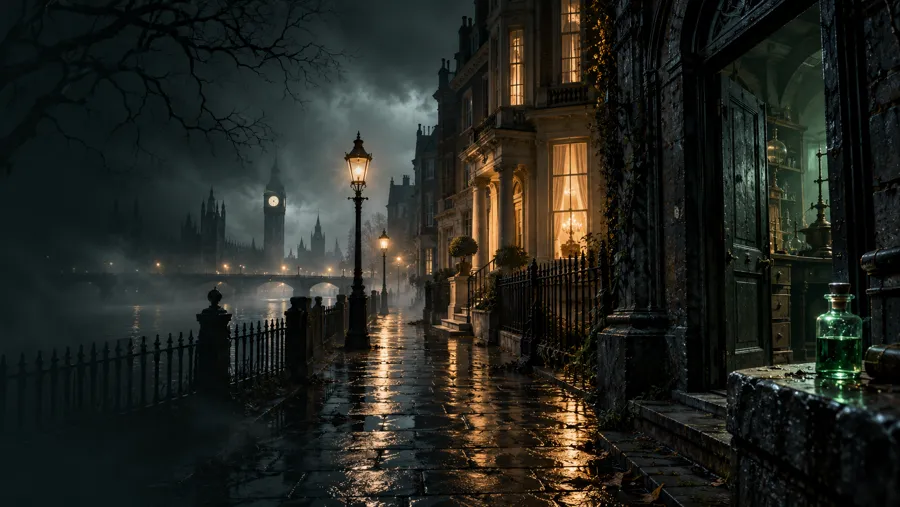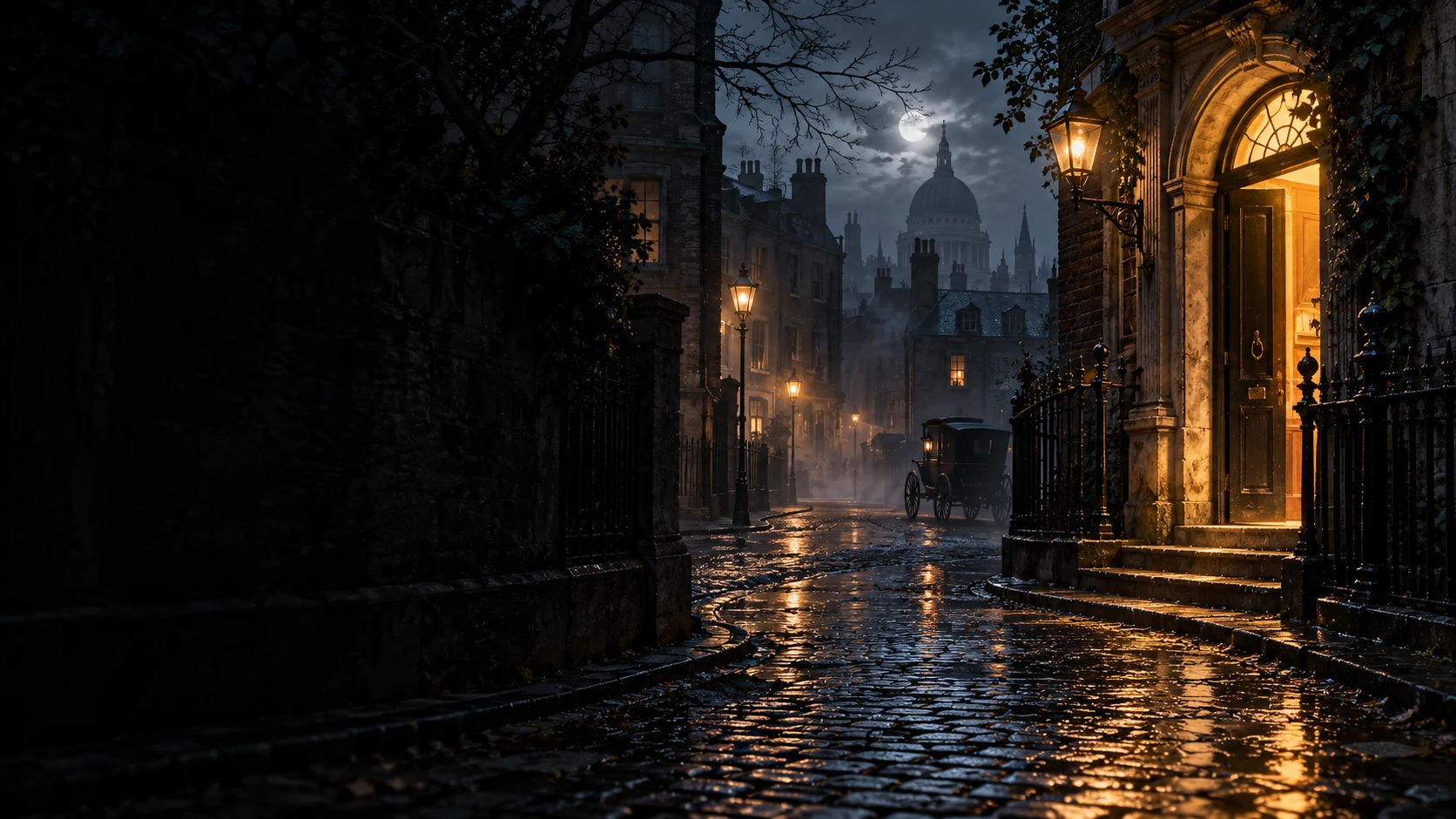
A young man bursts into a London oyster bar followed by two commissionaires, each carrying a large dish of cream tarts. He goes round the room pressing the pastries on every stranger he meets, with exaggerated courtesy, and whenever someone refuses he eats the tart himself. By the time he reaches the disguised Prince Florizel of Bohemia, he has eaten twenty-seven of them since five o’clock.
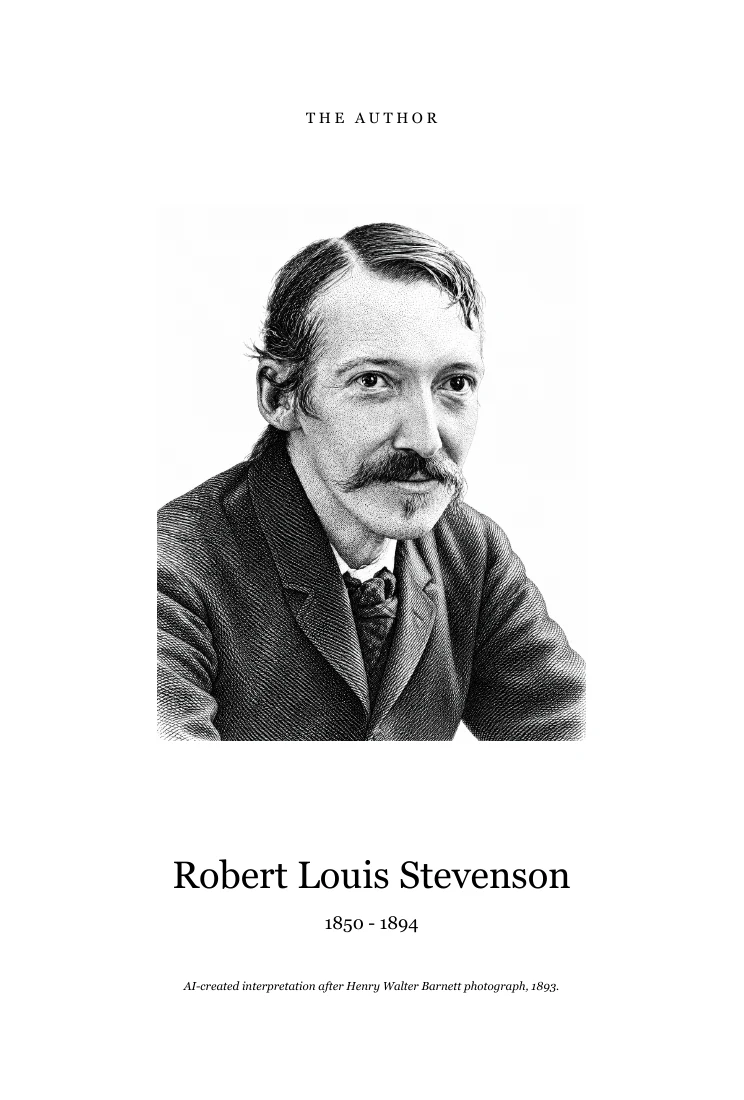
That is the opening of “The Suicide Club”, the first story in New Arabian Nights, the book that collected Robert Louis Stevenson’s earliest fiction, and it sets the tone for his short stories as a whole: playful on the surface, dark underneath, and never quite what you expect. Stevenson published three great collections in his lifetime, and between them they hold most of his best short work. Here they are in order, with the stories to read first.
New Arabian Nights (1882)
The Florizel stories began in 1878 as a serial in London Magazine, under the title “Latter-day Arabian Nights”. The joke is in that title: Stevenson took the old tales of a caliph wandering Baghdad in disguise and relocated them to Victorian London, with a prince who goes slumming for adventure and finds rather more of it than he wanted. “The Suicide Club” follows Florizel into a secret society whose members draw cards each night to decide which of them will die, and which will kill him.
- “The Suicide Club”: three linked stories, starting with the young man with the cream tarts. Read these first.
- “The Pavilion on the Links”: a lonely pavilion by the sea, a ruined banker in hiding, and two old friends in love with his daughter.
- “A Lodging for the Night”: Paris, late November 1456, snow, a murder among thieves, and Villon knocking at doors in the dark.
- “The Sire de Malétroit’s Door”: a young cavalier ducks through an open door to escape a night patrol, hears it lock behind him, and finds himself trapped in someone else’s plot.

The Merry Men and Other Tales and Fables (1887)
Stevenson’s own note says that three of these stories first appeared in the Cornhill Magazine, one in Longman’s, one in a Christmas annual and one in the Court and Society Review. The best of them belong on any shelf of classic short fiction.
- “Markheim”: a murderer in a London antique shop on Christmas Day is interrupted by a visitor who seems to know everything about him. A short, intense study of conscience.
- “Thrawn Janet”: a minister of a moorland parish in 1712 hires a housekeeper whom the village believes has dealings with the Devil. Written in Scots and best read aloud.
- “Olalla”: a wounded Scottish soldier in Spain during the Peninsular War convalesces in the decaying house of an old noble family, on condition that he keep his distance from them. Gothic, mysterious, and quietly terrifying.
- “The Merry Men”: a young man returns to his uncle’s island on the western coast of Scotland, where the sea is full of wrecks and one of them may hold a treasure.
Island Nights’ Entertainments (1893)
In 1890 Stevenson settled in Samoa, where he spent the last years of his life, and the Pacific changed his fiction. “The Beach of Falesá” is the most ambitious of these stories. Its narrator, a copra trader named Wiltshire, arrives on an island where a rival trader, Case, controls the local people through fear and trickery, and arranges a sham “marriage” for him with a young woman called Uma. Stevenson called it “the first realistic South Seas story”, and its first magazine appearance, in 1892, was bowdlerised.
There was a man of the Island of Hawaii, whom I shall call Keawe; for the truth is, he still lives, and his name must be kept secret…
Robert Louis Stevenson, “The Bottle Imp” (1891)
“The Bottle Imp” is the perfect short story. Keawe buys a bottle containing an imp that will grant any wish, but whoever dies owning it is damned, and it can only be sold for less than its owner paid. The price has been falling for centuries. It first appeared in 1891, and a Samoan translation ran the same year in a Samoan-language magazine, so that some of its earliest readers were the islanders among whom Stevenson lived. “The Isle of Voices” is lighter: an idle young man discovers that his father-in-law, the wise man of Molokai, gets his silver dollars by magic.

Which Stevenson short stories should you read first?
- If you have one evening: “The Bottle Imp”, then “Markheim”.
- If you like your stories witty: “The Suicide Club”.
- If you want to be frightened: “Thrawn Janet” and “Olalla”.
- If you want Stevenson at full stretch: “The Beach of Falesá”.
For the novella that made Stevenson a household name, see Did Stevenson really burn the first draft of Jekyll and Hyde?, and for his novels, Where to start with Robert Louis Stevenson. If you enjoy great novelists working in miniature, try short-story collections by famous novelists.
Then walk into that oyster bar with Prince Florizel. New Arabian Nights begins with a tray of cream tarts and ends somewhere very different, and it is the best possible introduction to the Stevenson who could do anything in thirty pages.
Questions readers ask
What are Robert Louis Stevenson’s best short stories?
The most admired include “The Bottle Imp”, “Markheim”, “Thrawn Janet”, “Olalla”, “The Beach of Falesá” and the linked stories of “The Suicide Club”. They are collected in New Arabian Nights, The Merry Men and Other Tales and Fables, and Island Nights’ Entertainments.
Which book is The Bottle Imp in?
“The Bottle Imp” was first published in magazines in 1891 and collected in Island Nights’ Entertainments (1893), alongside “The Beach of Falesá” and “The Isle of Voices”.
What is The Suicide Club by Robert Louis Stevenson?
“The Suicide Club” is a cycle of three linked stories that opens New Arabian Nights (1882). Prince Florizel of Bohemia, exploring London in disguise, joins a secret club whose members draw cards each night to decide who will die.
Is Thrawn Janet written in Scots?
Yes. After a short introduction in English, the story is told in Scots by an old villager. It first appeared in the Cornhill Magazine in October 1881.
 Treasure Island218 pages · $14.99
 Strange Case of Dr Jekyll and Mr Hyde108 pages · $11.99
 Kidnapped276 pages · $16.99
 The Black Arrow214 pages · $14.99