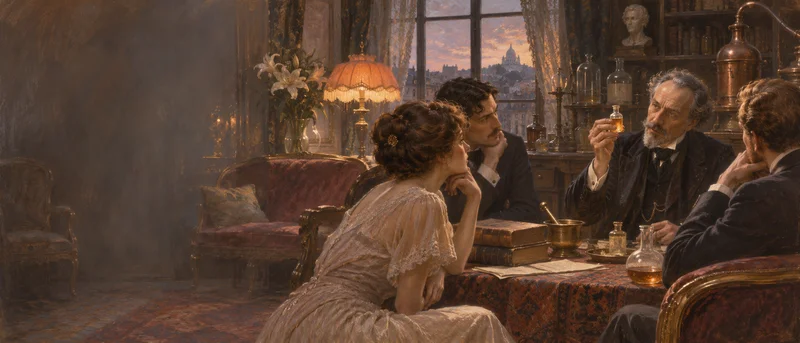
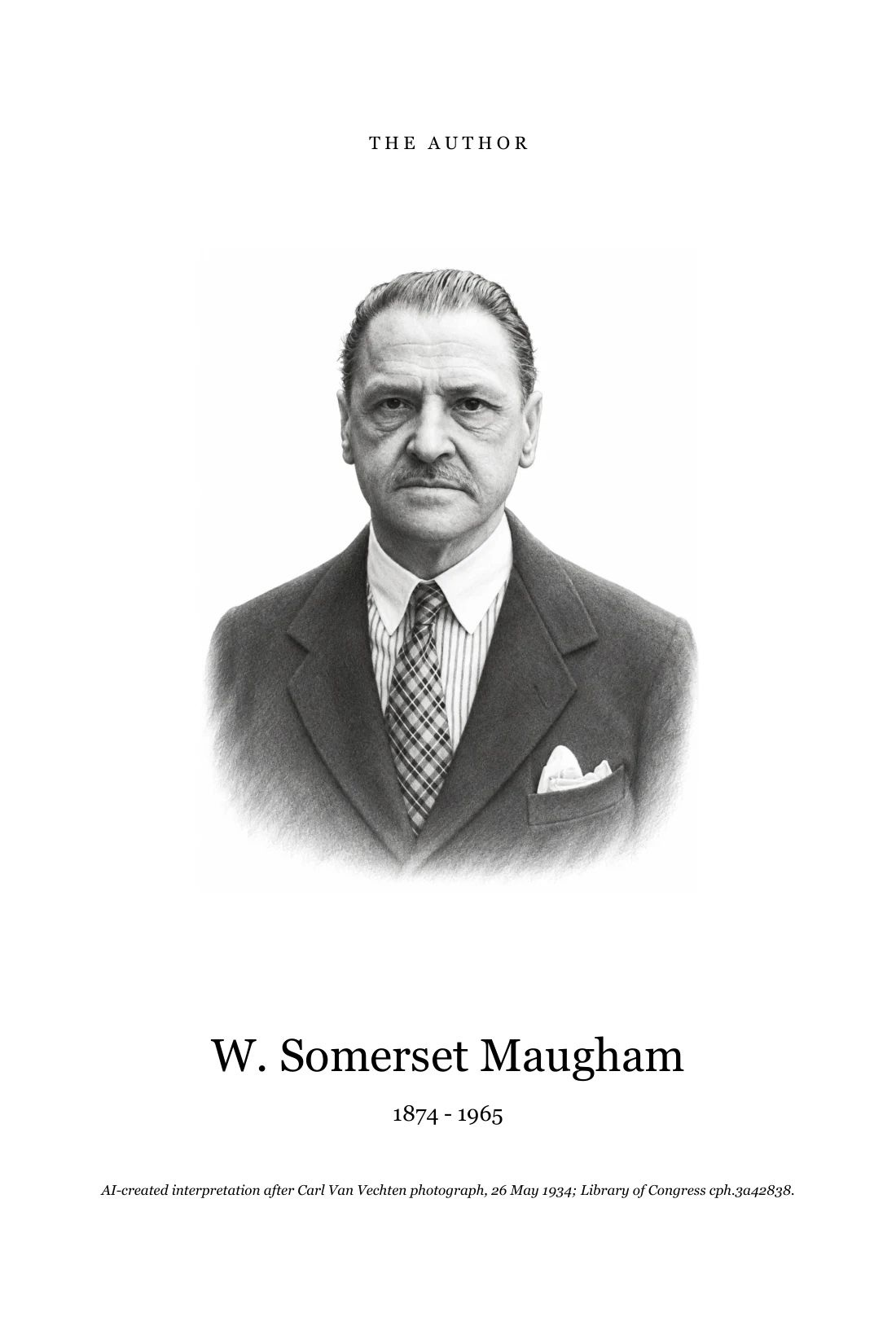
He trained at St Thomas’s Hospital in Lambeth, delivering babies in the slums south of the river, and the experience went straight into that first novel, Liza of Lambeth. Its first printing sold out within three weeks, and Maugham chose writing over medicine. Success on the stage took longer, but when it came it came all at once: by 1908, four of his plays were running in the West End at the same time.
Those years on the wards taught him the thing that runs through all his books. W. Somerset Maugham drew his characters from people he had met, often barely disguised, and his gift was for seeing through them. If you are wondering which Somerset Maugham books to read first, start with one of the short novels, The Moon and Sixpence or The Painted Veil, and save Of Human Bondage, his longest and most personal book, for when you are hooked.
Which Somerset Maugham book should you read first?
The Moon and Sixpence (1919) is the easiest way in. A London stockbroker, Charles Strickland, walks out on his wife and children in middle age to become a painter, and a young writer who barely knew him tries to work out why. The story is loosely inspired by the life of Paul Gauguin, and its narrator, curious, amused and a little appalled, is the voice Maugham used for the rest of his career.
I confess that when first I made acquaintance with Charles Strickland I never for a moment discerned that there was in him anything out of the ordinary.
W. Somerset Maugham, The Moon and Sixpence (1919)
The Painted Veil (1925) is the other ideal starting point, and many readers’ favourite. Kitty Garstin marries a reserved bacteriologist she does not love, goes with him to Hong Kong and has an affair; when he finds out, he gives her a choice that takes them both into a cholera epidemic in the interior of China. Maugham said the seed of the story was a passage in Dante, about a wife whose suspicious husband took her to a fever-ridden castle in the Maremma.
The best Somerset Maugham books, and the order to read them
- $14.99
The Moon and Sixpence
1919. A respectable stockbroker abandons everything for art, and leaves wreckage behind him from London to Paris to Tahiti. Short, sharp and the ideal introduction.
- $14.99
The Painted Veil
1925. A bored young wife, an affair in a colonial city and a journey into an epidemic. Maugham’s most concentrated novel, and a study of how people change, or don’t.
- $28.99
Of Human Bondage
1915. Philip Carey, orphaned and born with a club foot, grows up in a Kent vicarage and stumbles through art school, medicine and a ruinous infatuation. Maugham’s masterpiece, and his most autobiographical book.
- $13.99
Cakes and Ale
1930. A wicked comedy of London literary life, built around the widow of a celebrated novelist and his warm, scandalous first wife, Rosie. The novel Maugham said he liked best of all his books.
- $14.99
The Magician
1908. An early supernatural thriller about a sinister occultist, Oliver Haddo. A curiosity, but a lively one.


Of Human Bondage: the big one
Maugham was finishing Of Human Bondage as the First World War broke out, and corrected the proofs while serving as a volunteer ambulance driver in France. Its hero shares his own early losses: Maugham’s mother died when he was eight, his father soon after, and he was sent to an uncle who was vicar of Whitstable. Philip Carey’s club foot is often read as a stand-in for Maugham’s lifelong stammer. He had first thought of calling the book Beauty from Ashes, but took his title instead from a section of Spinoza’s Ethics.
Reviews were mixed until the American novelist Theodore Dreiser praised it as a work of genius, and after that, in the words of the Oxford Dictionary of National Biography, it seemed that Maugham could not fail. It is long, and Philip’s obsession with the cold, careless waitress Mildred can be painful to read. But it is the novel critics now rank highest.
Maugham the observer
Maugham trained as a doctor in the slums of Lambeth, worked for British intelligence in the First World War, and travelled for years through Asia and the South Seas, gathering stories in clubs, ships and bar-rooms. Highbrow critics often dismissed him as merely competent because he was so popular. Readers disagreed, and still do. His plain, lucid prose wears well, and his sympathy for people behaving badly is hard to resist.
His characters often make choices that look like madness from the outside, which links him to novels such as those in Classic novels about writers and artists. For a contemporary who also sent his English characters overseas, try Where to start with E. M. Forster.
Strickland is the man to meet first. In The Moon and Sixpence he is introduced as a dull stockbroker at his wife’s dinner party, and Maugham spends the rest of the book taking that impression apart.
Questions readers ask
What is the best Somerset Maugham book to start with?
The Moon and Sixpence (1919) or The Painted Veil (1925). Both are short, gripping and show his style at its best. Move on to Of Human Bondage when you want something longer.
What is Somerset Maugham’s most famous novel?
Of Human Bondage (1915), a largely autobiographical novel about an orphan with a club foot, is generally considered his masterpiece.
Is The Moon and Sixpence about Gauguin?
Loosely. Its painter, Charles Strickland, is partly based on Paul Gauguin, who also left a conventional career to paint and died in the South Seas.