


Why the city matters to a Christmas story
A city Christmas story can place different lives close together without making them equally visible. A passerby, a child and a person with money to give may share a street while understanding it very differently. That makes setting part of the moral question. Generosity is not only a feeling; it depends on noticing people and circumstances that an ordinary routine can pass by.
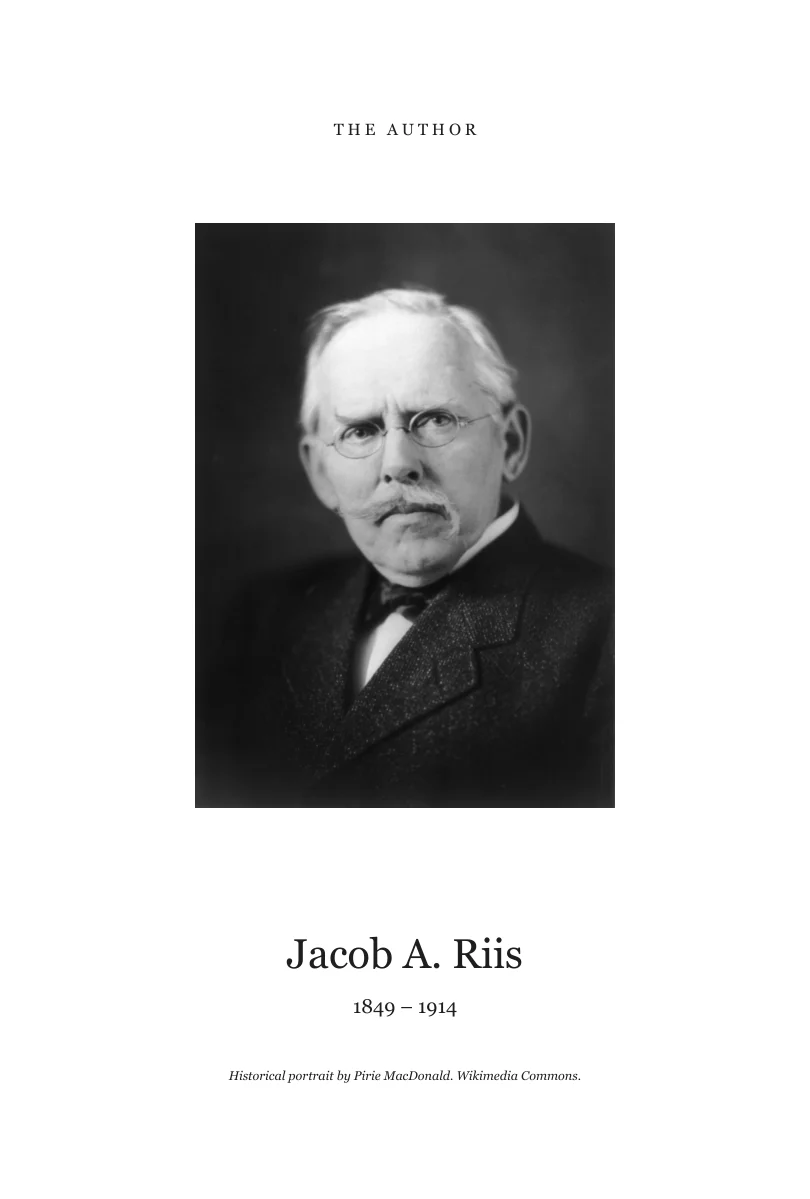
Jacob Riis’s Christmas Stories is a useful choice if your seasonal reading has become dominated by country houses, enchanted forests or one isolated wealthy man. The collection opens a more varied social view. It should still be read as the work of a particular writer, with a particular historical perspective, rather than as an exhaustive account of everyone who lived in New York.

Three things to notice as you read
First, notice where the narrator directs your sympathy. Does a story introduce a person through a need, a voice, an action or another observer’s description? The order affects the reader’s relationship to that person. A sympathetic portrait can still raise a useful question about who gets to explain their own circumstances.
Second, pay attention to objects and small sums of money. A stocking or a dollar can carry different meanings depending on the household. Rather than deciding immediately that a gift is generous, ask what it makes possible and who decides how it should be used. The material detail gives the seasonal language something concrete to work with.
Third, compare public and private spaces. A street encounter and a family interior do not permit the same kinds of conversation. Who can enter, who must wait and who knows the people already there? These questions help you read the city as part of the story instead of treating it as an interchangeable Christmas backdrop.
The contents include several kinds of Christmas setting and recollection, so avoid expecting every selection to repeat one urban scene. A collection gives an author room to vary the focus. Let those changes become part of the reading: they may alter how you understand the more familiar images of children, gifts and seasonal hope.
A useful pairing for a December reading group
Pair Riis with a story where hospitality depends on distance rather than crowded proximity. The contrast can make practical questions clearer: how does help reach someone, what must a host provide, and what does a stranger know about the person receiving care? The purpose is to compare narrative conditions, not to decide that one location has more authentic Christmas feeling.
For a group session, assign one named story rather than the entire collection at once. Ask each reader to bring one detail that changed their understanding of a character’s circumstances. Then discuss whether the ending answers the material problem or mainly changes the reader’s feeling about it. Those are related effects, but they are not identical.

Where to continue
Our American Christmas stories guide adds villages, mountain communities and domestic settings to the comparison. For a broader range of writers in one December project, use Christmas short-story collections. If the central interest is what giving changes, continue with Christmas books about generosity.
Questions readers ask
Is Christmas Stories one continuous story?
No. It is a collection, so choose an individual piece when planning a shared reading or discussion.
What makes Riis a different Christmas choice?
The collection pays attention to children, working families and city circumstances, offering a counterpoint to country-house and fairy-tale Christmas settings.
 How the Other Half Lives254 pages · $15.99


