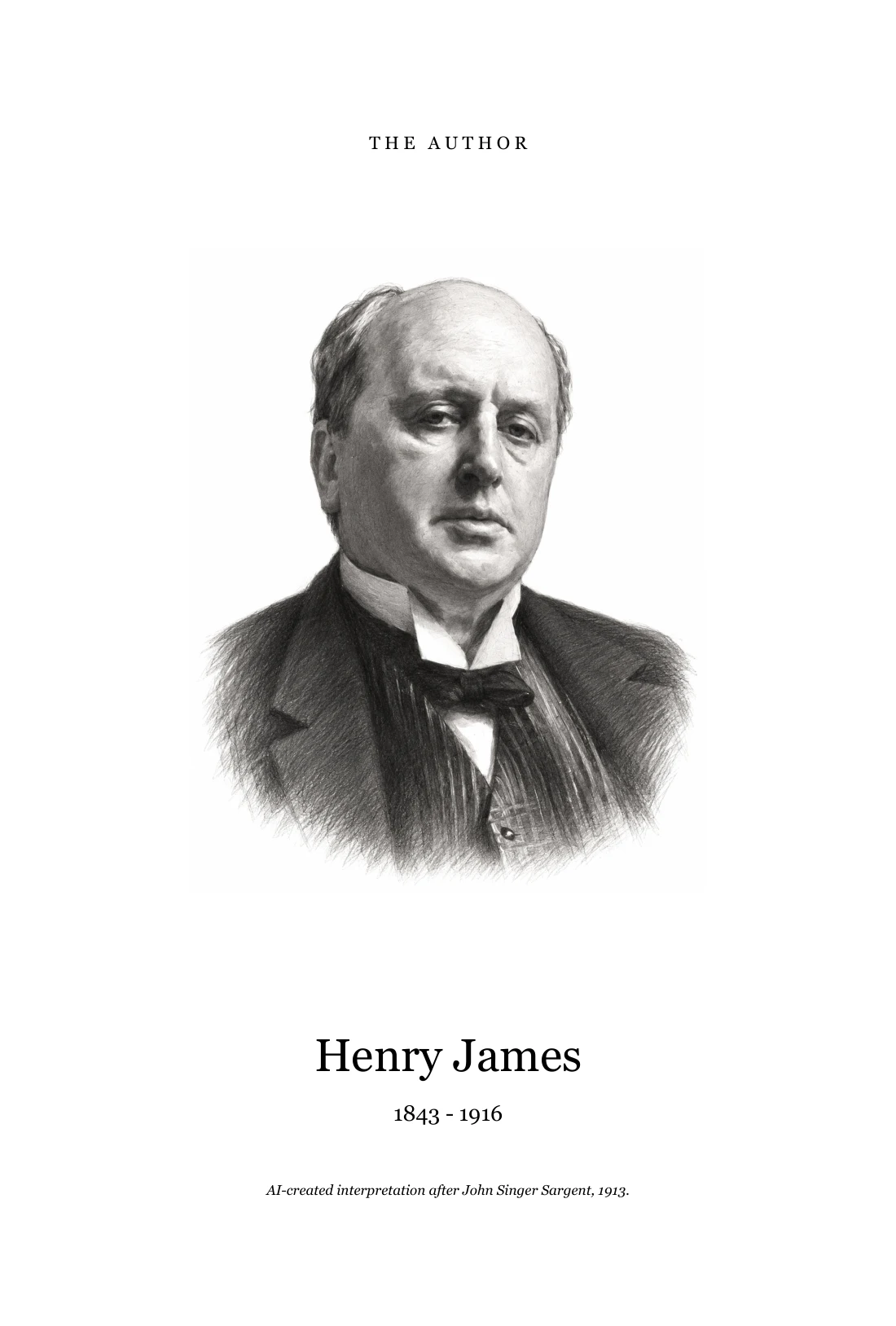
Halfway through The Ambassadors, a fifty-five-year-old American named Lambert Strether stands in a Paris garden and tells a young man what he wishes someone had told him. It is the nearest thing to a moral in all of Henry James, and it explains why people who love James love him so much.
“Live all you can; it’s a mistake not to. It doesn’t so much matter what you do in particular, so long as you have your life. If you haven’t had that what have you had?”
Lambert Strether, The Ambassadors (1903)
James thought The Ambassadors was, as he put it in his later preface, “quite the best, ‘all round,’ of all my productions”. It is also among his most demanding. The trick with James is not to start at the summit. Begin with the short works that made his name, and climb.
The best Henry James books, in reading order
- $10.99
Daisy Miller
1878. A frank, flirtatious girl from New York scandalises the American colony in Europe, and a stiff young compatriot cannot decide what to make of her. The book that made James famous on both sides of the Atlantic, and an afternoon’s read.
- $13.99
Washington Square
1880. A plain, shy heiress, her clever, contemptuous father and a handsome suitor who may be after her money. Set in New York, written with a cool comic edge, and quietly devastating.
- $11.99
The Turn of the Screw
1898. A governess, two beautiful children, a lonely country house and figures who should not be there. Or should they? The ghost story critics have argued over ever since.
- $19.99
The Ambassadors
1903. Strether is sent to Paris to rescue his fiancée’s son from a woman everyone at home assumes is wicked. Paris has other plans for him. James’s own favourite.


Why start with Daisy Miller?
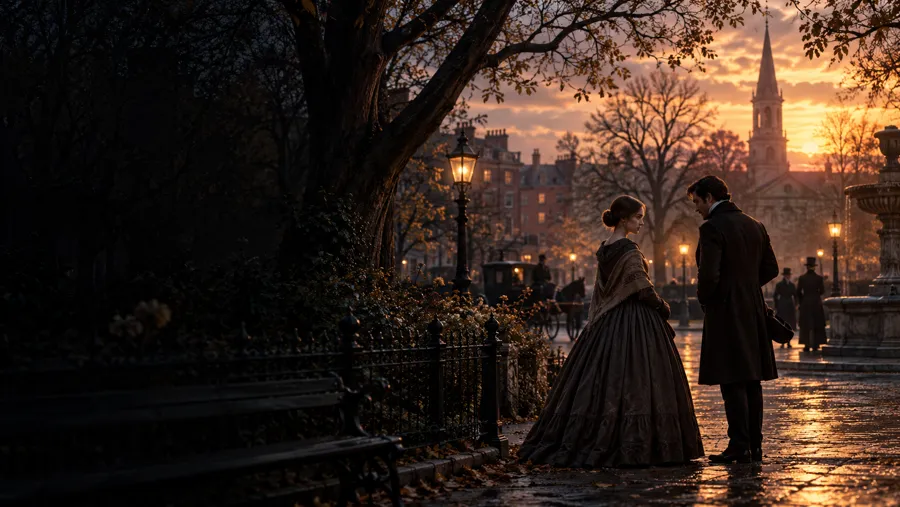
Daisy Miller: A Study first appeared in The Cornhill Magazine in the summer of 1878 and made James a celebrity. It is short, clear and very funny, and it introduces the subject he returned to all his life: what happens when innocent, energetic Americans meet the old, watchful societies of Europe. Daisy herself, chattering about all the hotels she has stayed in and refusing to be told what is proper, is one of his liveliest creations.
From there, Washington Square is a natural next step: still early James, still easy to follow, but deeper and sadder. It was adapted for the stage as The Heiress, which became the 1949 film that won Olivia de Havilland an Academy Award.
The Turn of the Screw: James for the dark nights
James wrote The Turn of the Screw to order, as a ghost story for Collier’s Weekly, where it ran from January to April 1898. It opens on Christmas Eve, around a fire, with a manuscript about to be read aloud, and it has frightened readers ever since, partly because James never settles what is really happening. Is the governess seeing ghosts, or is something wrong with the governess? You will have to decide. Read the full story behind it in Did you know The Turn of the Screw begins on Christmas Eve?.

Early, middle and late James
Readers often talk about three Jameses, and the historian Philip Guedalla is remembered for joking that they were James I, James II and the Old Pretender. The early novels and tales, up to The Portrait of a Lady (1881), are written with relative directness. In the 1890s he turned to the theatre, failed publicly when his play Guy Domville was hissed on its opening night in January 1895, and came back to fiction with shorter, stranger work. Then, between 1902 and 1904, he produced the three long novels the critic F. O. Matthiessen called his “major phase”: The Wings of the Dove, The Ambassadors and The Golden Bowl.
The late style is the hurdle. Sentences unfurl over half a page, with the verb arriving last, and characters talk around the thing that matters. The reward is that you see a mind noticing, moment by moment, and James is often dryly funny about it. Read slowly, read aloud if it helps, and do not worry about catching everything on the first pass.
Where to go next
After these four, try The Aspern Papers, a short, tense novella about a literary scholar scheming to get his hands on a dead poet’s letters, or What Maisie Knew, a bitter divorce as watched by the small girl caught in the middle. The Portrait of a Lady is the big early novel everyone mentions, and well worth finding. When you are ready for the summit, The Golden Bowl is the most intricate of the late novels.
For more Americans abroad, see Edith Wharton, the first woman to win the Pulitzer, who was James’s friend, and for more ghosts, the golden age of the ghost story. But start in Vevey, with a young American finishing his coffee in a hotel garden as a girl in white muslin, with a hundred frills and flounces, comes down the path. Daisy Miller takes an afternoon, and it may well start a habit.
Questions readers ask
What is the best Henry James book to start with?
Daisy Miller (1878) or Washington Square (1880). Both are short and written in James’s clearer early style, and they introduce his great subject, Americans meeting Europe.
What is Henry James’s best book?
James himself considered The Ambassadors (1903) his best. Many readers would also name The Portrait of a Lady (1881) or The Wings of the Dove (1902).
Why is Henry James hard to read?
His late novels use long, winding sentences and indirect dialogue to follow characters’ thoughts closely. His earlier books, such as Daisy Miller and Washington Square, are much more straightforward.
Is The Turn of the Screw a ghost story?
Yes, though famously an ambiguous one. James wrote it as a ghost story for Collier’s Weekly in 1898, but readers still debate whether the ghosts are real or imagined by the governess.
 The Aspern Papers102 pages · $11.99
 The Golden Bowl504 pages · $22.99
 What Maisie Knew248 pages · $15.99
 Roderick Hudson338 pages · $17.99