


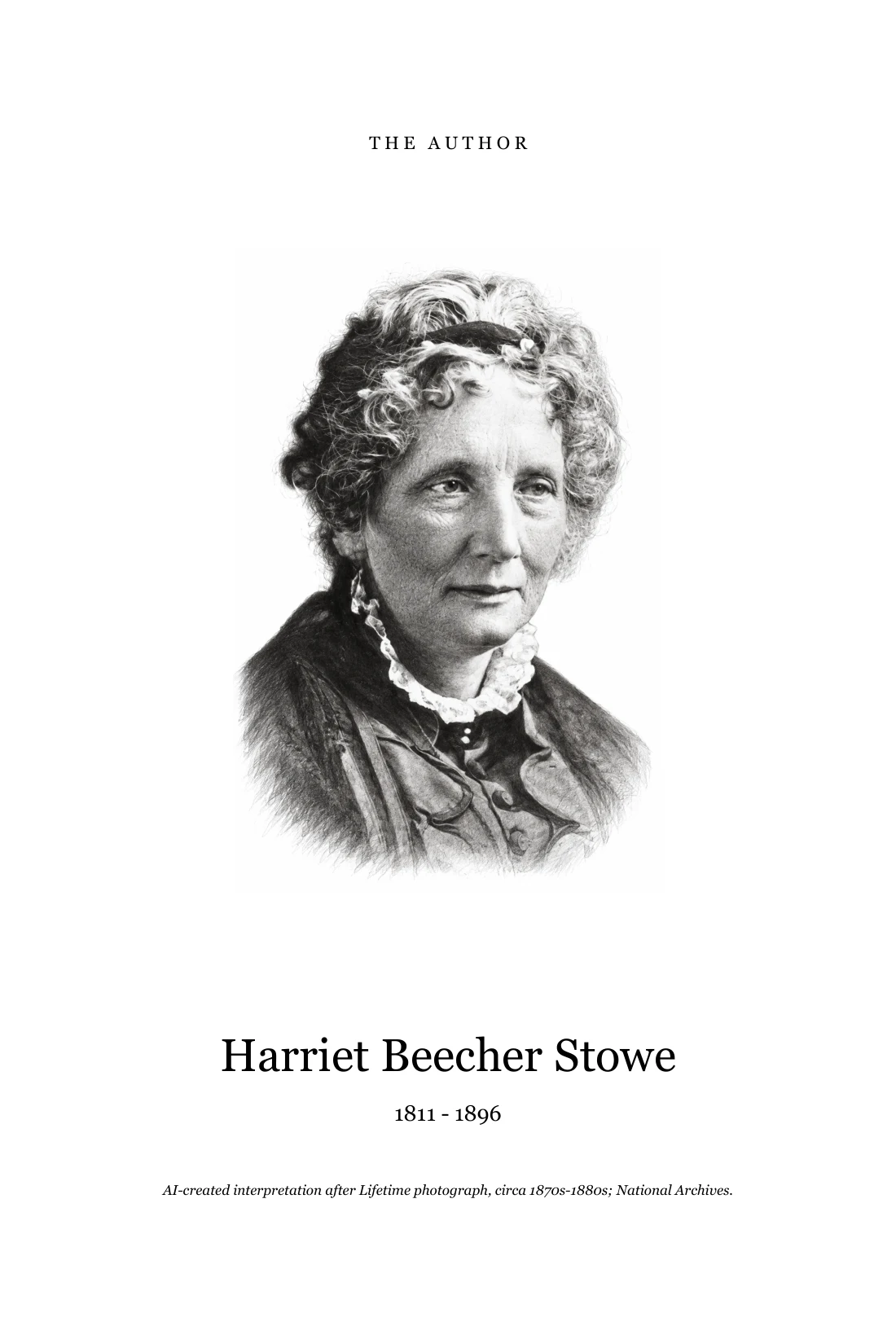
Three works sharing a volume are not one novel
Betty’s Bright Idea, Deacon Pitkin’s Farm and The First Christmas of New England are collected together in the Pipcub edition. The combined title matters: a reader should not assume that every page continues Betty’s story, or that every work has the same relationship to Christmas. Read the contents as three distinct invitations rather than as chapter headings in a single plot.
The volume can be a useful choice for someone who wants shorter Stowe reading and is interested in how domestic life becomes a place for moral questions. Smaller works can focus attention on a particular relationship, decision or occasion. They should be allowed their own scale, rather than treated only as footnotes to the author’s more famous books.

Read the domestic world as a place of action
A household story can make work, obligation and judgment as consequential as an outward adventure. Notice who has an idea, who is expected to carry it out and who gets to decide whether it succeeds. A small action may reveal the assumptions organizing a family or community. The interest is not limited to whether the scene appears comfortable.
When a work presents a moral choice, ask what makes that choice difficult in its setting. A reader can agree with a principle while still wanting to understand the circumstances that test it. Look for differences of knowledge, position or expectation between characters. Those details help explain the story instead of reducing it to an instruction detached from a life.
With a historically framed Christmas piece, keep the distinction between a literary presentation and independent historical verification. A title such as The First Christmas of New England should not be turned casually into a modern historical claim about every community in a region. Read what the work says and how it frames its occasion before drawing broader conclusions.
A useful way to compare the three pieces
After each work, write one sentence about the kind of attention it asks for. Is the central interest a decision, a relationship, a place or an account of an occasion? Then compare the narrator’s way of guiding your response. Does the writing explain, dramatize, reflect or invite sympathy through a particular detail? The differences may be more revealing than trying to supply one theme for the entire volume.
A reading group can divide the book into three sessions or choose one work for a shorter meeting. If members read different pieces, make that explicit in advance. A shared cover does not guarantee shared reference points, and a discussion becomes more useful when everyone knows which work is under consideration.

Where to continue after the volume
If the shorter form appeals, explore Christmas story collections. If the historical subject raises questions about regional practices, choose a separate route through Christmas traditions and history books. That keeps literary reading and historical inquiry in conversation without asking one text to serve every purpose.
For a comparison of domestic warmth with a more suspenseful seasonal setting, our Alcott Christmas guide offers another author-centered pairing. The most useful continuation is one that develops a question you noticed in the reading, whether that is the role of a household, the shape of a moral decision or the way a writer presents the past.
Questions readers ask
Does this edition contain only Betty’s Bright Idea?
No. It also includes Deacon Pitkin’s Farm and The First Christmas of New England.
Should I treat the historical title as a verified claim about all New England Christmas observance?
No. Read the work in its literary and historical context, and use independent historical research before making broader claims about regional practice.
 Uncle Tom's Cabin498 pages · $22.99
