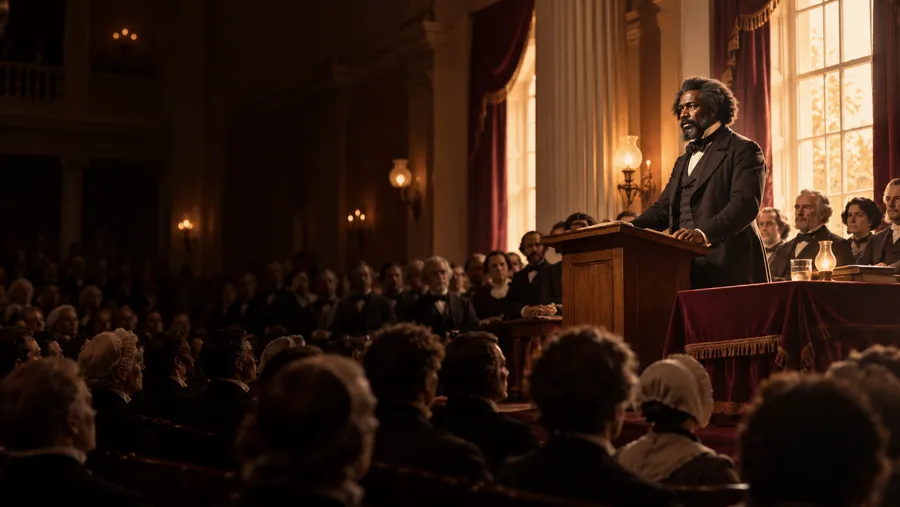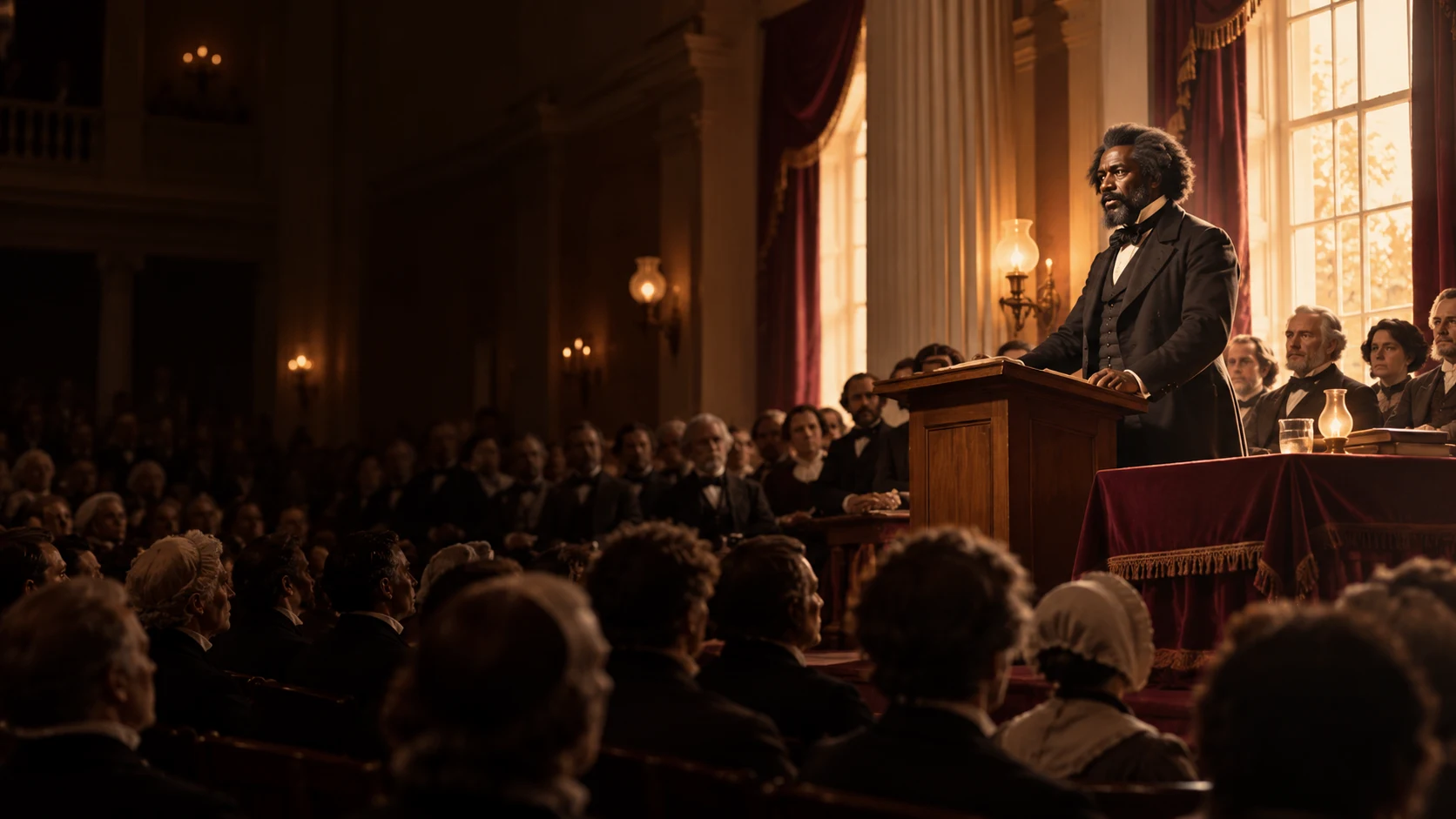
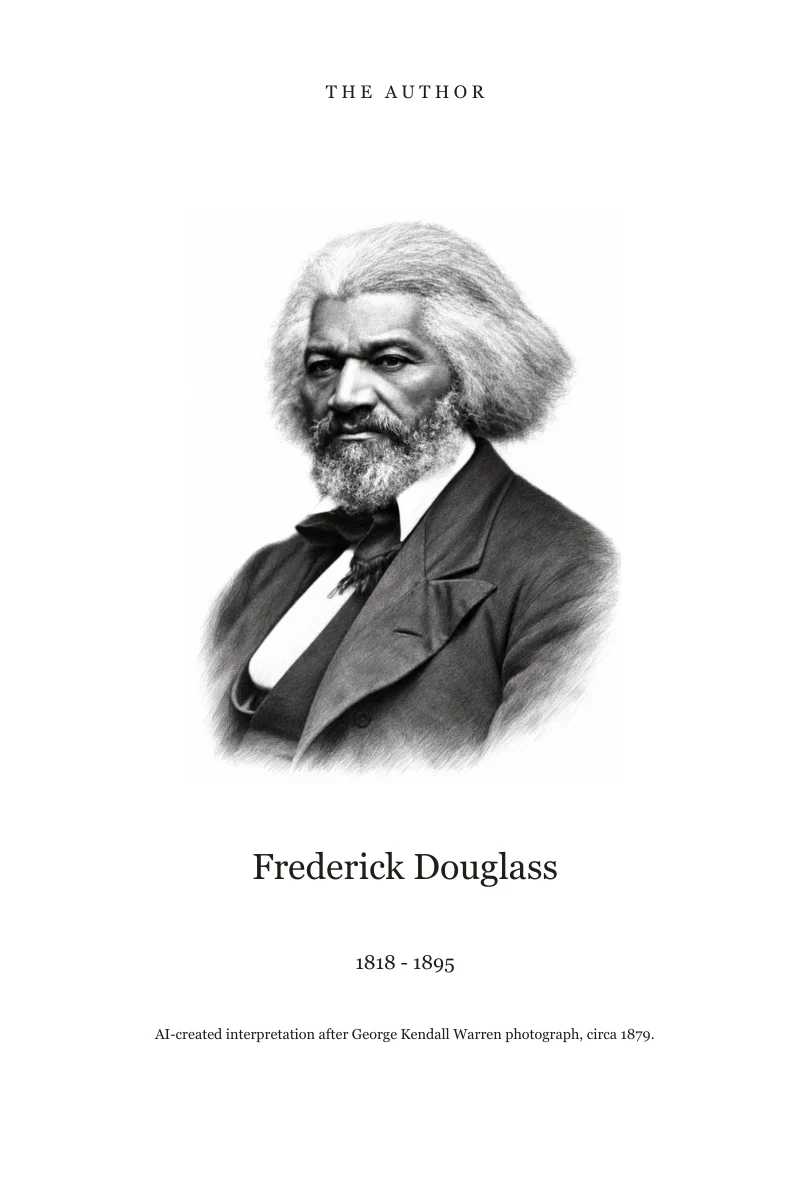
An enslaver in Baltimore warns his wife that teaching a boy to read “would forever unfit him to be a slave”. The boy overhears, and the sentence changes his life. The scene was first published in 1845. Ten years later it appears again, rewritten and sharpened, and in 1881 it appears a third time. That is the shape of Frederick Douglass’s career as a writer: one life, told three times, each telling bolder than the last.
His three autobiographies are the Narrative of the Life of Frederick Douglass, an American Slave (1845), My Bondage and My Freedom (1855) and Life and Times of Frederick Douglass (1881, expanded in 1892). Among Frederick Douglass’s books they are the core of his work, and the differences between them are as revealing as anything inside them.
The Narrative (1845): proof
Douglass escaped from slavery in Baltimore in September 1838, dressed as a sailor and carrying papers borrowed from a free Black seaman. Within a few years he was lecturing for the abolitionist movement, and audiences began to doubt him. He spoke too well, they said, to have been a slave.
The Narrative was his answer. Published in Boston by the Anti-Slavery Office in 1845, with a preface by William Lloyd Garrison and a letter from Wendell Phillips, it named places, dates and the men who had owned and beaten him. It is short, controlled and furious, and it reportedly sold about five thousand copies in its first four months. Its centre is his fight with Edward Covey, a farmer with what Douglass calls “a very high reputation for breaking young slaves”, introduced with one of the most famous sentences in American prose:
You have seen how a man was made a slave; you shall see how a slave was made a man.
Narrative of the Life of Frederick Douglass, an American Slave (1845)
The book also kept one secret. Douglass refused to say how he had escaped, explaining that the details might endanger the people who helped him and close the route to others. Publishing at all was a risk: he was still legally a fugitive, and soon afterwards he left for a long speaking tour of Britain and Ireland, partly to put an ocean between himself and his former owner.

My Bondage and My Freedom (1855): philosophy
On the lecture circuit, Douglass later wrote, his white sponsors had wanted him to stick to his story. One of them, John A. Collins, put it bluntly: “Give us the facts,” he said, “we will take care of the philosophy.” My Bondage and My Freedom is the book in which Douglass takes care of the philosophy himself.
It runs to about three times the length of the Narrative, carries an introduction by James McCune Smith, the first African American to earn a medical degree, and is written by a man now running his own paper and his own politics. The childhood chapters are richer, his grandmother and the plantation world come into focus, and his years as a lecturer get a whole second part. Compare the reading lesson: in 1845 he “understood the pathway from slavery to freedom”; in 1855 it has become “the direct pathway”, and the lesson he draws is spelled out as a principle, “knowledge unfits a child to be a slave.”
Life and Times (1881): reckoning
The third book belongs to a public man. After the Civil War Douglass held federal office as US Marshal for the District of Columbia, then Recorder of Deeds, and later served as minister to Haiti. Life and Times, first published in 1881 and enlarged in 1892, follows him through all of it.
With slavery abolished, he could at last explain his escape, the borrowed sailor’s protection papers, the train north and the conductor who did not look too closely. And he describes a scene the young author of the Narrative could never have imagined: in 1877 he returned to St Michaels, Maryland, and sat at the bedside of Thomas Auld, the man who had once owned him. Asked what he thought of Douglass running away, the old man replied, “Frederick, I always knew you were too smart to be a slave, and had I been in your place I should have done as you did.” Douglass used the visit to correct a mistake he had made in the Narrative about the treatment of his grandmother.
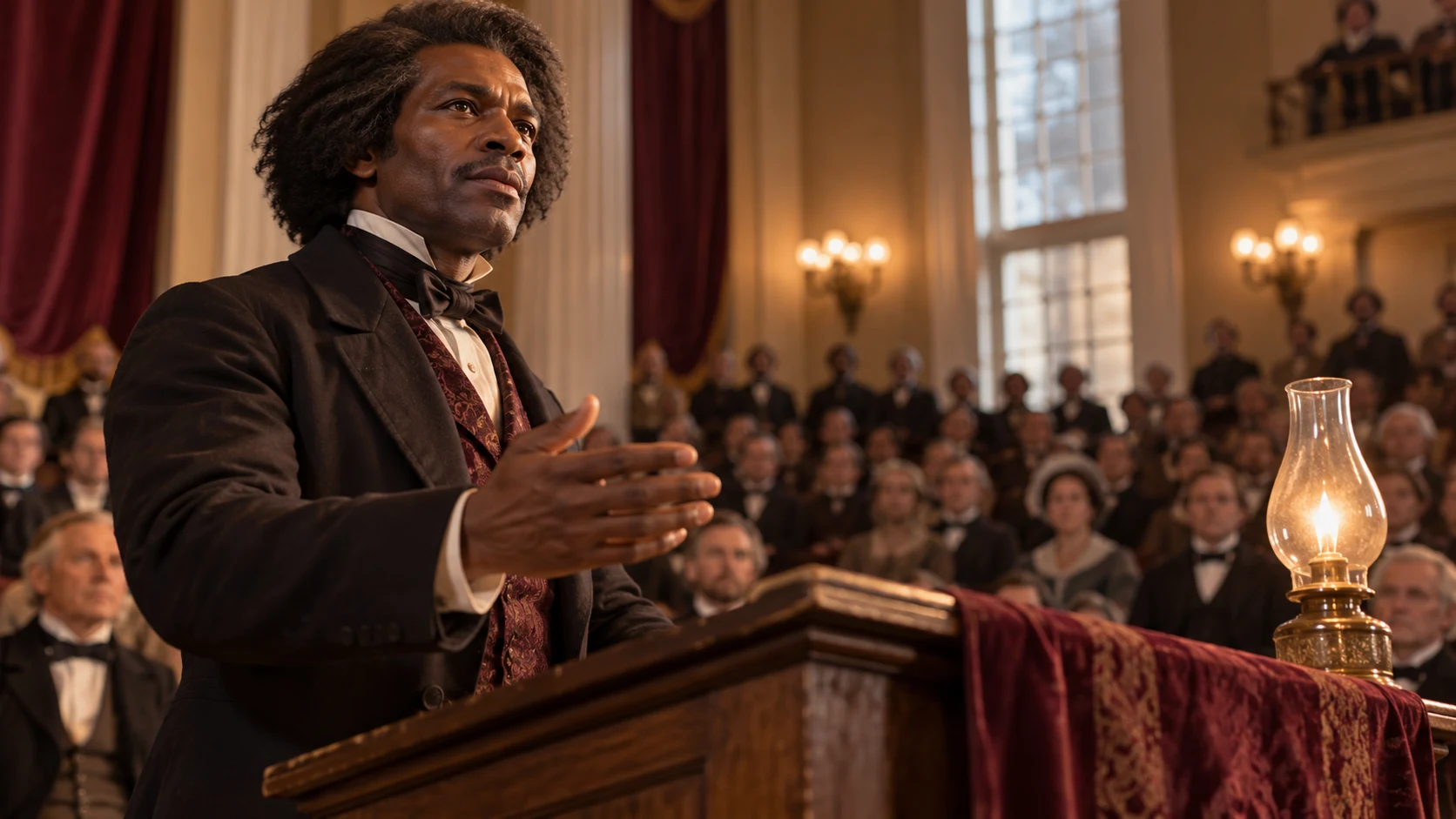
Which Frederick Douglass books should you read first?
- $11.99
Narrative of the Life of Frederick Douglass, an American Slave
1845. The first and most concentrated telling, short enough for an afternoon and written as evidence against slavery itself. The essential Douglass.
- $18.99
My Bondage and My Freedom
1855. The fuller, more reflective version, with the plantation world drawn in depth and a second part on his life as a free man and abolitionist. For readers who finished the Narrative wanting more.


Start with the Narrative. It is the version that made his name and the one that most rewards being read in a single sitting. Then read My Bondage and My Freedom and watch the same events turn from testimony into argument. Life and Times is the long view, best read once the first two have made you care about the man telling it.
Douglass belongs to a larger tradition of first-person witness, from Olaudah Equiano to Harriet Jacobs; we trace it in the slave narratives that changed history and Harriet Jacobs’s seven years in hiding. Booker T. Washington told a very different story of rising from slavery in Up from Slavery.
Begin with the boy who heard he must not learn to read. The Narrative of the Life of Frederick Douglass runs to about a hundred pages, and it ends with a man standing up to speak.
Questions readers ask
How many autobiographies did Frederick Douglass write?
Three: Narrative of the Life of Frederick Douglass, an American Slave (1845), My Bondage and My Freedom (1855) and Life and Times of Frederick Douglass (1881, revised and expanded in 1892).
What is the difference between Douglass’s Narrative and My Bondage and My Freedom?
The Narrative is short and written as proof of what slavery was. My Bondage and My Freedom is about three times longer, gives a richer account of his childhood and adds his own analysis of slavery and of his years as a free abolitionist.
Which Frederick Douglass book should I read first?
Start with the Narrative of 1845. It is the shortest, the most famous and the most direct of Frederick Douglass’s books.
Why didn’t Douglass explain his escape in the Narrative?
He said that describing his escape could endanger the people who helped him and make it harder for others to follow. He revealed the details in Life and Times in 1881, long after slavery had ended.