
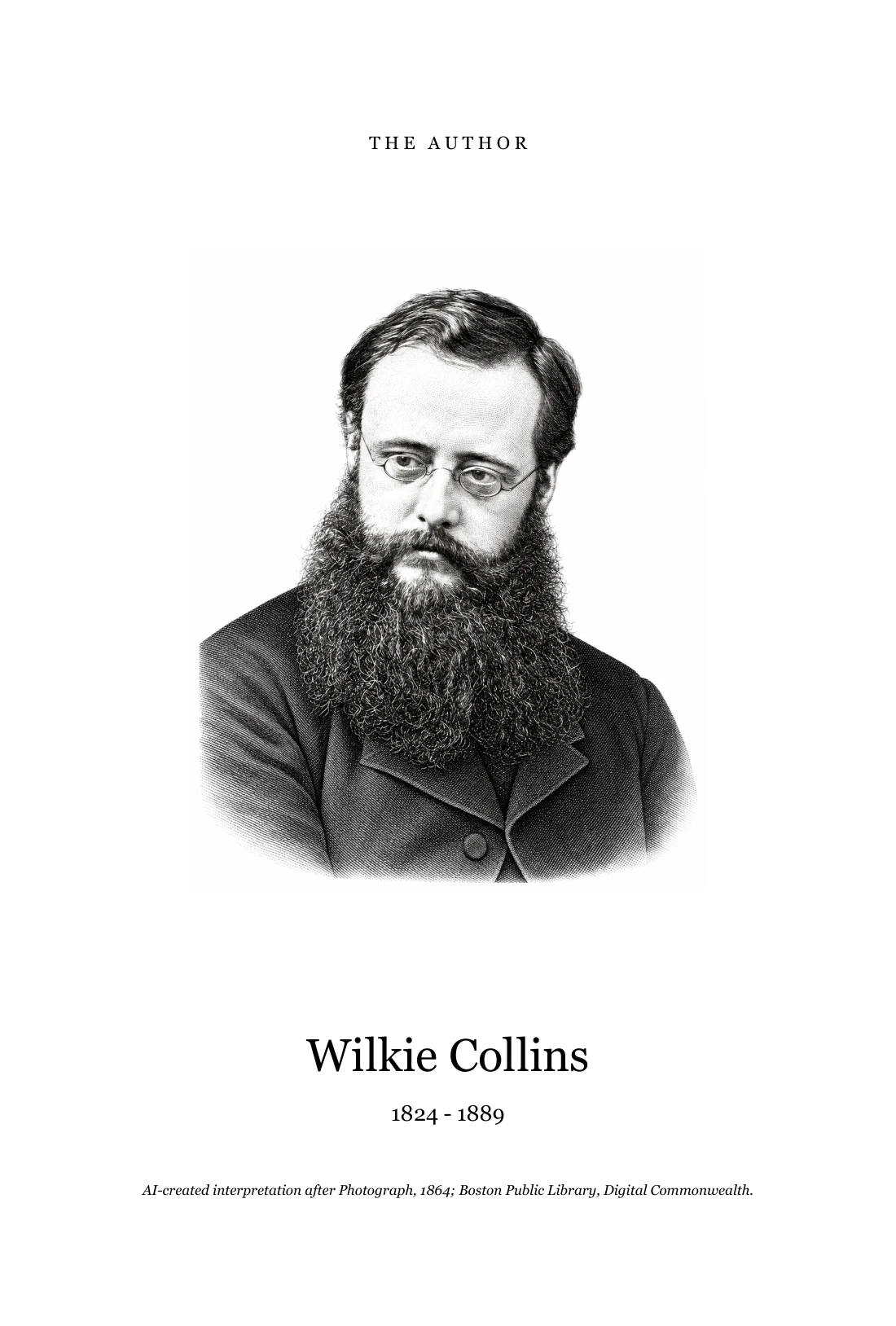
What was a “sensation novel”? To Victorian critics it was a worrying new kind of bestseller: a story of crime and secrets set not in a Gothic castle but in an English country house, among people very like its readers, built to keep them turning pages. Its acknowledged master was Wilkie Collins, and the novel usually credited with starting the craze ran in Dickens’s own magazine.
The Woman in White began in All the Year Round on 26 November 1859 and ran weekly until August 1860. Collins wrote three more great sensation novels in the decade that followed, and the Wilkie Collins books from those years are still the best place to meet him. Start with The Woman in White; finish with The Moonstone.
The Wilkie Collins books to read, in order
- $24.99
The Woman in White
1860. A drawing master meets a ghostly woman on a moonlit road outside London, and walks into a conspiracy against an heiress. Told by a relay of witnesses, with Count Fosco, one of fiction’s great villains, at its centre.
- $27.99
No Name
1862. Two sisters discover after their father’s death that a legal technicality has left them with nothing. The younger, Magdalen, sets out with a disguise and a plan to get it back.
- $29.99
Armadale
1866. Two young men share a name and a family secret, and a dying father’s confession hangs over both. Enter Lydia Gwilt, the most magnificent of Collins’s bad women.
- $12.99
No Thoroughfare
1867. Collins and Dickens together: a story of a foundling, a wine business and a crossing of the Alps in winter, written for the Christmas number of All the Year Round.
- $21.99
The Moonstone
1868. A cursed Indian diamond vanishes from a Yorkshire country house on the night of a birthday, and a celebrated detective is called in. The model for a century of mysteries.



How Collins met Dickens
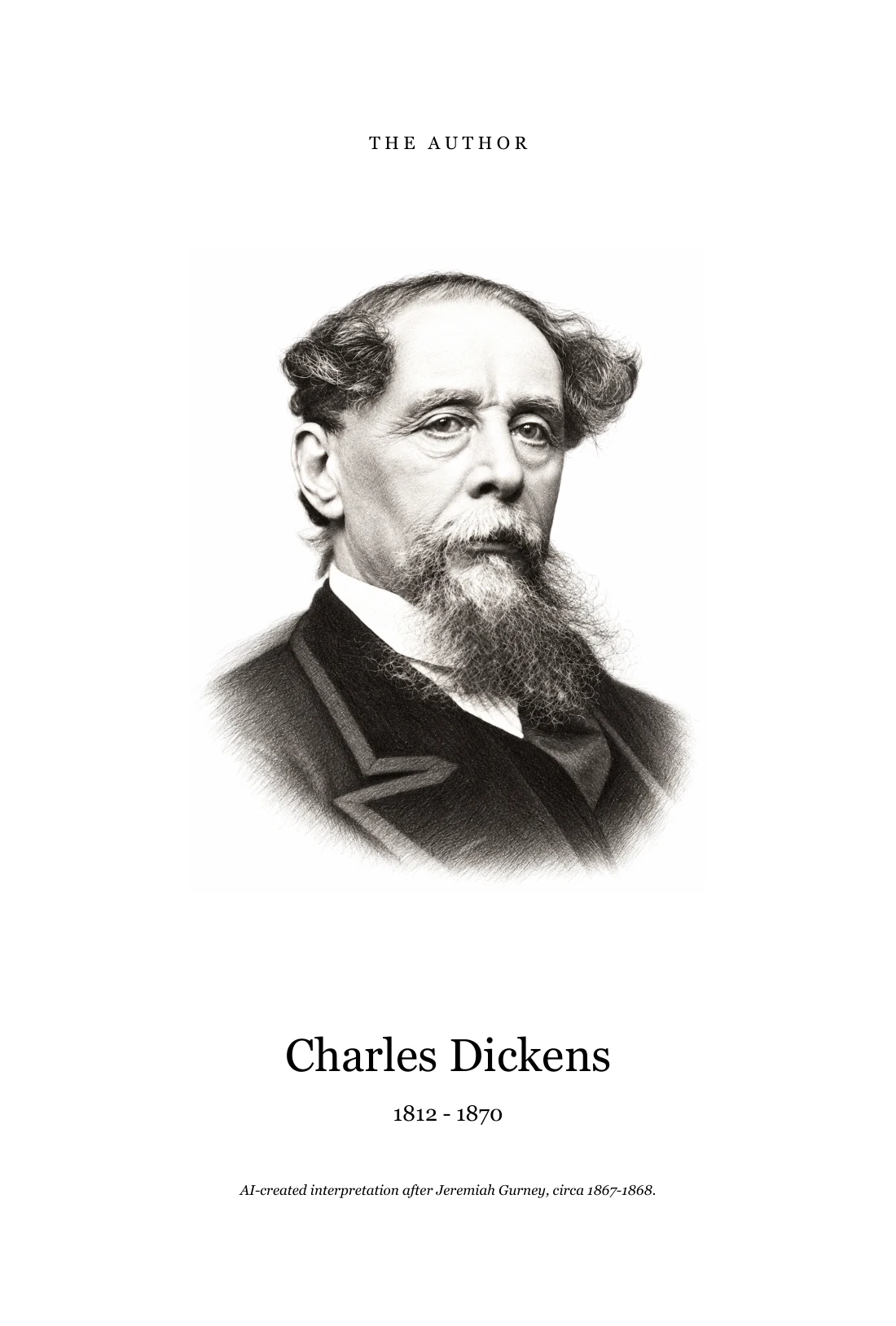
The painter Augustus Egg introduced them in March 1851, when Dickens needed actors for an amateur theatrical. Collins was twenty-seven, the son of a well-known landscape painter, a former tea merchant’s clerk and a reluctant law student. Dickens was the most famous writer in England. They became close friends, travelled together and wrote together.
- 1851
Collins meets Dickens and joins his company of amateur actors.
- 1856–57
They write the melodrama The Frozen Deep together and stage it at Dickens’s home, Tavistock House.
- 1859–60
The Woman in White is serialised in All the Year Round and becomes a sensation.
- 1860
Collins’s brother Charles marries Dickens’s daughter Kate.
- 1862
No Name follows in the same magazine.
- 1864–66
Armadale runs in a rival, The Cornhill Magazine, which had paid handsomely to get him.
- 1867
No Thoroughfare, written jointly, fills the magazine’s Christmas number.
- 1868
The Moonstone appears in All the Year Round from January to August.
Dickens died in 1870, and the debt between them ran both ways. Collins learned from Dickens how to hold an audience week by week, and Dickens, in his unfinished last novel, wrote his own mystery; see Did you know The Mystery of Edwin Drood was never finished?
Why The Woman in White still works
Collins had trained in the law, and he built the novel like a court case. Each witness tells only what he or she saw, and the reader has to piece the truth together from their partial accounts. He explains the method in a short preamble.
Thus, the story here presented will be told by more than one pen, as the story of an offence against the laws is told in Court by more than one witness
Wilkie Collins, The Woman in White (1860)
Then he gives you the best scene in Victorian fiction: a young man walking home to London at midnight, and a hand on his shoulder. Readers who have not met Marian Halcombe, the heroine’s clever, plain and fearless half-sister, have one of the great pleasures of the period ahead of them. We tell the story of the book’s extraordinary success in Did you know The Woman in White caused a merchandise craze?

The Moonstone and the birth of the detective novel
The Moonstone takes the many-narrator method of The Woman in White and turns it towards a single puzzle: who took the diamond? It gave English fiction Sergeant Cuff, the quiet professional detective who grows roses, and it was written while Collins was suffering badly from gout and relying on laudanum, which he had taken for years. Read our full account in Did you know The Moonstone is often called the first English detective novel?
What else did Wilkie Collins write?
He wrote more than twenty novels in all. After the 1860s his books grew more openly campaigning, attacking marriage laws and the treatment of women. The Law and the Lady (1875) has a heroine who turns detective to clear her husband’s name, and The Haunted Hotel is a short Venetian ghost story that makes a good single evening. For the genre he led, see What was the sensation novel? and the decade’s other great scandal, Lady Audley’s Secret.
Collins lived unconventionally, sharing his home with Caroline Graves for most of his later life while raising a second family with Martha Rudd, and his fiction is unusually sympathetic to people whom Victorian law and manners left out. That is part of what keeps it fresh. Begin on that moonlit road: open The Woman in White, and do not plan on an early night.
Questions readers ask
What is Wilkie Collins’s most famous book?
The Woman in White (1860) and The Moonstone (1868) are his most famous novels. The first is usually credited with launching the sensation novel; the second is often called the first full-length detective novel in English.
Were Wilkie Collins and Charles Dickens friends?
Yes. They met in 1851, acted and travelled together, co-wrote The Frozen Deep and No Thoroughfare, and Dickens serialised several of Collins’s novels in his magazine All the Year Round. Collins’s brother married Dickens’s daughter.
What order should I read Wilkie Collins books in?
Start with his four great sensation novels in publication order: The Woman in White, No Name, Armadale and The Moonstone. Then try later Wilkie Collins books such as The Law and the Lady.
 The Dead Secret350 pages · $18.99
 Man and Wife576 pages · $24.99
 Basil274 pages · $16.99
 Poor Miss Finch406 pages · $19.99