
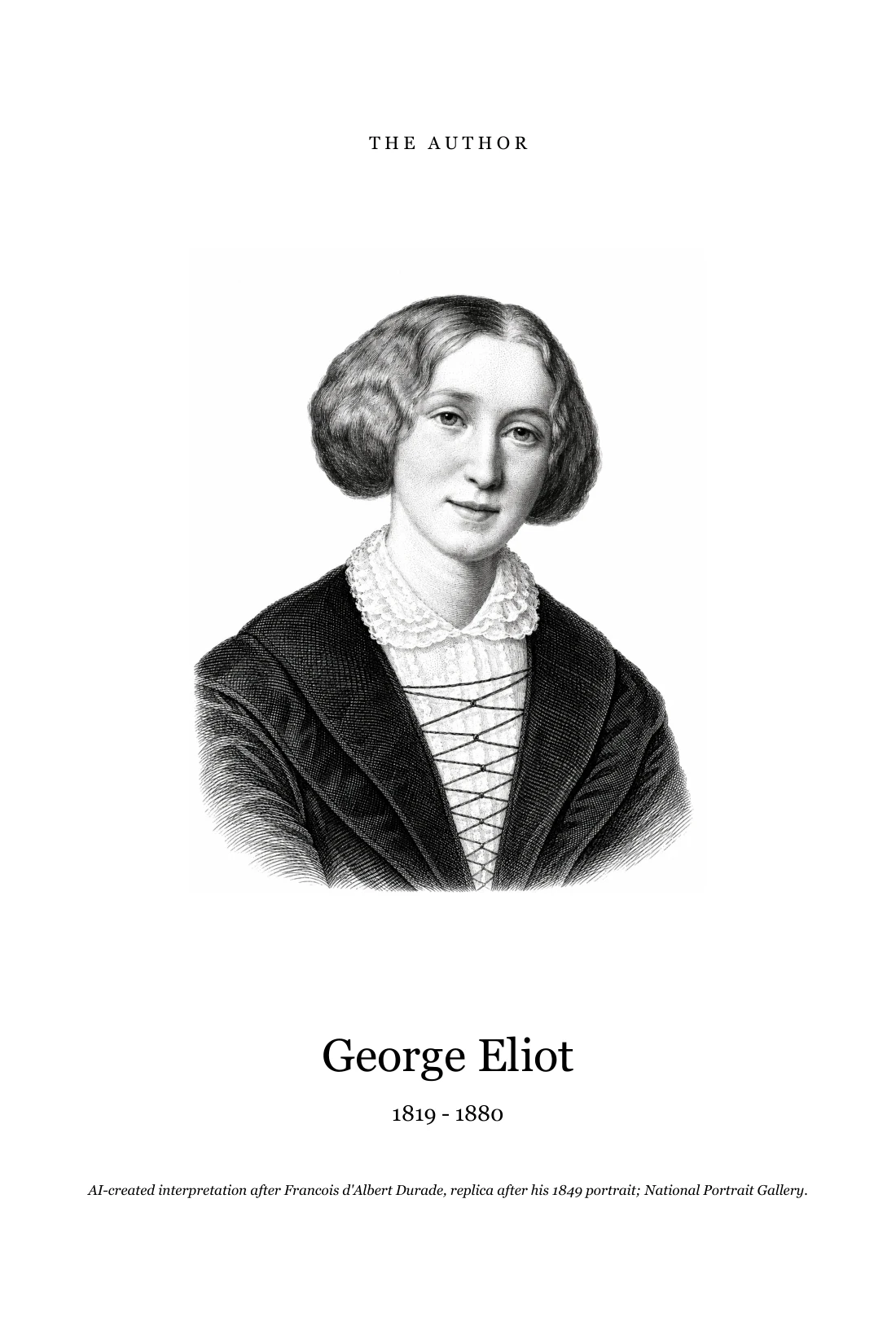
By 1871 Middlemarch had outgrown the three-volume format that Victorian novels were expected to fit. Eliot’s partner, George Henry Lewes, acting as her agent, proposed an unusual solution to her publisher, John Blackwood, borrowed from the way Les Misérables had been issued: eight separate paper-bound parts, sold every two months and then monthly, from December 1871 to December 1872. Readers waited a year to find out what became of Dorothea Brooke. They have been arguing about her ever since.
Ask which is George Eliot’s best novel and most readers will answer Middlemarch, and many would call it the greatest novel in the language. But it is long and slow to start, and it is not the only way in. George Eliot wrote seven novels in under twenty years, and the right first one depends on how much time you have and what kind of reader you are.
Three ways into George Eliot
If you want a short book: Silas Marner
A linen-weaver, driven out of his chapel by a false accusation, settles in the village of Raveloe and lives only for the gold he hoards. One winter the gold disappears; soon afterwards a small child with golden hair toddles into his cottage. It is a fable, almost a fairy tale, and it has all Eliot’s gifts at a fraction of the length: comic villagers in the pub, a moral that grows out of the people rather than being pinned on them, and a love story between a lonely man and a child. It opens like a story told by the fire:
In the days when the spinning-wheels hummed busily in the farmhouses—and even great ladies, clothed in silk and thread-lace, had their toy spinning-wheels of polished oak—there might be seen in districts far away among the lanes, or deep in the bosom of the hills, certain pallid undersized men, who, by the side of the brawny country-folk, looked like the remnants of a disinherited race.
Silas Marner (1861)
If you want to be moved: The Mill on the Floss
Maggie Tulliver is clever, impulsive and too big for the life laid out for her, and she loves her stolid brother Tom more than he can ever love her back. Eliot drew on her own experience of being an intellectual girl in a provincial world, and of being cast out for the choices she made as a woman. Many readers who find Middlemarch admirable find The Mill on the Floss unforgettable. Don’t let anyone tell you about the ending.
If you are ready for the summit: Middlemarch
Set in a Midlands town between 1829 and 1832, as the country argues about political reform, Middlemarch follows several lives at once: the idealistic Dorothea and her dry, scholarly husband Casaubon; the ambitious young doctor Lydgate and the pretty, determined Rosamond Vincy; the feckless Fred Vincy and the clear-eyed Mary Garth; and the respectable banker Bulstrode, who has something to hide. Eliot’s narrator moves between them with a sympathy that never becomes softness, and some of her sentences are among the wisest in fiction:
If we had a keen vision and feeling of all ordinary human life, it would be like hearing the grass grow and the squirrel’s heart beat, and we should die of that roar which lies on the other side of silence.
Middlemarch (1871–72)

George Eliot’s novels in order
Publication order is a reasonable reading order if you plan to read them all, since you can watch her range widen from village life to a whole society.
- $23.99
Adam Bede
1859. A carpenter, a dairymaid, a squire’s heir and a Methodist preacher in the village of Hayslope in 1799. Her first novel, built from a story her aunt told her, and an immediate success.
- $23.99
The Mill on the Floss
1860. Maggie and Tom Tulliver grow up at Dorlcote Mill beside the River Floss. Her most personal novel.
- $13.99
Silas Marner
1861. The miser of Raveloe and the child who changes him. Her shortest novel, and the gentlest introduction.
- $25.99
Romola
1862–63. A scholar’s daughter in fifteenth-century Florence, in the years of the preacher Savonarola. Her only novel set in the distant past, and heavy with research.
- $21.99
Felix Holt, the Radical
1866. A principled young radical and an election riot in a Midlands town. Her most openly political book.
- $29.99
Middlemarch
1871–72. A whole provincial town on the eve of reform, seen from the inside. The masterpiece.


The seventh novel, Daniel Deronda (1876), split between an English heiress and a young man discovering his Jewish heritage, is the boldest of all, and the place to go once you have finished the others.
So is Middlemarch George Eliot’s best novel?
Yes, by most measures. Its reputation has only grown since the critic F. R. Leavis championed it in the 1940s, and polls and critics regularly place it at or near the top of the English novel. But best is not the same as first. If Silas Marner or The Mill on the Floss wins you over, you will reach Middlemarch already fluent in Eliot’s voice, and its slow first chapters will feel like a promise rather than a test.
If you are curious about the woman behind the name, we tell that story in Why did Mary Ann Evans write as George Eliot?. For her nearest contemporaries, try Where to start with Elizabeth Gaskell and Thomas Hardy, who gave up novels.
Our advice for a first evening: Silas Marner. It is short enough to finish in a weekend, and by the time the weaver opens his door to the child in the snow, you will know whether you are ready for Middlemarch.
Questions readers ask
What is George Eliot’s best novel?
Middlemarch (1871–72) is generally considered George Eliot’s best novel, and it is often named among the greatest novels in English.
Which George Eliot novel should I read first?
Silas Marner is the easiest place to start because it is short and self-contained. Readers ready for a long book can go straight to Middlemarch, and The Mill on the Floss suits anyone who wants a more emotional, personal novel.
How many novels did George Eliot write?
Seven: Adam Bede, The Mill on the Floss, Silas Marner, Romola, Felix Holt, the Radical, Middlemarch and Daniel Deronda.
Is Middlemarch hard to read?
It is long and starts slowly, but the prose is clear and often funny. Most readers find it gathers pace once all the main characters have been introduced.