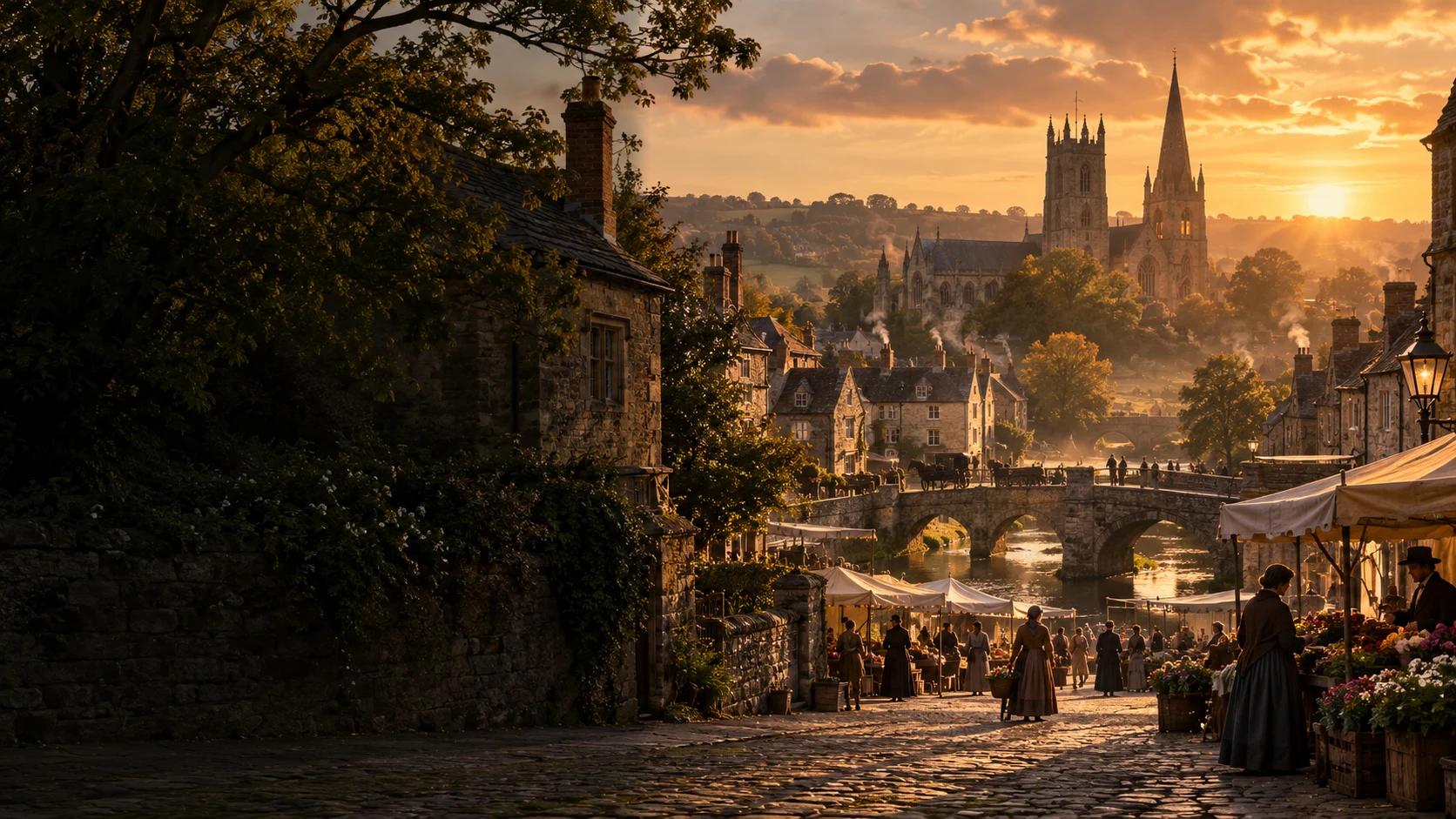
An English provincial market town in the 1830s with church towers at golden hour
PIPCUB CINEMATIC EDITIONS / PAPERBACK BOOKS

Middlemarch

George Eliot

Dorothea Brooke and her neighbors pursue love, work and purpose in a provincial community shaped by ambition and reform.

$29.99

Printed for you. Shipping calculated at checkout.

Checkout opening soon. Shipping & delivery Returns
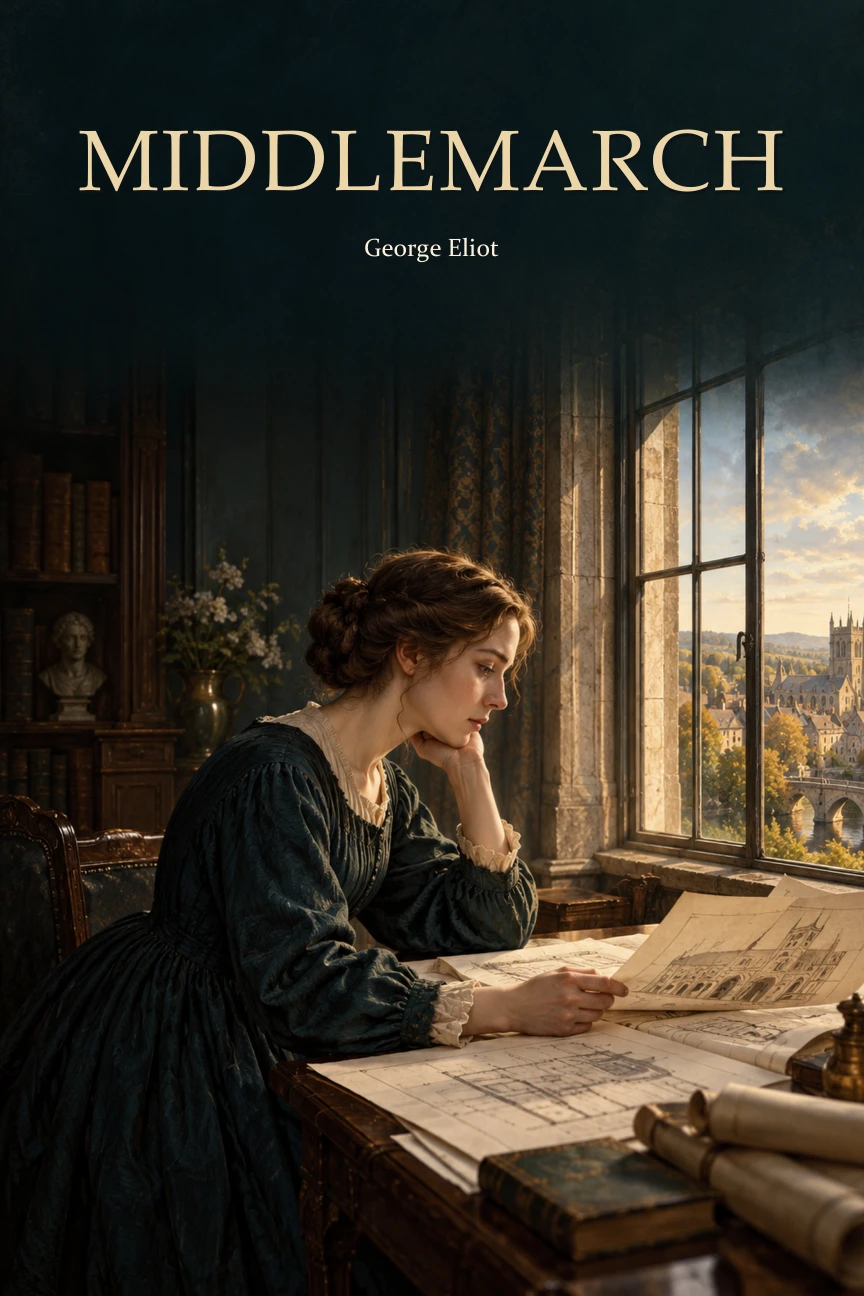
Middlemarch — actual Pipcub paperback cover
SCROLL INTO THE STORYAN IMAGINED WORLD · ORIGINAL AI ART
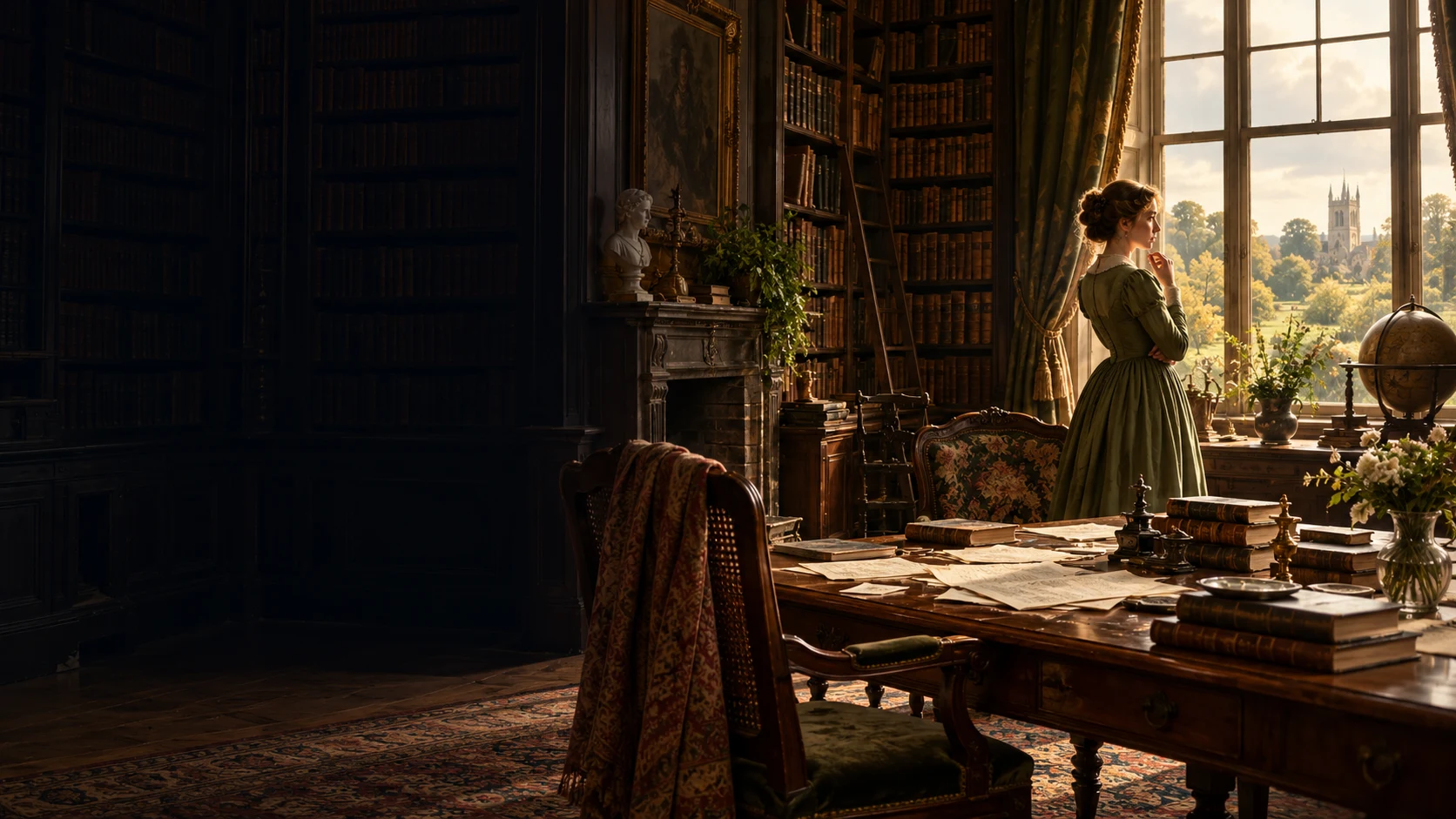
A scholarly country-house library with papers and tall shelves

THE STORY

Many lives. One changing town.

Dorothea Brooke and her neighbors pursue love, work and purpose in a provincial community shaped by ambition and reform.
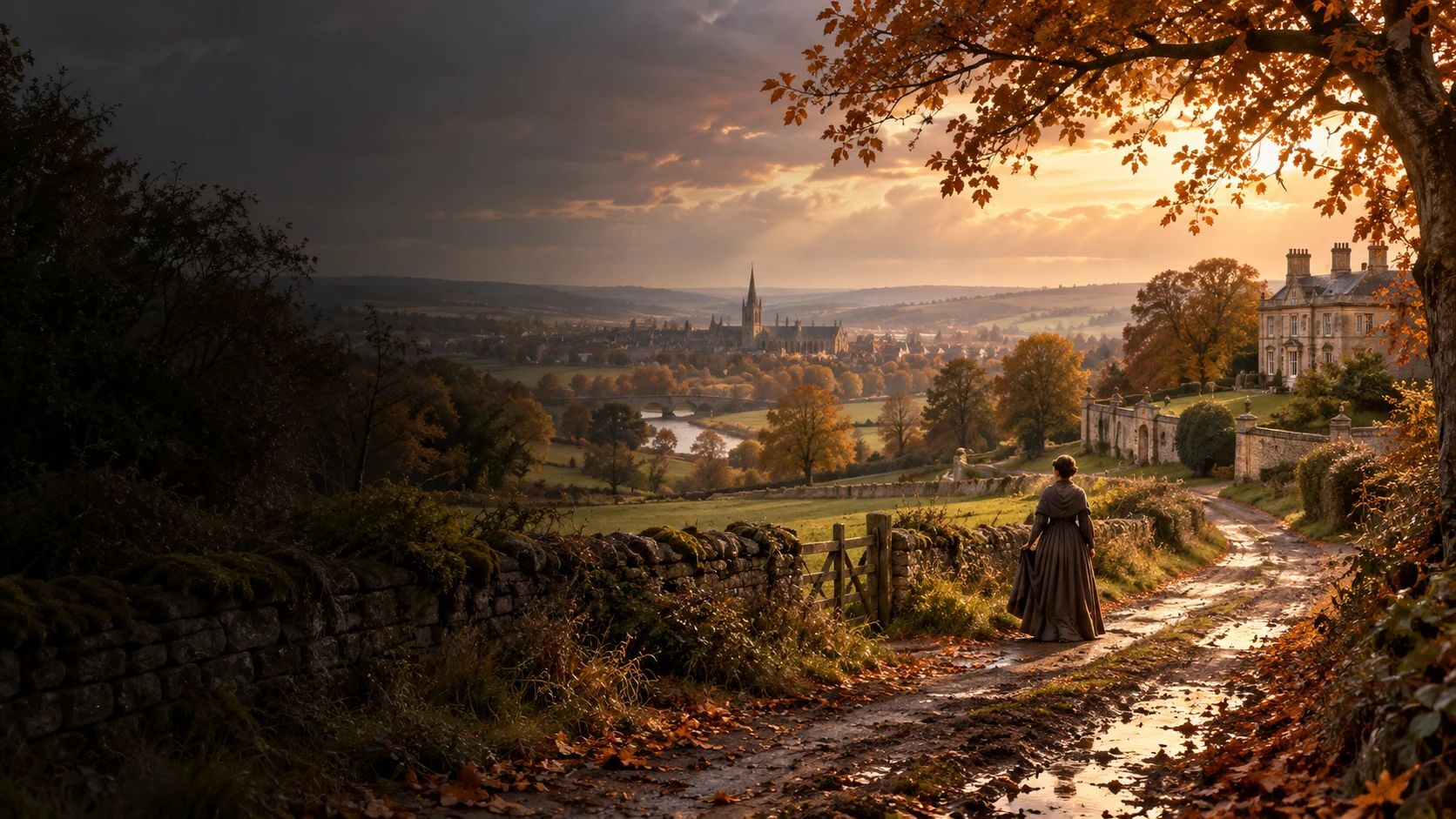
A country lane connecting a manor and distant town beneath an autumn sky

THE WORLD OF THE BOOK

A town woven from lives.

Drawing rooms, country lanes and busy streets reveal how private choices ripple through a whole community.
Middlemarch front cover
Read the interior preview

LOOK INSIDE

Open a book.
Enter a world.

Preview six pages from this edition. Select a page to enlarge it, or use the arrows to keep reading.

Spread 1 of 3
Middlemarch · PDF page 10
Actual interior PDF page 10 of Middlemarch
Read accessible text

8 with that common-sense which is able to accept momentous doctrines without any eccentric agitation. Dorothea knew many passages of Pascal’s Pensees and of Jeremy Taylor by heart; and to her the destinies of mankind, seen by the light of Christianity, made the solicitudes of feminine fashion appear an occupation for Bedlam. She could not reconcile the anxieties of a spiritual life involving eternal consequences, with a keen interest in gimp and artificial protrusions of drapery. Her mind was theoretic, and yearned by its nature after some lofty conception of the world which might frankly include the parish of Tipton and her own rule of conduct there; she was enamoured of intensity and greatness, and rash in embracing whatever seemed to her to have those aspects; likely to seek martyrdom, to make retractations, and then to incur martyrdom after all in a quarter where she had not sought it. Certainly such elements in the character of a marriageable girl tended to interfere with her lot, and hinder it from being decided according to custom, by good looks, vanity, and merely canine affection. With all this, she, the elder of the sisters, was not yet twenty, and they had both been educated, since they were about twelve years old and had lost their parents, on plans at once narrow and promiscuous, first in an English family and afterwards in a Swiss family at Lausanne, their bachelor uncle and guardian trying in this way to remedy the disadvantages of their orphaned condition. It was hardly a year since they had come to live at Tipton Grange with their uncle, a man nearly sixty, of acquiescent temper, miscellaneous opinions, and uncertain vote. He had travelled in his younger years, and was held in this part of the county to have contracted a too rambling habit of mind. Mr. Brooke’s conclusions were as difficult to predict as the weather: it was only safe to say that he would act with benevolent intentions, and that he would spend as little money as possible in carrying them out. For the most glutinously indefinite minds enclose some hard grains of habit; and a man has been seen lax about all his own interests except the retention of his snuff-box, concerning which he was watchful, suspicious, and greedy of clutch. In Mr. Brooke the hereditary strain of Puritan energy was clearly in abeyance; but in his niece Dorothea it glowed alike through faults and virtues, turning sometimes into impatience of her uncle’s talk or his way of “letting things be” on his estate, and making her long all the more for the time when she would be of age and have some command of money for generous schemes. She was regarded as an heiress; for not only had the sisters seven hundred a-year each from their parents, but if

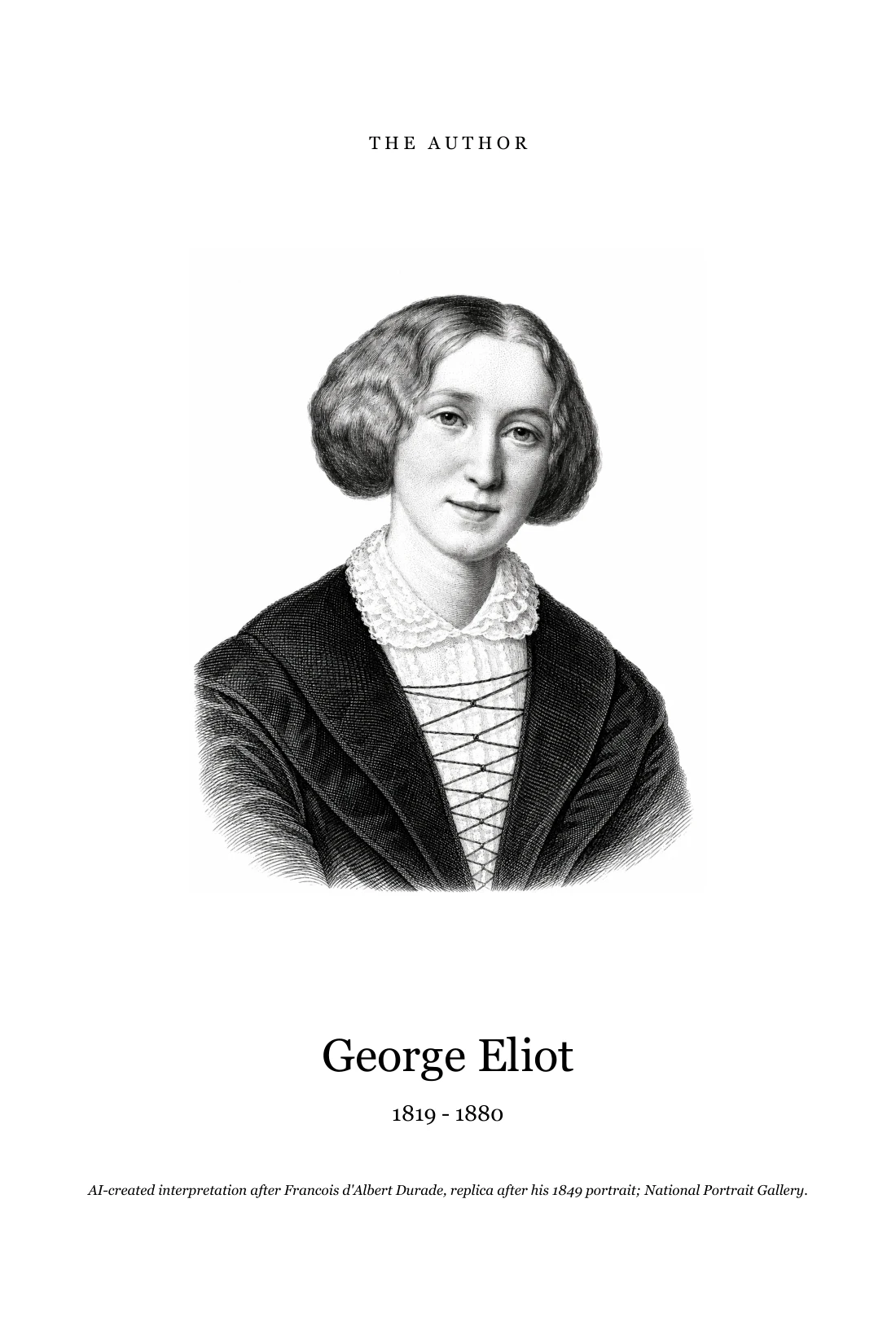
George Eliot portrait page from this edition

ABOUT THE AUTHOR

George Eliot

George Eliot was the pen name of Mary Ann Evans, an English novelist, poet, journalist and translator. Her fiction is distinguished by psychological insight and close attention to the relationships that connect individuals with their communities. Small decisions can acquire consequences that no character fully anticipates.

More about the author ↗

Discover the author behind the story. This portrait and biography are included in your edition.

FREE TO READ

Take it with you.

Middlemarch is in the public domain, so its words belong to everyone. Download our edition free. No account needed.

Read it in your browser ↗
Add it to your reading app
iPhone & iPad
Tap download, then open the file from Safari’s downloads, tap Share and choose Books. It stays in your Apple Books library.
Android
Tap download, open the file and choose Google Play Books. Or, in Play Books, go to Library, tap ⋮ and choose Upload files.
Kindle
Send the file to your Kindle library with Amazon’s Send to Kindle.
Kobo, Moon+ Reader and other apps
Open the downloaded file with the app, or use the app’s import option.

KEEP BROWSING

More from the library.

Men, Women and Ghosts cover

Men, Women and Ghosts

Amy Lowell

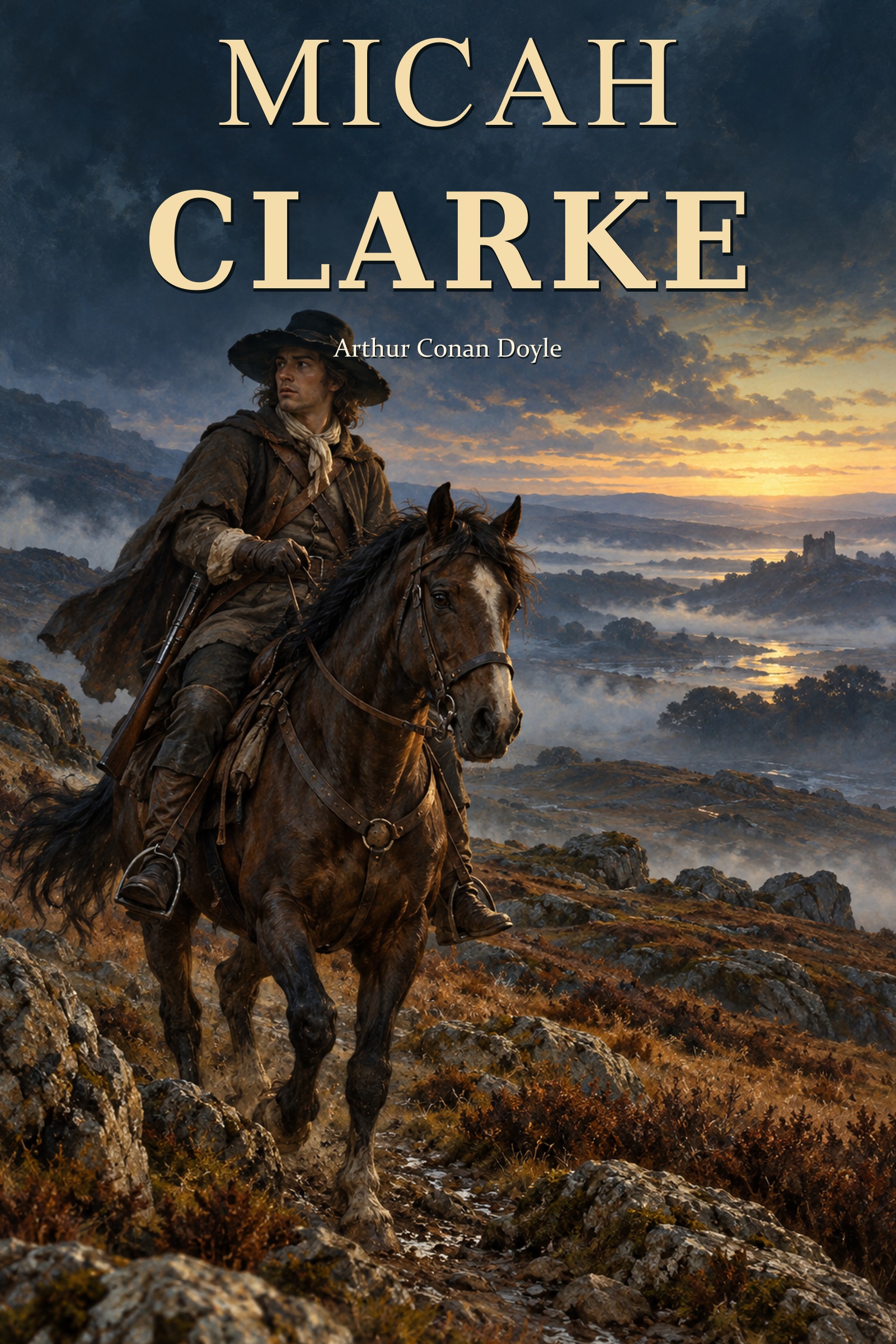
Micah Clarke cover

Micah Clarke

Arthur Conan Doyle

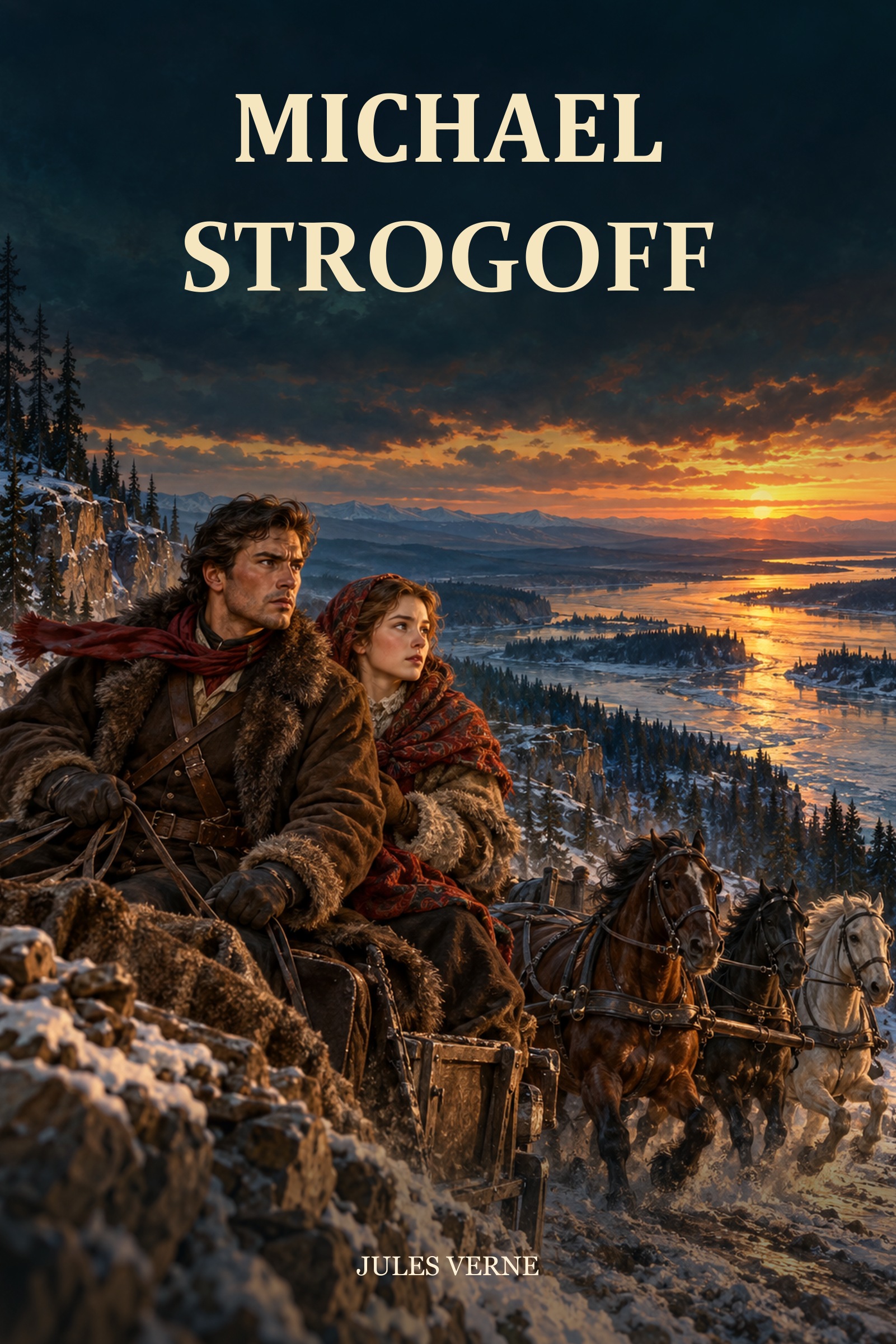
Michael Strogoff; Or, The Courier of the Czar cover

Michael Strogoff; Or, The Courier of the Czar

Jules Verne

Midwinter cover

Midwinter

John Buchan

Mirthful Haven cover

Mirthful Haven

Booth Tarkington

Miss Mapp cover

Miss Mapp

E. F. Benson

Browse the complete library ↗
YOUR NEXT CHAPTER

Your book bag 0

A little escape. A story to keep.

Loading your book bag…