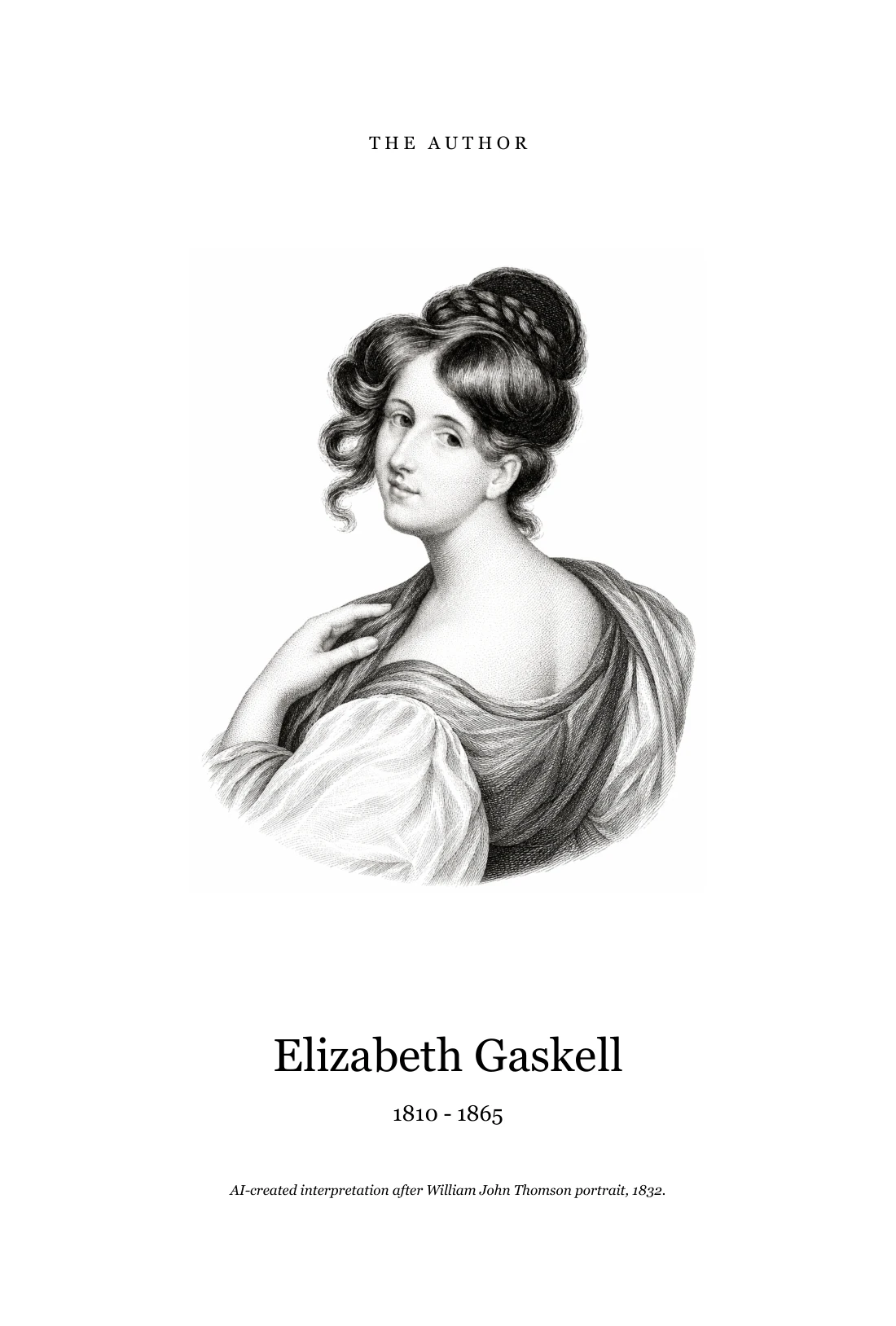
The last instalment of Wives and Daughters, published in The Cornhill Magazine in January 1866, ends in a different voice. “Here the story is broken off, and it can never be finished,” the editor told his readers. Elizabeth Gaskell had died suddenly two months earlier, aged fifty-five, with only the final chapter left to write.
It is a strange way to meet a novelist, and it is also the strongest argument for reading her: people mourned the ending they would never get. If you are new to the Elizabeth Gaskell books, though, begin earlier in her career, with Cranford, a short, funny and unexpectedly moving book about a town run by women. Then go on to North and South, the novel most readers now love best.
Which Elizabeth Gaskell book should you read first?
Cranford. It is the shortest of her major books and the easiest to love. It began as a few sketches for Charles Dickens’s weekly magazine, Household Words, and grew, between 1851 and 1853, into a portrait of a small town where genteel poverty is never mentioned and everyone pretends not to notice how little anyone has. Its opening sets the tone.
In the first place, Cranford is in possession of the Amazons; all the holders of houses above a certain rent are women.
Elizabeth Gaskell, Cranford (1853)
Cranford was modelled on Knutsford, the Cheshire town where Gaskell was brought up by her aunt after her mother’s death. The comedy is gentle, the characters are drawn with great affection, and then, quietly, it breaks your heart. The BBC adapted it for television in 2007, with Judi Dench as the gentle Miss Matty.
The Elizabeth Gaskell books in reading order
- $13.99
Cranford
1853. The ladies of a small country town, their card parties, their economies and their dread of anything vulgar. Delicate comedy with a real sorrow running underneath.
- $21.99
North and South
1855. Margaret Hale, a clergyman’s daughter from the south, moves to a northern mill town and clashes with the mill owner John Thornton. A love story and an argument about industry, and both work.
- $28.99
Wives and Daughters
1866. Molly Gibson, a country doctor’s daughter, acquires a stepmother and a dazzling stepsister. The most Austen-like of her books, and many readers’ favourite, despite its missing last chapter.
- $20.99
Mary Barton
1848. Her first novel: a working-class Manchester family in the hungry 1840s, a strike, a crime and a young woman caught between two men. Raw, angry and full of compassion.


North and South, and the argument with Dickens
North and South ran in Household Words in twenty weekly parts from September 1854 to January 1855, and the collaboration was not a happy one. Gaskell wanted to call the novel Margaret Hale; Dickens insisted on the broader title. She had planned twenty-two instalments and was forced to squeeze the story into twenty, and Dickens complained privately about how hard she was to edit.
The result is still her best-loved book. Its fictional town of Milton is Manchester, where Gaskell lived as a minister’s wife, and the novel gives both the mill owners and their striking workers a fair hearing. It also has one of the great slow-burning romances in Victorian fiction, which is a large part of why the 2004 BBC adaptation, with Richard Armitage as Thornton, found such a devoted audience.

Wives and Daughters: the unfinished masterpiece
Do not let the missing chapter put you off. Wives and Daughters is complete in every way that matters: the plot has been resolved in all but its final scene, and the Cornhill’s editor, Frederick Greenwood, explained in a closing note what Gaskell had planned. It is a long book, close to seven hundred pages, but it is wise, witty and warm, and the stepmother, Mrs Gibson, is one of the great comic monsters of the period. Fans of Jane Austen’s novels should start here instead of with Cranford.
What else did Elizabeth Gaskell write?
Two more novels are worth seeking out. Ruth (1853) is about a seduced and abandoned orphan who raises her child under a false name; it was so controversial that, Gaskell reported, two acquaintances burned their copies. Sylvia’s Lovers (1863) is set in a Yorkshire whaling port during the Napoleonic wars, and Gaskell went to Whitby to research it.
She also wrote The Life of Charlotte Brontë (1857), at the request of Charlotte’s father, and it shaped the Brontës’ reputation for generations. If you have come to Gaskell from that direction, our guides to Charlotte Brontë’s four novels and Anne Brontë follow naturally. For tips on settling into her longer books, see How to read a long Victorian novel.
But start in the little town where the women hold the houses and the gentlemen somehow disappear. Open Cranford, and within a few pages you will be keeping up appearances with the rest of them.
Questions readers ask
What is Elizabeth Gaskell’s best book?
North and South is the most popular today, and many critics name Wives and Daughters as her masterpiece. Cranford is the most widely loved of her shorter works.
Which Elizabeth Gaskell book should I read first?
Cranford is the best place to start: short, funny and touching. If you prefer a full-length novel with a romance at its centre, begin with North and South.
Is Wives and Daughters finished?
Almost. Gaskell died in November 1865 with only the final chapter unwritten, and the magazine’s editor added a note explaining how she meant the story to end.
How many novels did Elizabeth Gaskell write?
Six, counting Cranford, which grew out of linked sketches: Mary Barton, Cranford, Ruth, North and South, Sylvia’s Lovers and Wives and Daughters. Among the Elizabeth Gaskell books there are also many shorter works and a biography of Charlotte Brontë.
 Ruth412 pages · $20.99
 Sylvia's Lovers488 pages · $22.99