early nineteenth century English village at atmospheric dusk
PIPCUB CINEMATIC EDITIONS / PAPERBACK BOOKS

Silas Marner

George Eliot

A solitary weaver finds his life transformed by a child and the community around him.

$13.99

Printed for you. Shipping calculated at checkout.

Checkout opening soon. Shipping & delivery Returns
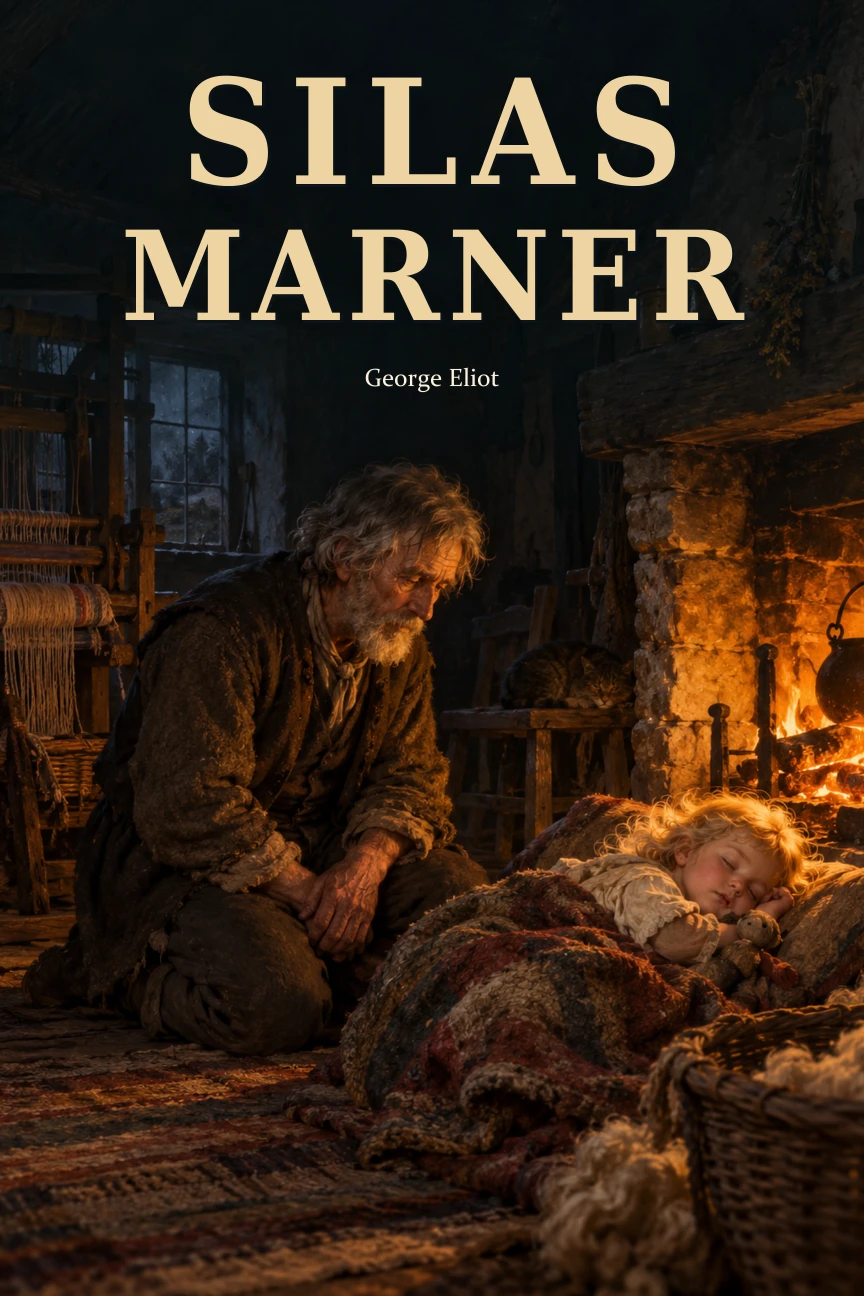
Silas Marner — actual Pipcub paperback cover
SCROLL INTO THE STORYAN IMAGINED WORLD · ORIGINAL AI ART
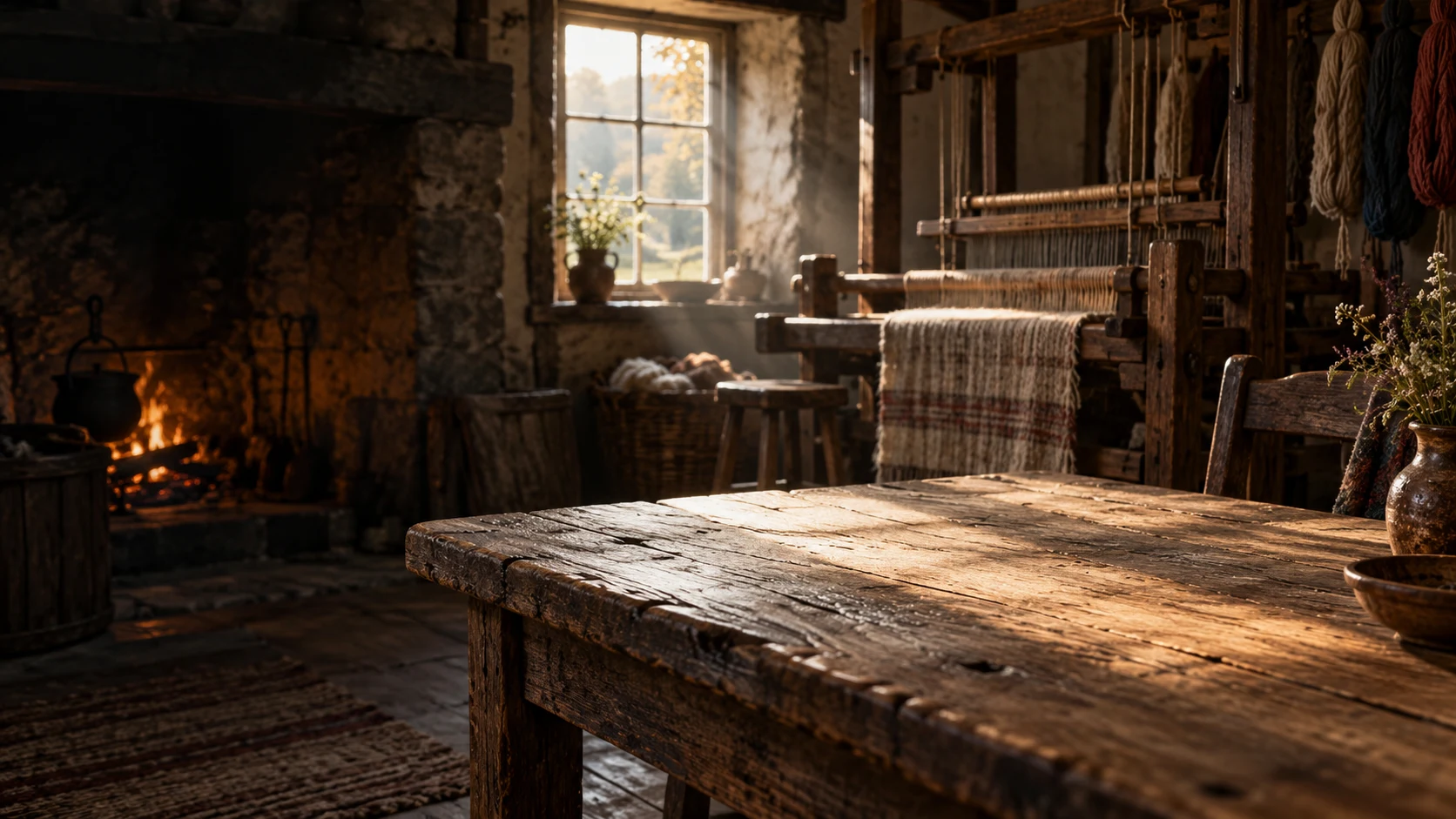
weaver's cottage with hand loom with warm window light

THE STORY

A life rewoven.

A solitary weaver finds his life transformed by a child and the community around him.

snowy cottage doorway beneath bare trees

THE WORLD OF THE BOOK

From solitude to belonging.

The loom, the cottage and the village trace a movement from isolation toward trust and affection.
Silas Marner front cover
Read the interior preview

LOOK INSIDE

Open a book.
Enter a world.

Preview six pages from this edition. Select a page to enlarge it, or use the arrows to keep reading.

Spread 1 of 3
Silas Marner · PDF page 6
Actual interior PDF page 6 of Silas Marner
Read accessible text

4 the weather; and the process by which rapidity and dexterity of any kind were acquired was so wholly hidden, that they partook of the nature of conjuring. In this way it came to pass that those scattered linen-weavers—emigrants from the town into the country—were to the last regarded as aliens by their rustic neighbours, and usually contracted the eccentric habits which belong to a state of loneliness. In the early years of this century, such a linen-weaver, named Silas Marner, worked at his vocation in a stone cottage that stood among the nutty hedgerows near the village of Raveloe, and not far from the edge of a deserted stone-pit. The questionable sound of Silas’s loom, so unlike the natural cheerful trotting of the winnowing-machine, or the simpler rhythm of the flail, had a half-fearful fascination for the Raveloe boys, who would often leave off their nutting or birds’-nesting to peep in at the window of the stone cottage, counterbalancing a certain awe at the mysterious action of the loom, by a pleasant sense of scornful superiority, drawn from the mockery of its alternating noises, along with the bent, tread-mill attitude of the weaver. But sometimes it happened that Marner, pausing to adjust an irregularity in his thread, became aware of the small scoundrels, and, though chary of his time, he liked their intrusion so ill that he would descend from his loom, and, opening the door, would fix on them a gaze that was always enough to make them take to their legs in terror. For how was it possible to believe that those large brown protuberant eyes in Silas Marner’s pale face really saw nothing very distinctly that was not close to them, and not rather that their dreadful stare could dart cramp, or rickets, or a wry mouth at any boy who happened to be in the rear? They had, perhaps, heard their fathers and mothers hint that Silas Marner could cure folks’ rheumatism if he had a mind, and add, still more darkly, that if you could only speak the devil fair enough, he might save you the cost of the doctor. Such strange lingering echoes of the old demon-worship might perhaps even now be caught by the diligent listener among the grey-haired peasantry; for the rude mind with difficulty associates the ideas of power and benignity. A shadowy conception of power that by much persuasion can be induced to refrain from inflicting harm, is the shape most easily taken by the sense of the Invisible in the minds of men who have always been pressed close by primitive wants, and to whom a life of

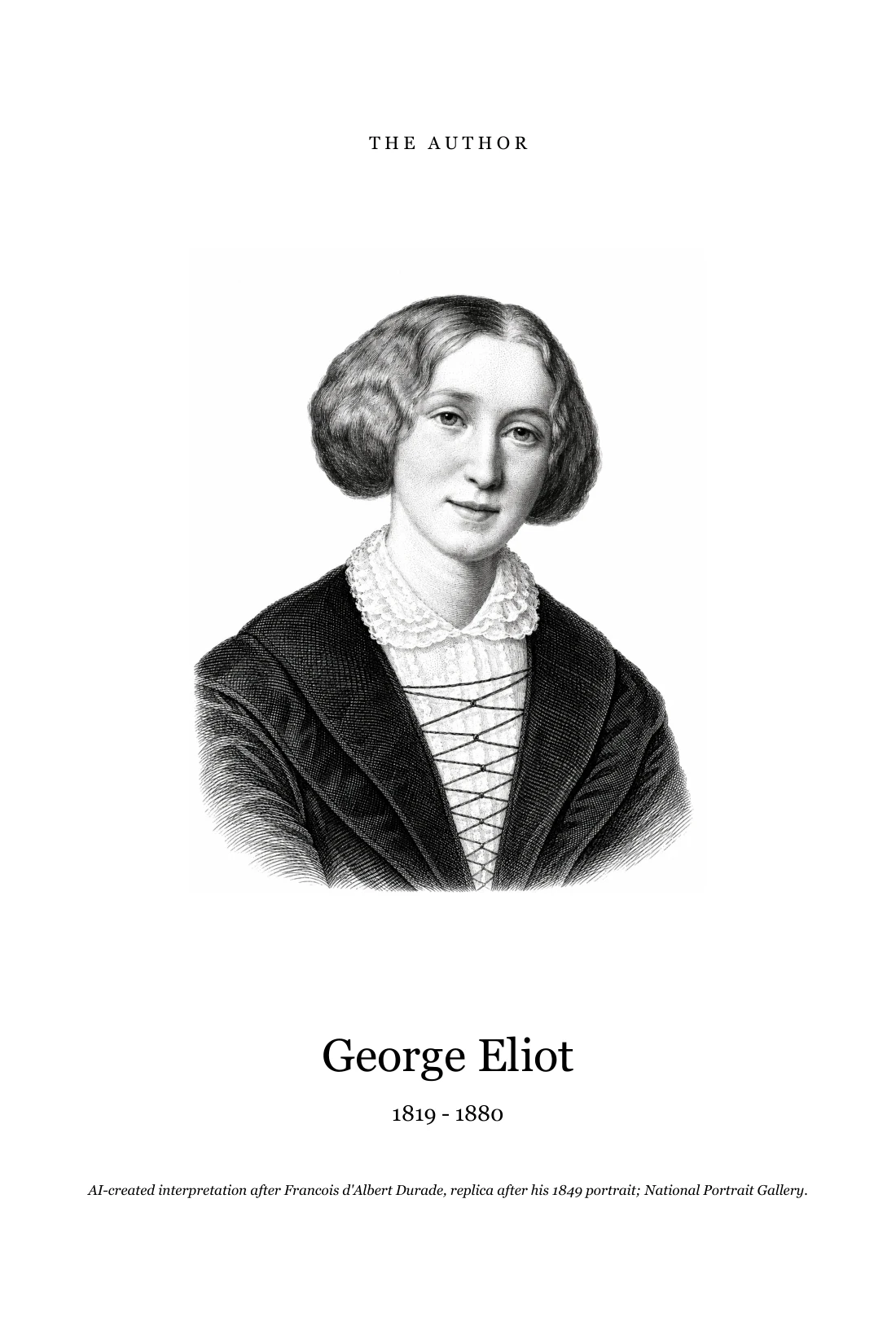
George Eliot portrait page from this edition

ABOUT THE AUTHOR

George Eliot

George Eliot was the pen name of Mary Ann Evans, an English novelist, poet, journalist and translator. Her fiction is distinguished by psychological insight and close attention to the relationships that connect individuals with their communities. Small decisions can acquire consequences that no character fully anticipates.

More about the author ↗

Discover the author behind the story. This portrait and biography are included in your edition.

FREE TO READ

Take it with you.

Silas Marner is in the public domain, so its words belong to everyone. Download our edition free. No account needed.

Read it in your browser ↗
Add it to your reading app
iPhone & iPad
Tap download, then open the file from Safari’s downloads, tap Share and choose Books. It stays in your Apple Books library.
Android
Tap download, open the file and choose Google Play Books. Or, in Play Books, go to Library, tap ⋮ and choose Upload files.
Kindle
Send the file to your Kindle library with Amazon’s Send to Kindle.
Kobo, Moon+ Reader and other apps
Open the downloaded file with the app, or use the app’s import option.

KEEP BROWSING

More from the library.

She Who Sleeps cover

She Who Sleeps

Sax Rohmer

Shirley cover

Shirley

Charlotte Brontë

Siddhartha cover

Siddhartha

Hermann Hesse

Simon cover

Simon

J. Storer Clouston

Sir Gibbie cover

Sir Gibbie

George MacDonald

Sir Nigel cover

Sir Nigel

Arthur Conan Doyle

Browse the complete library ↗
YOUR NEXT CHAPTER

Your book bag 0

A little escape. A story to keep.

Loading your book bag…