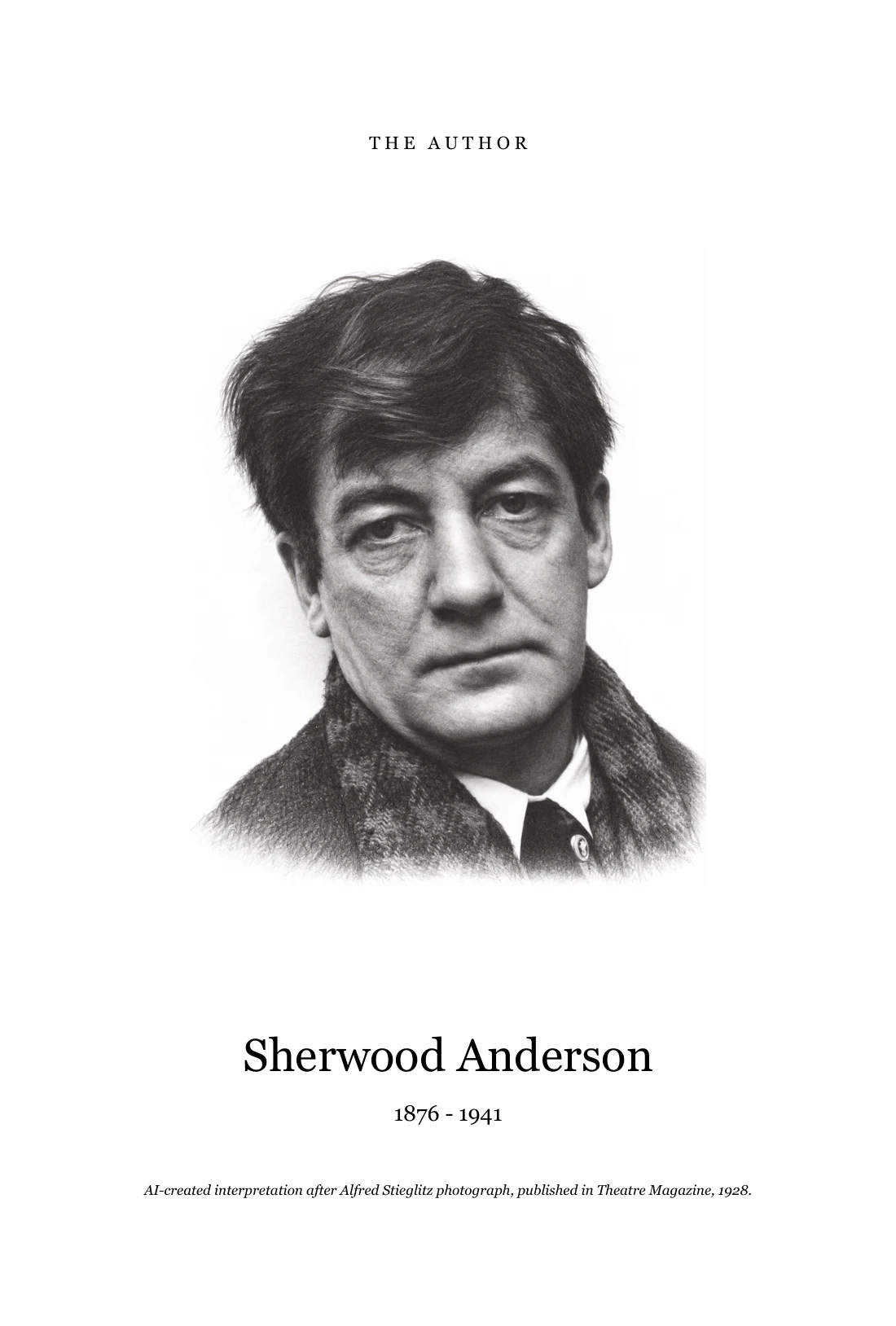
The owner of a paint business in Elyria, Ohio, walked out of his office one day in 1912, aged thirty-six, and kept walking. Some days later he was found in a Cleveland drugstore, apparently in the grip of a breakdown. He never went back to the firm, or to that life. Within a few years Sherwood Anderson was in Chicago, writing advertising copy and, in his own time, stories, and in 1919 those stories became Winesburg, Ohio.
Of all Sherwood Anderson’s books, Winesburg is the one that lasted. It is not quite a novel and not quite a story collection, but a cycle of twenty-two linked tales about the inhabitants of one Ohio town, and it changed the way American writers thought about small-town life, and about short fiction itself.
What is Winesburg, Ohio about?
Winesburg is a small farming town at the end of the nineteenth century, closely modelled on Clyde, Ohio, where Anderson lived from about the age of eight to nineteen. Its people are, in Anderson’s word, grotesques: a doctor who writes his thoughts on scraps of paper and stuffs them in his pockets, a former teacher whose hands betray him, a mother who longs for her son to become what she could not. They are not monsters. They are people who have taken hold of one idea about life and been bent out of shape by it.
The book opens with “The Book of the Grotesque”, a short prologue about an old writer who has a theory to explain them all:
It was the truths that made the people grotesques.
“The Book of the Grotesque”, Winesburg, Ohio (1919)
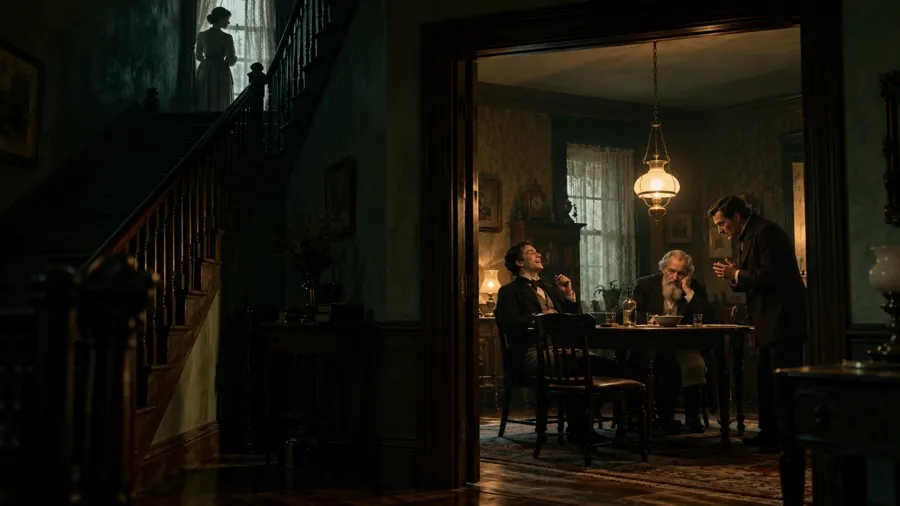
Threading through the stories is George Willard, a young reporter on the Winesburg Eagle, to whom the townspeople come, one by one, to try to say the things they have never said aloud. His growing up gives the book its shape, and in the last story he takes the train out of town.
Why does Winesburg, Ohio matter?
Before Anderson, the small town in American fiction was usually either a sentimental haven or a target for satire. Anderson, influenced in part by Edgar Lee Masters’s Spoon River Anthology, saw it as a place of hidden loneliness and private longing, and he told its stories in plain, rhythmic sentences that owed something to Gertrude Stein. Critics have traced the book’s influence through Jean Toomer, Ernest Hemingway, William Faulkner and John Steinbeck, and in 1998 the Modern Library placed it twenty-fourth on its list of the best English-language novels of the twentieth century.
The debts were personal as well as literary. In New Orleans in the mid-1920s Anderson befriended the young William Faulkner. Hemingway, whom he had encouraged, repaid him in 1926 with The Torrents of Spring, a parody of Anderson’s novel Dark Laughter, which turned out to be the only bestseller Anderson had in his lifetime. The full story is in Hemingway’s first great novels.
Where to start with Sherwood Anderson’s books
- $13.99
Winesburg, Ohio: A Group of Tales of Ohio Small Town Life
1919. Twenty-two linked tales of one Ohio town and the young reporter its people confide in. Anderson’s masterpiece, and a landmark among American story cycles.
- $12.99
Triumph of the Egg, and Other Stories
1921. Tales and poems of Midwestern lives, including “I Want to Know Why”, about a boy at the racetrack, and “The Egg”, his funniest and saddest story. It appeared in the same year as the work that won Anderson the first Dial Award.


Start with Winesburg, Ohio. The stories can be read in any order, but they are best read in sequence, so that the town gradually fills in around George Willard. Try “Hands”, “Paper Pills” and “Mother” first if you want a taste.
Then go on to Triumph of the Egg. Its central story, “The Egg”, is narrated by the son of a failed chicken farmer who opens a restaurant in Bidwell, Ohio, and tries, disastrously, to entertain the customers. It is a comic masterpiece about ambition and humiliation, and a perfect example of how Anderson can make you laugh and wince in the same paragraph.
What else did Sherwood Anderson write?
Anderson published novels, memoirs and essays as well as stories, beginning with Windy McPherson’s Son in 1916. In his later years he settled in south-western Virginia, where he owned and wrote for local newspapers. He died in Colón, Panama, on 8 March 1941, after a swallowed toothpick caused internal injuries and fatal peritonitis. His gravestone reads “Life, Not Death, Is the Great Adventure”.
For another view of the American small town, published just a year after Winesburg, see Sinclair Lewis and Main Street. Readers who love Anderson’s quiet, open-ended stories often find their next favourite in Chekhov or Katherine Mansfield.
But start in Winesburg, on the half-decayed veranda of a small frame house near a ravine, where a fat little old man named Wing Biddlebaum is walking nervously up and down. Winesburg, Ohio begins there, and it is hard to stop.
Questions readers ask
What is Sherwood Anderson’s most famous book?
Of all Sherwood Anderson’s books, Winesburg, Ohio (1919), a cycle of twenty-two linked stories about the inhabitants of a small Ohio town, is the most famous and influential.
Is Winesburg, Ohio a novel or short stories?
Both, in a sense. It is a short story cycle: each tale stands alone, but they share a setting and characters, especially the young reporter George Willard, and together they read like a novel.
Is Winesburg a real town?
There is a real Winesburg, Ohio, but Anderson’s fictional town is based on Clyde, Ohio, where he grew up.
How did Sherwood Anderson influence Hemingway and Faulkner?
His plain style and focus on ordinary inner lives shaped both writers early in their careers. He befriended Faulkner in New Orleans, and Hemingway parodied him in The Torrents of Spring.
 A Story Teller's Story280 pages · $16.99