


What makes the greatest sea stories so gripping is that a ship is a closed world. There is no walking away from a bad captain, a rising wind or your own fear. Herman Melville sailed on a whaler, Joseph Conrad spent some twenty years in the merchant service, Jack London worked a sealing schooner, and Stephen Crane survived a shipwreck. Their fiction carries the weight of things they had seen.
This list of the best sea novels mixes those sailor-writers with a few landlubbers whose imaginations went to sea anyway. We have included whaling, sealing and fishing voyages, storms and calms, a submarine, a lifeboat and a desert island — eleven books in all, from the 1830s to the First World War.
The heavyweights
If you read only a handful of classic sea stories, start with these. Each one puts a person against the ocean and a captain against his crew.
Moby-Dick
1851. Ishmael ships aboard the Pequod under Captain Ahab, who is hunting the white whale that took his leg. Encyclopaedic, funny and wild, and drawn from Melville’s own time on a whaler.
The Sea-Wolf
1904. A gentle literary critic is plucked from San Francisco Bay and pressed into service aboard a sealing schooner run by the brutal, brilliant Wolf Larsen. A battle of ideas played out with fists.
Captains Courageous
1897. A spoiled millionaire’s son falls overboard from a liner and is picked up by a Grand Banks fishing schooner, where he has to earn his keep. Kipling’s warmest adventure.
Lord Jim
1900. A young officer makes one catastrophic decision aboard a pilgrim ship and spends the rest of the novel trying to live it down. The sea chapters are among Conrad’s finest.


Melville’s novel sold poorly in his lifetime and was only widely recognised as a classic in the twentieth century. Read the story behind it in Did you know Moby-Dick was based on a real whale attack?
Joseph Conrad’s sea stories
Joseph Conrad went to sea as a teenager and rose to the rank of master in the British merchant service before he published a word. He wrote in English, his third language, and no one has written better about the moral pressure of command.
Typhoon
A stolid, unimaginative captain steers his steamer straight into a typhoon. Short enough to read in an evening, with one of the great storms in literature at its centre.
The Shadow Line: A Confession
1917. A young man takes his first command and finds his ship becalmed in the Gulf of Siam with a fever-stricken crew. Drawn from Conrad’s own first command.


Shipwrecks, lifeboats and strange seas
Not every great sea story happens on deck. Some of the most vivid begin after the ship is gone.
The Open Boat and Other Stories
Crane survived the sinking of the steamer Commodore off Florida in 1897 and spent more than a day in a dinghy. The title story turns that ordeal into one of the best short stories in American literature.
The Boats of the Glen Carrig
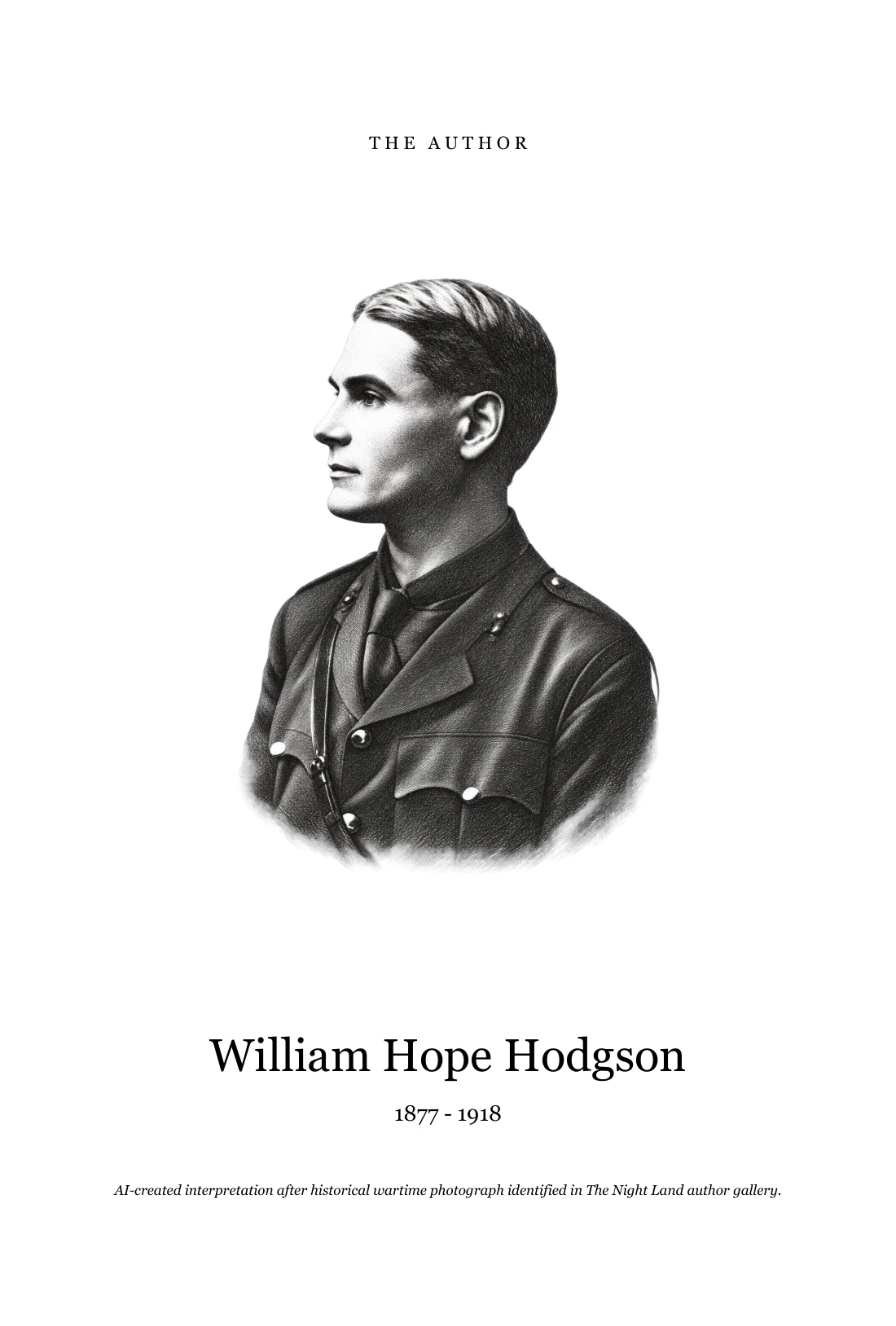
1907. Survivors of a lost ship drift into strange creeks and a weed-choked sea where something watches from the dark. William Hope Hodgson served at sea himself, and the horror feels grounded.
The Narrative of Arthur Gordon Pym of Nantucket
1838. Poe’s only complete novel: a stowaway, a mutiny, starvation and a voyage towards the South Pole that ends in one of literature’s most enigmatic final pages.


Under the sea and on the island
Two books for younger readers, or for anyone who wants adventure without the darkness.
Twenty Thousand Leagues Under the Sea
1870. Professor Aronnax is taken aboard the Nautilus, Captain Nemo’s electric submarine, for a voyage beneath every ocean. The title is a distance travelled, not a depth.
The Coral Island
1857. Three boys are shipwrecked on a Pacific island and make it their kingdom. William Golding wrote Lord of the Flies partly as a reply to it.


Like many Victorian adventure books, The Coral Island reflects the imperial attitudes of its day, especially in its portrayal of Pacific islanders, and it is worth reading with that in mind. We look at its unlikely afterlife in Did you know The Coral Island inspired Lord of the Flies?, and at Verne’s famous title in Did you know Twenty Thousand Leagues is a distance?
What are the best sea novels to start with?
It depends what you want from the voyage. For sheer scale and strangeness, nothing matches Moby-Dick, though it rewards patience. For a page-turner, The Sea-Wolf grips from the first chapter. For something short and perfect, take Typhoon or Crane’s “The Open Boat”. And if you want sea stories with cutlasses and buried gold, our list of classic pirate novels picks up where this one leaves off.
Whichever you choose, the whole adventure shelf is close at hand. But if you have never read a sea story at all, try Captains Courageous first. It has everything: a storm, a rescue, hard work, good company and a boy who comes home changed.
Questions readers ask
What is the greatest sea novel ever written?
Moby-Dick by Herman Melville is the most often named, for its ambition and its portrait of Captain Ahab. Joseph Conrad’s sea fiction, especially Lord Jim and Typhoon, is close behind.
What are the best sea novels for beginners?
Captains Courageous by Rudyard Kipling and The Sea-Wolf by Jack London are fast, vivid and approachable. Conrad’s Typhoon is short enough to read in one sitting.
Did Joseph Conrad really sail?
Yes. Conrad spent about two decades at sea, mostly in the British merchant service, and qualified as a master mariner before he turned to writing.