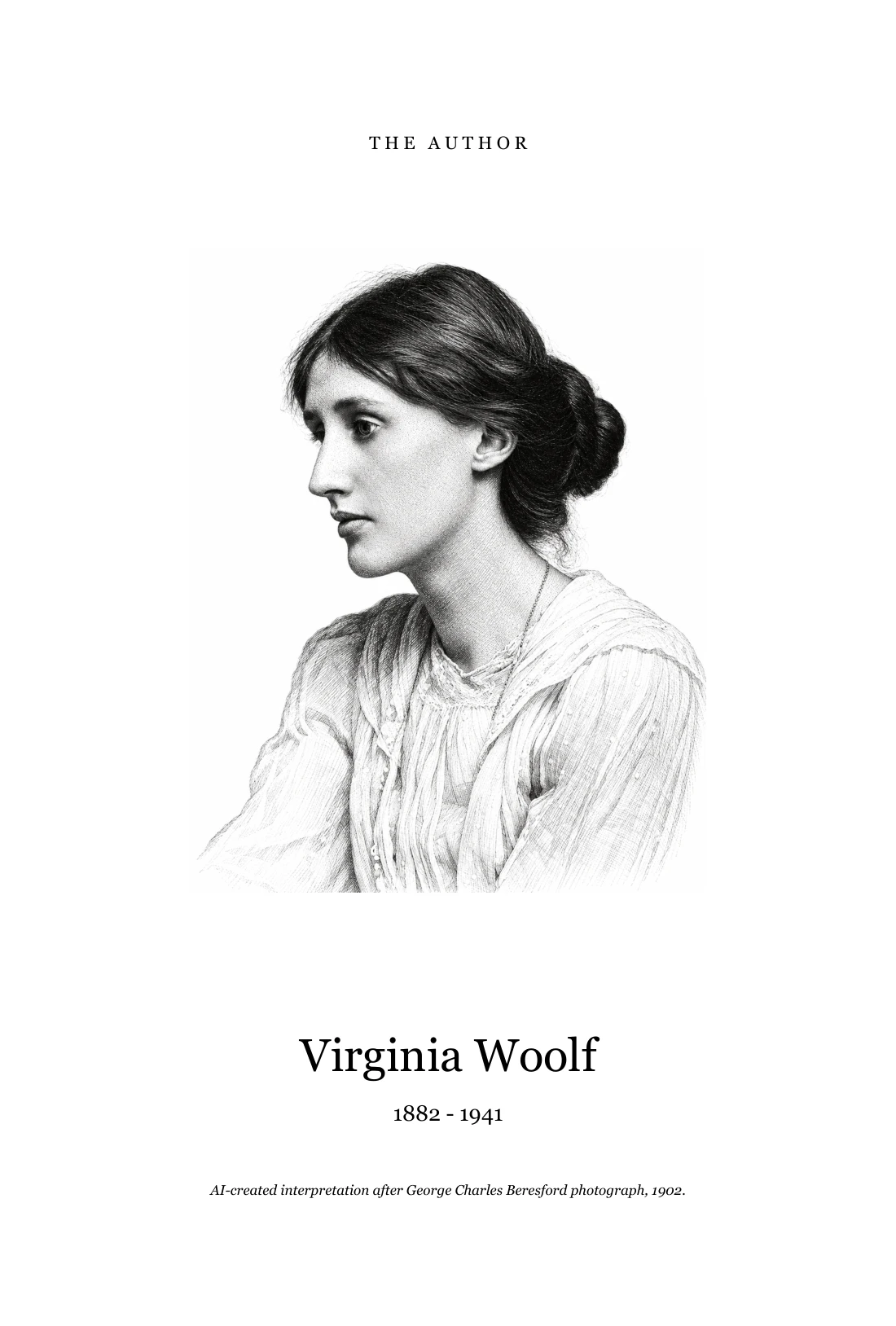
In 1917 Virginia and Leonard Woolf paid £19 for a hand printing press, set it up in the dining room of their house in Richmond and taught themselves to use it. Five years later their small Hogarth Press published her third novel, Jacob’s Room, and from then on the novels of Virginia Woolf were published in Britain under her own imprint.
That freedom is visible on every page of the books that followed. Mrs Dalloway came out from the same press in May 1925, and an essay collection, The Common Reader, appeared that year too. Between them they are the best introduction to her: one shows what she wanted the novel to do, the other explains why. If you are wondering where to start with Virginia Woolf books, start with Mrs Dalloway, which runs to about 160 pages and takes place on a single day.
Which Virginia Woolf book should you read first?
There are two good answers, depending on temperament.
- Dive in: Mrs Dalloway. Her most famous novel, and short. If you can enjoy following a mind as it drifts from a flower shop to a memory thirty years old and back again, you will enjoy Woolf.
- Wade in: The Voyage Out. Her first novel, written in a far more traditional style, with a plot, a ship and a group of English travellers in South America. You can watch her technique change in later books from here.
Mrs. Dalloway said she would buy the flowers herself.
Virginia Woolf, Mrs. Dalloway (1925)
That first sentence is as plain as a shopping list, and it sets the whole day moving. Clarissa Dalloway, a politician’s wife, walks through London in the middle of June 1923, preparing for a party that evening. Across the city Septimus Warren Smith, a young veteran suffering from shell shock, moves through the same streets in a very different state of mind. The two never meet, and the novel is about why that matters.

The early Virginia Woolf books, in order
- $18.99
The Voyage Out
1915. Young Rachel Vinrace sails to South America on her father’s ship and begins, awkwardly, to discover the world. Conventional on the surface, restless underneath. Look out for Mr and Mrs Dalloway, who board the ship for a few chapters.
- $13.99
Jacob's Room
1922. A novel built around an absence: Jacob Flanders, from childhood to Cambridge and beyond, seen only through the people who notice him. Her first truly experimental novel, and the first of her novels published by her own press.
- $12.99
Mrs. Dalloway
1925. One June day in London, a party and a soldier who cannot leave the war behind. Her working title was The Hours. The easiest of her great novels to finish in a weekend.
- $14.99
The Common Reader
1925. Essays on Chaucer, Montaigne, Defoe, Jane Austen, the Brontës, George Eliot, the Russians and modern fiction, written for the reader who reads for pleasure. The best companion to everything else on this list.


Clarissa Dalloway’s first appearance
Clarissa was not invented for Mrs Dalloway. She and her husband Richard first appear in The Voyage Out, ten years earlier, as passengers who join the ship for part of the voyage. Woolf returned to her in short stories, including “Mrs Dalloway in Bond Street”, and in the autumn of 1922 began treating that story as the first chapter of a novel. Reading the two books side by side is the clearest way to see how far Woolf travelled in a decade.
Why read The Common Reader?
Many readers never get to Woolf’s essays, and they miss the warmest part of her. The Common Reader takes its title from Samuel Johnson, who said he rejoiced to agree with the common reader, and Woolf makes that reader her hero: not a scholar, not a critic, but someone reading for love.
He reads for his own pleasure rather than to impart knowledge or correct the opinions of others.
Virginia Woolf, The Common Reader (1925)
The essays are short and opinionated, and several double as reading lists. “Modern Fiction” sets out what she was trying to do in her novels, and there are essays on Jane Eyre and Wuthering Heights and on the Russian novelists that pair naturally with our guides to Charlotte Brontë’s novels and where to start with Dostoevsky.
What comes after these?
Woolf’s second novel, Night and Day, a more traditional novel of love and marriage, came out in 1919, and the only collection of her stories she published in her lifetime, Monday or Tuesday, followed in 1921. After Mrs Dalloway came To the Lighthouse (1927) and the essay A Room of One’s Own (1929), both later than the books here and well worth seeking out. For the wider movement she belonged to, see Modernism explained in four books.
She died in 1941, in the river near her home in Sussex. But the books are full of life, and of London in particular. Pick up Mrs Dalloway, step out with Clarissa into a June morning, and go and buy the flowers.
Questions readers ask
What is the easiest Virginia Woolf book to read?
The Voyage Out, her first novel, is the most conventional and the easiest to follow. Mrs Dalloway is the best short introduction to her mature style.
What order should I read Virginia Woolf’s novels in?
Publication order works well: The Voyage Out (1915), Night and Day (1919), Jacob’s Room (1922), Mrs Dalloway (1925) and then To the Lighthouse (1927). Many readers prefer to start with Mrs Dalloway and go back.
What are Virginia Woolf’s most famous books?
Among the Virginia Woolf books, Mrs Dalloway and To the Lighthouse are the most famous novels, and A Room of One’s Own is her best-known essay.
 Night and Day444 pages · $20.99
 Monday or Tuesday52 pages · $9.99
 To the Lighthouse196 pages · $13.99
 A Room of One’s Own98 pages · $11.99