
BEGIN HERE
A life observed closely.
Walden
Thoreau reflects on simple living, work, nature and independence during his time beside Walden Pond.

Browse collections

Find your next chapter
Explore timeless stories, unexpected discoveries, and old favourites.
Henry David Thoreau was an American writer, naturalist and thinker, born in Concord, Massachusetts, in 1817.
THE LIFE
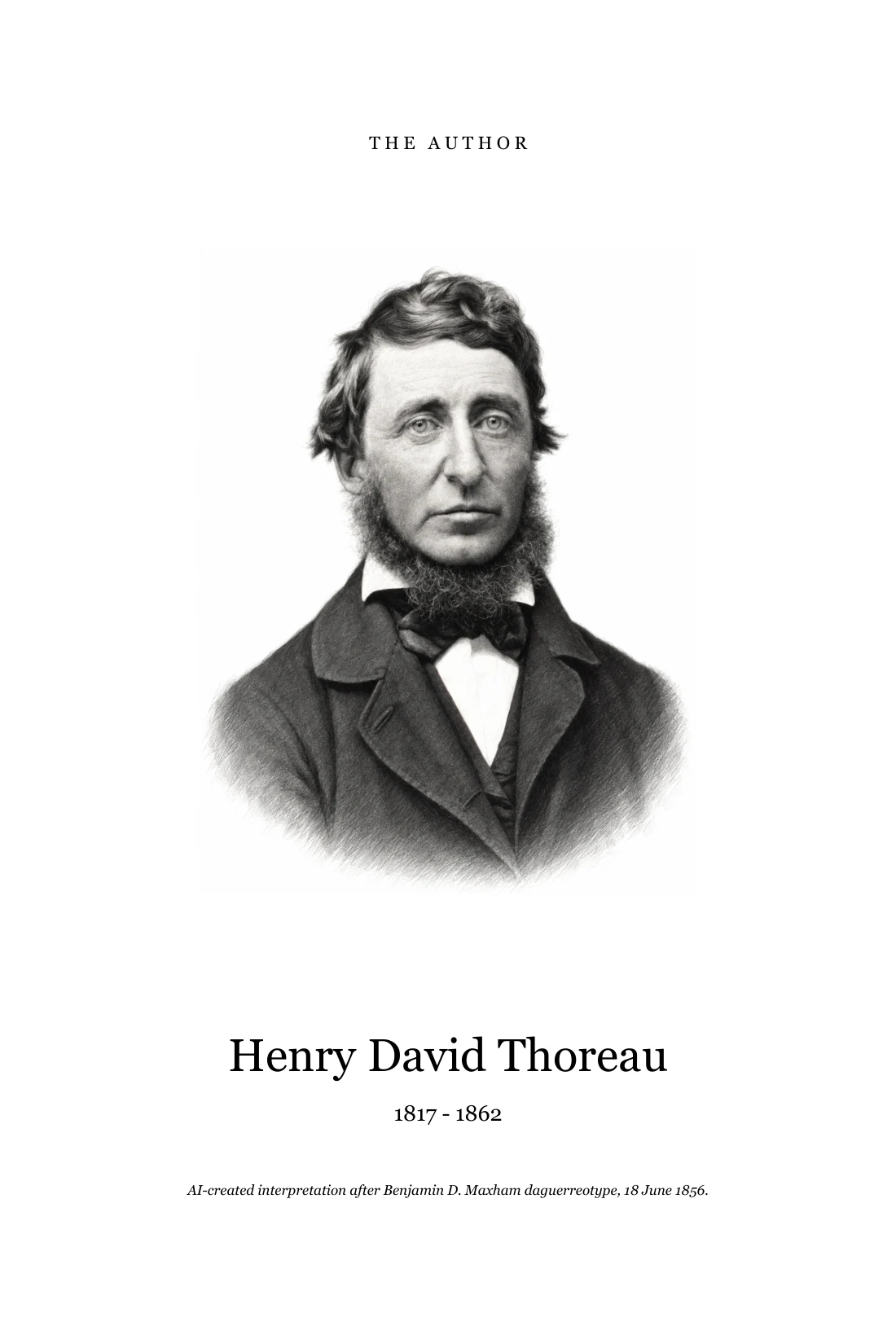
Henry David Thoreau was an American writer, naturalist and thinker, born in Concord, Massachusetts, in 1817. His work joins close observation of the natural world with questions about how a person should live. Practical activities, including teaching, surveying and work in his family's pencil business, accompanied his literary life.
From 1845 to 1847 he lived in a small house beside Walden Pond. Walden, published in 1854, grew from that experiment but is more than a record of daily events. Its carefully arranged reflections examine labour, possessions, attention, solitude and the assumptions people inherit about a successful life.
Thoreau also wrote forcefully about conscience and political responsibility. His essay now commonly called Civil Disobedience considers the individual's obligations when government sustains injustice. His opposition to slavery formed an important part of his public commitments.
He died in 1862, leaving extensive journals as well as books, essays and poetry. His writing rewards patient attention to small changes in language and landscape. A pond, a path or the arrival of a season can become an occasion to reconsider habits of perception. Observation is both a pleasure and a discipline through which familiar surroundings become newly demanding.
Biographical references: Walden Woods Project; Thoreau Society; Stanford Encyclopedia of Philosophy. Portrait source: Benjamin D. Maxham daguerreotype, 18 June 1856. Full source records retained in the edition archive.
BEGIN HERE
Walden
Thoreau reflects on simple living, work, nature and independence during his time beside Walden Pond.
KINDRED SPIRITS