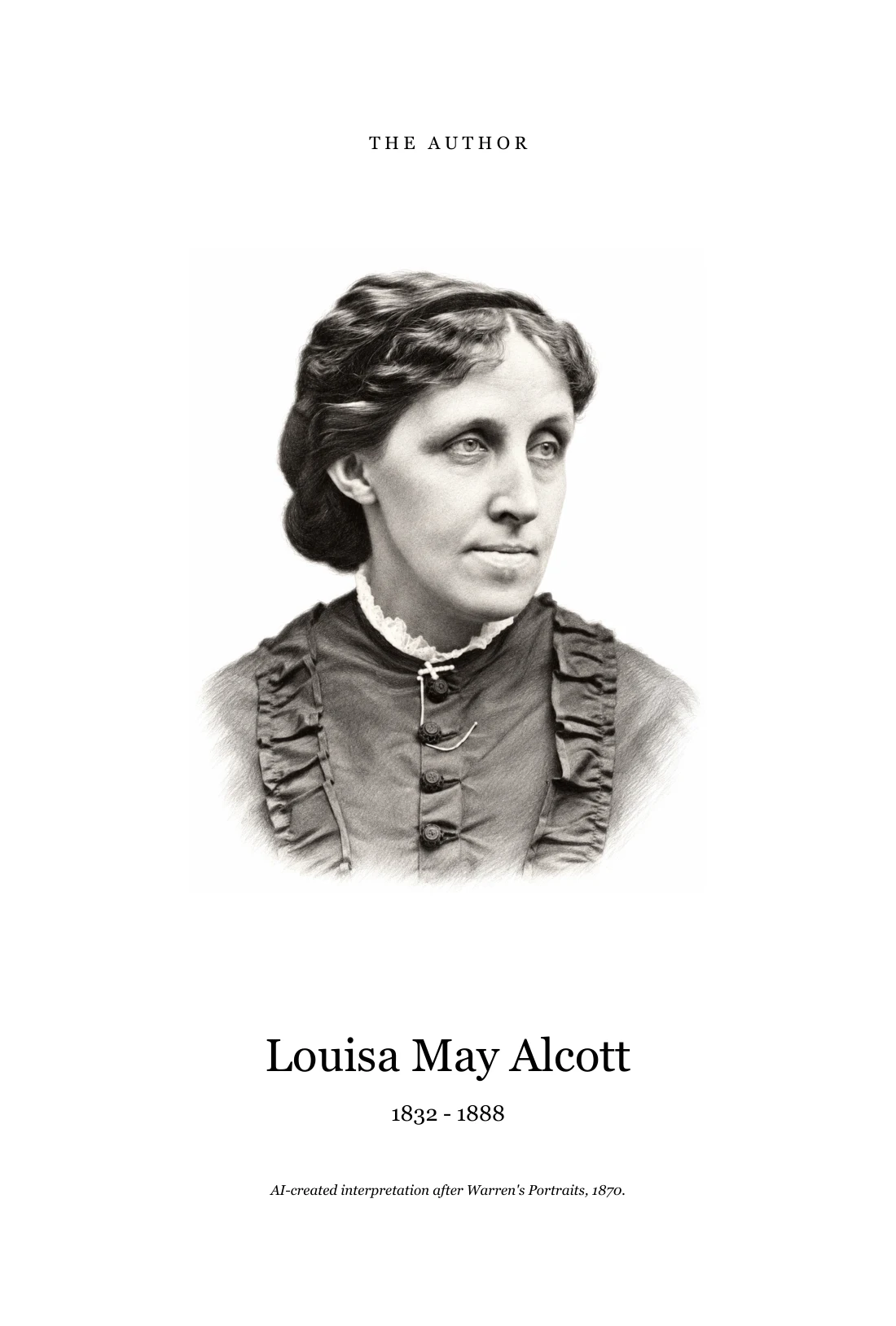
In 1867 Thomas Niles, a partner in the Boston publisher Roberts Brothers, asked Louisa May Alcott to write a book for girls. She was thirty-four, already a working writer, and she was not keen. She said she would try, put it off for months, and when she finally began, she grumbled in her journal that she had “never liked girls or knew many, except my sisters”.
That book was Little Women. Alcott wrote it reluctantly, quickly and very close to home, and within a year it had made her famous. The little women history is a good reminder that books do not always come from the plans their authors make for themselves.
Why didn’t Alcott want to write Little Women?
Alcott had been writing for money since her teens. Her father, the philosopher Bronson Alcott, was brilliant and almost entirely unable to earn a living, so Louisa sewed, taught, went into domestic service and served as a nurse in the Civil War, writing all the while to keep the family afloat.
The writing she enjoyed most was nothing like a gentle girls’ story. She was turning out lurid thrillers of revenge, disguise and dangerous women, published anonymously or under the name A. M. Barnard, and they paid. A moral tale for young readers looked like hack work by comparison. Niles, though, was persistent, and Roberts Brothers was publishing a book by her father at around the same time, which gave Louisa another reason to keep him happy.
Little Women history: how the book was written
In May 1868 Alcott began writing about the thing she knew best, her own family. The four March sisters are closely modelled on the four Alcott girls, Anna, Louisa, Elizabeth and May, and many episodes come from their childhood in Concord, Massachusetts: the home theatricals, the cheerful poverty, the mother who held everything together. Jo, hot-tempered and bookish and scribbling in the attic, is Louisa herself.
She wrote fast, sending Niles the first chapters within weeks and finishing the first part over the summer. Neither of them was certain it was any good. The story goes that Niles found the opening dull, but the girls he tried it on loved it, and that was enough. Alcott, reading the proofs, admitted it was better than she had expected, and guessed that if it succeeded, it would be because it was simple and true.
“Christmas won’t be Christmas without any presents,” grumbled Jo, lying on the rug.
Louisa May Alcott, Little Women (1868), opening line
Little Women was published on 30 September 1868 and was an immediate success. Readers wanted to know what happened next, and the reluctant author found herself with a second part to write.
Little Women and Good Wives
Alcott began the second part on 1 November 1868, aiming at a chapter a day, and finished it on New Year’s Day 1869. It picks up the sisters a few years on, as they grow up and make their way in the world. In Britain it was published separately as Good Wives, which is why some readers still think of it as a sequel; today the two parts are usually printed together as one novel.
Letters poured in while she was writing it, many of them asking whom the girls would marry. Alcott, who never married, found this exasperating, and she was determined that her readers would not decide Jo’s future for her. The choices she made have been argued over ever since, which is perhaps the surest sign of how real the Marches feel.
Little Women
1868–69. Meg, Jo, Beth and Amy March, from a poor Christmas in wartime New England to adulthood. The book Alcott didn’t want to write, and the one she is remembered for.
Little Men
1871. Jo and her husband run a lively, unconventional school at Plumfield. The first sequel.
Jo’s Boys
1886. The Plumfield boys grown up, and Alcott’s last look at the March family.
Behind a Mask; or, a Woman's Power
1866. A governess with a past works her way into a wealthy family. One of the thrillers Alcott preferred to write, published under a pen name.



Is Little Women worth reading today?
Yes, and not only for nostalgia. Alcott’s reluctance shows in the best way: she refused to write the pious little book Niles might have expected. The sisters quarrel, sulk, burn a sister’s manuscript and make real mistakes, and the moral lessons, though they are there, sit beside a great deal of comedy and warmth.
It is a long book, but an easy one to live with. Many chapters work as self-contained episodes, which makes it good for reading a few at a time over a winter. It suits readers from about ten upward and reads differently at every age: children tend to love Jo, while adults often find themselves understanding Meg and Amy rather better than they did the first time.
Where to go after Little Women
Alcott did come round to the Marches in the end, and wrote two more books about them; see Did you know Little Women has two sequels? If you would like to meet the writer she preferred to be, start with Behind a Mask and read Did you know Louisa May Alcott secretly wrote thrillers? And since the novel opens at Christmas, it earns its place among the best Christmas classics.
But begin where so many readers have, with four sisters on a winter evening and not a present between them. Little Women is the book its author never meant to write, and it is hard to imagine American fiction without it.
Questions readers ask
Why did Louisa May Alcott write Little Women?
Her publisher, Thomas Niles of Roberts Brothers, asked her for a book for girls in 1867. Alcott was reluctant, but she agreed, and based the story on her own family.
What is the history behind Little Women?
Alcott wrote the first part in 1868, drawing on her childhood in Concord, Massachusetts, with her three sisters. It was published that September, and its success led her to write a second part that winter, published in 1869.
Is Little Women based on a true story?
Largely. The March sisters are modelled on Alcott and her three sisters, and many episodes come from their real life, though Alcott changed and invented a great deal.
Is Good Wives part of Little Women?
Yes. Good Wives is the British title of the second part of Little Women, first published in 1869. Most editions today print both parts together as one novel.
 An Old-Fashioned Girl266 pages · $15.99
 Under the Lilacs214 pages · $14.99
 Jack and Jill242 pages · $15.99
 Eight Cousins204 pages · $14.99