

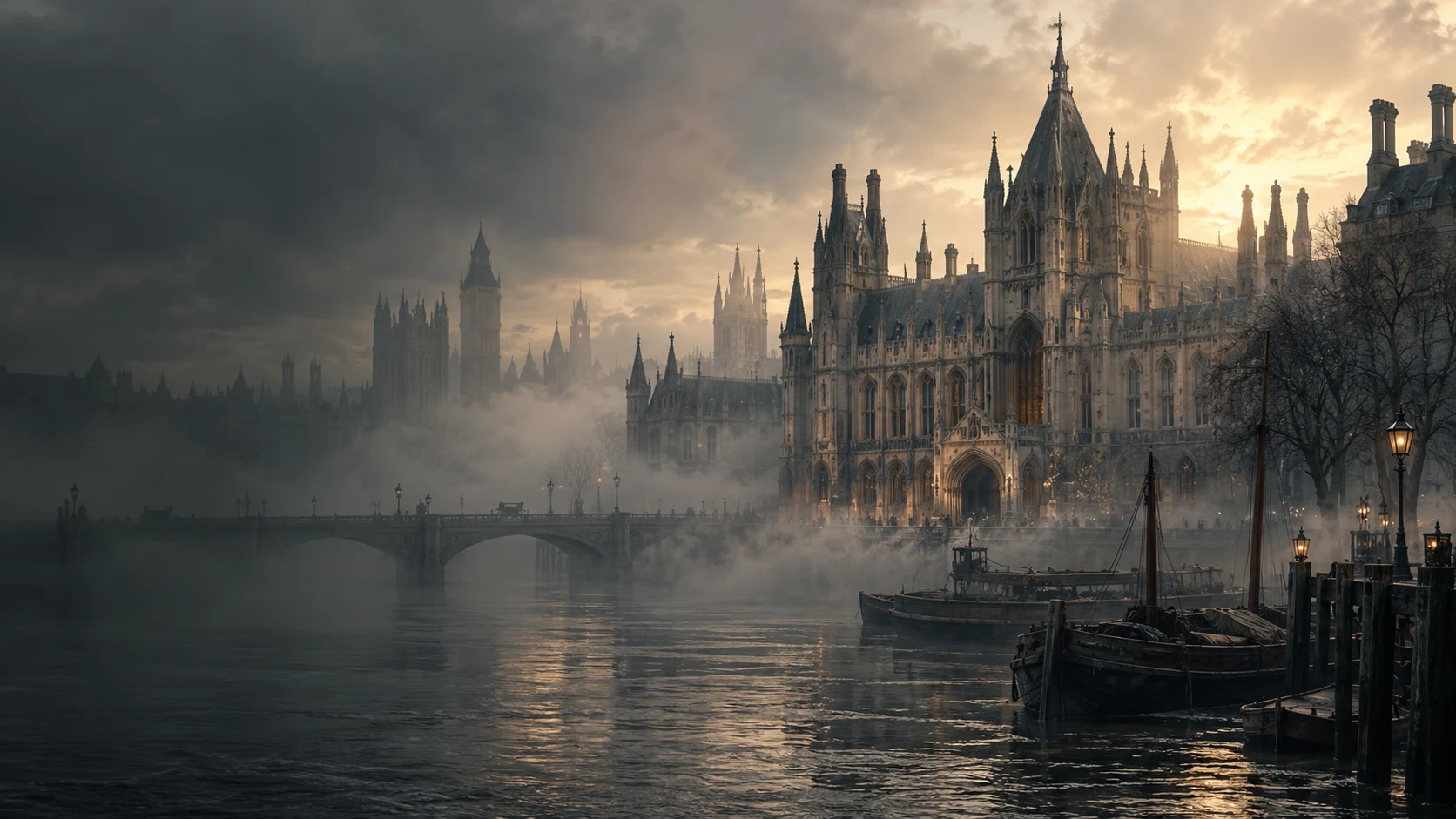

As much mud in the streets as if the waters had but newly retired from the face of the earth, and it would not be wonderful to meet a Megalosaurus, forty feet long or so, waddling like an elephantine lizard up Holborn Hill.
Charles Dickens, Bleak House (1852–53), chapter 1
That comes from the opening paragraph of Bleak House, and it tells you most of what you need to know about reading Victorian novels. Nothing has happened yet. There is no hero and no plot, only mud, soot and a joke about a dinosaur in central London. Dickens is not stalling. He is building a world, and he expects you to stand in it for a while before anyone speaks.
Long Victorian novels ask for that kind of patience at the start and repay it many times over. The trick is to stop reading them like modern novels, which want your attention in the first paragraph, and read them more like a long-running series: in regular sittings, with time between, trusting that the threads will come together.
Why are Victorian novels so long?
Mostly because of how they were sold. Many came out in parts: David Copperfield appeared in nineteen monthly numbers between 1849 and 1850, each a shilling, with thirty-two pages of text and two illustrations, and Bleak House ran from March 1852 to September 1853. Others were published as “three-deckers”, novels in three volumes priced at a guinea and a half the set and bought chiefly by circulating libraries, a format that lasted until the libraries turned against it in 1894.
Either way, length was expected, and a big cast of characters kept readers coming back. Knowing that changes how you approach the books. They were designed to be put down and picked up again. You are not supposed to read them in one breath.
Tips for reading Victorian novels
- Use the book’s own divisions. Middlemarch is in eight books with titles such as “Miss Brooke”, “The Dead Hand” and “Sunset and Sunrise”, each a natural week’s reading. David Copperfield’s monthly parts held three or four chapters apiece, and you can pace yourself the same way.
- Give the opening fifty pages the benefit of the doubt. Victorian novelists set out the whole board before they move a piece. The slow start is where you learn the town, the families and the money that will drive everything later.
- Keep a cast list. Write names on your bookmark as people appear, with a word to place each one. By the time three families are related by marriage you will be glad of it.
- Expect the subplots to meet. A character who seems to wander in from another novel is almost always there for a reason. Part of the pleasure is watching separate stories turn out to be one.
- Read the narrator as a character. Victorian narrators comment, argue, joke and moralise. Don’t skip those passages; they are often the best writing in the book.
Learn to enjoy the narrator
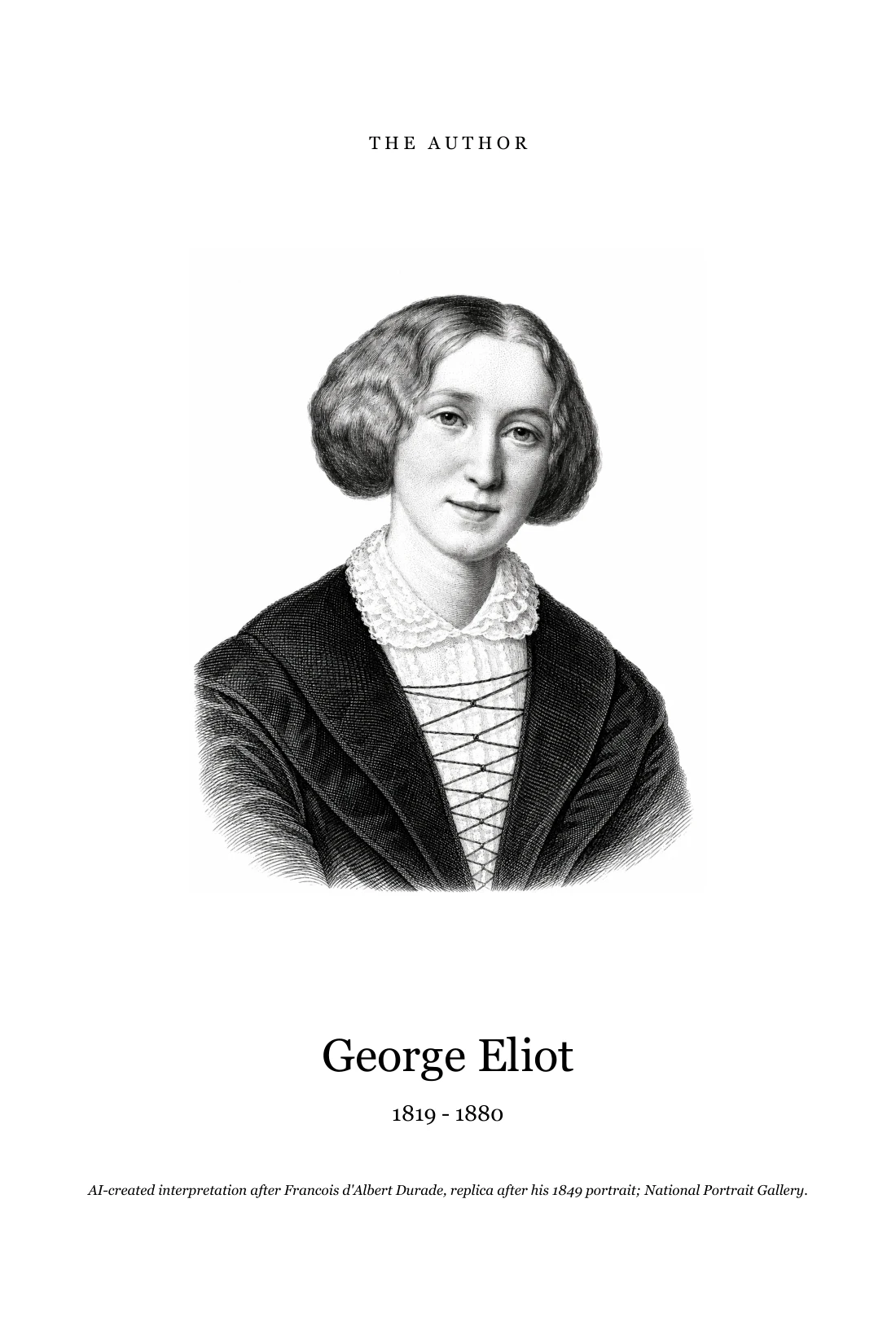
This is the habit that matters most, and the one modern readers resist. George Eliot will stop Middlemarch to deliver a little essay. In chapter 27 she describes the scratches on a polished mirror, which seem to arrange themselves in circles around a candle held up to them, and then turns the image on her characters:
These things are a parable. The scratches are events, and the candle is the egoism of any person now absent
George Eliot, Middlemarch (1871–72), chapter 27
A paragraph like that is not a delay. It is the novel telling you how to read it: everyone in Middlemarch thinks the world is arranged around them, and the book’s job is to show you the scratches going everywhere.
Dickens plays a different game in Bleak House. Half the book is told by Esther Summerson in the first person and the past tense, modest and observant; the other half by an unnamed narrator in the present tense, sweeping across London from the fog to the slums to the great houses. Noticing which voice you are in, and what each can and cannot see, is half the fun.
Middlemarch
1871–72. A provincial town in the years before the 1832 Reform Act, seen through a dozen lives at once. Eight books, each a satisfying stretch on its own.
Bleak House
1852–53. A lawsuit that has outlived its own participants, two narrators and a London buried in fog. Dickens at his most ambitious and his most savage.
David Copperfield
1849–50. A life told by the man who lived it, from a frightened childhood to a writer’s career. The friendliest way into Dickens’s long books.



How long will it take?
Longer than a modern novel, less than you fear. All three of these run to over 700 pages in our editions, and the book cards estimate around fifteen hours each at a brisk fifty pages an hour. A more relaxed pace of forty pages a day sees any of them through in under three weeks. For honest per-book figures, see How long is Middlemarch? and How long is David Copperfield?
The history of the part-issues is told in Did you know many great Victorian novels first came out in instalments?, and Where to start with George Eliot will help you choose your next one.
If you want the warmest possible start, choose David Copperfield, read the first chapter, “I Am Born”, and give it a fortnight. If you want the richest, choose Middlemarch and treat “Miss Brooke” as your first week’s reading. Either way, settle in. These books were made for staying.
Questions readers ask
How do you read a long Victorian novel?
Read it in regular instalments, using the book’s own parts or a fixed number of chapters a day, keep a list of characters, and give the slow opening chapters time to build the world. The novels were written to be read over months.
Why are Victorian novels so long?
Many were first sold in monthly parts or as three-volume sets for circulating libraries, both of which rewarded length, large casts and multiple plots. Readers expected to live with a novel for a long time.
Which long Victorian novel should I read first?
David Copperfield is the friendliest: it is told by one engaging narrator from childhood onwards. Middlemarch is the most rewarding once you are comfortable with longer, slower books.
 Great Expectations532 pages · $23.99
 A Christmas Carol86 pages · $10.99
 A Tale of Two Cities360 pages · $18.99
 Oliver Twist420 pages · $20.99




