

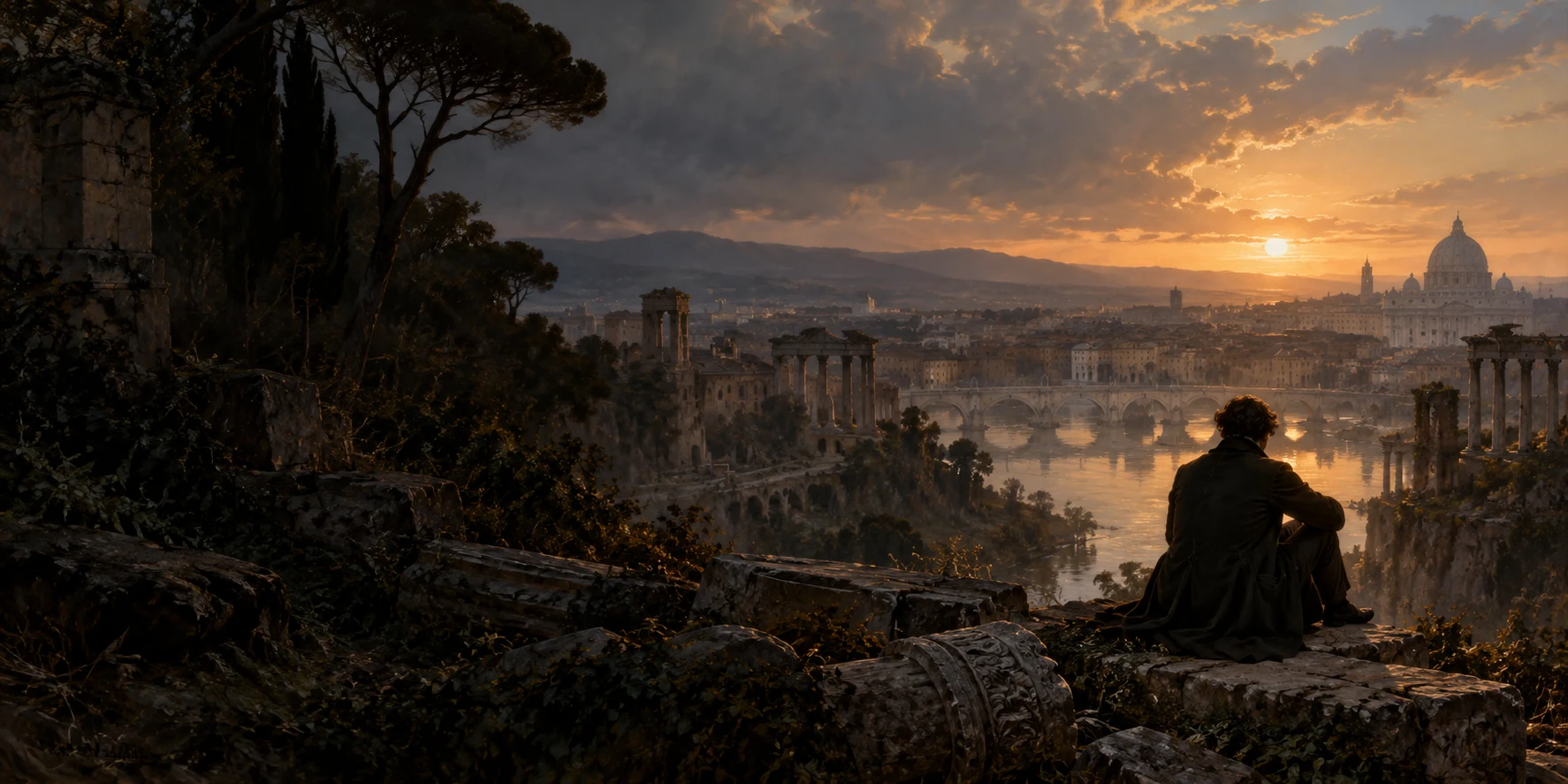
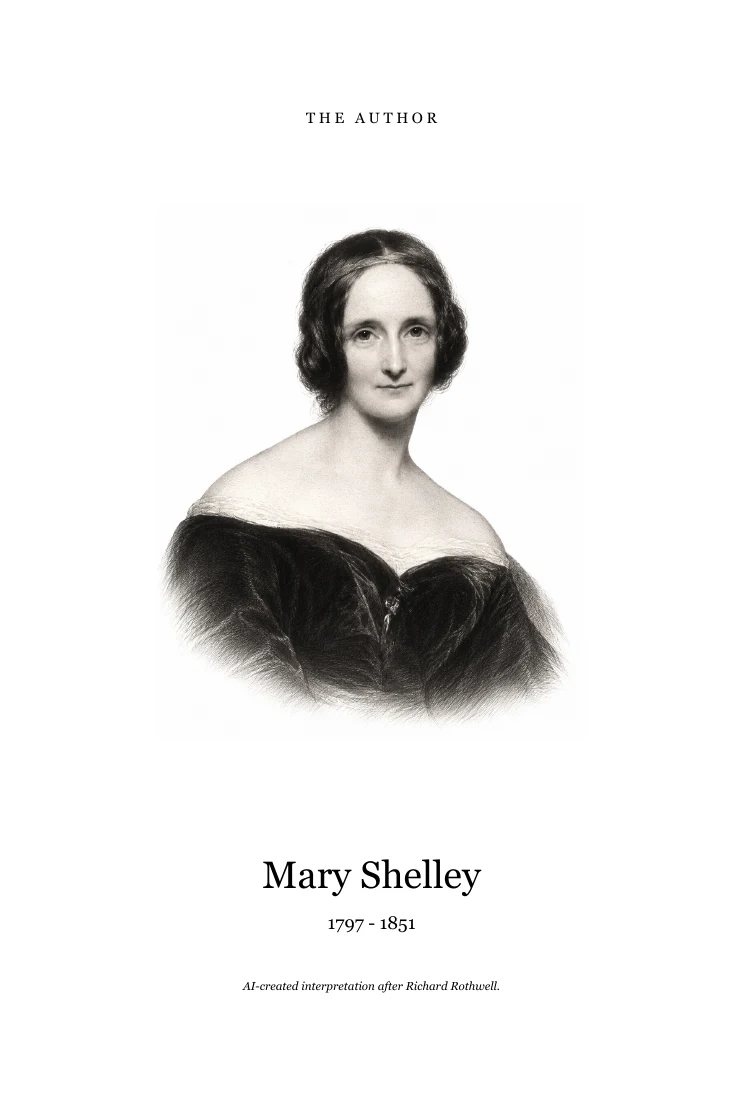
The Last Man was published in London on 23 January 1826, eight years after Frankenstein. Its story begins in 2073, when the last king of England abdicates and the country becomes a republic, and it ends in 2100. In between, a plague that first appears on the banks of the Nile spreads across Europe and the Americas until almost nobody is left. The narrator, Lionel Verney, tells us in the title who survives.
Mary Shelley did not invent the idea of the last man. A French prose epic, Jean-Baptiste Cousin de Grainville’s Le Dernier Homme, had appeared in 1805, and by the 1820s the theme was fashionable enough for Lord Byron and Thomas Campbell to have written poems on it. But The Last Man is one of the first full-length novels to imagine humanity wiped out by disease, and it is the one that has lasted.
What is The Last Man about?
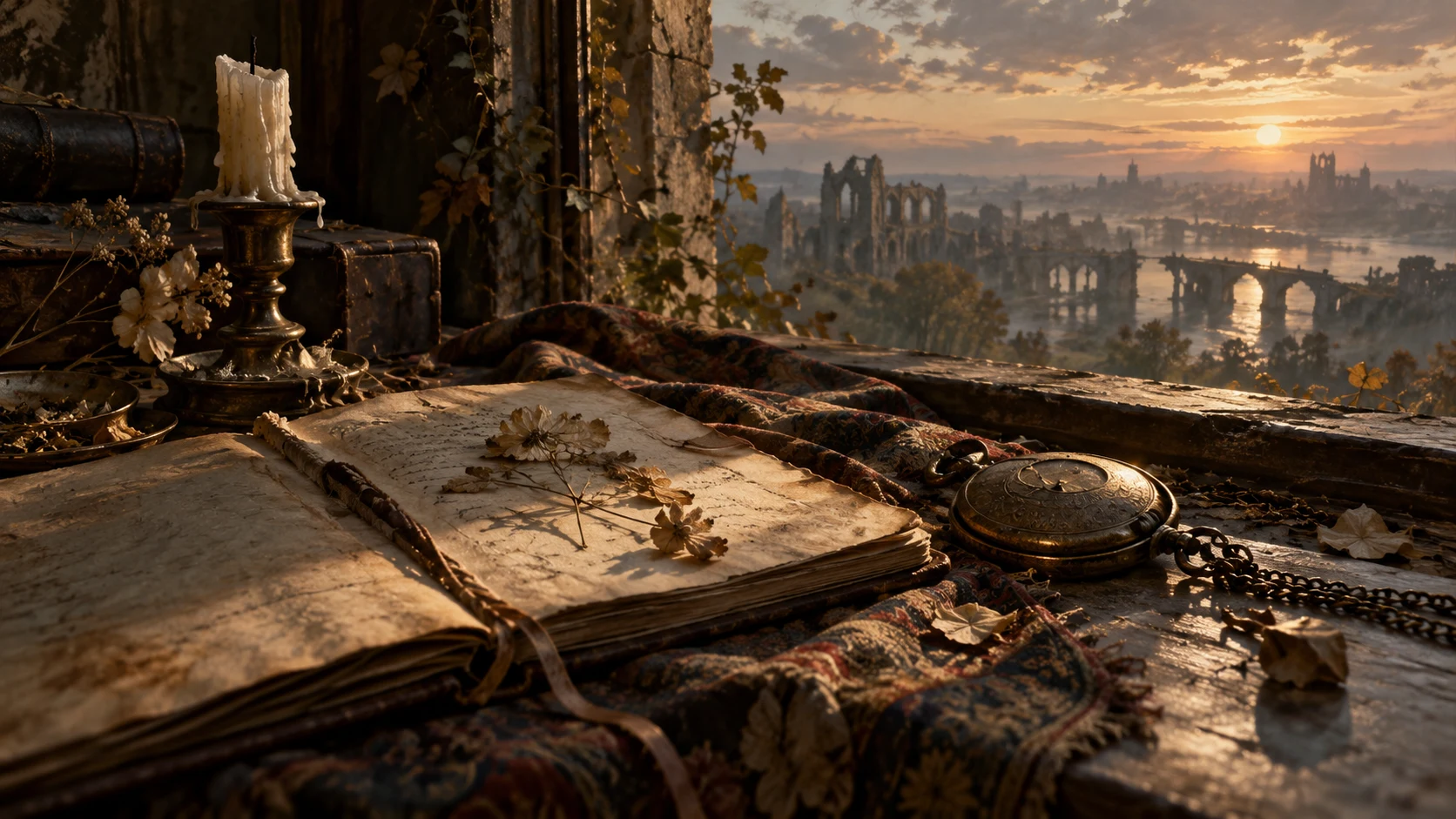
It opens with a frame. In an introduction, Shelley says that in December 1818 she and a companion explored a cave near Naples said to be the cavern of the Cumaean Sibyl, and found heaps of leaves written over with prophecies in many languages. The novel, she claims, is her assembly of those fragments.
I visited Naples in the year 1818. On the 8th of December of that year, my companion and I crossed the Bay, to visit the antiquities which are scattered on the shores of Baiæ.
Mary Shelley, The Last Man (1826)
The first half is a political and romantic story about a small circle of friends: Lionel, an orphan who grows from a lawless shepherd boy into a scholar; Adrian, the idealistic son of the last king; and Lord Raymond, a dazzling, ambitious nobleman who fights for Greek independence against the Ottomans. Only in the second volume does the plague take hold, and from there the novel becomes a long, unflinching record of a civilisation coming apart.
Shelley’s twenty-first century is in some ways very like her own. Lionel can “engage a sailing balloon” to reach Scotland in two days, and his friends float over the Alps by balloon, only to switch to an ordinary steam-packet at Dieppe because of the rain. What she imagined most vividly was not technology but behaviour: panic, false prophets, refugees, the failure of governments, and the few people who keep their courage.
Why did Mary Shelley write The Last Man?
Because almost everyone she loved had died. By the time she began it, she had lost three of her four children; her husband, Percy Bysshe Shelley, had drowned off the Italian coast in 1822; and in 1824 Lord Byron died in Greece, where he had gone to fight for its independence. She called her circle “the Elect”, and The Last Man is in part an elegy for them.
The resemblances are deliberate. Adrian is widely read as a portrait of Percy Shelley, and Lord Raymond, who goes to fight for the Greeks, as Byron. Lionel Verney, left alone, is often taken to be Mary Shelley herself.
The Last Man and Frankenstein
The Last Man
1826. A plague at the end of the twenty-first century leaves one man to tell the story of the end of humanity. Long, grief-stricken and startlingly modern in its picture of a pandemic.
Frankenstein
1818. The novel she began at eighteen, during the famous ghost-story summer by Lake Geneva. A scientist, a creature and the question of what we owe to what we make.


Read together, the two books make a pair. Frankenstein is about one man who dares to create life and cannot face the consequences; The Last Man is about the whole of humanity facing a death it cannot prevent. Both are, at heart, about isolation.
If you are new to Shelley, start with Frankenstein: it is far shorter, and we tell how it came to be written in Did you know Frankenstein was written by an 18-year-old? and The ghost story contest that gave us Frankenstein and The Vampyre. Then give The Last Man the time it needs. Its first volume is slow, but the second and third are among the most haunting things she wrote.
Is The Last Man the first apocalyptic novel?
Not quite the first story of the end of the world, but one of the first novels of its kind in English, and many readers would say the first great one. Its descendants are everywhere, from H. G. Wells to modern pandemic fiction, and you can follow them in Post-apocalyptic novels from before the atomic age and The science fiction firsts.
The cave is where it starts. Follow Shelley into the Sibyl’s cavern in the introduction to The Last Man, among the scattered leaves, and see what she claims to have found written there about our century.
Questions readers ask
What is Mary Shelley’s The Last Man about?
Published in 1826, it tells the story of a plague that spreads across the world in the late 21st century and wipes out almost all of humanity, narrated by Lionel Verney, the last survivor.
When is The Last Man set?
The story runs from 2073 to 2100. Mary Shelley presents it as a prophecy she found written on leaves in the Sibyl’s cave near Naples in 1818.
Who are the characters in The Last Man based on?
Adrian, Earl of Windsor, is generally seen as a portrait of Percy Bysshe Shelley, Lord Raymond as Lord Byron, and the narrator Lionel Verney as a version of Mary Shelley herself.
