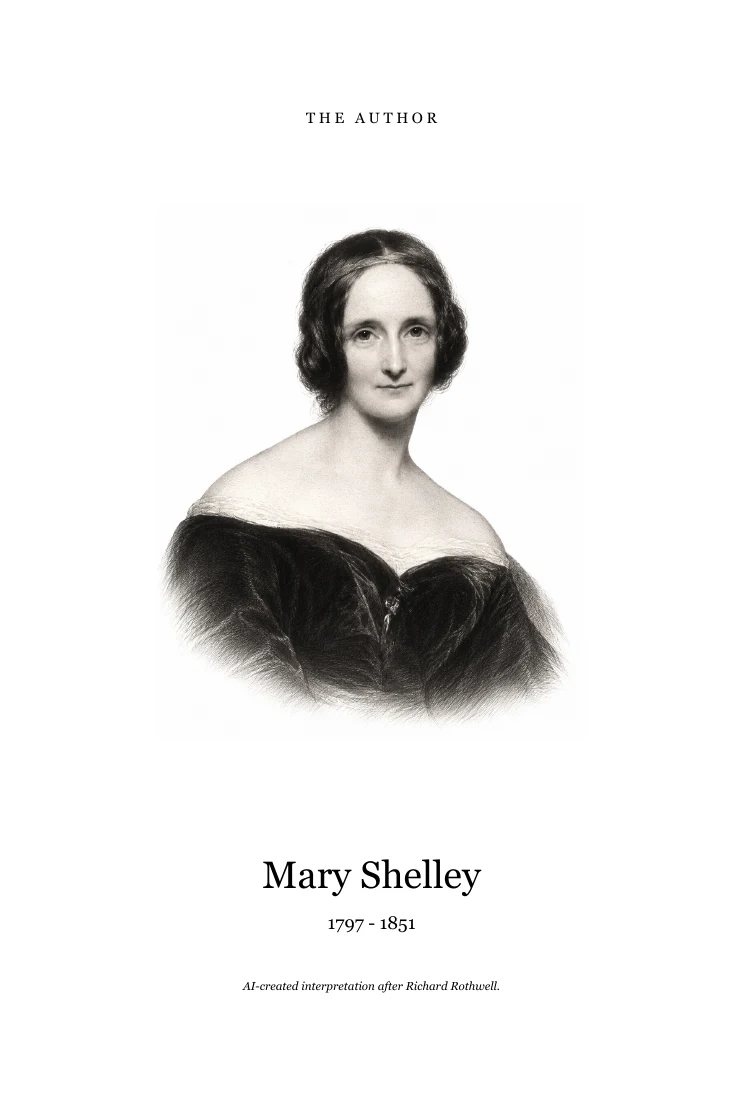
The Villa Diodati ghost story contest may be the most productive rainy holiday in literary history. In June 1816, Lord Byron was renting the Villa Diodati on the shore of Lake Geneva with his young personal physician, John William Polidori. Nearby, Percy Bysshe Shelley was staying with eighteen-year-old Mary Godwin, soon to be Mary Shelley, and her stepsister Claire Clairmont.
The weather was dreadful. 1816 is remembered as the “year without a summer”, a cold, stormy season across Europe now often linked to the eruption of Mount Tambora in Indonesia the year before. Mary later recalled how it confined them indoors:
But it proved a wet, ungenial summer, and incessant rain often confined us for days to the house.
Mary Shelley, introduction to Frankenstein (1831)
What happened at the Villa Diodati?
Stuck inside, the friends read aloud from Fantasmagoriana, a French collection of German ghost stories. Then Byron issued his challenge. In Mary’s famous account, written fifteen years afterwards, it was a single sentence:
“We will each write a ghost story,” said Lord Byron; and his proposition was acceded to.
Mary Shelley, introduction to Frankenstein (1831)
The two famous poets made the least of it. Byron began a tale and soon abandoned it, and Percy Shelley did not get far either. Polidori, by Mary’s slightly teasing account, had “some terrible idea about a skull-headed lady”. Mary herself struggled for days, until a waking dream gave her the image of a student kneeling beside the creature he had made. That idea became Frankenstein.
How the contest gave us The Vampyre
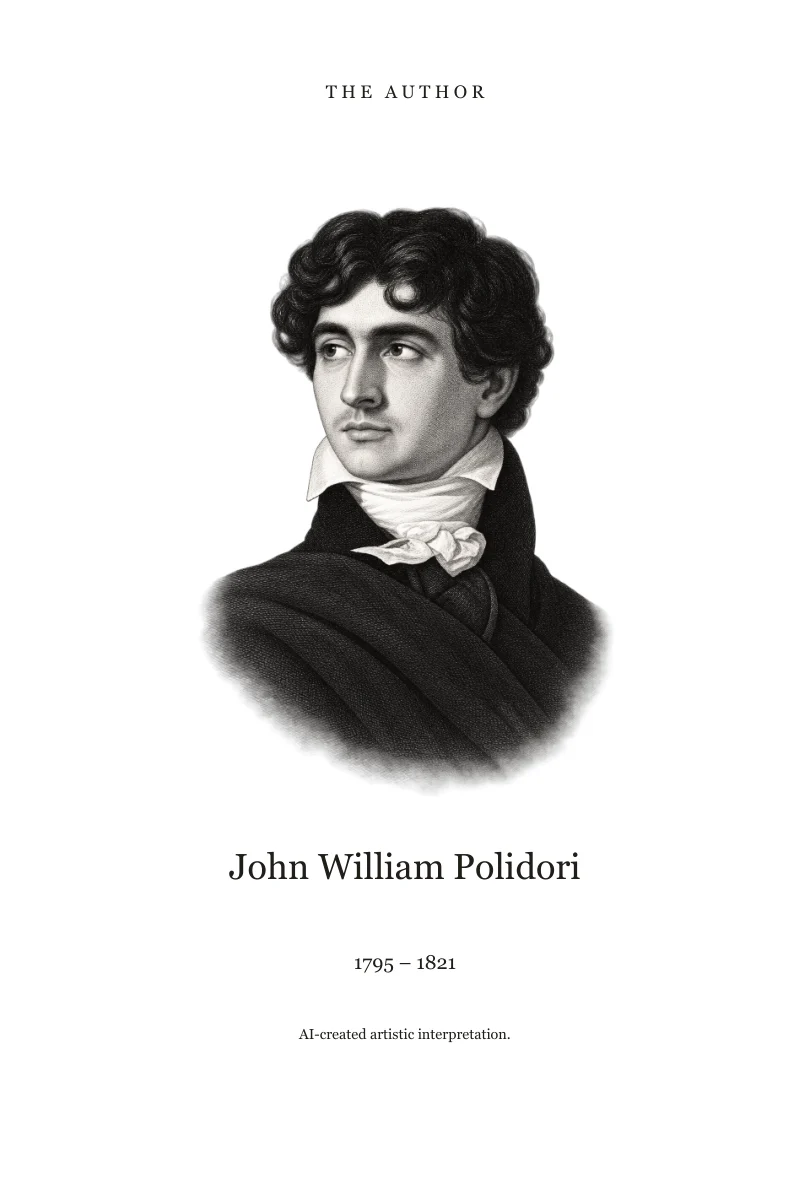
Polidori’s skull-headed lady went nowhere, but he took Byron’s abandoned fragment, about a mysterious traveller who dies on a journey through the eastern Mediterranean, and later reworked it into a story of his own. The result was The Vampyre, in which a young Englishman named Aubrey falls under the spell of the cold, fascinating Lord Ruthven.
It appeared in the New Monthly Magazine in April 1819, and to Polidori’s dismay it was credited to Byron. That mistake helped make it a sensation. Lord Ruthven, aristocratic, seductive and widely read as a portrait of Byron himself, was something new: the vampire not as a peasant corpse from folklore but as a gentleman moving through high society. Without him, it is hard to imagine Count Dracula.
Polidori did not live to enjoy his influence. He died in 1821, aged just twenty-five. His story’s afterlife is explored in Did you know a vampire story was a bestseller 78 years before Dracula?
Not everything that came out of those weeks was a ghost story. Byron wrote his bleak poem “Darkness”, which imagines the sun going out, during that same gloomy summer, and Percy Shelley composed “Mont Blanc” after a trip into the Alps. The oldest of the group, Byron, was twenty-eight; Mary and Claire were eighteen, and Polidori just twenty. Few holidays have produced so much, and few were spent by such young people.
The line from that villa to modern horror is remarkably direct. Lord Ruthven’s descendants run through the vampire fiction of the nineteenth century to Bram Stoker’s Dracula, published in 1897, while Mary’s creature has never stopped walking out of laboratories in books and films.
Frankenstein
1818. Mary Shelley’s entry in the contest, begun when she was eighteen. A scientist creates life and runs from the consequences.
The Vampyre
1819. John Polidori’s tale of the mysterious Lord Ruthven, the first great aristocratic vampire in English fiction. A single sitting’s read.


What are the two stories like to read today?
They make a fascinating pair. Frankenstein is a full novel, philosophical and deeply sad, built from nested letters and confessions; we tell how its teenage author shaped it in Did you know Frankenstein was written by an 18-year-old? The Vampyre is a short, swift tale, more an elegant shiver than a novel, and you can read it in under an hour. Reading them together, you can see two very different routes out of the same rainy week: one towards science fiction, one towards the vampire story.
Both suit anyone who enjoys the gothic, and both reward readers curious about how modern horror began. For the wider tradition, browse our gothic shelf or read the best Gothic novels, from Otranto to Dracula. And since Byron’s challenge was really a fireside custom, you may also enjoy Did you know ghost stories were once a Christmas tradition?
On a stormy evening this winter, do as they did. Start with The Vampyre, which you can finish before the candles burn down, and then turn to Frankenstein for the long night.
Questions readers ask
What was the Villa Diodati ghost story contest?
In June 1816, Lord Byron challenged the friends staying with him by Lake Geneva, including Percy Shelley, Mary Godwin (later Mary Shelley) and John Polidori, to each write a ghost story. Mary’s became Frankenstein and Polidori’s became The Vampyre.
Who won the Frankenstein ghost story contest?
There was no formal winner, but Mary Shelley’s Frankenstein is by far the most famous result. Byron and Percy Shelley abandoned their stories.
Why was 1816 called the year without a summer?
Unusually cold, wet weather affected much of Europe and North America in 1816. It is widely linked to the massive eruption of Mount Tambora in 1815.
 The Last Man458 pages · $21.99