Our Frankenstein follows the text of 1818, the anonymous first edition, rather than the revised version of 1831 that most editions reprint. That choice has almost no effect on how long the book takes to read, but it does change what you are reading, and readers who compare copies sometimes wonder why theirs looks different from a friend’s.
The short answer to the question first. Our edition runs to 214 pages, and our book cards reckon on fifty pages an hour, which puts Frankenstein at roughly four hours. Your own speed will vary, and Shelley’s long, rolling sentences reward going slowly, but for most people this is a novel for two or three evenings rather than a project for a month.
How long is Frankenstein in the 1818 and 1831 versions?
Much the same. The two texts tell the same story at roughly the same length, so either way you are looking at an evening or three. The differences are in the detail, and some of them matter.
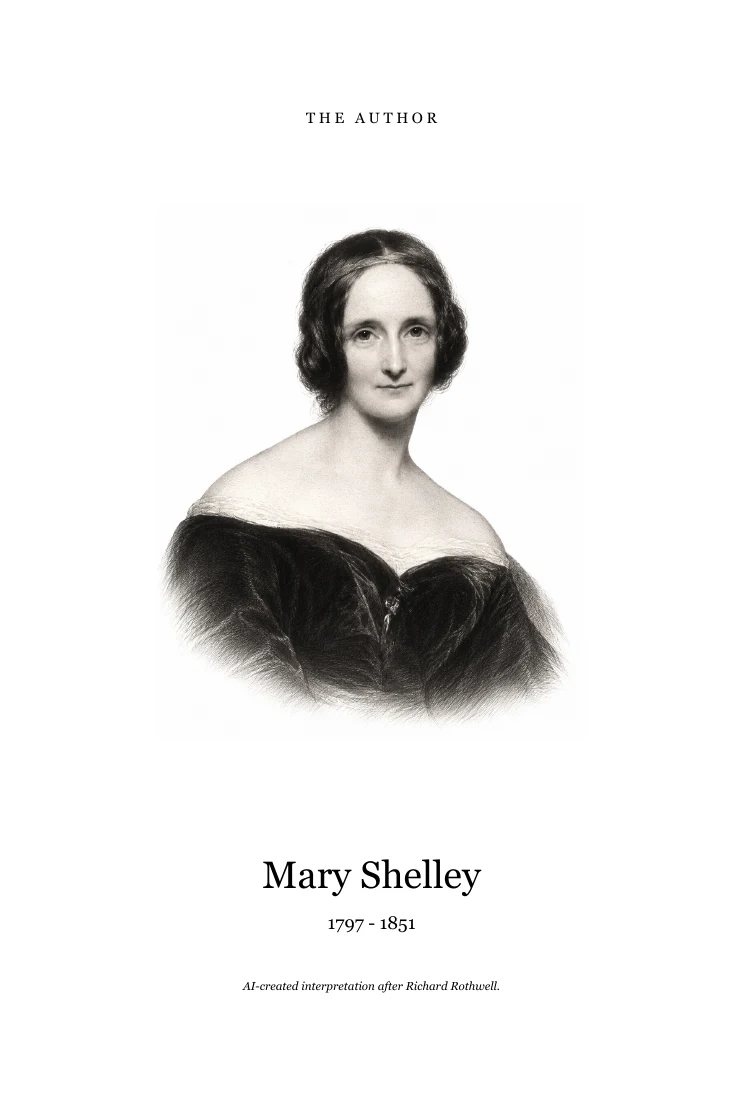
Mary Shelley first published the novel through the small London firm of Lackington, Hughes, Harding, Mavor & Jones, with a preface written for her by Percy Shelley and a dedication to her father, William Godwin. Her name was not on it. In 1831 the publishers Colburn and Bentley brought out a cheap one-volume edition, and she revised it substantially. Among the changes:
- A long new introduction by Shelley herself, describing the ghost-story challenge at Lake Geneva in 1816 and the waking dream that gave her the idea.
- The first chapter was expanded and split in two, which is why the 1831 text has one chapter more.
- Elizabeth, Victor’s cousin in 1818, becomes an orphan adopted by his family.
- Victor is judged more harshly, and some of the science of 1818 is trimmed.
- The epigraph from Paradise Lost on the original title page was dropped.
The 1831 text is the one most people have read, partly because it carries that famous introduction. Some scholars prefer 1818 as closer to what Shelley first wrote at nineteen; you can read more about that summer in Frankenstein was written by a teenager and the ghost-story contest that produced it.
Did I request thee, Maker, from my clay / To mould me man? Did I solicit thee / From darkness to promote me?
John Milton, Paradise Lost, the epigraph to the 1818 edition of Frankenstein
Reading Frankenstein in three sittings
The best reading plan was built in from the start. The 1818 edition came out in three volumes, the standard format for a new novel at the time, and each volume makes a satisfying sitting of roughly an hour and a quarter.
- Volume one: the explorer Robert Walton’s four letters from the far north, Victor’s childhood in Geneva, his studies at Ingolstadt and the night of the experiment. It closes on a trial in Geneva, and on Victor’s guilt.
- Volume two: Victor climbs to the glacier above Chamonix and meets what he has made. Most of this volume belongs to the creature, who tells his own story across six chapters, and it ends with a bargain.
- Volume three: the journey to England and Scotland, the cost of that bargain, and the return to the ice where Walton’s letters began.
If you only have time for part of the book, read the second volume. The creature’s account of learning to speak, read and hope, much of it while hidden in a hovel beside a cottage, is the heart of the novel and the part most films leave out. We compare page and screen in Frankenstein: book vs. movie.
Is Frankenstein hard to read?
Not especially, but it is not quick in the way a modern thriller is quick. The prose is formal, the sentences are long, and characters speak in paragraphs. Readers who expect the lumbering monster of the films are usually surprised by how much of the book is argument, landscape and grief. Give the first volume a fair hearing; once the creature speaks, the pages go faster.
Frankenstein
The 1818 text: Walton, Victor and the creature, three voices nested inside one another, and a book far stranger and sadder than its reputation.
The Last Man
1826. Shelley’s later novel of a plague that empties the world, narrated by its final survivor. Longer than Frankenstein, and bleaker.


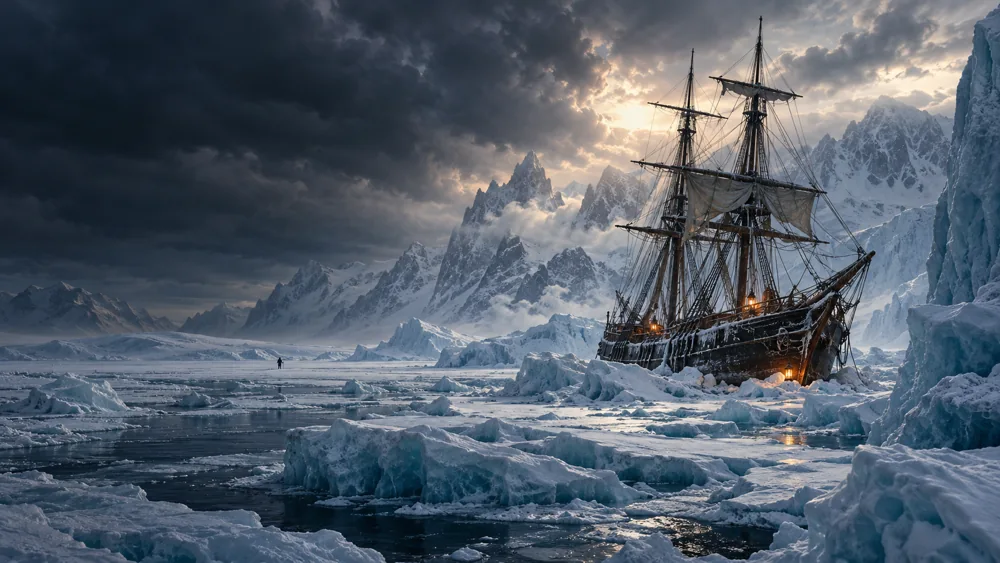
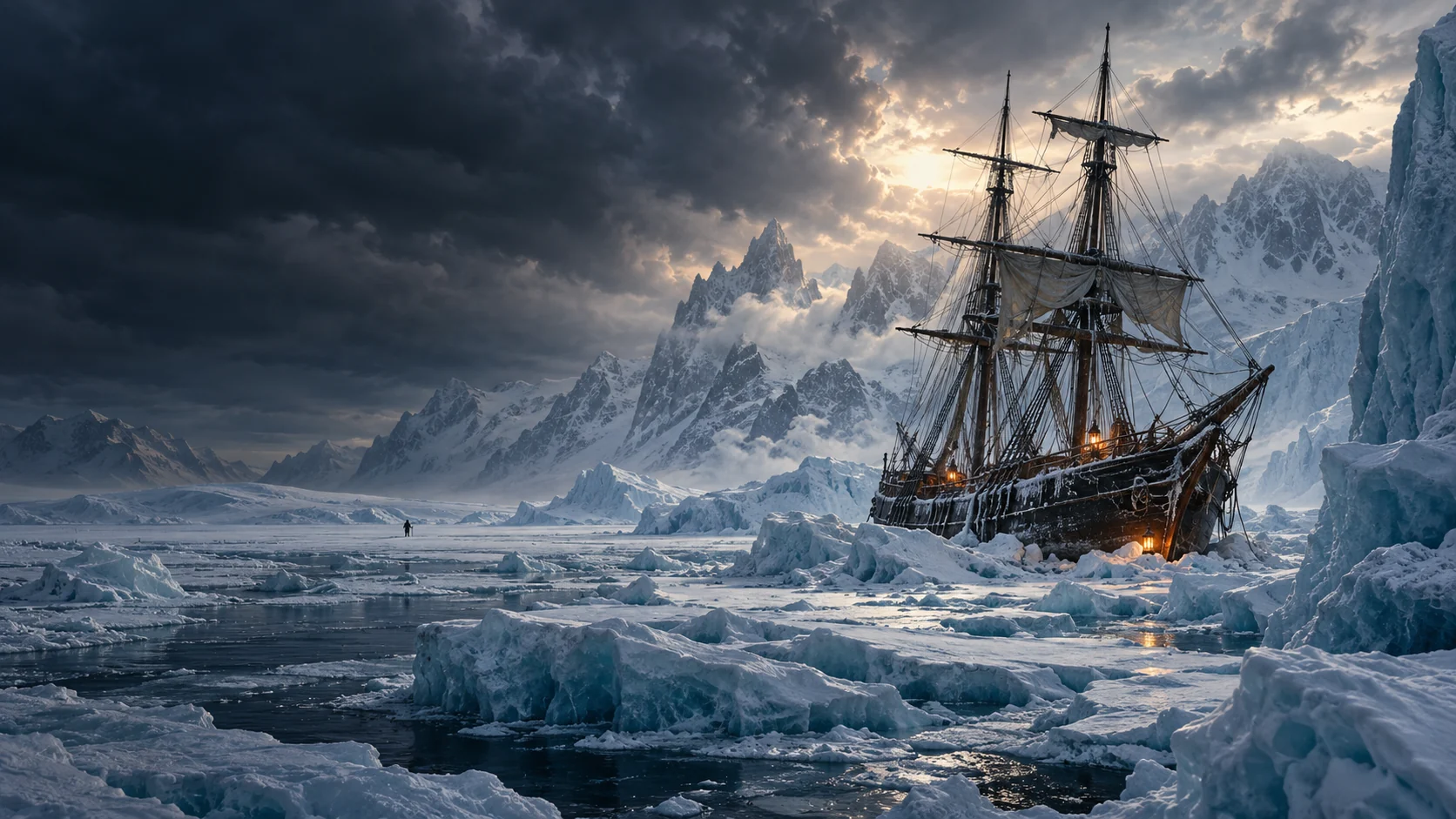
If you finish Frankenstein and want more of Shelley, The Last Man is her other great work of speculative fiction; we introduce it in Mary Shelley’s The Last Man. But start with the shorter book. Four hours, three volumes, one ship locked in the Arctic ice: open Frankenstein at Walton’s first letter and see how far you get tonight.
Questions readers ask
How long does it take to read Frankenstein?
Roughly four hours. That is 214 pages at our usual rate; a slower, more savouring reader might take five.
What is the difference between the 1818 and 1831 Frankenstein?
The 1831 edition was revised by Mary Shelley and adds her famous introduction. It also makes Elizabeth an adopted orphan rather than Victor’s cousin, splits the first chapter in two and judges Victor more harshly.
Which version of Frankenstein should I read?
Either works. The 1831 text is the most widely read, while the 1818 text, which our edition follows, is closer to what Shelley first wrote.
How many chapters are in Frankenstein?
The 1818 text has four opening letters and 23 chapters across three volumes. The 1831 text has 24 chapters, because the first chapter was split in two.