


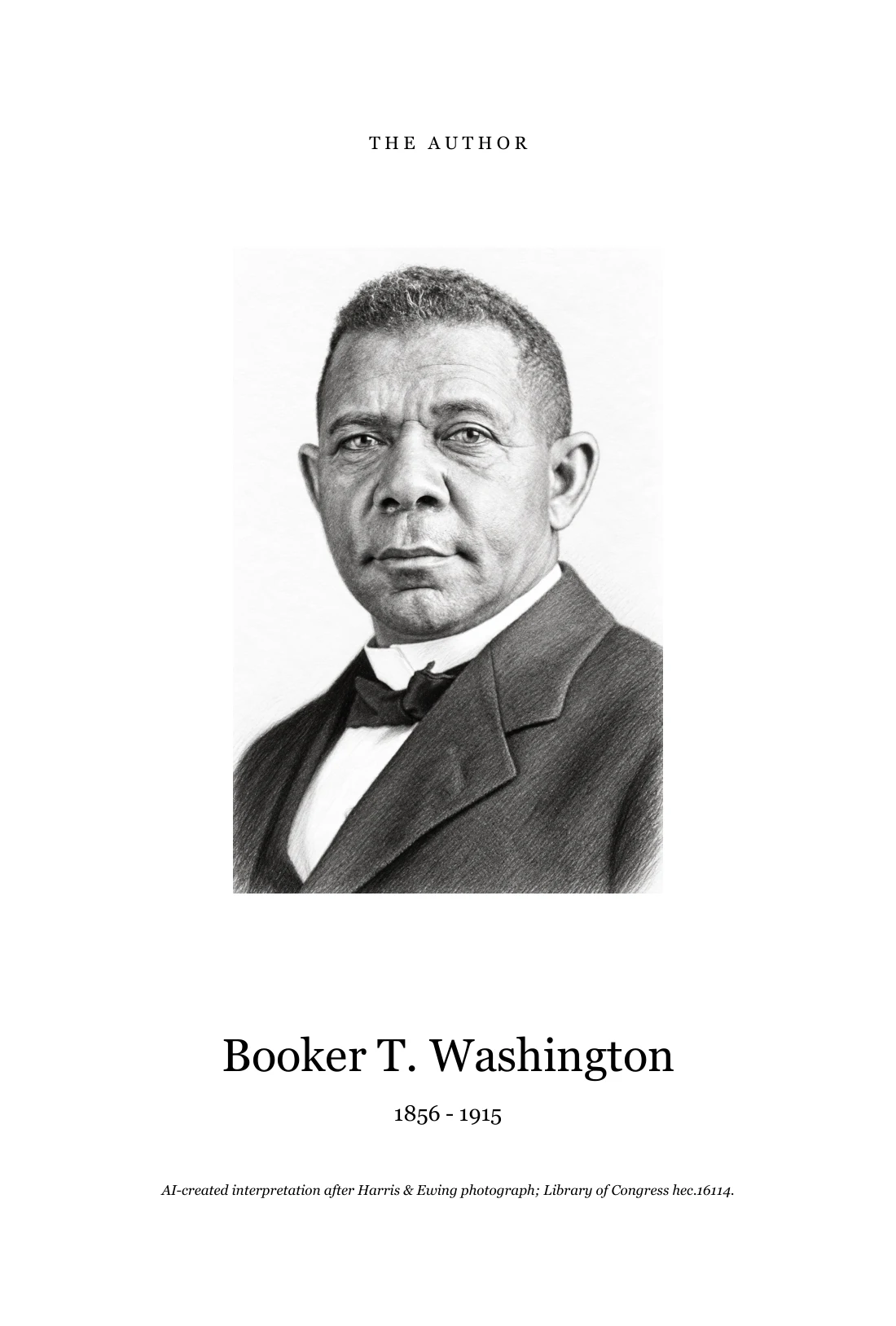
I was born a slave on a plantation in Franklin County, Virginia. I am not quite sure of the exact place or exact date of my birth, but at any rate I suspect I must have been born somewhere and at some time.
Booker T. Washington, Up from Slavery, chapter I
That dry little joke opens Up from Slavery, and it sets the tone for everything after it. Booker T. Washington guessed he was born in 1858 or 1859. The National Park Service, which now looks after the farm where he was born, gives the year as 1856. A man who rose to dine at the White House began his life without a date on record.
Published in 1901, Up from Slavery follows Washington from a one-room cabin to the head of the Tuskegee Institute in Alabama. It is plain, brisk and deliberately unembellished, and it was written for a purpose: to persuade readers, many of them white and wealthy, that his way of building Black education was the right one.
How was Up from Slavery written?
In snatches. The book began as a series of articles in the Outlook magazine in 1900 and 1901, and Washington’s preface admits that much of it was written “on board trains, or at hotels or railroad stations” while he travelled to raise money for Tuskegee. He thanks Max Bennett Thrasher for “painstaking and generous assistance”, help without which he “could not have succeeded in any satisfactory degree”. Doubleday, Page published the book version the same year.
It was not his first autobiography. An earlier book, The Story of My Life and Work, had been put together largely by a ghostwriter and was poorly reviewed. Up from Slavery was the one aimed at the whole country, and the one that lasted.

What happens in Up from Slavery?
The early chapters are the most vivid. After emancipation the family moved to Malden, West Virginia, where the boy packed salt in a salt-furnace and then worked in a coal mine. When he first went to school and heard the teacher call the roll, he realised that every other child had at least two names. Asked for his, he said “Booker Washington” on the spot. Only later did he learn that his mother had named him Booker Taliaferro, and he took that name back too.
In the autumn of 1872 he set out for the Hampton Institute in Virginia, about five hundred miles away, with nowhere near enough money for the fare. He reached Richmond penniless, slept under a raised board sidewalk, and earned his food by unloading a ship. At Hampton the head teacher, unconvinced by the ragged arrival, told him to sweep a classroom. He swept it three times and dusted it four.
The sweeping of that room was my college examination, and never did any youth pass an examination for entrance into Harvard or Yale that gave him more genuine satisfaction.
Up from Slavery, chapter III
From there the book becomes the story of an institution. Washington opened Tuskegee on 4 July 1881 in a shanty and a church, and much of the second half is about bricks, borrowed money, students who built the buildings they studied in, and the endless fundraising tours that took him away from them.
- 1856
Born into slavery near Hale’s Ford, Franklin County, Virginia, in the year historians now accept
- 1872
Leaves Malden, West Virginia, for the Hampton Institute
- 1881
Opens the school at Tuskegee, Alabama, on 4 July
- 1895
Gives his address at the Atlanta Cotton States and International Exposition on 18 September
- 1896
Receives an honorary degree from Harvard
- 1901
Up from Slavery is published; in October he dines with Theodore Roosevelt at the White House
- 1915
Dies at Tuskegee on 14 November
The Atlanta speech and the argument it started
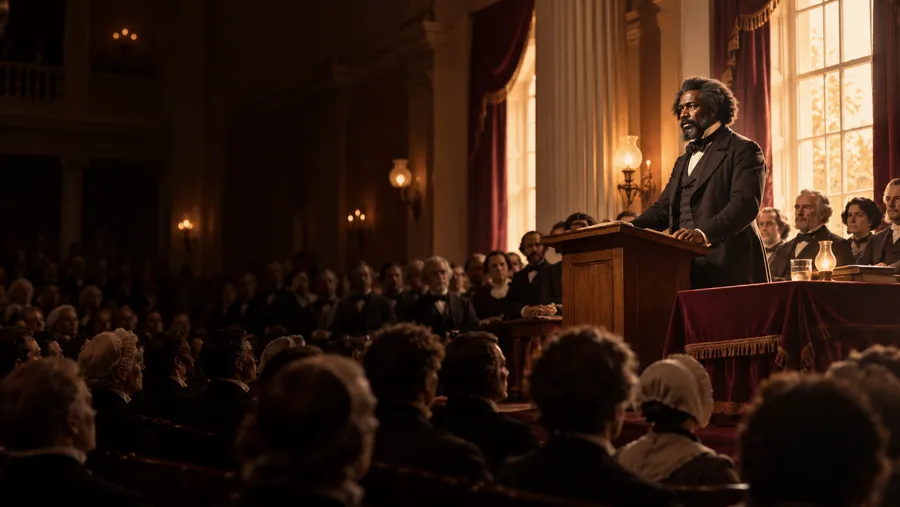
The book’s centrepiece is the speech that made Washington a national figure. At the Atlanta Exposition in 1895 he urged Black Southerners to “Cast down your bucket where you are”, to win respect through work, property and skill, and he offered white listeners a line that would be quoted for decades: “In all things that are purely social we can be as separate as the fingers, yet one as the hand in all things essential to mutual progress.”
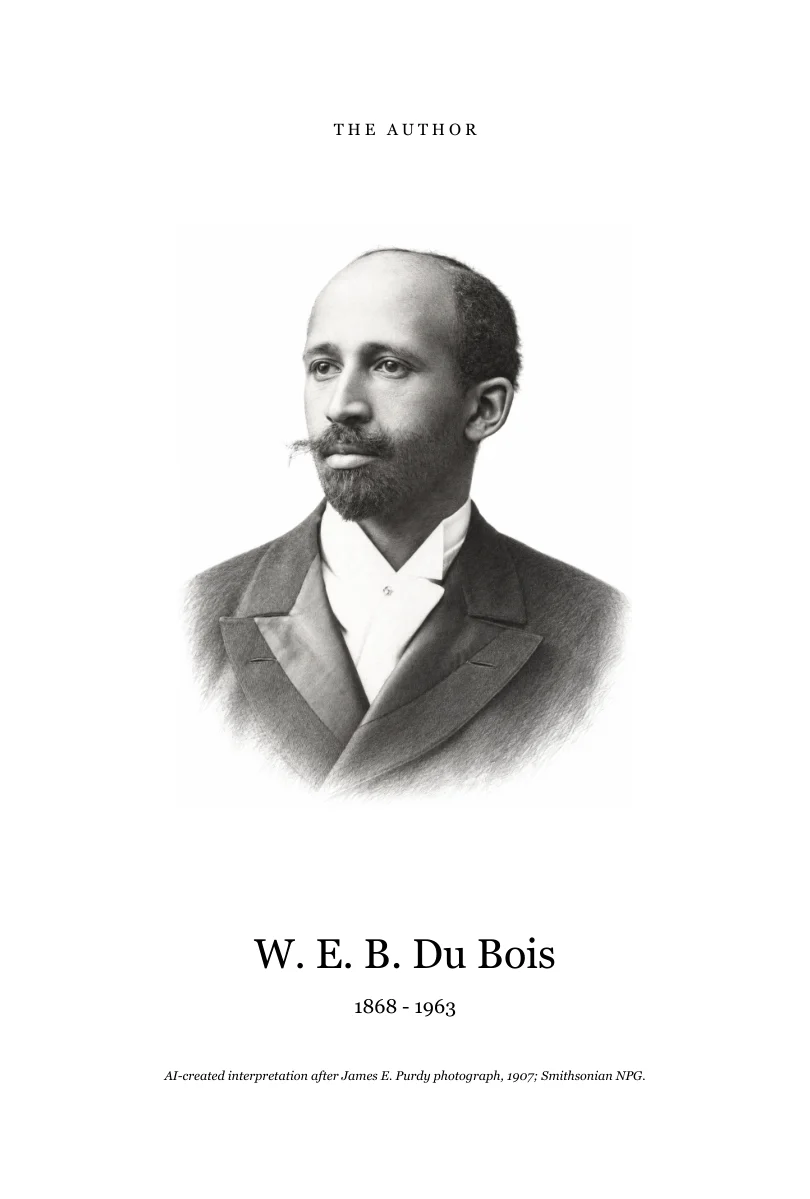
Many white Americans heard that as a promise not to challenge segregation, and that is exactly why others objected. In The Souls of Black Folk in 1903, W. E. B. Du Bois gave the speech the name it still carries, the “Atlanta Compromise”, and argued in his chapter “Of Mr. Booker T. Washington and Others” that no people could progress while giving up the vote and civil rights. That debate is told in The Souls of Black Folk and the idea of double consciousness.
Is Up from Slavery worth reading today?
Yes, with your eyes open. It is a public document as much as a private one: Washington is persuading donors, and he is careful about what he says of the South and of white people in it. The silences are part of the book. Read alongside Du Bois, or after Narrative of the Life of Frederick Douglass, it becomes one side of a long argument about how freedom should be pursued, made by a man who had very little room to manoeuvre.
It is also simply a good story, told with a dry humour that catches readers off guard. The boy under the Richmond sidewalk and the boy with the broom are hard to forget.
Up from Slavery
1901. Washington’s own account, from the cabin in Virginia to the brick buildings of Tuskegee. Short chapters, plain prose and a strategist’s eye for his audience.
The Souls of Black Folk
1903. Du Bois’s reply, among much else. Its third chapter takes on Washington directly, and the two books belong on the same shelf.
Narrative of the Life of Frederick Douglass, an American Slave
1845. Frederick Douglass’s first autobiography, written in the years of slavery rather than after them. Angrier, shorter and just as clear-eyed.


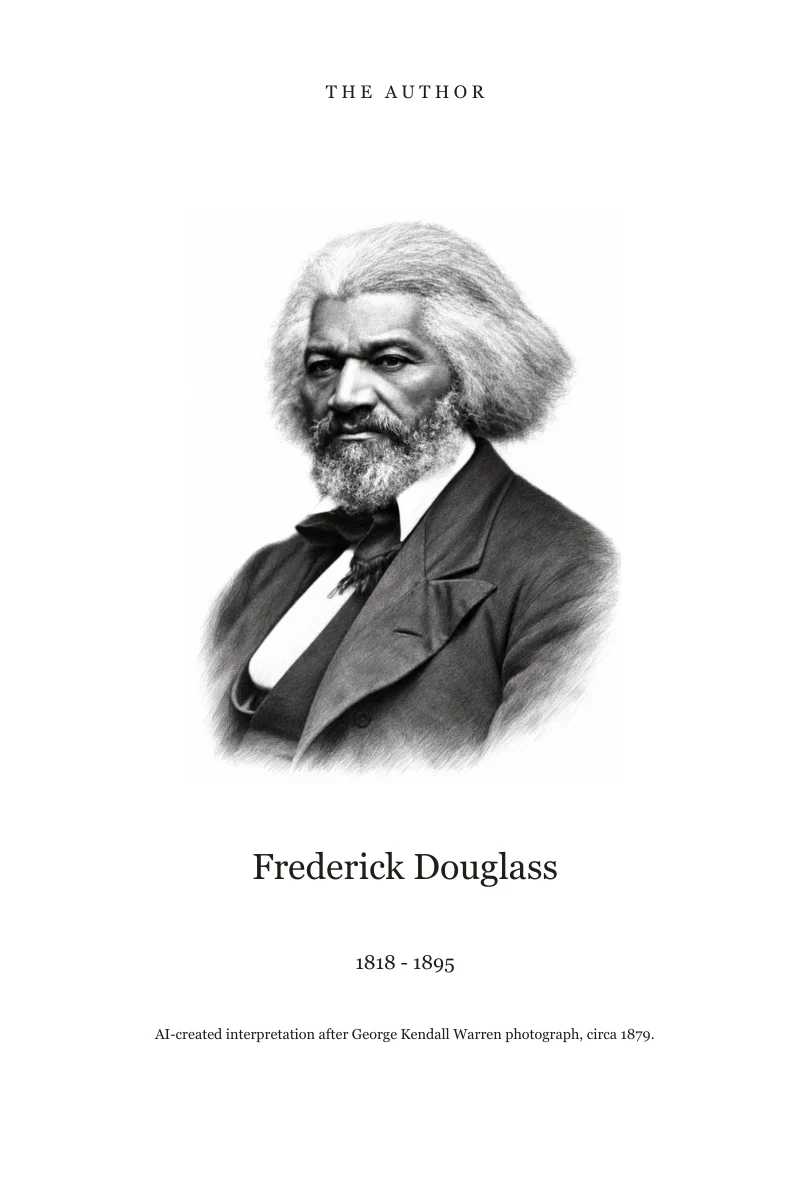
For more first-person accounts, see The slave narratives that changed history and Did you know Frederick Douglass wrote three autobiographies?. Then turn to the first page of Up from Slavery and meet the boy who suspected he must have been born somewhere, at some time.
Questions readers ask
What is Up from Slavery about?
It is Booker T. Washington’s 1901 autobiography, telling how he grew up enslaved in Virginia, worked his way through the Hampton Institute and founded the Tuskegee Institute in Alabama in 1881.
Did Booker T. Washington write Up from Slavery himself?
It is his account, first serialised in the Outlook, but his preface credits the journalist Max Bennett Thrasher with essential help in preparing it, and says much of it was written on trains and in stations.
Why was Up from Slavery controversial?
Its Atlanta speech accepted social separation in exchange for economic opportunity. W. E. B. Du Bois called this the “Atlanta Compromise” and criticised it in The Souls of Black Folk in 1903.
When was Booker T. Washington born?
He wrote that he did not know, guessing 1858 or 1859. Historians and the National Park Service now give 1856.

