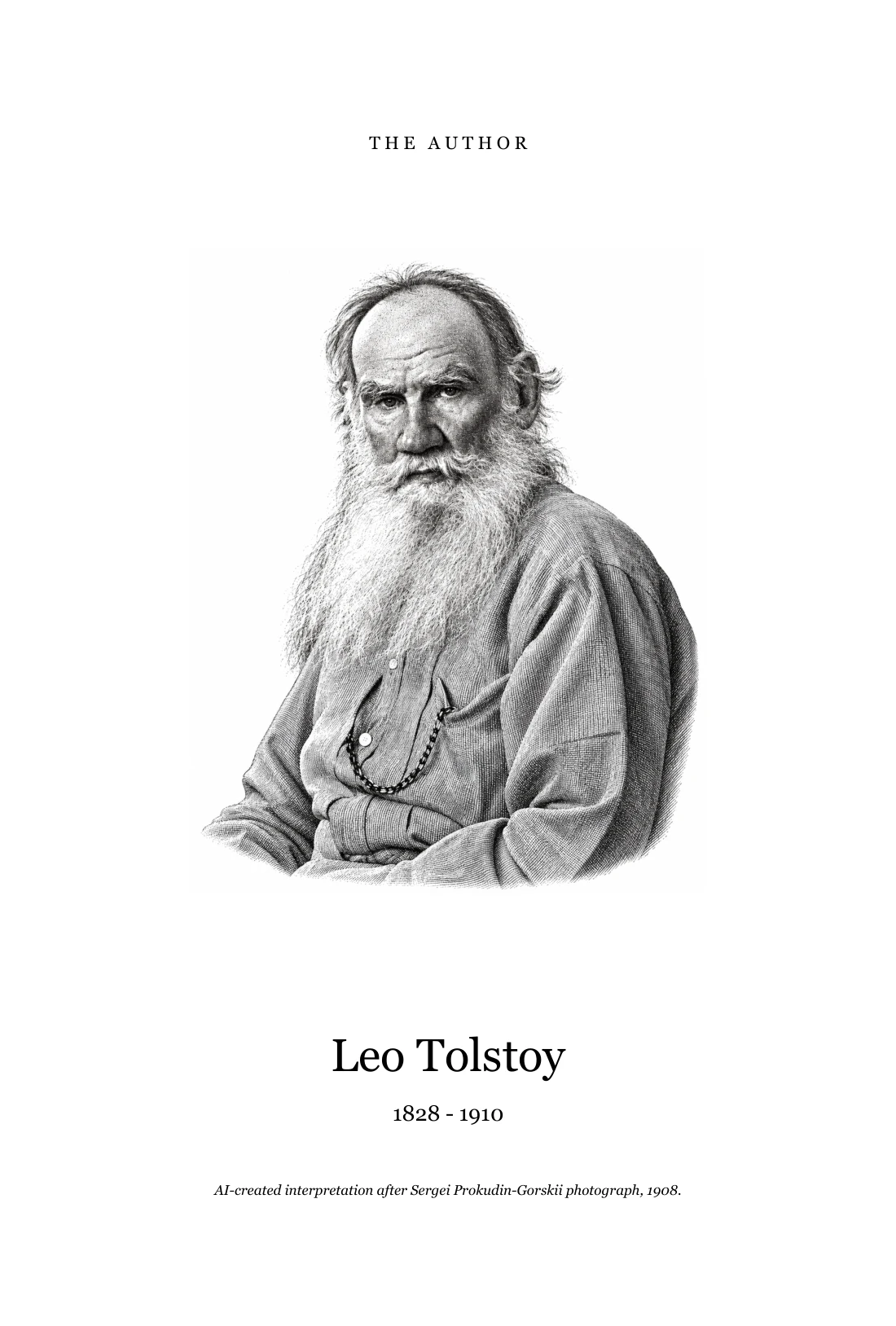
In 1890 the United States Post Office refused to carry newspapers that were printing a new story by Leo Tolstoy. The story was The Kreutzer Sonata, a husband’s confession of how jealousy drove him to violence, and its views on sex and marriage were judged too shocking for the mail. Theodore Roosevelt is reported to have called its author a “sexual moral pervert”. The Russian censor had already banned it at home.
This was the same Tolstoy whose War and Peace had made him famous across Russia and far beyond it. It is a useful reminder that he wrote a great deal more than one enormous book, and that the rest of his work is anything but predictable. If you are looking for Tolstoy books beyond the famous one, here are four, from a young officer’s love story to the novel often linked to his expulsion from the Church.
Which Tolstoy books should you read besides War and Peace?
The Cossacks: A Tale of 1852
1863. A bored young Moscow nobleman goes to the Caucasus, falls for a Cossack girl already promised to a village hero, and discovers he cannot become the simple man he admires. Turgenev called it his favourite of Tolstoy’s works.
Anna Karenina
1878. A married woman’s passion for an officer, set against a landowner’s search for a life worth living. The novel Tolstoy himself called his first, and for many readers his greatest.
The Kreutzer Sonata and Other Stories
1889. On a long train journey, a stranger tells how he came to kill his wife. A furious, claustrophobic monologue about marriage and desire, with a handful of shorter tales alongside it.
Resurrection
1899. Sitting on a jury, a prince recognises the accused as the young woman he seduced and abandoned years before, and sets out to make amends. Tolstoy’s last novel and his angriest.



Anna Karenina: the novel he called his first
Tolstoy did not think of War and Peace as a novel at all; he considered it something closer to a prose epic. Anna Karenina, which appeared in instalments between 1875 and 1877, was another matter. All but the final part ran in The Russian Messenger, and the book came out complete in 1878.
Happy families are all alike; every unhappy family is unhappy in its own way.
Leo Tolstoy, Anna Karenina, translated by Constance Garnett
That first line is famous enough to be misremembered as the whole book, but it is really a doorway into two stories. One is Anna’s, the most celebrated tragic love story in Russian fiction. The other belongs to Konstantin Levin, awkward, honest and obsessed with farming and faith, who is widely read as a self-portrait; his very name echoes Tolstoy’s own first name, Lev. Readers who come for Anna often stay for Levin.
It is long, close to eight hundred pages, but it moves faster than its reputation suggests. If you want to know exactly how long, see How long is Anna Karenina?
The young Tolstoy: The Cossacks
In 1851 Tolstoy, deep in gambling debts, followed his elder brother to the Caucasus and joined the army there. The Cossacks grew out of those years, though it took him the best part of a decade to finish, and he only did so when he needed money to pay off another gambling debt. It is short, sunlit and full of mountains, hunting and village life, and it shows Tolstoy at his most purely joyful as a describer of the physical world.
It is also the best way to see where the later books came from. Olenin, its hero, wants to shed his privileges and live simply among people he idealises, and fails. Tolstoy spent the rest of his life trying the same experiment on himself.
The late Tolstoy: the banned novella and the last novel
In the 1870s Tolstoy went through a spiritual crisis that changed everything he wrote. The fiction that followed is plainer and more urgent, and it often reads like an argument. The Kreutzer Sonata, named after the Beethoven violin sonata that the narrator’s wife plays with another man, is the most extreme example, and Tolstoy added an epilogue setting out the ideas behind it, which only deepened the scandal. His wife, Sophia, was troubled enough to write fiction of her own in reply, which went unpublished for about a century.
Resurrection turns the same moral force on the courts, the prisons and the Church. Its prince follows the woman he wronged towards Siberia, and on the way Tolstoy shows almost every institution of the Russian state failing the people it is meant to serve. The novel’s satire of a church service is often cited as a reason the Holy Synod excommunicated him in 1901.
Which Tolstoy book should you read first?
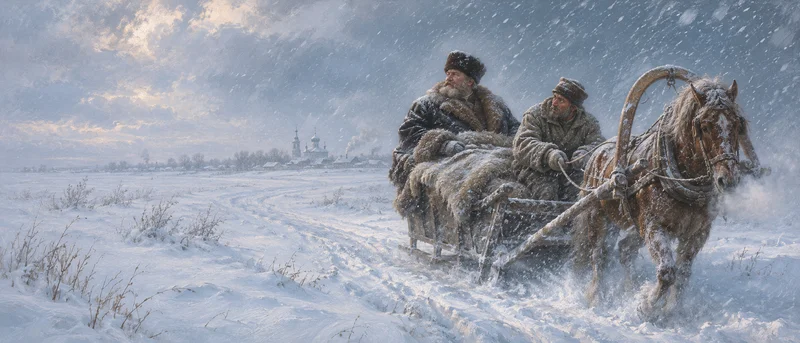
For a short way in, The Cossacks, or the long story Master and Man (1895), in which a merchant and his servant lose their way in a snowstorm, which can be read in an hour and is among the finest things he wrote. For the full experience, Anna Karenina. And if you want to see Tolstoy at his most provocative, read The Kreutzer Sonata and argue with it.
Tolstoy left home in the autumn of 1910, at eighty-two, and died days later at the railway station of Astapovo. For his contemporaries, and for the rest of the Russian classics for beginners, he is the measure, and readers who enjoy him should try where to start with Dostoevsky next. But begin where Tolstoy began as a novelist, in the mountains. Open The Cossacks and ride south with Olenin.
Questions readers ask
What are Tolstoy’s best books besides War and Peace?
Anna Karenina is the obvious choice. Among the shorter Tolstoy books, The Cossacks, The Kreutzer Sonata, The Death of Ivan Ilyich and Master and Man are widely admired, and Resurrection was his last full novel.
Which is better, War and Peace or Anna Karenina?
Readers disagree, but Anna Karenina is shorter and more tightly focused, and Tolstoy himself called it his first true novel. It is the easier place to start.
Why was The Kreutzer Sonata banned?
Its frank treatment of sex, marriage and jealousy led the Russian censor to prohibit it, and in 1890 the US Post Office refused to carry newspapers serialising it. A court ruling later that year allowed it to be sold in New York.
 Master and Man58 pages · $9.99
 What Is Art?274 pages · $16.99
 What Men Live By, and Other Tales68 pages · $9.99
 The Kingdom of God Is Within You364 pages · $18.99