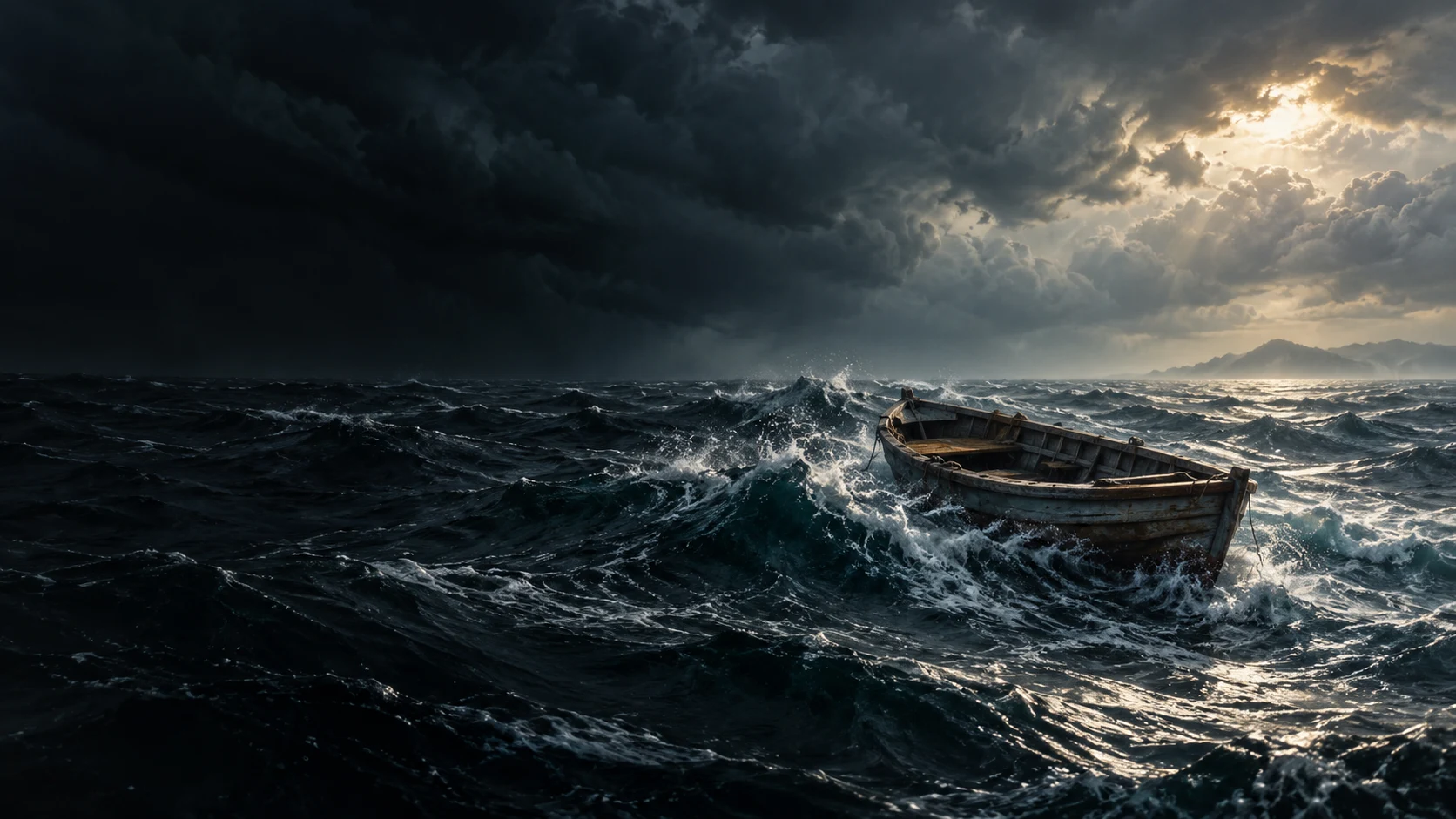
On 7 January 1897, a few days after he staggered up a Florida beach, The New York Press ran “Stephen Crane’s Own Story” on its front page. The steamer Commodore, carrying guns to Cuban rebels with Crane aboard as a correspondent, had sunk off the coast, and he had spent about thirty hours in a dinghy with three other men. The report is vivid journalism. A few months later he went back to the same night and wrote “The Open Boat”, and gave it a subtitle that tells you exactly what he was doing: “A Tale intended to be after the Fact.”
That is Stephen Crane in miniature: a reporter who kept turning experience, and sometimes pure imagination, into something stranger and truer than reporting. He died at twenty-eight, and of all his books two have lasted best, The Red Badge of Courage and the stories collected in The Open Boat and Other Stories. Anyone starting on Stephen Crane books should read both, in whichever order they come to hand.
Stephen Crane’s short, crowded life
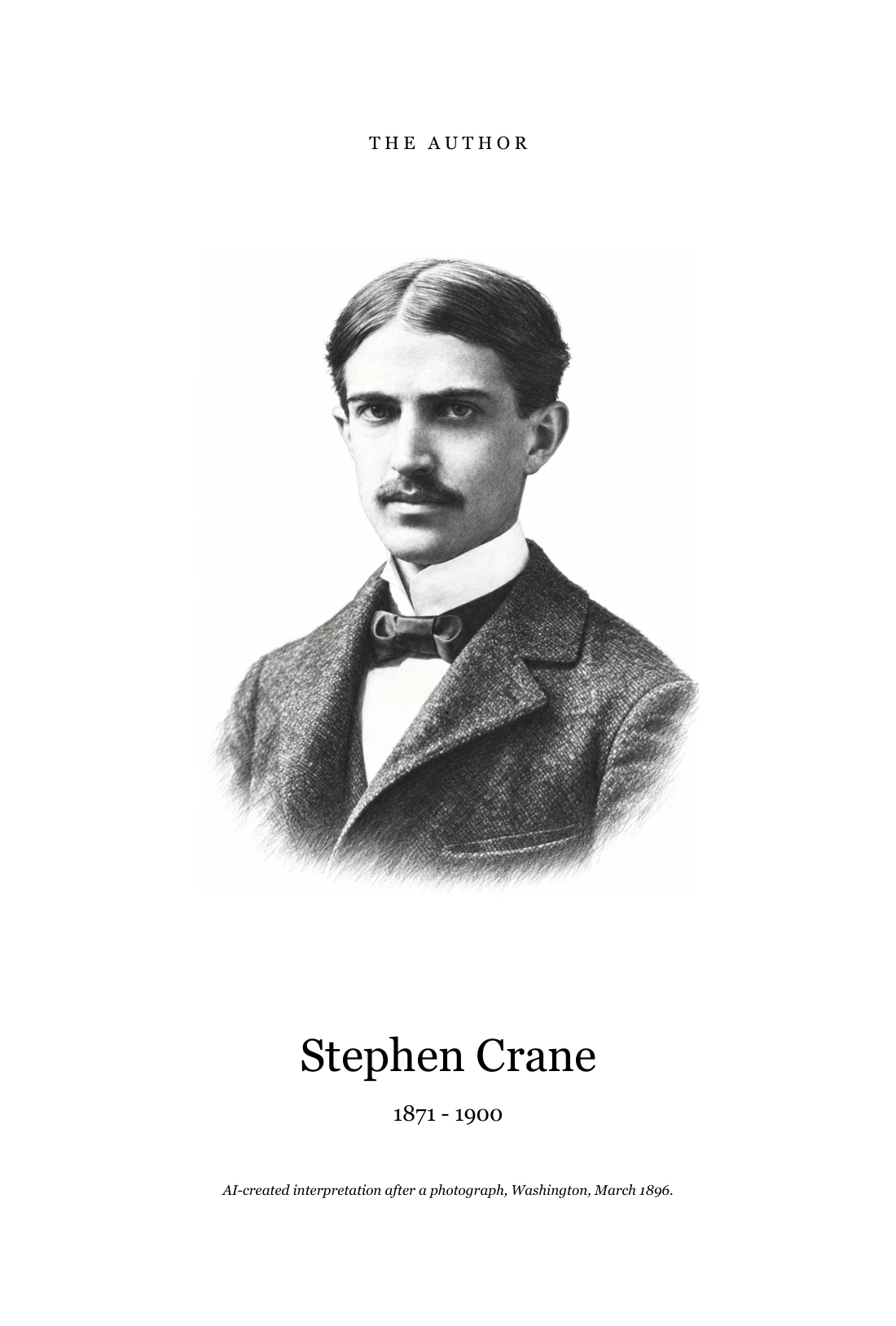
He was born in Newark, New Jersey, in 1871, the fourteenth and last child of a Methodist minister. He was a better baseball catcher than student, lasted a semester at one college and not much longer at the next, and by 1891 was working as a reporter in New York, where the slums of the Bowery gave him his first novel, Maggie: A Girl of the Streets. Publishers thought it too risqué, so in 1893 he paid for it himself, under the name Johnston Smith, which he later told a friend was the commonest name he could think of.
Then came The Red Badge of Courage, first in a cut-down newspaper serial and in 1895 as a book, and with it fame on both sides of the Atlantic. The story of how a young man who had never seen a battle wrote the great Civil War novel has its own post: Did you know Stephen Crane had never seen a battle when he wrote The Red Badge of Courage?.
After the shipwreck he reported on wars in Greece and Cuba, settled in England with his partner Cora Taylor, and took a crumbling fourteenth-century manor in Sussex, Brede Place, with no electricity or indoor plumbing. Joseph Conrad, Henry James and H. G. Wells came to stay for a Christmas party at the end of 1899. Days later Crane suffered a severe haemorrhage. He died of tuberculosis at Badenweiler, in the Black Forest, on 5 June 1900, with a novel unfinished; The O’Ruddy was completed by Robert Barr and published in 1903.
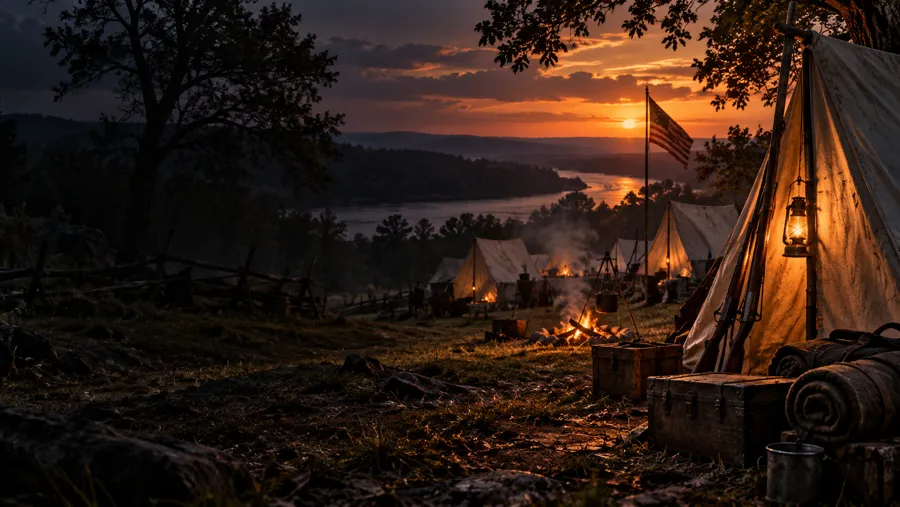
The Red Badge of Courage: the first great book
It is short, intense and almost free of history. The battle is never named, the hero is usually just “the youth”, and Crane is interested only in what fear, panic and shame feel like from inside a frightened boy’s head. The prose works in flashes of colour, which is why critics have so often called it impressionist.
The red sun was pasted in the sky like a wafer.
Stephen Crane, The Red Badge of Courage (1895)
It is the kind of sentence that made Crane seem so new in 1895, and it makes a good test: if it strikes you as thrilling rather than odd, you will love the whole book.
The Open Boat: the second
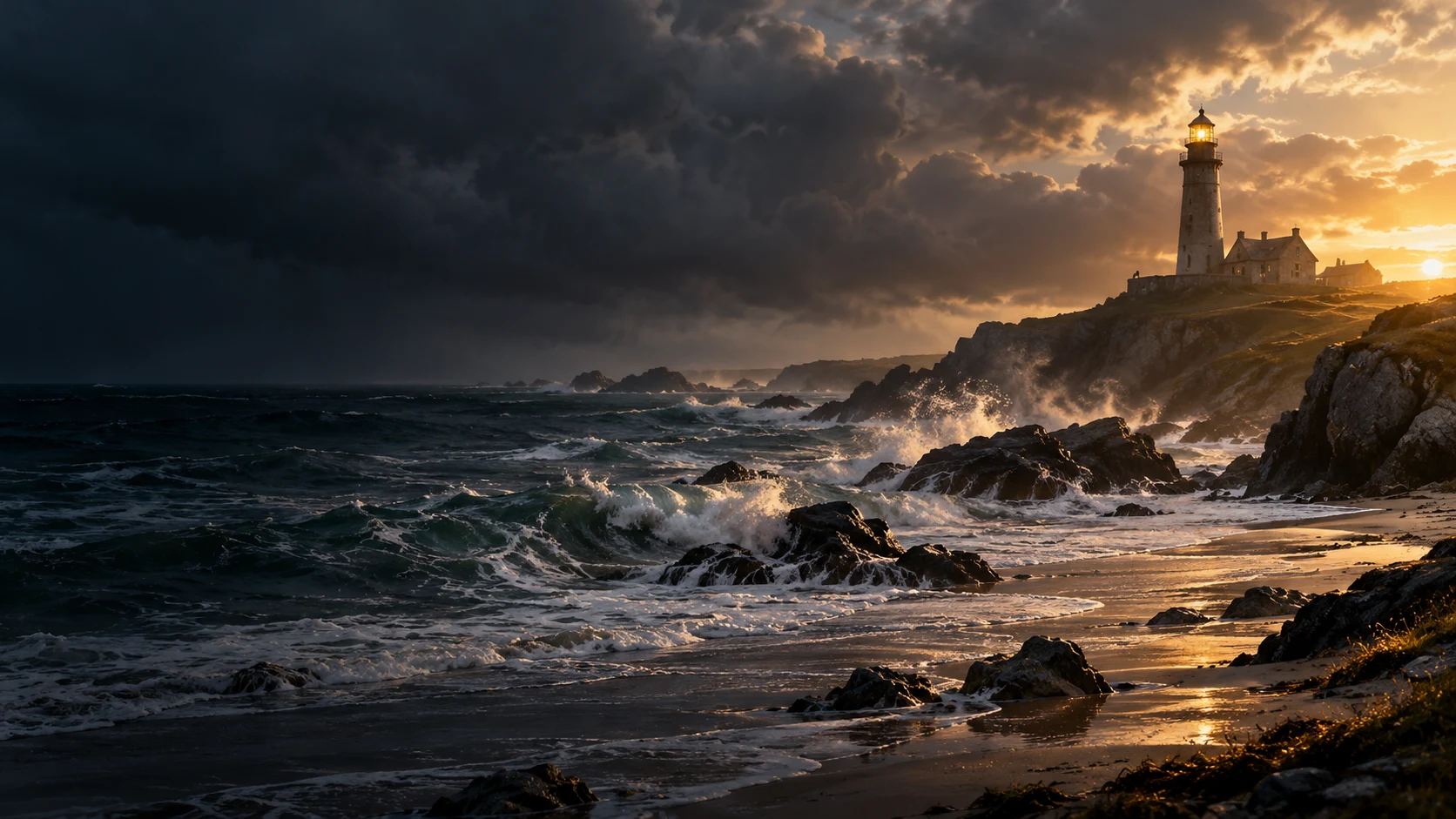
Four men, the captain, the cook, the oiler and a correspondent, sit in a boat so small that, as Crane says, many a man ought to have a bath-tub larger. The shore is visible and unreachable. Over seven short sections they row, bicker, sleep in turns and slowly understand that the sea does not care about them at all. H. G. Wells thought it the crown of all Crane’s work. How it ends, we will leave the story to tell.
None of them knew the colour of the sky. Their eyes glanced level, and were fastened upon the waves that swept toward them.
Stephen Crane, “The Open Boat” (1897)
The Red Badge of Courage
1895. A young Union recruit runs from his first battle and spends the rest of the book finding out what courage is. Barely longer than a long short story, and as modern as anything written since.
The Open Boat and Other Stories
Crane’s short fiction, led by the shipwreck story he lived through. Read it alongside the novel and you have the essential Crane.


What else is in The Open Boat and Other Stories?
The collection that appeared under this title in London in 1898 shows how wide Crane ranged in a few short years. Alongside the title story it includes:
- “The Bride Comes to Yellow Sky”, a comic Western in which a town marshal brings home a new wife and meets the local gunman.
- “An Experiment in Misery”, a New York sketch in which a young man in tattered clothes spends a rainy night in a downtown flophouse.
- “Death and the Child”, set in the Greek war Crane had just reported, in which a young correspondent, Peza, goes looking for the fighting.
- “The Five White Mice”, set in Mexico City and drawn from his travels as a syndicate reporter.
If he grips you, read on in Classic war novels and The greatest sea stories ever written. His friend Conrad is introduced in Did you know Joseph Conrad learned English in his twenties?.
Four men in a dinghy, waves the colour of slate, and nobody with time to look at the sky: the first page of The Open Boat and Other Stories deserves a slow read.
Questions readers ask
What are Stephen Crane’s most famous works?
The novel The Red Badge of Courage (1895), the short stories “The Open Boat”, “The Blue Hotel” and “The Bride Comes to Yellow Sky”, the novella Maggie: A Girl of the Streets (1893), and his free-verse poems in The Black Riders.
Is The Open Boat a true story?
Largely. It is based on Crane’s own experience after the steamer Commodore sank off Florida in January 1897, when he spent about thirty hours in a small boat with three other men.
How old was Stephen Crane when he died?
Twenty-eight. He died of tuberculosis at Badenweiler in Germany on 5 June 1900.