On a frosty afternoon at Leatherhead station in Surrey, a bookish teenager called Clive Staples Lewis bought a copy of a novel he knew nothing about. It was Phantastes, by George MacDonald, first published more than half a century earlier. Lewis read it that evening, and he never stopped trying to describe what it did to him. Decades later he wrote that it had baptised his imagination.
Lewis was not the only one. J. R. R. Tolkien acknowledged that his orcs owed something to MacDonald’s goblins, and the goblins of The Hobbit are plainly their cousins. G. K. Chesterton, a generation older, said The Princess and the Goblin had made a difference to his whole existence. Between them, Lewis and Tolkien built Narnia and Middle-earth, and both, in different ways, owed a debt to a Victorian clergyman from Aberdeenshire. If you want to read the George MacDonald books behind them, start with the four below.
Who was George MacDonald?
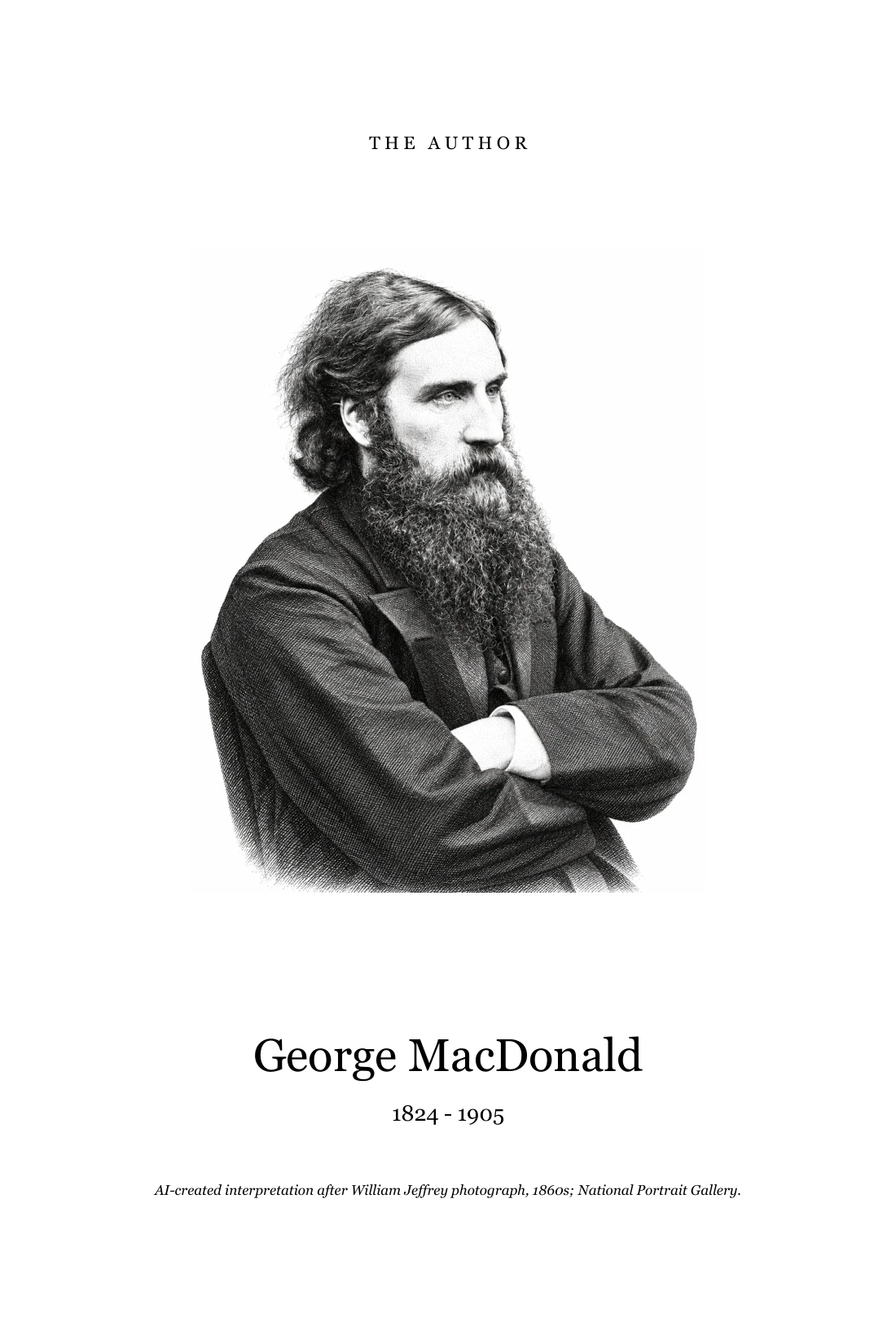
MacDonald was born in Huntly, Aberdeenshire, in 1824. He trained for the ministry and in 1850 became pastor of a Congregational chapel in Arundel, where his sermons on God’s love for everyone found little favour; his salary was cut in half and he resigned in 1853. He turned to lecturing and writing to support a very large family, and produced novels, poems, sermons and the fantasies for which he is remembered.
He was a friend and early adviser of Lewis Carroll. Carroll tried out the story that became Alice’s Adventures in Wonderland on the MacDonald children, and their delight, along with their father’s encouragement, helped persuade him to publish it.

The George MacDonald books to start with
- $13.99
Phantastes
1858. A young man named Anodos wakes to find his bedroom turning into a forest and walks out into Fairy Land. Dreamlike and episodic, it reads like nothing written before it. The book that changed Lewis.
- $12.99
The Princess and the Goblin
1872. Princess Irene, her mysterious great-great-grandmother in the tower, and Curdie, a miner’s boy who knows how to deal with goblins. The most approachable of his books, and the one Tolkien’s goblins owe most to.
- $15.99
At the Back of the North Wind
1871. Diamond, a coachman’s son who sleeps in a hayloft, is carried through the night by the North Wind, a woman of shifting size and terrible kindness. Tender, strange and frank about poverty and death.
- $16.99
Lilith: A Romance
1895. An old man’s last fantasy: Mr Vane follows the ghost of his family’s long-dead librarian through an old mirror into a strange world beside our own. Dark, difficult and unforgettable, best read after the others.


What C. S. Lewis took from MacDonald
The quality Lewis found in Phantastes is hard to name, and Lewis spent years trying. It is a sense that the other world is not an escape from goodness but a door into it. MacDonald’s fairy land is beautiful and dangerous, and the hero’s shadow follows him through it; what he learns there is less about adventure than about losing his own selfishness. Here is how the change begins, with water running across a bedroom floor.
a stream of clear water was running over the carpet, all the length of the room, finding its outlet I knew not where.
George MacDonald, Phantastes (1858)
Lewis eventually returned to Christianity, and he gave MacDonald a large share of the credit. Years later he edited an anthology of MacDonald’s writings and said plainly in its preface that he had never concealed regarding MacDonald as his master. In The Great Divorce (1945) he went further, making MacDonald a character, the wise guide who leads the narrator through a vision of heaven and hell, much as Virgil guides Dante.
What Tolkien took from MacDonald
Tolkien’s debt is more specific. In a letter of 1954 he acknowledged that his orcs owed something to the goblins of The Princess and the Goblin, the underground race who tunnel beneath the mountain and plot against the people above. Read the book after The Hobbit and the family resemblance is obvious, right down to the tunnels.
Tolkien never made MacDonald a master as Lewis did, and his admiration was cooler: when he agreed in 1964 to write a preface for a new edition of MacDonald’s fairy tale The Golden Key, he told the publisher that he was not as warm an admirer of MacDonald as Lewis had been, though he would try. The preface never got written as intended. The little story he began to illustrate it grew instead into Smith of Wootton Major, one of his last works of fiction.
Should children read George MacDonald?
Yes, with a little guidance. The Princess and the Goblin was written for children and makes a wonderful read-aloud, and it has a sequel, The Princess and Curdie, which is darker and more grown-up; see The Princess and the Goblin has a sequel. At the Back of the North Wind is longer and sadder, and better shared with older children who can talk about it. The Light Princess, a short comic fairy tale about a princess with no gravity, is the easiest MacDonald of all.
Phantastes and Lilith are for adults, and they repay patience. They sit at the head of a tradition we trace in Fantasy novels before Tolkien, alongside the romances of William Morris and the dream worlds of Lord Dunsany.
MacDonald died in 1905 in Ashtead, Surrey, before either Lewis or Tolkien had published a word. If you want to see where Narnia’s wardrobe and Middle-earth’s mines first opened, begin with the princess in her tower. Read The Princess and the Goblin, and listen for the goblins under the floor.
Questions readers ask
How did George MacDonald influence C. S. Lewis?
Lewis read Phantastes as a teenager and later said it transformed his imagination. He called MacDonald his master, edited an anthology of his work and made him a character in The Great Divorce.
Did George MacDonald influence Tolkien?
Yes, though he admired him less warmly than Lewis did. Tolkien wrote in a 1954 letter that his orcs were influenced by the goblins of The Princess and the Goblin, and his late story Smith of Wootton Major began as a preface to MacDonald’s The Golden Key.
What is the best George MacDonald book to start with?
The Princess and the Goblin (1872) is the most approachable of the George MacDonald books, for children and adults alike. Adult readers interested in his influence on Lewis should go next to Phantastes.
 The Princess and Curdie144 pages · $12.99
 The Light Princess50 pages · $9.99
 Sir Gibbie512 pages · $22.99
 Donal Grant534 pages · $23.99