
The magic carpet in this story is not much to look at. When Prince Dolor first unwraps it, the travelling cloak is “a mere piece of cloth—circular in form, dark green in color”, so worn and shabby that he is openly disappointed. It has a hole in the middle for the head, like a South American poncho. Spoken to in the right words, it carries him out of a locked tower and over a whole kingdom.
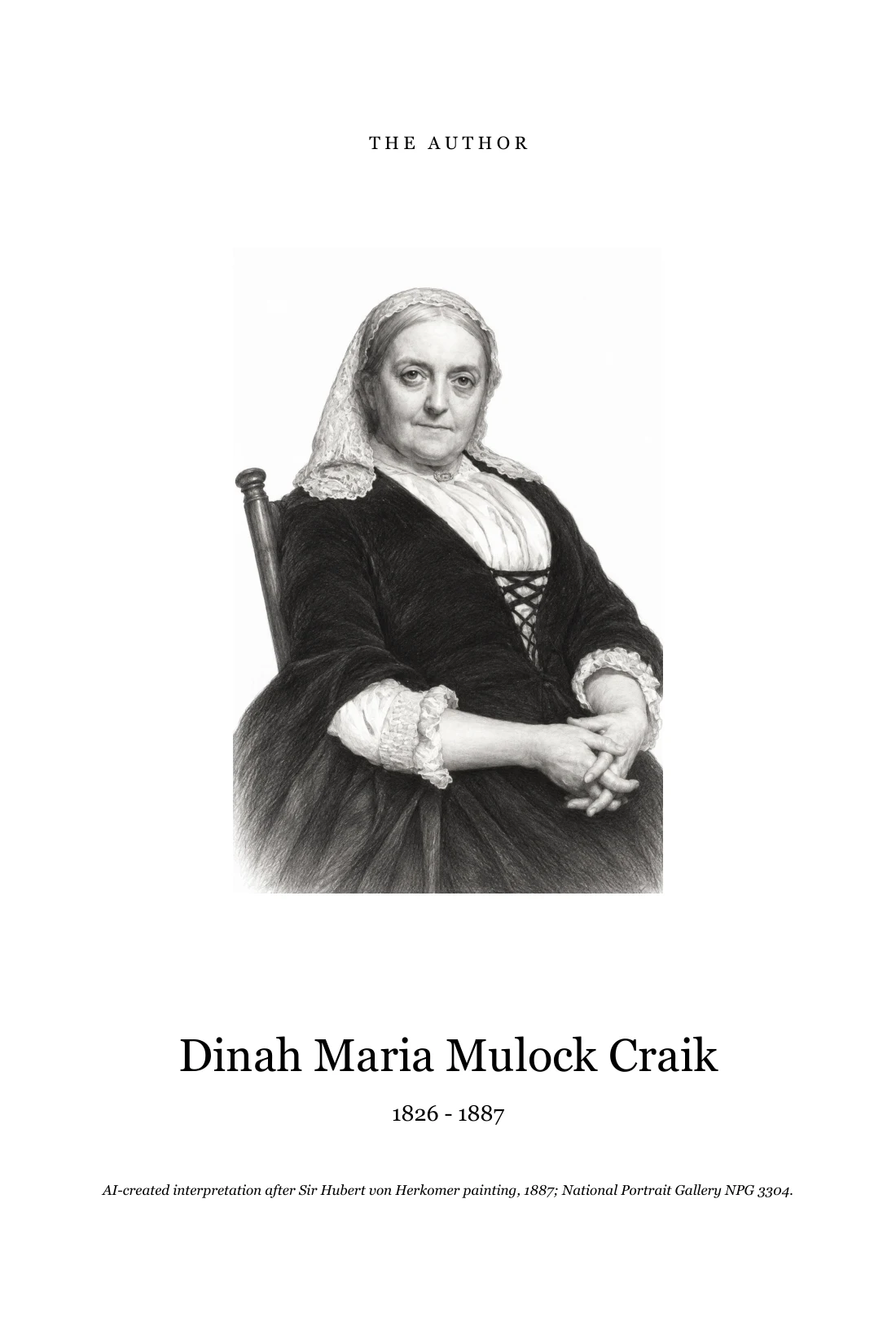
Dinah Maria Mulock Craik published The Little Lame Prince and his Travelling Cloak in 1875, under the name “Miss Mulock” by which many readers already knew her. She was nearly fifty, famous for her novel John Halifax, Gentleman, and in her later years she had turned back towards more fanciful tales.
What happens in The Little Lame Prince?
Prince Dolor is born to the King and Queen of Nomansland, a country that, Craik says, she cannot point out on any map. On the day of his christening a fashionable young lady carrying him is so busy arranging her train that she stumbles and lets him fall at the foot of a marble staircase. Nobody mentions it. The baby turns pale and does not cry, and only much later does the court notice that his legs have stopped growing.
His mother dies the same day, and a little old woman in grey who appears at the christening names him Dolor, after her, and promises to be his godmother. Then his father dies too. The boy’s ambitious uncle has him declared dead, buries a wax figure in his place, and sends the real child across a desolate plain to Hopeless Tower: a round brick tower nearly a hundred feet high, with no door at all and a snug little house hidden at the top.
He grows up there with a single nurse, a condemned criminal whose own life now depends on keeping him alive, and visits from a silent messenger on a black horse. Then his godmother arrives with her present.
“That you will never be able to walk or run or jump or play—that your life will be quite different from most people’s lives; but it may be a very happy life for all that. Do not be afraid.”
Dinah Maria Mulock Craik, The Little Lame Prince, chapter IV

How does the travelling cloak work?
Prince Dolor sits in the middle of it “like a frog on a water-lily leaf”, says “Abracadabra, dum dum dum”, and opens the skylight. To come home he says “Abracadabra, tum tum ti”. The cloak folds itself into a bundle small enough for his trouser pocket, and it carries him across the plain, over mountains and fields, and at last above the capital he has never seen.
It comes with extras when he wishes for them. A pair of gold spectacles settles on his nose so that he can see the insects on a blade of grass from high in the air, and later a pair of silver ears brings him the wind, running water, birdsong and bleating sheep. What the cloak never gives him is the chance to walk among the people he watches. He can see the world and hear it, but not join it, and Craik lets that ache stay in the story.
Why the ending matters
Plenty of Victorian children’s books heal their invalids by the last chapter. Craik does not. When the usurping uncle dies and Nomansland falls into uproar, it is the condemned nurse who rides from city to city spreading the news that Dolor is alive. The lords sent to fetch him find a pale boy sitting on the floor of the tower, still unable to stand, and they kneel and offer him the crown anyway. King Dolor reigns long and well. Among other things, he sends for the old country nurse who looked after him as a baby and treats her with honour for the rest of her life.
The final pages, which are best met fresh, return to the cloak one last time. Just before them, Craik steps out from behind the story to mention “a small person belonging to me” who loved hearing it told aloud and grumbled at the time spent writing it down. That was very probably her adopted daughter Dorothy, who was still a small child when the book appeared.
Some critics have also read the story as being about more than a boy’s body: a sharp picture of the cramped, watched, well-furnished lives of respectable Victorian women, who could look out from their towers at a world they were not allowed to enter. Whether or not Craik meant that, it is easy to see.
The Little Lame Prince
1875. A prince who cannot walk, a usurping uncle, a lonely tower and a magic cloak. Short enough to read aloud in a few evenings, and much less sentimental than its title suggests.
The Light Princess
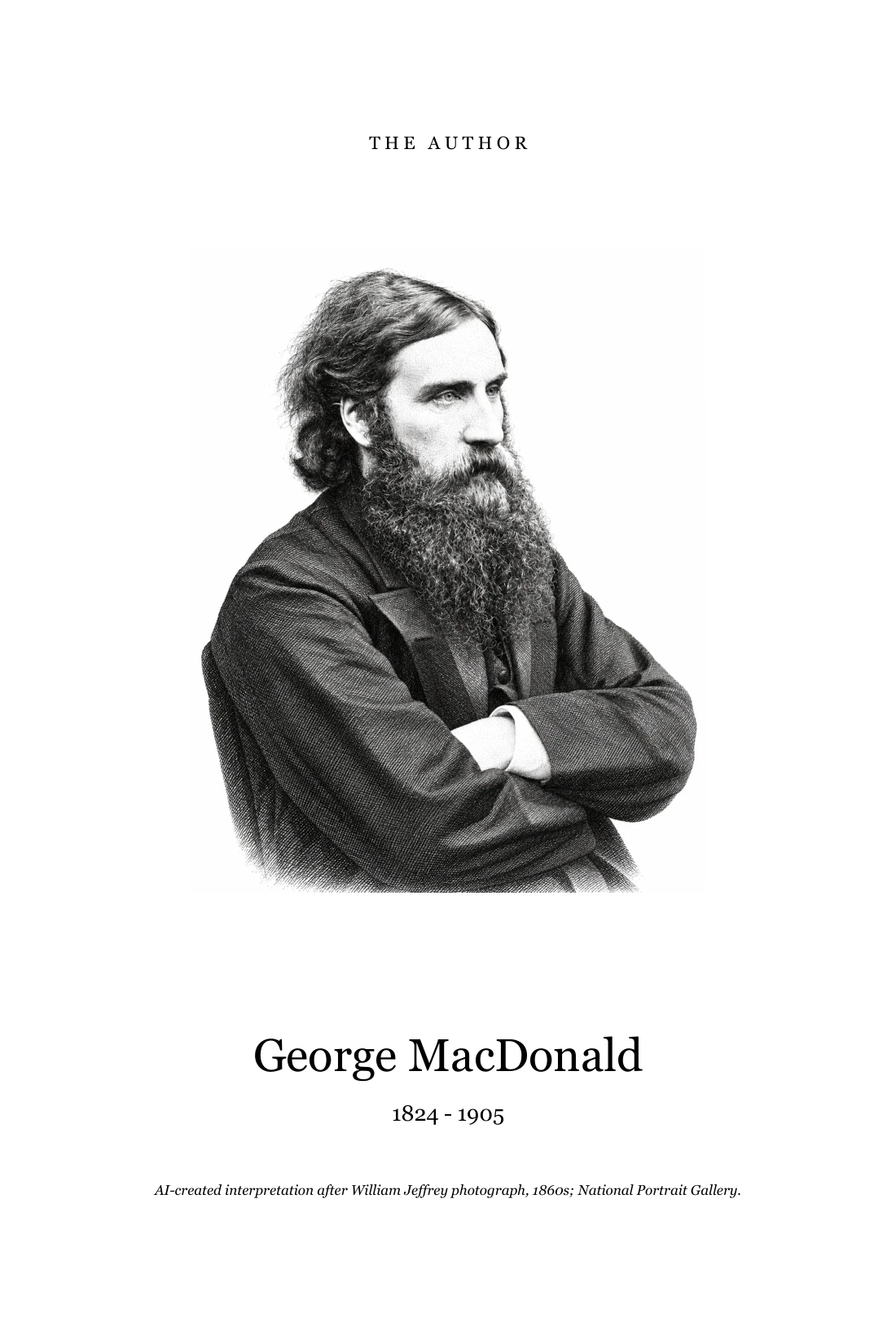
1864. George MacDonald’s princess is cursed to have no gravity, physical or emotional, and floats through life laughing at everything. A witty Victorian fairy tale about a body that will not behave.
The Princess and the Goblin
1872. Princess Irene, her mysterious great-great-grandmother in the attic and the goblins tunnelling under the castle. MacDonald’s best-known book for children.



Where to go next
For more Victorian fairy tales written by novelists, see Did you know Thackeray wrote a fairy-tale pantomime for children? and Did you know Oscar Wilde wrote fairy tales?. MacDonald’s goblin books are covered in The Princess and the Goblin has a sequel.
Then climb the tower. The Little Lame Prince is short, odd and kind, and the moment the skylight opens and the shabby green cloak sails out into the sky is one children have been holding their breath over for a century and a half.
Questions readers ask
What is The Little Lame Prince about?
It is an 1875 fairy tale by Dinah Maria Mulock Craik about Prince Dolor, who is injured as a baby, hidden in a tower by his usurping uncle, and given a magic travelling cloak by his fairy godmother that lets him fly over the world.
Who wrote The Little Lame Prince?
Dinah Maria Mulock Craik (1826–1887), the English novelist best known for John Halifax, Gentleman. The story first appeared under the name Miss Mulock.
Does the Little Lame Prince ever walk?
No. His godmother tells him he will never walk, and the story does not cure him. He becomes a wise and well-loved king without ever being able to stand.
What age is The Little Lame Prince for?
It suits confident readers from about eight, and works well as a read-aloud for younger children, though the early chapters include the deaths of both the prince’s parents.