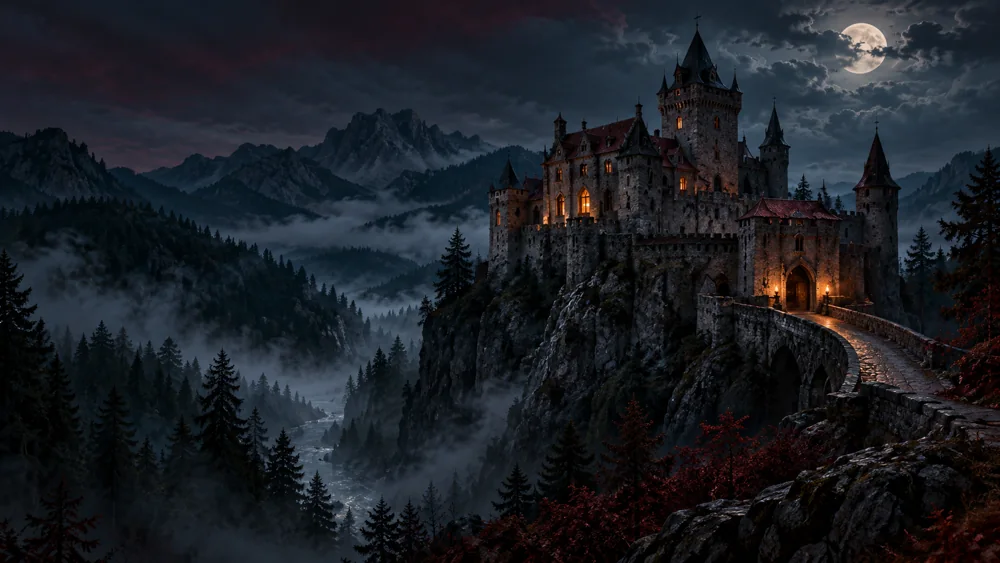
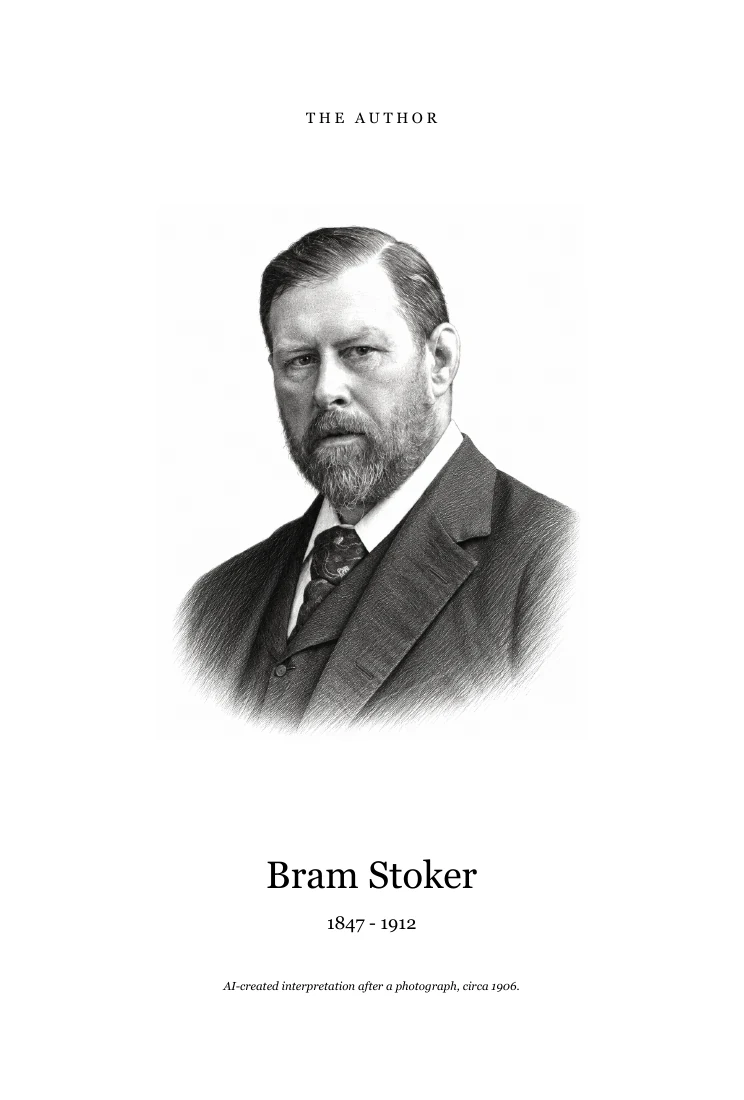
Bram Stoker’s Count Dracula has hair growing on the palms of his hands. That is one of the first things Jonathan Harker notices about him, after the door of the castle is opened by “a tall old man, clean shaven save for a long white moustache, and clad in black from head to foot, without a single speck of colour about him anywhere.” The hands are coarse and broad, with squat fingers, and “Strange to say, there were hairs in the centre of the palm.”
That is Stoker’s Dracula in 1897: old, unsettling and faintly animal, a man who grows younger as he feeds. Few of the Dracula movies have let him stay that way for long. Here is how the screen Count was made, film by film, and what each version changed.
Dracula movies in order: the landmarks
- 1921–23
Drakula halála, a silent film directed by Károly Lajthay, is the first known screen appearance of the Count. Said to have premiered in 1921, it is first recorded on screen in 1923, and it is lost.
- 1922
F. W. Murnau’s Nosferatu, with Max Schreck as Count Orlok, retells the novel without permission.
- 1931
Universal’s Dracula, directed by Tod Browning, makes a star of Bela Lugosi.
- 1931
A Spanish-language Dracula, directed by George Melford with Carlos Villarías, is shot on the same sets at night.
- 1958
Hammer’s Dracula, directed by Terence Fisher, casts Christopher Lee as the Count and Peter Cushing as Van Helsing.
- 1979
Werner Herzog remakes Nosferatu with Klaus Kinski; John Badham’s Dracula stars Frank Langella.
- 1992
Francis Ford Coppola’s Bram Stoker’s Dracula, with Gary Oldman, Winona Ryder and Anthony Hopkins.
- 2020
Mark Gatiss and Steven Moffat’s BBC serial, with Claes Bang as the Count.
- 2024
Robert Eggers’s Nosferatu, with Bill Skarsgård as Orlok and Lily-Rose Depp.
Nosferatu: the unauthorised Dracula
Murnau’s German film changed the names and moved the story to a German port town, but its intertitles originally acknowledged Stoker’s novel, and nobody was fooled. Stoker’s widow, Florence, sued for infringement of copyright, and a court ordered every copy destroyed. Some prints survived, which is why the film is still with us. Schreck’s Orlok, bald, rat-toothed and spidery, is closer to the repellent creature of the novel than almost any later Count.
Nosferatu also gave the vampire a new weakness. In Stoker’s book the Count’s powers fade by day, but he can still walk through London in daylight. Murnau’s film is credited as the first to show a vampire destroyed by sunlight, and the idea has haunted the genre ever since.
1931: Bela Lugosi and the man in evening dress
Universal’s Dracula was based less on the novel than on the stage play by Hamilton Deane, revised for Broadway by John L. Balderston, in which Lugosi had already played the Count. The play and the film are responsible for much of the image we now take for granted: the charming foreign nobleman, the evening clothes, the cape wrapped around a victim, the entrance through French windows. The film also reshuffles the plot, sending the solicitor Renfield, rather than Harker, to Transylvania.
Universal shot a Spanish-language version at the same time, using the same sets at night with a different cast and director. Long forgotten, it was screened at the Museum of Modern Art in 1977, and critics have compared the two versions ever since.
Hammer’s colour Count
Hammer’s 1958 Dracula, released in the United States as Horror of Dracula, is described as the first vampire film shot in colour, and it made Christopher Lee the definitive Count for a generation. The historian Christopher Frayling credits it with introducing the fangs, the red contact lenses and the blood spattered over the coffin in the credits. Jimmy Sangster’s script trims the novel drastically, and the film began a long series in which Lee returned to the role again and again.
Dracula as a love story
The biggest change in later adaptations is romance. Stoker’s Count menaces Mina Harker; he does not woo her. Badham’s 1979 film was advertised as “A Love Story”, and Coppola’s Bram Stoker’s Dracula, despite its title, gives the Count a lost wife reborn in Mina. In other ways Coppola’s film keeps more of the book than most: after a prologue in the fifteenth century it shows the Count as an old man when Harker meets him, and it finds room for Lucy and all three of her suitors, Quincey Morris included, who is missing from both the 1931 and 1958 films. It won three Academy Awards, for costume design, makeup and sound editing.
What is the best Dracula movie to watch after the book?
If you want Stoker’s atmosphere, Nosferatu in either its 1922 or 2024 form. If you want the story most completely told, Coppola. If you want the Count as popular culture remembers him, Lugosi. None of them reproduces the novel’s strangest quality, that it is assembled entirely from journals, letters, telegrams and newspaper cuttings; we explain why that matters in Dracula is told in letters and diaries.
Dracula
1897. Harker’s journey to the castle, the shipwreck at Whitby and the hunt across Europe. Long, but far more frightening than its reputation.
Dracula's Guest
1914. Stoker’s posthumous collection, opening with the episode many believe was cut from Dracula’s first chapters.
The Vampyre
1819. John Polidori’s aristocratic vampire, the ancestor of every elegant screen Count.


For the story behind that opening episode see Dracula’s Guest, the lost chapter, and for the vampire tradition before Stoker, The Vampyre before Dracula. There is more on Bram Stoker and his other horrors too.
But begin where the films all began, with an old man holding a lamp at the castle door. Open Dracula and meet him before Hollywood got to him.
Questions readers ask
What was the first Dracula movie?
The first known film of the character is Drakula halála, said to have premiered in 1921 but first recorded in 1923, which is now lost. The earliest surviving adaptation is F. W. Murnau’s Nosferatu (1922), which renamed the Count Orlok.
Which Dracula movie is closest to the book?
Francis Ford Coppola’s Bram Stoker’s Dracula (1992) keeps more of the novel’s characters than most, though it adds a reincarnation love story that Stoker never wrote.
Does Dracula die in sunlight in the book?
No. In Stoker’s novel the Count’s powers weaken by day, but he is seen walking in London in daylight. Death by sunlight was introduced by Nosferatu in 1922.
Why did Nosferatu change Dracula’s name?
The filmmakers did not have the rights to Stoker’s novel, so they changed names and details. It did not work: Florence Stoker sued, and a court ordered the copies destroyed.
 The Jewel of Seven Stars230 pages · $14.99
 The Lair of the White Worm168 pages · $13.99
 The Man298 pages · $16.99
 The Lady of the Shroud330 pages · $17.99