Count Orlok, the bald, rat-toothed creature of F. W. Murnau’s Nosferatu (1922), is Count Dracula under another name. The film follows the first half of Bram Stoker’s novel closely: a young clerk from an estate agent’s office is sent to a castle in the Carpathians to sell a house to a mysterious nobleman, who then travels by ship, with his boxes of earth, to the clerk’s home town. Nobody at Prana Film, the small company that made it, had paid for the right to tell that story.
What followed was one of the strangest copyright battles in film history, and the reason Nosferatu very nearly disappeared.
How closely does Nosferatu follow Dracula?
Henrik Galeen’s screenplay renames everyone. Jonathan Harker becomes Thomas Hutter, Mina becomes Ellen, the madman Renfield becomes Hutter’s employer Knock, and Count Dracula becomes Count Orlok. The action moves from London and Whitby to Wisborg, an invented German port, in 1838.
Underneath, the bones of Stoker’s opening chapters are easy to see. Hutter’s frightened fellow travellers will go no further, and a strange carriage collects him, as the Count’s calèche collects Harker at the Borgo Pass. At supper Hutter cuts himself and his host is far too interested in the blood (in Stoker it is a shaving cut). The boxes of earth go aboard a ship whose crew die one by one until it drifts into harbour; if you have read the voyage of the Demeter, you will know that ship.
What Nosferatu changes
The second half of the film is where Murnau and Galeen go their own way. There is no Van Helsing and his band of hunters, no Lucy, no chase back across Europe. Orlok brings plague to Wisborg, and rats pour from the ship. The ending is the film’s great invention: Ellen reads that a vampire can be defeated if a woman pure in heart keeps him with her past the cock’s crow, and she holds Orlok at her side until the sunrise destroys him.
That last detail outlived the film. Stoker’s Count is weaker by day but not destroyed by it, and Jonathan and Mina see him in Piccadilly in daylight. Nosferatu is generally credited as the first film in which sunlight kills a vampire, and a great many vampire stories since have followed it.
Florence Stoker’s lawsuit
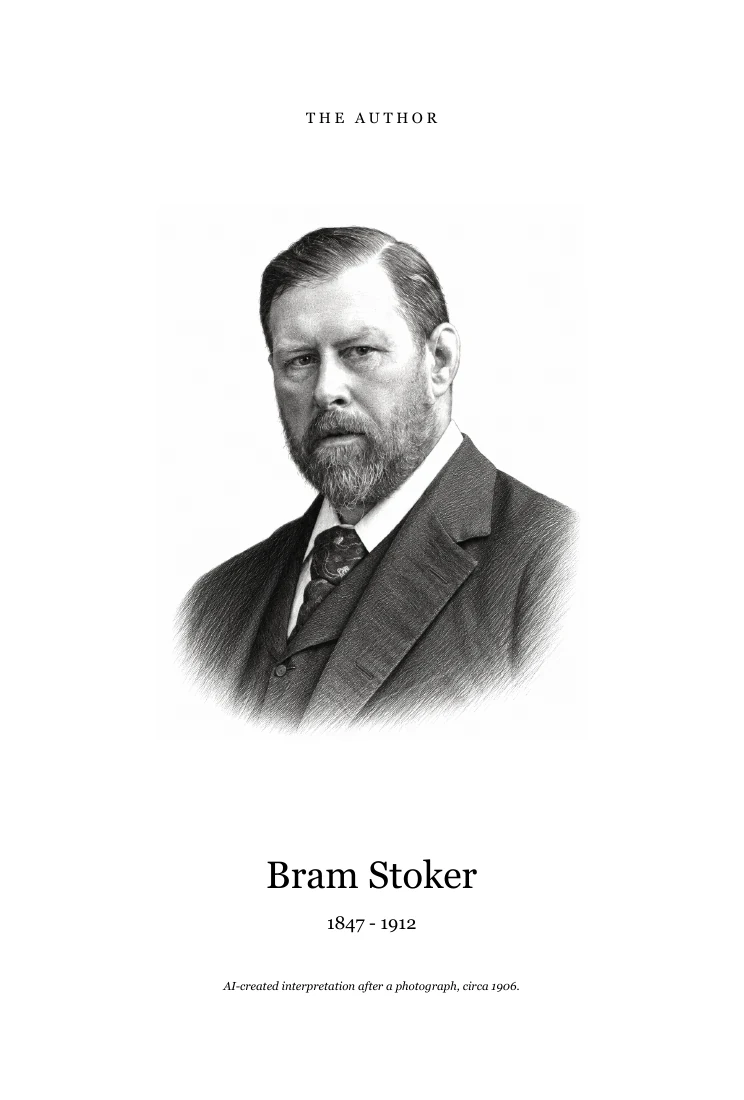
Bram Stoker died in 1912, and his widow, Florence, depended on the income from his books. When she learned of the film, she took Prana Film to court in Germany, with the backing of the Incorporated Society of Authors in London.
Prana Film, which made no other film, went into bankruptcy, so there was little money to recover. What Florence Stoker won instead was an order that the negative and every print be destroyed. It was never carried out everywhere. Copies had already travelled abroad, and some survived, which is why the film can still be watched today in restored versions.
She also protected the stage version she had licensed, by Hamilton Deane, and later sold the film rights to Universal, whose 1931 Dracula with Bela Lugosi became the authorised screen Count. We trace that line in Dracula on screen.
Nosferatu remakes: Herzog and Eggers
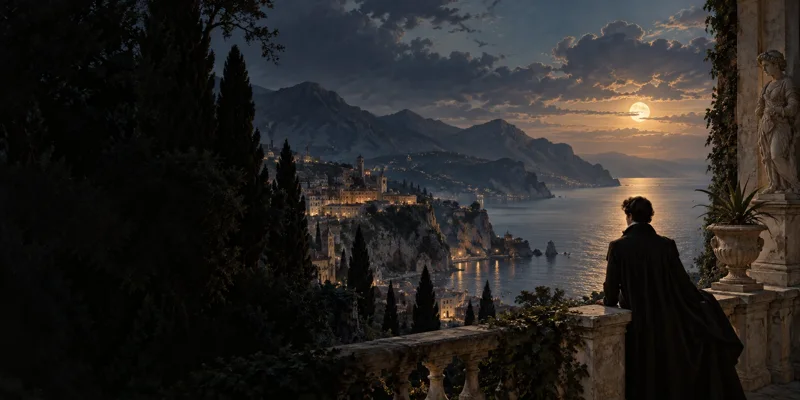
By the 1970s Stoker’s novel was out of copyright, and Werner Herzog’s Nosferatu the Vampyre (1979) could do what Murnau could not. Herzog kept Murnau’s look, with Klaus Kinski made up as a near twin of Schreck’s Orlok, but restored Stoker’s names: Jonathan Harker, Lucy and Count Dracula.
Shadow of the Vampire (2000) went behind the camera instead, imagining that Murnau had hired a real vampire to play Orlok; Willem Dafoe was nominated for an Academy Award for playing Schreck. And in 2024 Robert Eggers made a new Nosferatu, with Bill Skarsgård as Orlok and Lily-Rose Depp as Ellen. Eggers kept Murnau’s names and German setting but gave his Count the heavy moustache of Stoker’s description.
So a film that was meant to be destroyed has become, after Stoker himself, the second great source of the vampire on screen. For the other films that borrowed from the book, see films inspired by Dracula.
Should you read Dracula before watching Nosferatu?
You can watch Nosferatu in an evening; Stoker takes longer, and repays it. Reading the novel first shows how much Murnau took, especially in the castle chapters, and how much he invented. The film is about plague and the fear of the outsider. The novel is a detective story told in letters and diaries, in which a band of friends gather the evidence and give chase; we explain how that works in Dracula is told in letters and diaries.
Dracula
1897. The novel Murnau borrowed: Harker’s journal on the road to the castle, the death ship at Whitby and the hunt that Nosferatu leaves out.
Dracula's Guest
1914. Stoker’s posthumous story collection, opening with the Walpurgis Night episode many believe was cut from Dracula.
The Vampyre
1819. John Polidori’s aristocratic vampire, published nearly eighty years before Stoker’s Count.


There is more about Bram Stoker and his other novels, and a whole shelf of gothic fiction to follow.
Begin with Harker’s journal on the train out of Munich, and you will recognise every step Hutter takes. Open Dracula and see what Murnau borrowed.
Questions readers ask
Is Nosferatu based on Dracula?
Yes. Nosferatu (1922) is an unauthorised adaptation of Bram Stoker’s Dracula. The filmmakers changed the names and setting, but the first half of the film follows the novel closely.
Why is the vampire in Nosferatu called Orlok?
Prana Film did not have the rights to Stoker’s novel, so the characters were renamed. It did not help: Florence Stoker sued and won.
Was Nosferatu destroyed?
A German court ordered the negative and prints destroyed after Florence Stoker’s lawsuit, but copies had already gone abroad and some survived. Restored versions are widely available today.
Does sunlight kill Dracula in the book?
No. Stoker’s Count is weaker by day but is seen in London in daylight. Death by sunlight was introduced by Nosferatu.
 The Jewel of Seven Stars230 pages · $14.99
 The Lair of the White Worm168 pages · $13.99
 The Man298 pages · $16.99
 The Lady of the Shroud330 pages · $17.99