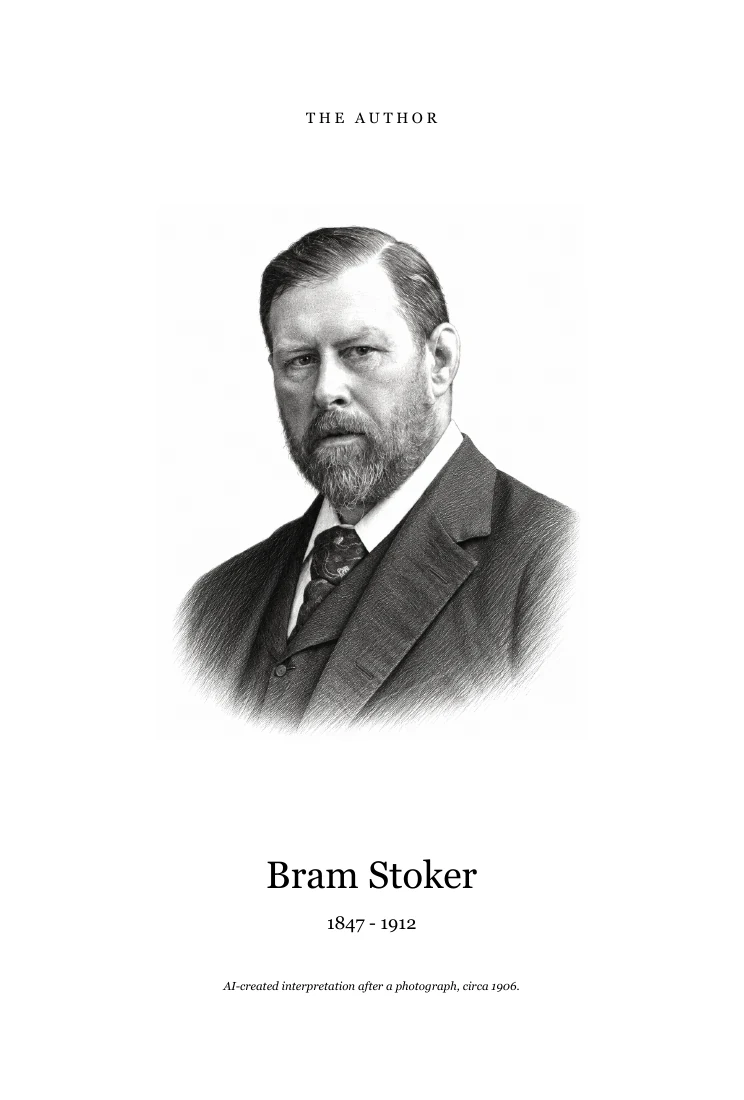
In 1914 a short preface signed “Florence Bram Stoker” introduced a new collection of her late husband’s stories. Most of them, she explained, had already appeared in magazines. One had not:
To his original list of stories in this book, I have added an hitherto unpublished episode from Dracula. It was originally excised owing to the length of the book, and may prove of interest to the many readers of what is considered my husband’s most remarkable work.
Florence Bram Stoker, preface to Dracula’s Guest (1914)
That episode gave the book its title. Dracula’s Guest is a short story, and on the strength of Florence’s note it has been described for more than a century as the lost first chapter of Dracula. The reality is more interesting, and less certain.
What happens in Dracula’s Guest?
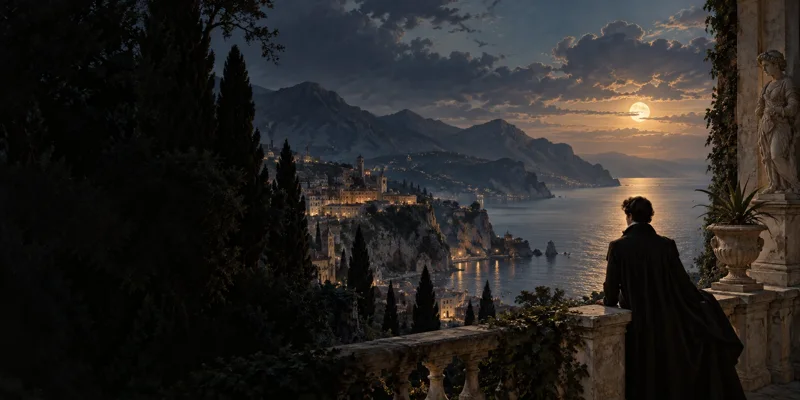
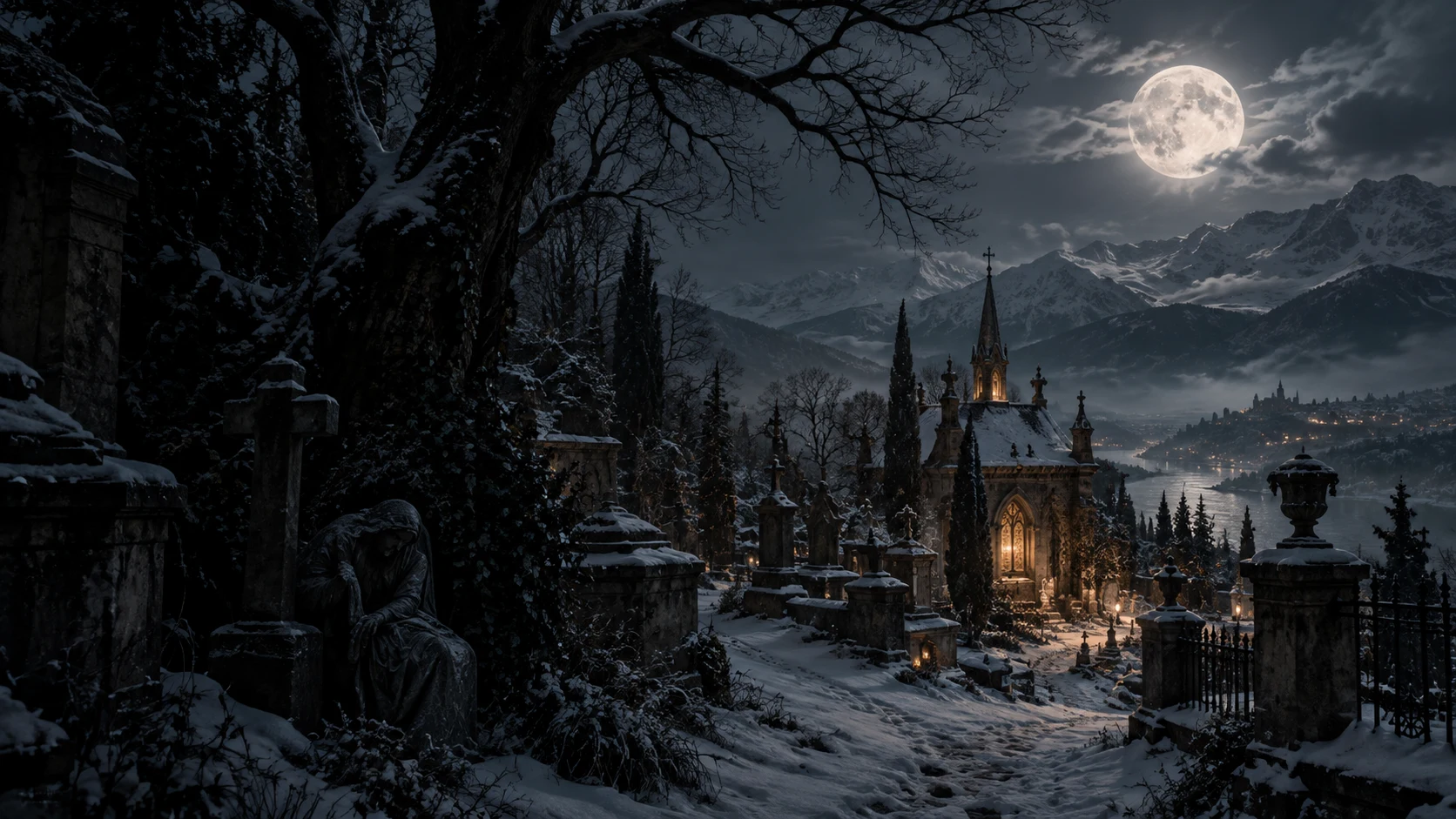
An unnamed Englishman sets out for a carriage drive from his hotel in Munich. The maître d’hôtel warns the coachman to be back by nightfall, “for you know what night it is”. It is Walpurgis Night, when, as the narrator later recalls, the graves were believed to open and the dead to walk. The traveller insists on exploring a deserted village, sends the frightened coachman away and walks on alone into a gathering snowstorm.
He takes shelter at a great marble tomb with an iron spike or stake driven into its top. The inscription reads “Countess Dolingen of Gratz in Styria, sought and found death, 1801”. What follows involves a storm, a woman in the tomb, a wolf and a rescue party, and ends with a telegram that had reached the hotel even before the coachman got back:
Be careful of my guest—his safety is most precious to me.
Bram Stoker, Dracula’s Guest (1914)
It is signed from Bistritz, by Dracula.
Was Dracula’s Guest really the first chapter of Dracula?
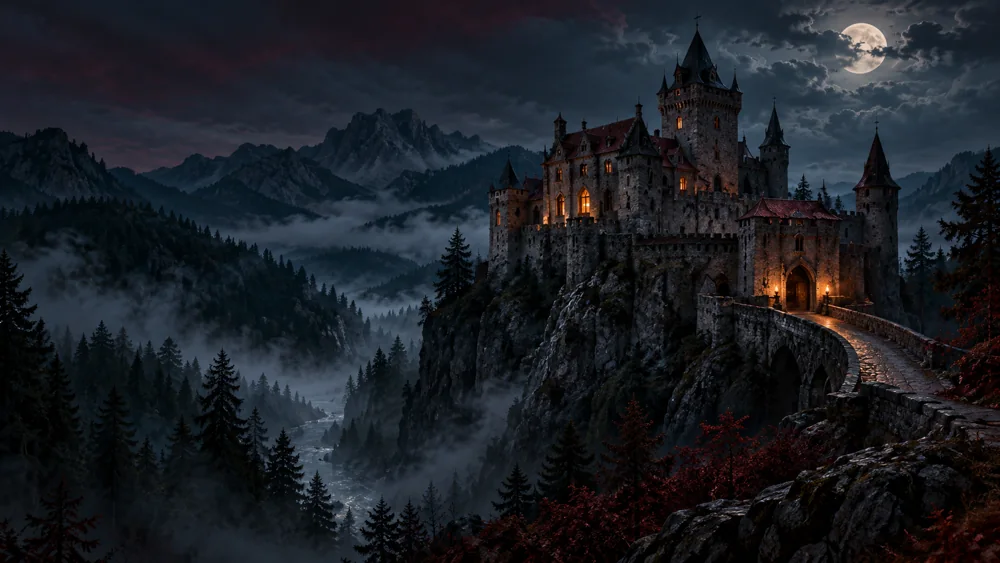
The dates certainly fit. Dracula opens with Jonathan Harker’s journal entry for 3 May, which begins by saying he left Munich on the evening of 1 May. Walpurgis Night falls on 30 April, the night before. A stop in Munich on the way to Transylvania would slot neatly into that gap.
But several scholars who have studied the novel closely doubt that this story is simply the missing pages. Clive Leatherdale calls the widely held notion that it was the first chapter incorrect. Elizabeth Miller and Robert Eighteen-Bisang, who edited Stoker’s working notes for the novel, argue that it grew out of ideas in his early plans, and Miller has said it was part of the original scheme but never meant as the first chapter. The differences are hard to ignore:
- Dracula is told entirely through diaries, letters and other documents; Dracula’s Guest is a conventional first-person story.
- The narrator is never named, and he is noticeably bolder than the nervous, careful Harker.
- He struggles to follow his coachman’s German, whereas Harker, in the novel, finds his “smattering of German” very useful.
- Florence herself said Stoker might have revised his stories had he lived; the text she printed may be an early draft rather than a polished cut chapter.
Why Styria matters
That early plan helps explain the tomb of the Countess of Gratz. Styria is an Austrian province, and it already had a famous literary vampire: Sheridan Le Fanu’s Carmilla, published in 1872, which also turns on the tomb of a Styrian countess. The critic Roger Luckhurst has pointed to the strong debts Dracula’s Guest owes to Le Fanu’s story. When Stoker moved his Count east to Transylvania, the Styrian material had to go somewhere, and Florence found a home for it.
Even the novel’s title changed late. The typescript Stoker sent to the printers was headed The Un-Dead. Somewhere between plan and publication, Count Wampyr became Count Dracula and Styria became Transylvania, and a chapter about a snowbound English traveller may have been one of the casualties.
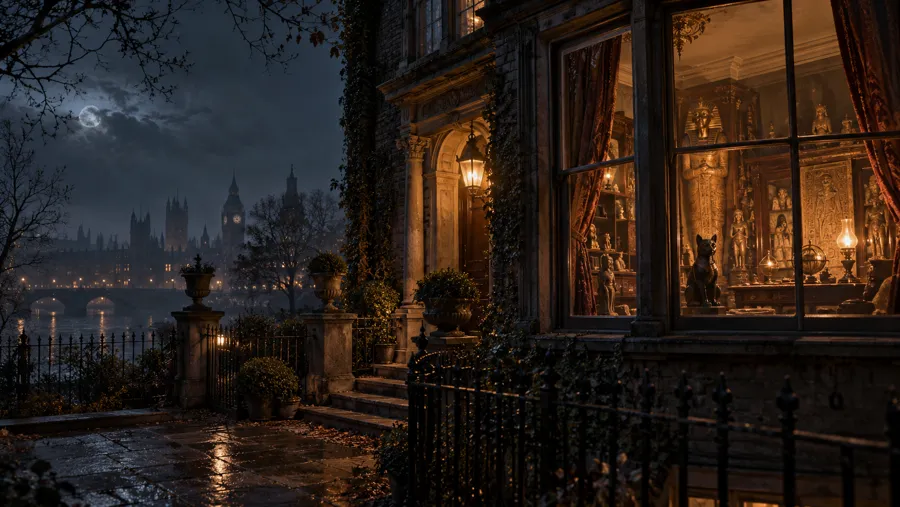
Where to read it
The story is short, atmospheric and genuinely eerie, and its last page, with that telegram, delivers a better chill than many complete novels. The rest of the 1914 collection is worth staying for, too. “The Judge’s House” and “The Squaw” are two of the best horror stories Stoker wrote.
Dracula's Guest
1914. Walpurgis Night, a snowstorm and a marble tomb, followed by eight more tales of rats, curses and a judge’s house that should never have been let.
Dracula
1897. The novel the episode belongs to, or almost belongs to. Begin with Harker on the train from Munich and see where the two stories meet.
The Jewel of Seven Stars
An Egyptologist’s strange trance and a mummified queen. Stoker’s other great supernatural novel, and the place to go when you have finished Dracula.


The novel’s unusual form is explored in Did you know Dracula is told entirely through diaries, letters and other documents?, and Stoker’s other books in Bram Stoker wrote much more than Dracula: where to go next. For the vampire who came first, see Did you know a vampire story was a sensation 78 years before Dracula?, and for more on the author, visit the Bram Stoker page.
Read Dracula’s Guest first, on a dark night, then go straight on to the opening of Dracula. Whether or not Stoker meant them to sit together, they make a very good pair.
Questions readers ask
Is Dracula’s Guest the first chapter of Dracula?
Bram Stoker’s widow said it was an episode cut from the novel for length, and it is often called the deleted first chapter. Several Stoker scholars disagree, arguing it grew from his early plans for the book but was never actually its opening.
When was Dracula’s Guest published?
It was first published in 1914, two years after Bram Stoker’s death, as the title story of Dracula’s Guest and Other Weird Stories, edited by his widow Florence.
Should I read Dracula’s Guest before Dracula?
It works well either way. Read first, it serves as a prelude to Harker’s journey; read afterwards, it is an intriguing glimpse of an earlier version of Stoker’s plan.
 The Lair of the White Worm168 pages · $13.99
 The Man298 pages · $16.99
 The Lady of the Shroud330 pages · $17.99
 The Mystery of the Sea436 pages · $20.99