A nineteenth century Alpine village under dramatic clouds
PIPCUB CINEMATIC EDITIONS / PAPERBACK BOOKS

The Genealogy of Morals

Friedrich Nietzsche

Nietzsche investigates the histories and forces behind moral values, guilt, and ascetic ideals.

$12.99

Printed for you. Shipping calculated at checkout.

Checkout opening soon. Shipping & delivery Returns

The Genealogy of Morals — actual Pipcub paperback cover
SCROLL INTO THE STORYAN IMAGINED WORLD · ORIGINAL AI ART
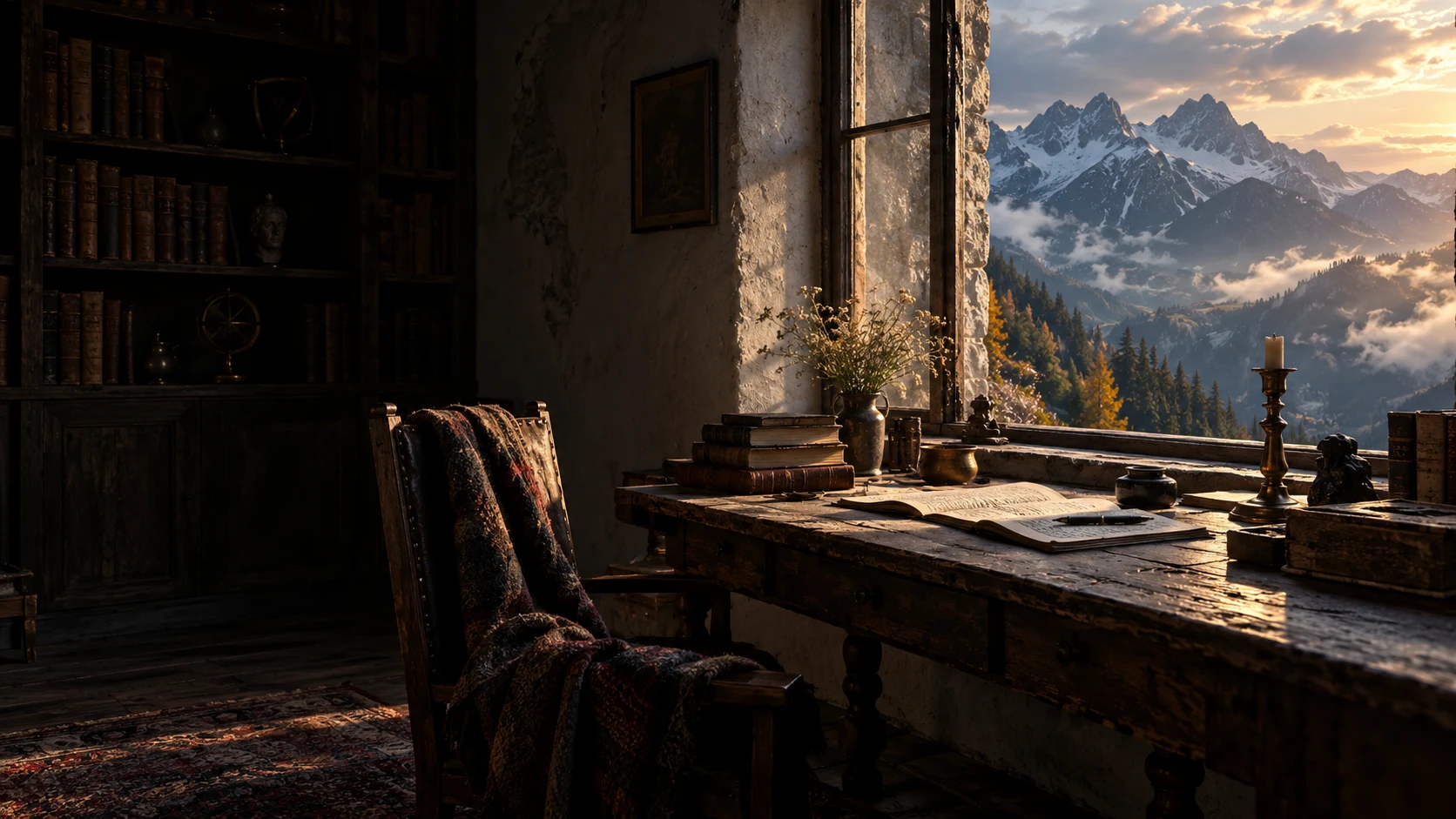
A spare philosopher's writing room with mountain window

THE STORY

Where do our moral judgments come from?

Nietzsche investigates the histories and forces behind moral values, guilt, and ascetic ideals.

A steep mountain path above a valley

THE WORLD OF THE BOOK

On the mountain path.

These essays challenge the reader to consider how judgments acquire authority and whose interests they may express. The work remains an intense encounter with questions of power, interpretation, and the origins of what we call good.
The Genealogy of Morals front cover
Read the interior preview

LOOK INSIDE

Open a book.
Enter a world.

Preview six pages from this edition. Select a page to enlarge it, or use the arrows to keep reading.

Spread 1 of 3

The Genealogy of Morals · PDF page 12
Actual interior PDF page 12 of The Genealogy of Morals
Read accessible text

10 to be quite frank about it, in their capacity of living riddles, an advantage over their books—they themselves are interesting! These English psychologists—what do they really mean? We always find them voluntarily or involuntarily at the same task of pushing to the front the partie honteuse of our inner world, and looking for the efficient, governing, and decisive principle in that precise quarter where the intellectual self-respect of the race would be the most reluctant to find it (for example, in the vis inertiæ of habit, or in forgetfulness, or in a blind and fortuitous mechanism and association of ideas, or in some factor that is purely passive, reflex, molecular, or fundamentally stupid)—what is the real motive power which always impels these psychologists in precisely this direction? Is it an instinct for human disparagement somewhat sinister, vulgar, and malignant, or perhaps incomprehensible even to itself? or perhaps a touch of pessimistic jealousy, the mistrust of disillusioned idealists who have become gloomy, poisoned, and bitter? or a petty subconscious enmity and rancour against Christianity (and Plato), that has conceivably never crossed the threshold of consciousness? or just a vicious taste for those elements of life which are bizarre, painfully paradoxical, mystical, and illogical? or, as a final alternative, a dash of each of these motives—a little vulgarity, a little gloominess, a little anti-Christianity, a little craving for the necessary piquancy? But I am told that it is simply a case of old frigid and tedious frogs crawling and hopping around men and inside men, as if they were as thoroughly at home there, as they would be in a swamp. I am opposed to this statement, nay, I do not believe it; and if, in the impossibility of knowledge, one is permitted to wish, so do I wish from my heart that just the converse metaphor should apply, and that these analysts with their psychological microscopes should be, at bottom, brave, proud, and magnanimous animals who know how to bridle both their hearts and their smarts, and have specifically trained themselves to sacrifice what is desirable to what is true, any truth in fact, even the simple, bitter, ugly, repulsive, unchristian, and immoral truths—for there are truths of that description. 2. All honour, then, to the noble spirits who would fain dominate these historians of morality. But it is certainly a pity that they lack

Friedrich Nietzsche portrait page from this edition

ABOUT THE AUTHOR

Friedrich Nietzsche

Friedrich Nietzsche was a German philosopher and writer who began his career as a scholar of classical languages and literature. In 1869, at the age of twenty-four, he became professor of classical philology at the University of Basel. Persistent ill health led him to leave the post in 1879.

More about the author ↗

Discover the author behind the story. This portrait and biography are included in your edition.

FREE TO READ

Take it with you.

The Genealogy of Morals is in the public domain, so its words belong to everyone. Download our edition free. No account needed.

Read it in your browser ↗
Add it to your reading app
iPhone & iPad
Tap download, then open the file from Safari’s downloads, tap Share and choose Books. It stays in your Apple Books library.
Android
Tap download, open the file and choose Google Play Books. Or, in Play Books, go to Library, tap ⋮ and choose Upload files.
Kindle
Send the file to your Kindle library with Amazon’s Send to Kindle.
Kobo, Moon+ Reader and other apps
Open the downloaded file with the app, or use the app’s import option.

KEEP BROWSING

More from the library.

The Game of Life and How to Play It cover

The Game of Life and How to Play It

Florence Scovel Shinn

The Garden Party, and Other Stories cover

The Garden Party, and Other Stories

Katherine Mansfield

The Gay Cockade cover

The Gay Cockade

Temple Bailey

The Ghost cover

The Ghost

William Douglas O’Connor

The Giant Crab, and Other Tales from Old India cover

The Giant Crab, and Other Tales from Old India

W. H. D. Rouse

The Gilded Age: A Tale of Today cover

The Gilded Age: A Tale of Today

Mark Twain and Charles Dudley Warner

Browse the complete library ↗
YOUR NEXT CHAPTER

Your book bag 0

A little escape. A story to keep.

Loading your book bag…