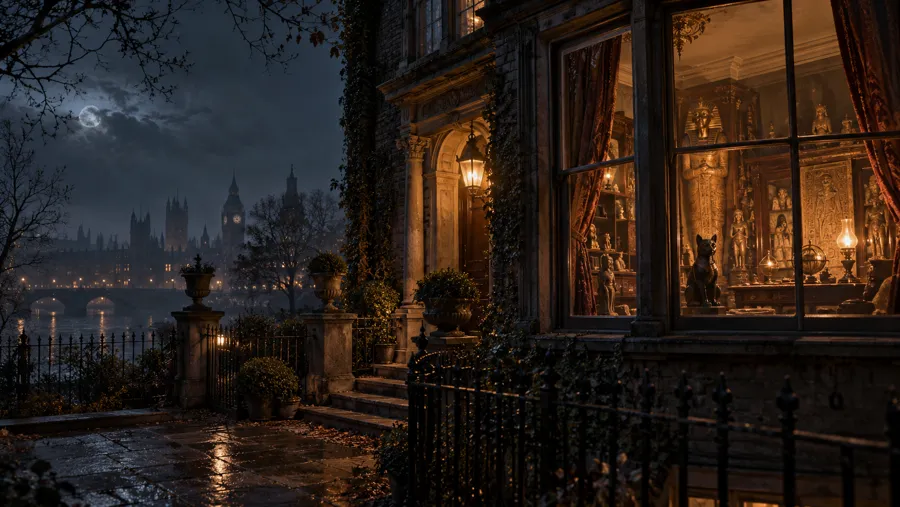
André Øvredal’s The Last Voyage of the Demeter (2023) does something unusual with a famous novel. Instead of adapting the whole of Dracula, it takes a single episode, one Stoker tells in a few pages, and stretches it into a feature film. The episode is the voyage of the Demeter, the Russian schooner that carries the Count from the Black Sea to England.
Here is what is really in the book, and how the film fills the gaps.
Where is the Demeter in Dracula?
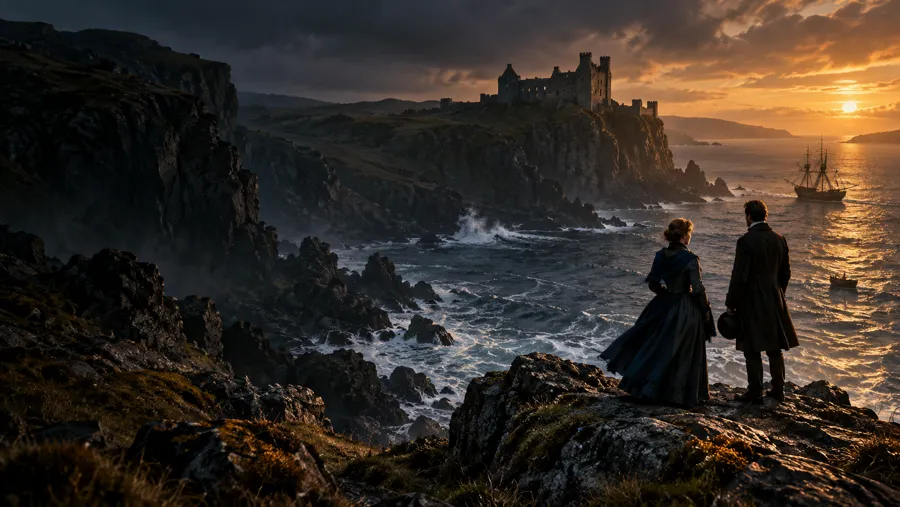
The ship appears in Chapter VII, which is made of two cuttings from a newspaper, The Dailygraph, pasted into Mina Murray’s journal. Mina is staying with her friend Lucy in Whitby, on the Yorkshire coast. The first cutting describes a sudden, savage storm, and a schooner that races into the harbour with all sail set. There is no one on deck except the man at the wheel.
…lashed to the helm was a corpse, with drooping head, which swung horribly to and fro at each motion of the ship.
Bram Stoker, Dracula (1897), Chapter VII
As the ship strikes the sand, “an immense dog sprang up on deck from below” and bounds up the cliff toward the churchyard. The next morning a local mastiff is found dead in the road with its throat torn away. Stoker never says outright that the dog is the Count, and he does not need to.
The second cutting reports the inquest. The ship is the Demeter, out of Varna, in ballast of silver sand with “a number of great wooden boxes filled with mould”, consigned to a Whitby solicitor. Elsewhere in the novel we learn there were fifty of them. Then comes the heart of the chapter: the captain’s log, and the addendum he left rolled up in a corked bottle in his pocket.
What the captain’s log says
- 6 July
The Demeter finishes loading “silver sand and boxes of earth” at Varna and sails at noon: five hands, two mates, a cook and the captain.
- 16 July
The mate reports that one of the crew, Petrofsky, is missing.
- 17 July
Another sailor, Olgaren, says he saw a tall, thin stranger on deck. The ship is searched from stem to stern, and no one is found.
- 24 July
A second man vanishes as they enter the Bay of Biscay. The crew beg for a double watch.
- 29–30 July
The second mate disappears, then the man on watch and the steersman.
- 3 August
The first mate, sure that It is hiding in the boxes, goes below with a tool-chest and comes up screaming. He throws himself into the sea.
- 4 August
Alone at the helm, the captain resolves to tie his hands to the wheel.
The log is terse, a sailor’s record rather than a story, and that is what makes it frightening. Each entry holds a little less hope. On 2 August the captain writes, “One more gone. Lord, help us!” By 4 August he has seen the thing himself.
But I am captain, and I must not leave my ship. But I shall baffle this fiend or monster, for I shall tie my hands to the wheel when my strength begins to fail…
The captain’s last entry, Dracula, Chapter VII
He keeps his word. When the coastguard boards the ship, the captain’s hands are tied one over the other to a spoke of the wheel, with a crucifix between his hand and the wood, its beads wound around both his wrists and the wheel.
How the film changes the story
A log with nine men and four weeks of near silence leaves a great deal of room, and the film fills it. Øvredal’s crew are named characters with lives of their own, among them Clemens, a doctor played by Corey Hawkins who joins the voyage at Varna, and Liam Cunningham’s captain, Eliot, who has brought his young grandson aboard.
The biggest addition is Anna, played by Aisling Franciosi, a young woman found buried in one of the boxes of earth. She has been brought aboard as food for the Count, and the crew’s attempts to save her drive much of the film.
The film also shows us the Count, which the book never does at sea. In Stoker he is only “It” and “Him”, glimpsed in the fog “like a man, tall and thin, and ghastly pale”. On screen he is a winged, bat-like creature, much nearer Murnau’s Orlok than Stoker’s elderly nobleman; we tell that film’s story in Nosferatu: the unauthorised Dracula.
What the film keeps is the shape: a ship that leaves port with a full crew and arrives with none, and a captain who will not leave his wheel. Its final scenes go beyond the log altogether. The book closes the episode more quietly, with a hero’s funeral for the captain and the newspaper calling the affair one more “mystery of the sea”.
Should you read the Demeter chapter before the film?
Chapter VII takes well under an hour to read and is one of the most self-contained in the novel, so you can read it on its own. But it works best in place. Stoker sets it inside Mina’s quiet seaside holiday, just as Lucy has begun to sleepwalk, and after it nothing in Whitby is safe. For more on how the novel is built from documents like this log, see Dracula is told in letters and diaries; for every other screen version, Dracula on screen.
Dracula
1897. The Demeter’s voyage is in Chapter VII, between Mina’s Whitby journal and Lucy’s first sleepwalking.
The Mystery of the Sea
1902. Stoker’s own novel of the sea: second sight, hidden treasure and a stormy stretch of the Scottish coast.
Dracula's Guest
1914. Stoker’s stories of the uncanny, opening with the episode thought to have been cut from Dracula.


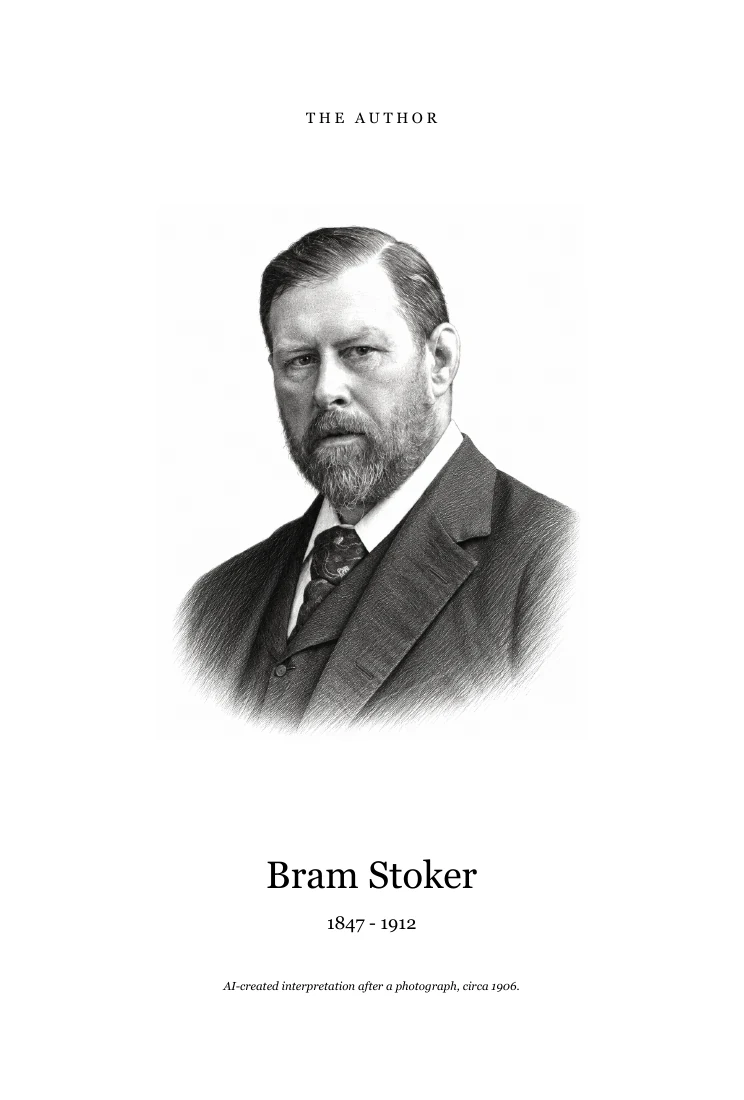
There is more about Bram Stoker on his author page. Then turn to Chapter VII of Dracula on a stormy night, and read the log the way the people of Whitby did, after the ship had already come in.
Questions readers ask
Is The Last Voyage of the Demeter based on a book?
Yes. It is based on Chapter VII of Bram Stoker’s Dracula (1897), which includes the log of the Demeter, the ship that carries Count Dracula from Varna to Whitby.
What happens to the Demeter in Dracula?
Its crew disappear one by one during the voyage. The ship reaches Whitby in a storm with the dead captain tied to the wheel, and a huge dog leaps ashore and vanishes.
Does anyone survive the voyage of the Demeter in the book?
No. The log ends with the captain alone, and he is found dead at the wheel. The film adds characters and gives the story a different ending.
 The Jewel of Seven Stars230 pages · $14.99
 The Lair of the White Worm168 pages · $13.99
 The Man298 pages · $16.99
 The Lady of the Shroud330 pages · $17.99