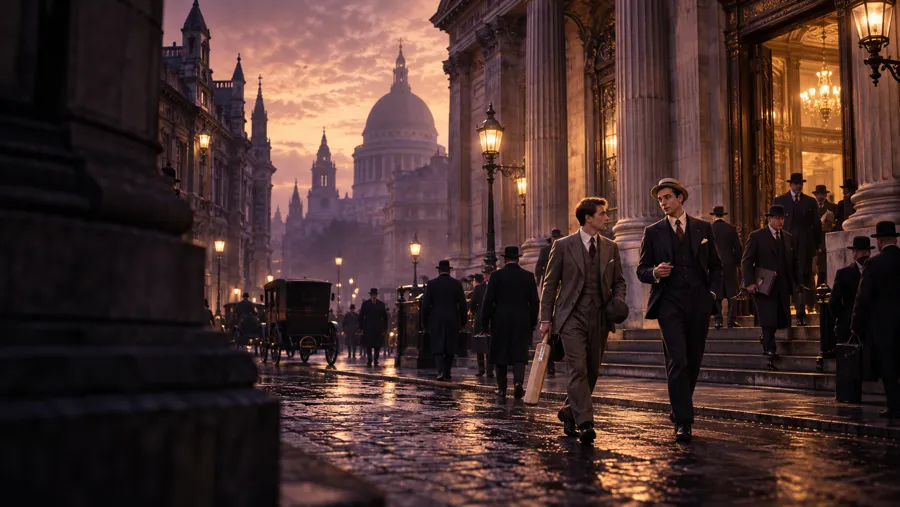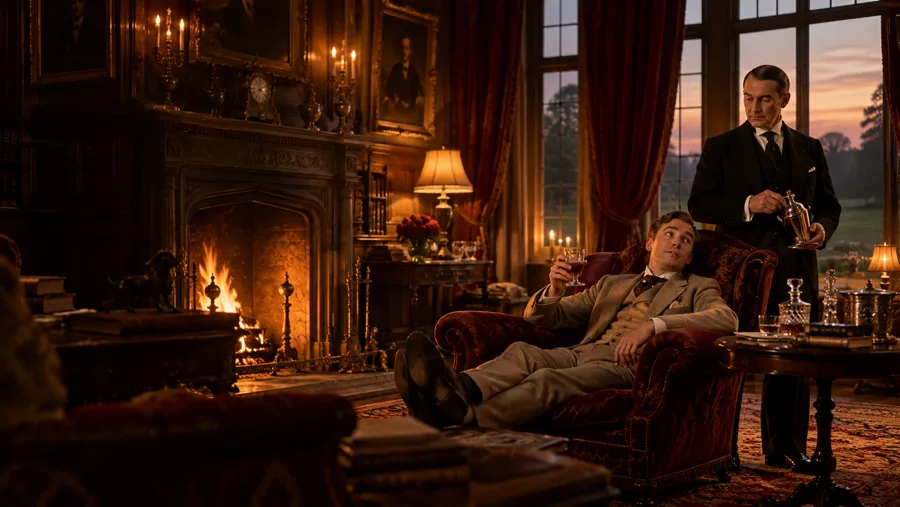
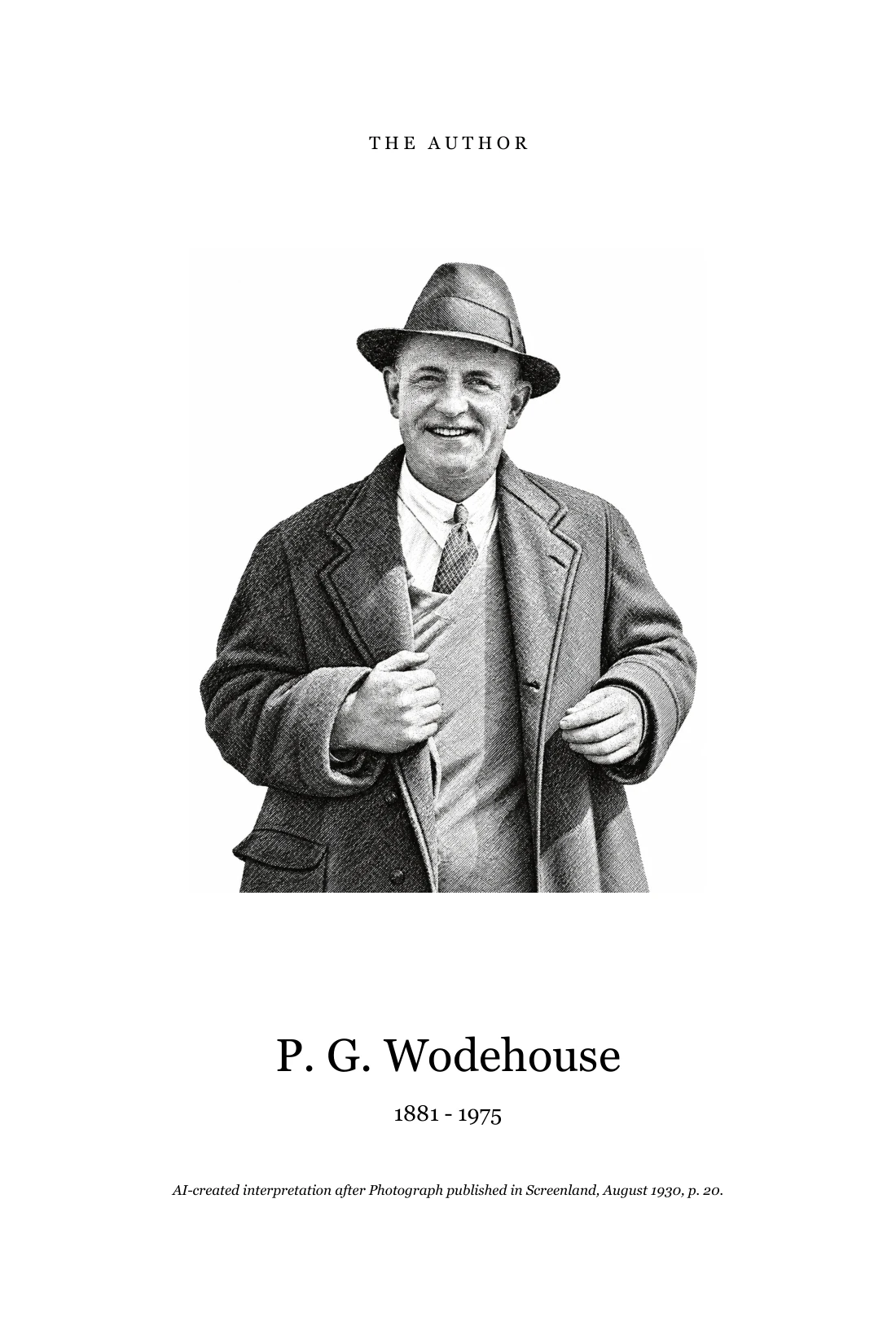
At the open window of the great library of Blandings Castle, drooping like a wet sock, as was his habit when he had nothing to prop his spine against, the Earl of Emsworth, that amiable and boneheaded peer, stood gazing out over his domain.
P. G. Wodehouse, Leave it to Psmith (1923)
That is the first sentence of Leave it to Psmith, and if it makes you smile, you are already a Wodehouse reader. If you want one recommendation, this is it: a complete novel, a country house, a stolen necklace and the most self-possessed young man in English comedy, all inside three hundred pages. It is the best Wodehouse book to start with because it shows everything he could do at once.
But P. G. Wodehouse built several worlds, and readers tend to fall for one of them first. Below are four ways in, each with its own book.
What is the best Wodehouse book to start with?
For a novel, Leave it to Psmith. For short stories, the early Jeeves collections. For something nobody else will have recommended, Piccadilly Jim or the golf stories. None of these requires you to have read anything else first, and none is long.
- $16.99
Leave it to Psmith
1923. Psmith, monocled and unflappable, advertises himself as ready for any job at all, crime included, provided it has nothing to do with fish. He ends up posing as a Canadian poet at Blandings Castle, one step ahead of a gang of jewel thieves with the same idea. Wodehouse’s plotting at its most elegant.
- $12.99
My Man Jeeves
1919. The first Jeeves collection, and an odd one: four stories of Bertie and Jeeves stranded in New York, and four about Reggie Pepper, the earlier Bertie-like hero Wodehouse soon retired. Watch the formula being born.
- $15.99
Piccadilly Jim
1917. Jimmy Crocker, a young American whose London scrapes keep him in the newspapers, sails to New York under a false name and ends up being asked to impersonate the one person he really is.
- $13.99
The Clicking of Cuthbert
1922. Ten golf stories, nearly all told by the Oldest Member to anyone foolish enough to sit near him at the clubhouse. You do not need to play golf. It helps if you have met someone who does.



Door one: Blandings and Psmith
Blandings Castle is where Wodehouse kept his most peaceful lunatic, Lord Emsworth, a peer who wants only to be left alone with his flowers and, later, his prize pig. The castle had appeared once before, in Something New (1915), Wodehouse’s first Blandings novel, but Leave it to Psmith is the one that made it a world.
It is also the last of the four Psmith books. Psmith began as a schoolboy in Mike (1909), worked unhappily in a bank in Psmith in the City, and edited a New York weekly in Psmith, Journalist. The bank, at least, came from life: Wodehouse spent two years as a clerk in the London office of the Hongkong and Shanghai Bank, from 1900 to 1902, found the work baffling and uncongenial, and drew on it for the novel. Psmith explains his name early in Leave it to Psmith: the p, he says, is silent, “as in phthisis, psychic, and ptarmigan.” We follow him from school to castle in the Psmith books in order.
Door two: Jeeves and Wooster
Most readers come to Wodehouse through Jeeves, and for good reason. My Man Jeeves is where the first stories were collected, but several were later revised and improved for Carry On, Jeeves, which also contains the story of how Jeeves first arrived. That makes Carry On, Jeeves the smoother start for the Bertie stories, with My Man Jeeves as the fascinating sketchbook. Our full route is in Jeeves and Wooster books in order.

Door three: the American comedies
Wodehouse spent much of his life in the United States, and a handful of his early novels move between New York and London with the speed of a stage farce. Piccadilly Jim is the best of them, a story of mistaken and assumed identities in which every second character seems to be pretending to be someone else. It has been filmed three times: in 1919, in 1936 with Robert Montgomery, and in 2004 with Sam Rockwell, from a screenplay by Julian Fellowes.
If you enjoy it, carry on with A Damsel in Distress or Uneasy Money, from 1919 and 1916 respectively and in the same high spirits.
Door four: golf
The Clicking of Cuthbert is the most underrated book on the shelf. Wodehouse was a devoted golfer, by his own account a distinctly middling one, and the stories treat the game with the solemnity other writers reserve for war or religion. In the title story a young man who cannot talk about literature competes for a girl who will talk about nothing else, until a visiting Russian novelist turns the whole thing on its head. In the United States the book appeared in 1924 as Golf Without Tears.
Which Wodehouse should you save for later?
The school stories, such as Mike, are charming but slight, and best read once you know which characters grew out of them. The later Jeeves novels, including Right Ho, Jeeves, are among his finest work, but they assume you already know Bertie’s aunts and the members of the Drones Club, so they land better after a few stories. And no single book is a commitment: none of the Wodehouse titles on our shelf runs past three hundred pages.
If you are after more books that are simply funny, try our list of the funniest classic novels. Otherwise, go back to that open window at Blandings. Open Leave it to Psmith, let Lord Emsworth droop, and see whether you can get to the end of the first chapter without laughing.
Questions readers ask
What is the best Wodehouse book to start with?
Leave it to Psmith (1923) is the best single starting point: a complete, self-contained novel with Psmith, Lord Emsworth and Blandings Castle. If you prefer short stories, begin with the early Jeeves collections such as Carry On, Jeeves.
Do you need to read Wodehouse in order?
No. Almost every Wodehouse book can be read on its own. Within a series, such as Psmith or Jeeves, publication order is the most rewarding, but it is never essential.
How many books did P. G. Wodehouse write?
More than ninety books between 1902 and 1974, along with around forty plays and some two hundred short stories.
Is My Man Jeeves the first Jeeves book?
Yes, it was the first collection with Jeeves in it, published in 1919. Only half its stories feature Jeeves and Bertie; the rest follow Reggie Pepper, an earlier hero.
 Psmith, Journalist176 pages · $13.99
 Something New216 pages · $14.99
 The Man Upstairs and Other Stories290 pages · $16.99
 A Damsel in Distress238 pages · $15.99