
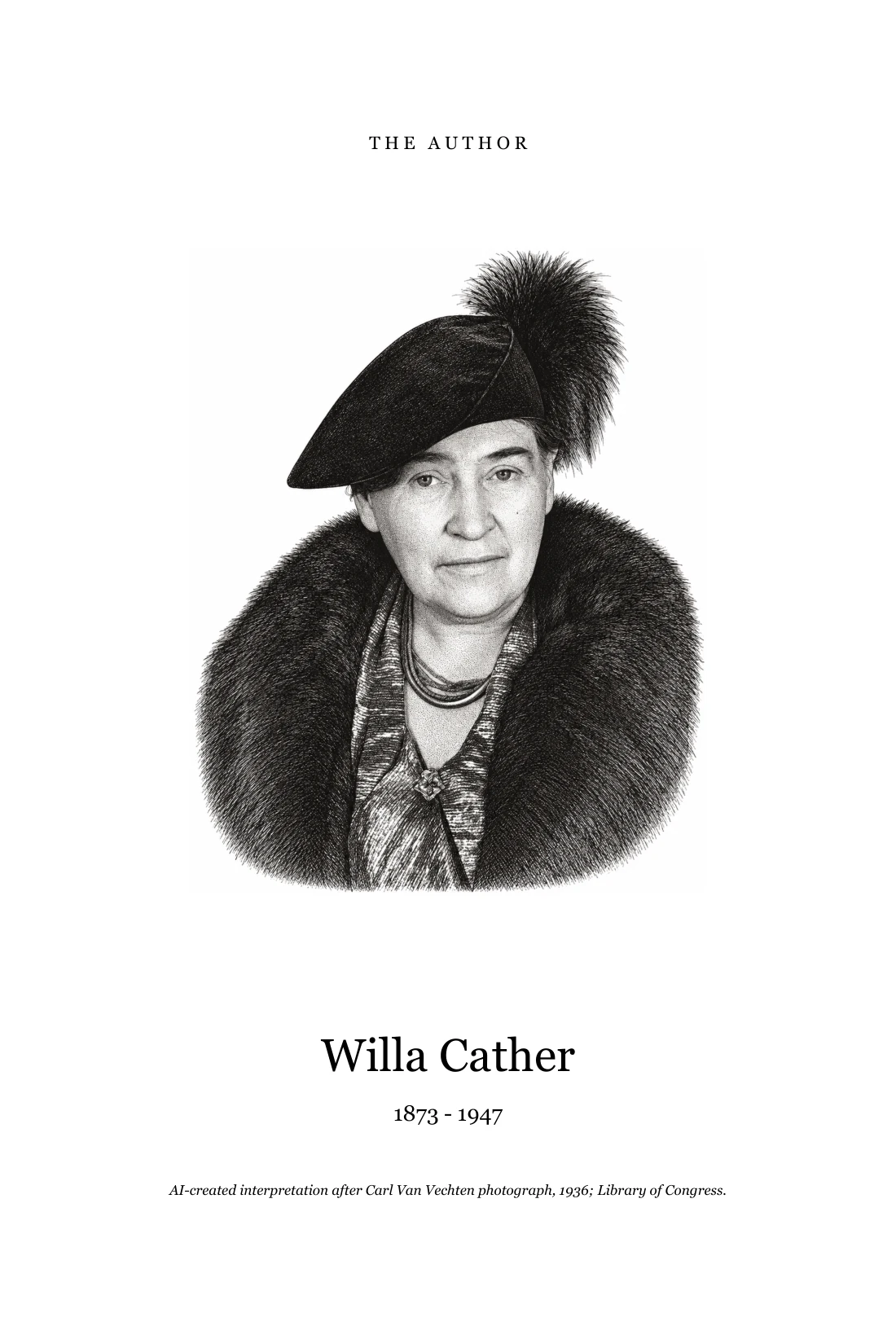
Three hundred dollars. That, according to Cather’s biographers, was all Houghton Mifflin set aside to advertise My Ántonia in 1918. The firm also refused to pay for all the illustrations she had commissioned and printed the book cheaply. In 1920 she took her work to a young New York publisher, Alfred A. Knopf, and stayed with him for the rest of her life. The novels she wrote for Knopf in the 1920s are the ones that made her a major American writer.
Here is the whole list. Willa Cather’s books in order are Alexander’s Bridge (1912), O Pioneers! (1913), The Song of the Lark (1915), My Ántonia (1918), One of Ours (1922), A Lost Lady (1923), The Professor’s House (1925), My Mortal Enemy (1926), Death Comes for the Archbishop (1927), Shadows on the Rock (1931), Lucy Gayheart (1935) and Sapphira and the Slave Girl (1940). The first nine are on our shelves, and they are the heart of her work.
Willa Cather’s novels in order
- $10.99
Alexander's Bridge
1912. A celebrated bridge engineer, divided between his wife in Boston and an old love in London, while his greatest bridge rises in Canada. Written while Cather was still an editor at McClure’s, and set far from the plains.
- $12.99
O Pioneers!
1913. Alexandra Bergson takes on her father’s farm and the land that has beaten him. The book where Cather found her subject: Nebraska, immigrants and a woman stronger than her surroundings.
- $20.99
The Song of the Lark
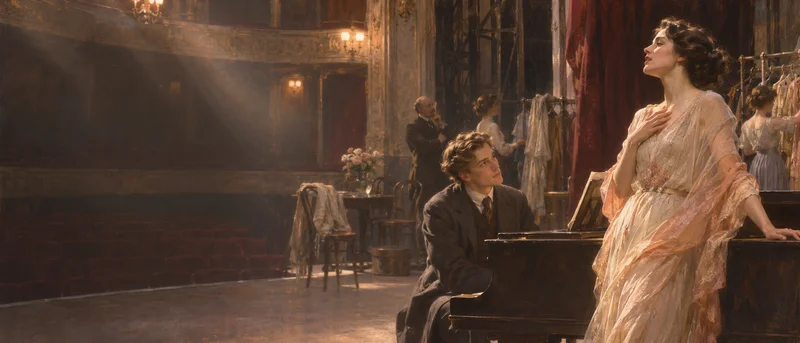
1915. A Colorado girl with a great voice fights her way to the opera stage. The longest of these nine, and her portrait of the artist.
- $14.99
My Ántonia
1918. Jim Burden remembers Ántonia Shimerda and their prairie childhood. The book most readers love best.
- $18.99
One of Ours
1922. Claude Wheeler, a restless Nebraska farm boy, finds a purpose only in the trenches of France. It won the Pulitzer Prize and divided the critics.
- $11.99
A Lost Lady
1923. Marian Forrester, charming wife of a railroad pioneer, slowly declines in a small Western town, watched by a boy who adores her. Perfectly made and barely a hundred pages.
- $13.99
The Professor's House
1925. A history professor refuses to leave his old study as his family moves on, and at its centre the novel opens into “Tom Outland’s Story”, a discovery of an ancient cliff city.
- $9.99
My Mortal Enemy
1926. Myra Henshawe, who gave up a fortune to marry for love, seen at two moments of her life, years apart. Spare and fierce, and the least known of the nine.
- $13.99
Death Comes for the Archbishop
1927. Two French priests carry their faith across the New Mexico desert in the years after the Mexican War. Often called her masterpiece.


How many novels did Willa Cather write?
Twelve. After Death Comes for the Archbishop she wrote three more: Shadows on the Rock (1931), set in seventeenth-century Quebec, Lucy Gayheart (1935), about a young pianist from a Nebraska town, and Sapphira and the Slave Girl (1940), set in the Virginia of her birth. Shadows on the Rock was among the most widely read novels in America the year it came out. When she died in 1947 she left part of a novel set in fourteenth-century Avignon, Hard Punishments; on her instructions, her partner Edith Lewis destroyed the manuscript.
She also wrote short stories, collected in volumes such as Youth and the Bright Medusa (1920), stories of singers, painters and the price of art, several of them first gathered in her early book The Troll Garden.
Two halves of a career
Read the nine in order and you can see the break. The early novels, O Pioneers!, The Song of the Lark and My Ántonia, look back on the frontier with something close to awe, and we cover them together in Willa Cather’s Prairie Trilogy in order. The 1920s books are quieter and sadder. The pioneers are dying or gone, their successors want money, and Cather’s heroes and heroines find the modern world thinner than the one they remember.
The Professor’s House begins with a sentence that could stand over the whole decade.
The moving was over and done. Professor St. Peter was alone in the dismantled house where he had lived ever since his marriage, where he had worked out his career and brought up his two daughters.
Willa Cather, The Professor’s House (1925)
One of Ours is the hinge. It drew on the letters of her cousin Grosvenor Cather, killed at Cantigny in 1918, and it won her the Pulitzer, but H. L. Mencken, who had championed her earlier work, mocked its war chapters. She answered with A Lost Lady, as tight and controlled as anything she wrote.

Where to start with Willa Cather
Begin with My Ántonia if you want the warm, remembering Cather, or with A Lost Lady if you want to see how much she can do in a short book. Death Comes for the Archbishop is the one to save, a novel built like a series of paintings, with almost no plot and a great deal of light. The stories behind three of these books have posts of their own: the bridge collapse behind Alexander’s Bridge, Fitzgerald’s letter about A Lost Lady and Gatsby and the real archbishop.
For the writers around her, see Essential American classics. But start with a train crossing the plains at night, and a boy and a Bohemian girl arriving in the same small town. Open My Ántonia, and the rest of the list will follow.
Questions readers ask
How many novels did Willa Cather write?
Twelve, published between 1912 (Alexander’s Bridge) and 1940 (Sapphira and the Slave Girl). She also published several collections of short stories.
What order should I read Willa Cather’s books in?
Publication order works well: Alexander’s Bridge, O Pioneers!, The Song of the Lark, My Ántonia, One of Ours, A Lost Lady, The Professor’s House, My Mortal Enemy, Death Comes for the Archbishop, Shadows on the Rock, Lucy Gayheart and Sapphira and the Slave Girl. None are sequels, so you can also start anywhere.
Which Willa Cather novel won the Pulitzer Prize?
One of Ours (1922), her novel of a Nebraska farmer’s son who fights in the First World War, won the Pulitzer Prize for the Novel in 1923.
What is Willa Cather’s best book?
Most readers point to My Ántonia (1918) or Death Comes for the Archbishop (1927). A Lost Lady (1923) is the favourite of many critics for its concentrated craft.
 Youth and the Bright Medusa188 pages · $13.99