
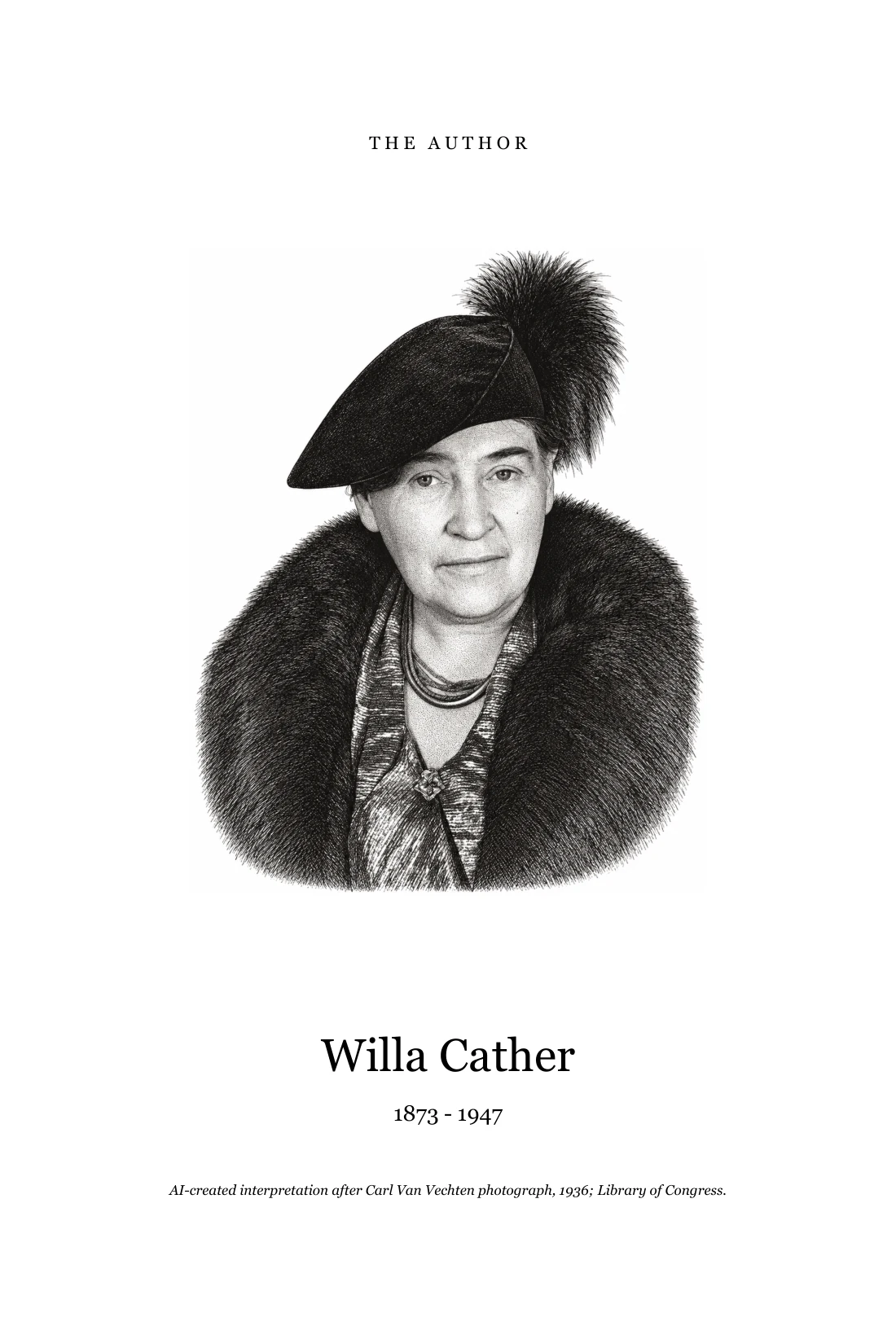
Willa Cather’s Prairie Trilogy is made up of O Pioneers! (1913), The Song of the Lark (1915) and My Ántonia (1918). It is sometimes called the Great Plains trilogy, and the name was given by readers and critics rather than by Cather herself. The three books do not continue one story. What they share is the prairie, the immigrant families who settled it, and strong, independent women who refuse to be bound by it.
Read them in publication order. It lets you follow Cather finding her voice as a novelist, from the spare, almost mythic O Pioneers! to the rich and quietly devastating My Ántonia, still the book most people consider her masterpiece.
The Willa Cather Prairie Trilogy in order
- $12.99
O Pioneers!
1913. Alexandra Bergson, the daughter of Swedish immigrants, inherits her father’s struggling Nebraska farm and turns it into a success through faith in the land her brothers want to abandon.
- $20.99
The Song of the Lark
1915. Thea Kronborg, a minister’s daughter from a small Colorado town, discovers a gift for singing and pursues it to Chicago and beyond. The longest of the three, and Cather’s portrait of an artist.
- $14.99
My Ántonia
1918. Jim Burden looks back on his Nebraska boyhood and his friendship with Ántonia Shimerda, a Bohemian immigrant girl whose family faces a terrible first winter on the plains.



What links the three novels?
No characters cross from one book to another. Instead, the trilogy is held together by place and theme. All three are set in the plains and prairie towns Cather knew as a girl, or in the West beyond them. All three are about immigrants and the children of immigrants, Swedish, Norwegian, Bohemian and German, making lives in a hard new country. And all three centre on women who shape their own fate, at a time when that was far from common in American fiction.
The novels also share a feeling for the land itself, which Cather writes about with a kind of reverence. The prairie in her books is harsh and dangerous, but also beautiful, and the people who come to love it are the ones who flourish.
Which Willa Cather book should you read first?
O Pioneers! is the natural start. It is short, it introduces Cather’s great subject, and Alexandra Bergson is one of the most memorable heroines in American literature. The book takes its title from Walt Whitman’s poem “Pioneers! O Pioneers!”, and it is dedicated to the memory of Sarah Orne Jewett, the New England writer who had urged Cather to write about the places she knew best.
If you only read one, though, make it My Ántonia. Told through Jim Burden’s memories, it is a novel about friendship, memory and the way the people we knew in childhood stay with us. Cather based Ántonia partly on a real woman, Annie Sadilek Pavelka, a Bohemian immigrant she had known in Red Cloud, Nebraska.
Is The Song of the Lark part of the trilogy?
Yes, though it is the odd one out. It is set mostly in Colorado, Chicago and the Arizona canyon country rather than Nebraska, and its heroine leaves the prairie behind to become an opera singer. Cather drew partly on the life of the Swedish-American soprano Olive Fremstad, and partly on her own experience as an artist from a small Western town. It is also by far the longest of the three, and Cather later revised and trimmed it.
Some readers skip it and go straight from O Pioneers! to My Ántonia. We suggest you do not. Thea Kronborg’s determination, and the extraordinary chapters in the ancient cliff dwellings of Arizona, are among the best things Cather wrote.
After the trilogy
Cather won the Pulitzer Prize for One of Ours in 1923, and went on to write Death Comes for the Archbishop, a luminous novel of the New Mexico desert. For another great American woman novelist of the same era, see Edith Wharton, the first woman to win the Pulitzer Prize for fiction. And for more books by women that broke new ground, see our feminist classics and essential American classics.
But start on the Divide, the high Nebraska prairie, in a small town in a snowstorm. Open O Pioneers!, and meet Alexandra Bergson, who loved the land when no one else did.
Questions readers ask
What books are in Willa Cather’s Prairie Trilogy?
O Pioneers! (1913), The Song of the Lark (1915) and My Ántonia (1918). The books are linked by setting and theme rather than by shared characters.
What order should I read Willa Cather’s Prairie Trilogy in?
Read them in publication order: O Pioneers!, then The Song of the Lark, then My Ántonia. Because the stories are separate, you can also start with My Ántonia.
Do you have to read O Pioneers! before My Ántonia?
No. Each novel stands completely on its own. Reading in order simply lets you see Cather developing as a writer.
 Death Comes for the Archbishop182 pages · $13.99
 Alexander's Bridge78 pages · $10.99
 One of Ours350 pages · $18.99
 The Professor's House182 pages · $13.99