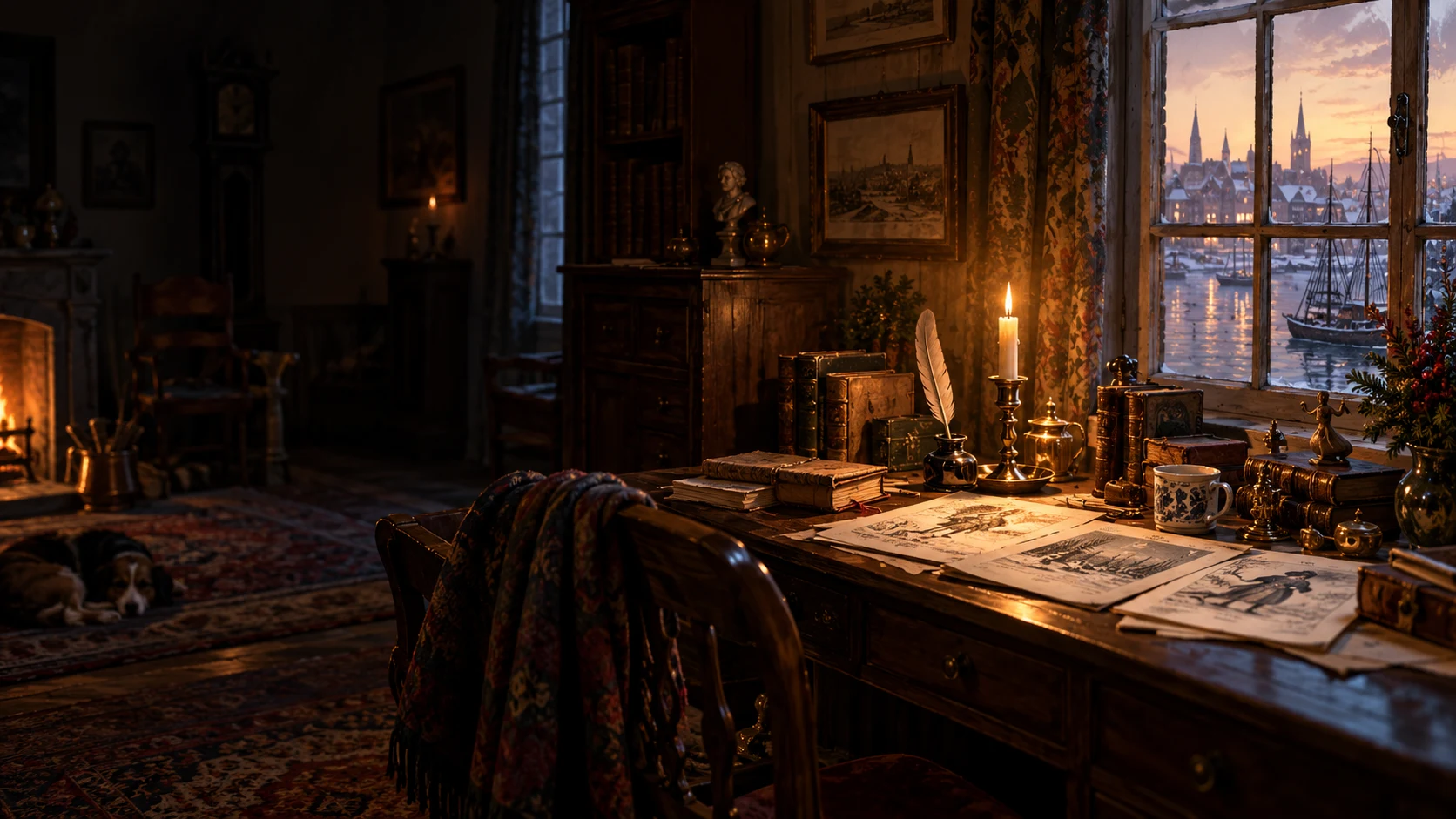
A snowy Danish town with warm windows
PIPCUB CINEMATIC EDITIONS / PAPERBACK BOOKS

Andersen's Fairy Tales

Hans Christian Andersen

A child sees what an emperor cannot. A little fir tree longs for a different life.

$12.99

Printed for you. Shipping calculated at checkout.

Checkout opening soon. Shipping & delivery Returns
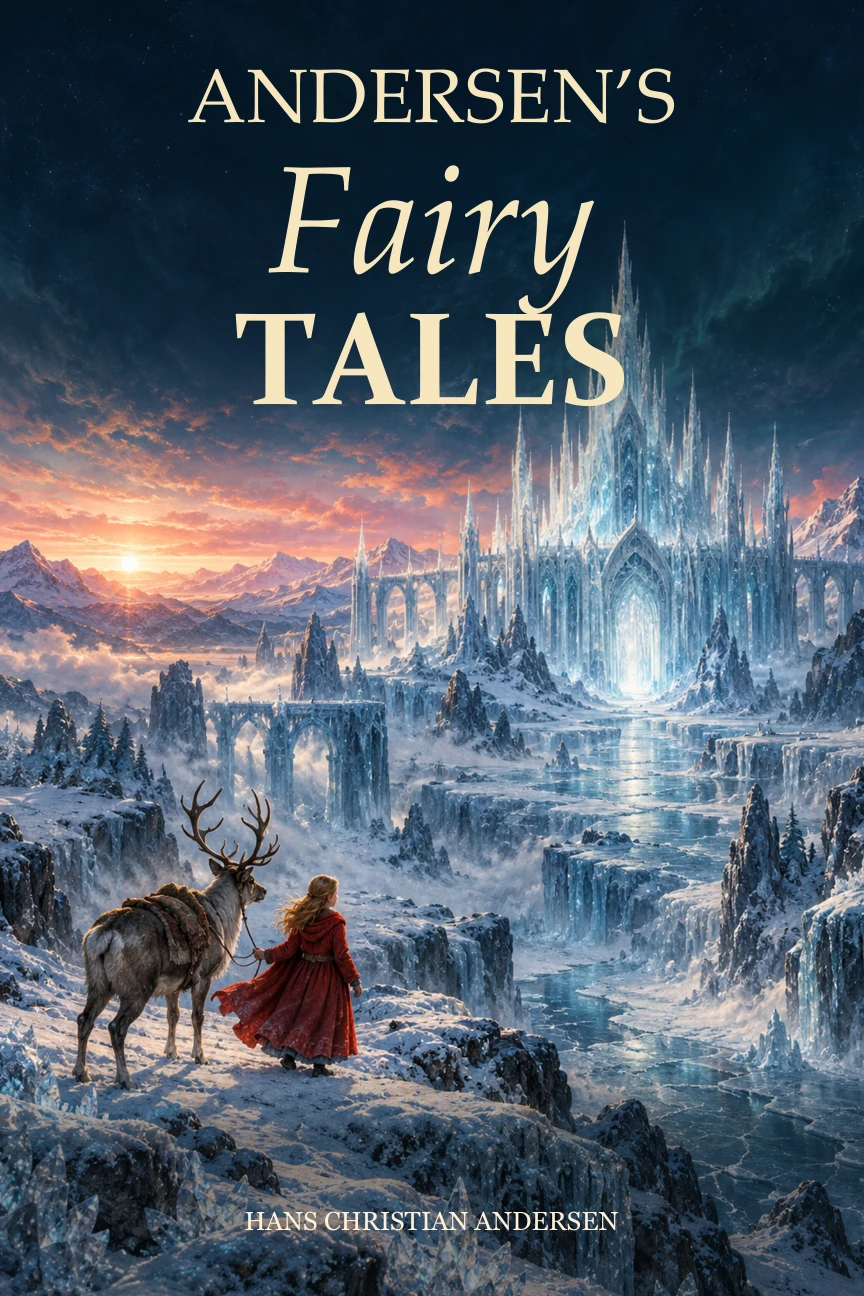
Andersen's Fairy Tales — actual Pipcub paperback cover
SCROLL INTO THE STORYAN IMAGINED WORLD · ORIGINAL AI ART
A traditional Danish room with a candlelit writing desk

THE STORY

Wonder has a shadow.

A child sees what an emperor cannot. A little fir tree longs for a different life.

A fairy tale lake with swans and distant palace

THE WORLD OF THE BOOK

Once upon a winter evening.

And a girl journeys through the snow to rescue someone she loves. These eighteen tales bring together Andersen’s dazzling imagination, tender humor, and unforgettable sense of wonder—from The Snow Queen and The Little Match Girl to The Red Shoes.

Andersen's Fairy Tales front cover
Read the interior preview

LOOK INSIDE

Open a book.
Enter a world.

Preview six pages from this edition. Select a page to enlarge it, or use the arrows to keep reading.

Spread 1 of 3
Andersen's Fairy Tales · PDF page 4
Actual interior PDF page 4 of Andersen's Fairy Tales
Read accessible text

2 THE EMPEROR'S NEW CLOTHES Many years ago, there was an Emperor, who was so excessively fond of new clothes, that he spent all his money in dress. He did not trouble himself in the least about his soldiers; nor did he care to go either to the theatre or the chase, except for the opportunities then afforded him for displaying his new clothes. He had a different suit for each hour of the day; and as of any other king or emperor, one is accustomed to say, “he is sitting in council,” it was always said of him, “The Emperor is sitting in his wardrobe.” Time passed merrily in the large town which was his capital; strangers arrived every day at the court. One day, two rogues, calling themselves weavers, made their appearance. They gave out that they knew how to weave stuffs of the most beautiful colors and elaborate patterns, the clothes manufactured from which should have the wonderful property of remaining invisible to everyone who was unfit for the office he held, or who was extraordinarily simple in character. “These must, indeed, be splendid clothes!” thought the Emperor. “Had I such a suit, I might at once find out what men in my realms are unfit for their office, and also be able to distinguish the wise from the foolish! This stuff must be woven for me immediately.” And he caused large sums of money to be given to both the weavers in order that they might begin their work directly. So the two pretended weavers set up two looms, and affected to work very busily, though in reality they did nothing at all. They asked for the most delicate silk and the purest gold thread; put both into their own knapsacks; and then continued their pretended work at the empty looms until late at night. “I should like to know how the weavers are getting on with my cloth,” said the Emperor to himself, after some little time had elapsed; he was, however, rather embarrassed, when he remembered that a simpleton, or one unfit for his office, would be unable to see the manufacture. To be sure, he thought he had nothing to risk in his own person; but yet, he would prefer sending somebody else, to bring him intelligence about the weavers, and their work, before he troubled himself in the affair. All the people throughout the city had heard of the wonderful property the cloth

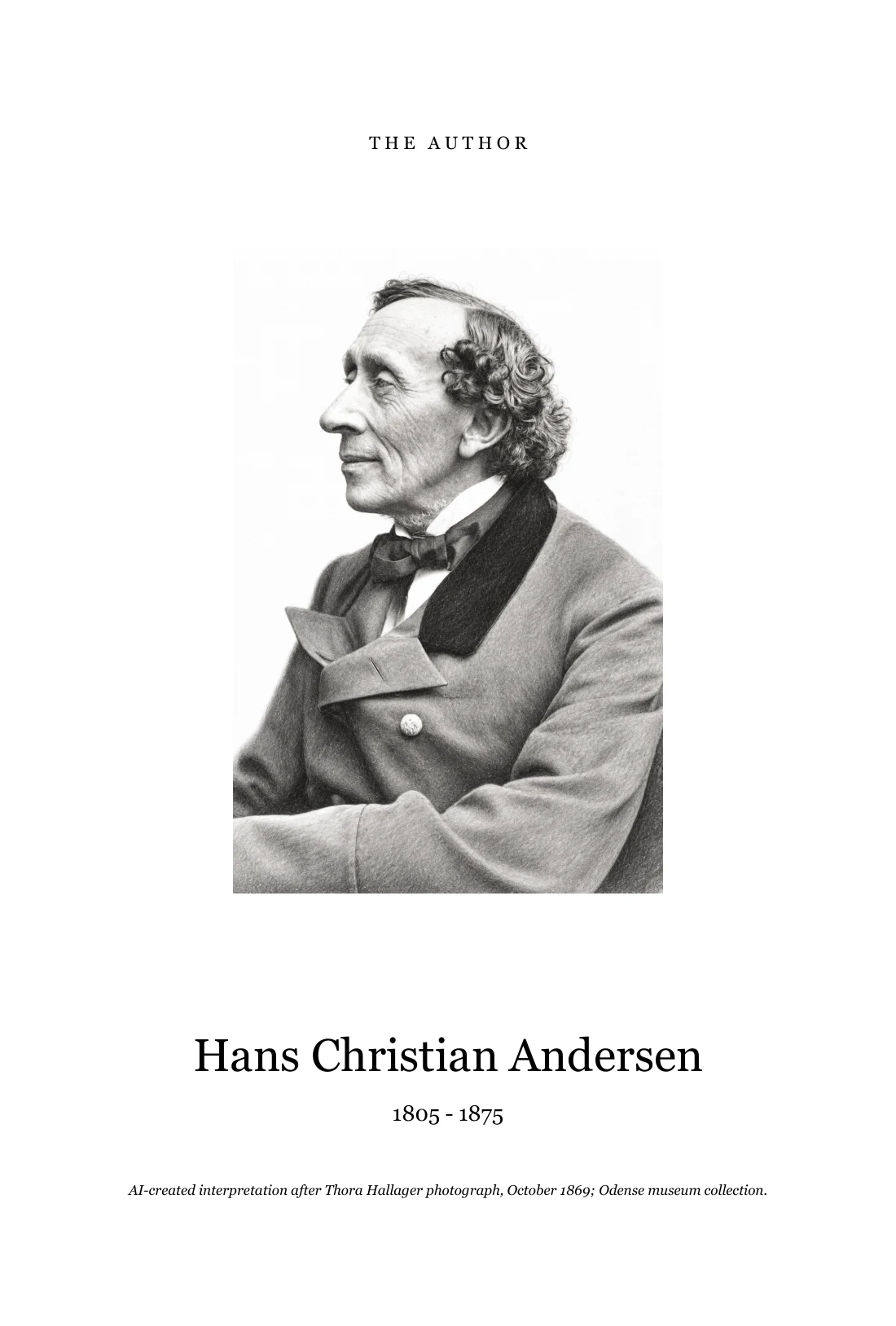
Hans Christian Andersen portrait page from this edition

ABOUT THE AUTHOR

Hans Christian Andersen

Hans Christian Andersen was a Danish writer, born in Odense in 1805. He grew up in modest circumstances and went to Copenhagen as a young man hoping to find a place in the theatre. His eventual literary career extended across poetry, novels, plays, travel writing and autobiography.

More about the author ↗

Discover the author behind the story. This portrait and biography are included in your edition.

FREE TO READ

Take it with you.

Andersen's Fairy Tales is in the public domain, so its words belong to everyone. Download our edition free. No account needed.

Read it in your browser ↗
Add it to your reading app
iPhone & iPad
Tap download, then open the file from Safari’s downloads, tap Share and choose Books. It stays in your Apple Books library.
Android
Tap download, open the file and choose Google Play Books. Or, in Play Books, go to Library, tap ⋮ and choose Upload files.
Kindle
Send the file to your Kindle library with Amazon’s Send to Kindle.
Kobo, Moon+ Reader and other apps
Open the downloaded file with the app, or use the app’s import option.

KEEP BROWSING

More from the library.

An Outcast of the Islands cover

An Outcast of the Islands

Joseph Conrad

Anarchism and Other Essays cover

Anarchism and Other Essays

Emma Goldman

Ancient Ballads and Legends of Hindustan cover

Ancient Ballads and Legends of Hindustan

Toru Dutt

Andy Blake and the Pot of Gold cover

Andy Blake and the Pot of Gold

Leo Edwards

Angel Pavement cover

Angel Pavement

J. B. Priestley

Angel's Christmas, and, Little Dot cover

Angel's Christmas, and, Little Dot

Mrs. O. F. Walton

Browse the complete library ↗
YOUR NEXT CHAPTER

Your book bag 0

A little escape. A story to keep.

Loading your book bag…