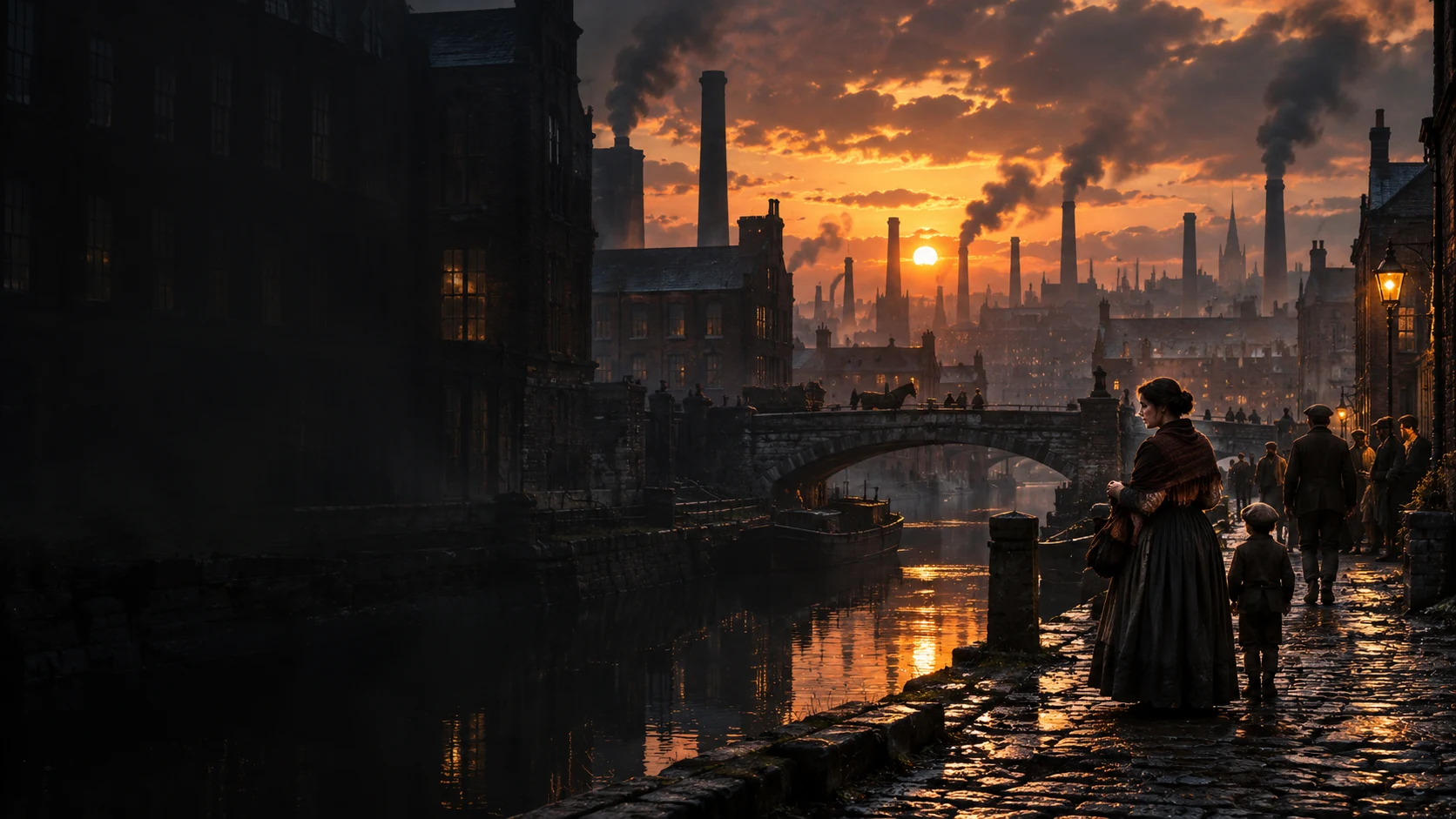
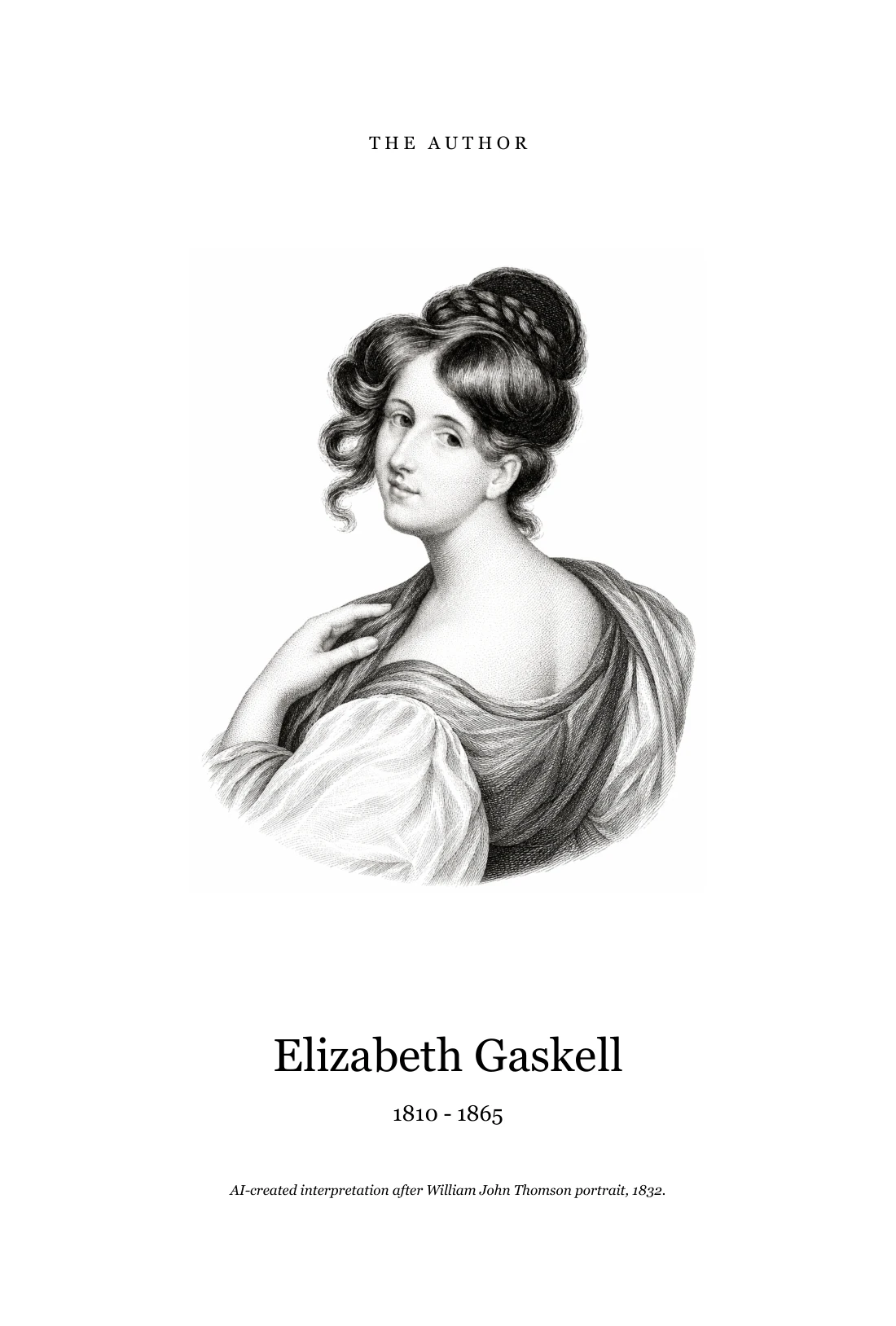
Read Elizabeth Gaskell’s novels in the order she published them and the calendar starts running backwards. Her first, Mary Barton (1848), is set in the Manchester of a few years earlier. Her middle books are novels of the present day. Her last two reach back: Sylvia’s Lovers (1863) to the 1790s, and Wives and Daughters (1864–66) to the provincial England of Elizabeth Gaskell’s own youth.
That is the shape of her career: the urgent social novelist of the hungry 1840s turning, in her last years, into a historical and domestic one. The six novels are Mary Barton, Cranford, Ruth, North and South, Sylvia’s Lovers and Wives and Daughters. None is a sequel to another, so you can start anywhere, but in order you watch one of the great Victorian careers unfold.
Elizabeth Gaskell’s novels in order
- $20.99
Mary Barton
1848. Manchester between 1839 and 1842: a mill worker’s daughter, her father driven to desperation by hunger and trade unionism, and a murder. Gaskell first called it John Barton, which tells you whose tragedy she thought it was.
- $13.99
Cranford
1851–53. Sketches of a little town of genteel widows and spinsters, written for Dickens’s Household Words and only gradually grown into a book. The gentlest thing she wrote.
- $20.99
Ruth
1853. A young dressmaker’s apprentice is seduced, abandoned in Wales and taken in by a dissenting minister and his sister, who pass her off as a widow. Her boldest book about a ‘fallen woman’, and a scandal in its day.
- $21.99
North and South
Serialised 1854–55. Margaret Hale leaves a southern country rectory for the smoke of Milton, quarrels with a mill master and lives through a strike. The love story and the industrial argument that have won her most of her modern readers.
- $22.99
Sylvia's Lovers
1863. A farmer’s daughter in Monkshaven, a Yorkshire whaling port modelled on Whitby, in the years of the press gangs. Gaskell is said to have called it the saddest story she ever wrote.
- $28.99
Wives and Daughters
1864–66. Molly Gibson’s widowed father remarries, and with the new wife comes a stepsister nobody can resist, in a small town of the 1830s. The longest and most assured of the six, broken off just short of its end.


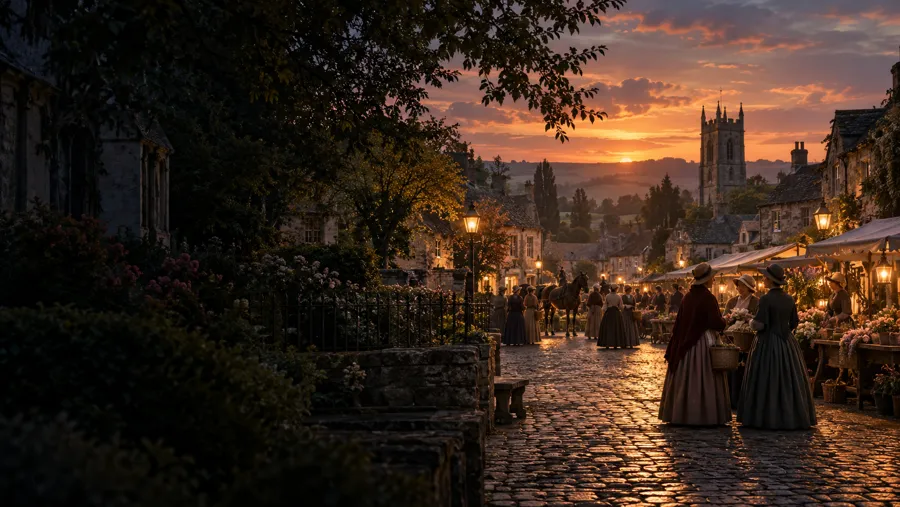
The novel she started first
Gaskell’s career very nearly began somewhere else. In the preface to Mary Barton, she explains that she first meant to write a country story, and had made a start on it, before the streets of Manchester claimed her:
I had already made a little progress in a tale, the period of which was more than a century ago, and the place on the borders of Yorkshire, when I bethought me how deep might be the romance in the lives of some of those who elbowed me daily in the busy streets of the town in which I resided.
Elizabeth Gaskell, preface to Mary Barton (1848)
Fifteen years later she did write a Yorkshire novel set in the past. Sylvia’s Lovers takes place at the end of the eighteenth century rather than earlier, and there is no evidence that it grew from that abandoned tale, but it is hard not to see her career closing a circle. She travelled to Whitby in 1859 to research it, and the finished book is full of whalers, harpooners and the terror of the press gang.
How many novels did Elizabeth Gaskell write?
Six, though the count depends on where you draw the line between a novel and a novella. Cranford, the shortest, began as two chapters in Household Words in 1851; Dickens asked for more, and the episodes kept coming until the book appeared in 1853. At the other end of her career, Cousin Phillis, serialised in The Cornhill from November 1863 to February 1864, is a short, perfect novel of rural life that many readers rank with her best, even though it is usually called a novella.
North and South is the one with the sharpest timing. It began in Household Words in September 1854, only weeks after Dickens had finished serialising his own industrial novel, Hard Times, in the same magazine. For the full story of how the two writers clashed over it, see Where to start with Elizabeth Gaskell.

The gap in the middle
Between North and South in 1855 and Sylvia’s Lovers in 1863 there is no new novel, and the reason is another book. In June 1855 Patrick Brontë asked Gaskell to write the life of his daughter Charlotte, who had died that spring, and The Life of Charlotte Brontë appeared in 1857. It made the Brontës’ legend, and it also landed Gaskell in trouble: the first edition was withdrawn after complaints of slander reached her publisher, and censored editions followed within months.
She kept writing shorter fiction through those years, including the novella My Lady Ludlow (1858–59) and a series of ghost stories in the Gothic vein. Readers who come to her through the Brontës should go on to Charlotte Brontë’s four novels and Anne Brontë.
Should you read Gaskell in order?
Only if you want the full arc. For a first book, most readers do better with Cranford, which is short and funny, or North and South, which has the strongest pull. Mary Barton is rawer and angrier, and makes more sense once you know what Gaskell became. Ruth and Sylvia’s Lovers are the two to save for when you are hooked; both are long, both are sad, and both are underrated.
Leave Wives and Daughters for last, as she did. It is her longest book and very nearly finished, and it reads like the work of a novelist who had stopped needing to prove anything. There are tips for books of that size in How to read a long Victorian novel, and Unfinished classic novels and how they might have ended puts its missing chapter in company.
But if you are reading in order, begin where she did, in the fields on the edge of Manchester, where the mill workers walk out on a holiday afternoon. Mary Barton is the book that announced a new kind of Victorian novelist, and her first readers had no idea she was a minister’s wife.
Questions readers ask
How many novels did Elizabeth Gaskell write?
Six: Mary Barton (1848), Cranford (1853), Ruth (1853), North and South (1855), Sylvia’s Lovers (1863) and Wives and Daughters (1866). She also wrote novellas such as Cousin Phillis and a biography of Charlotte Brontë.
What order should I read Elizabeth Gaskell’s novels in?
Publication order is Mary Barton, Cranford, Ruth, North and South, Sylvia’s Lovers and Wives and Daughters. None is a sequel, so for a first book many readers start with Cranford or North and South instead.
Did Elizabeth Gaskell finish Wives and Daughters?
Almost. She died suddenly on 12 November 1865 with only the last part unwritten, and the Cornhill’s editor added a note explaining how the story was meant to end.