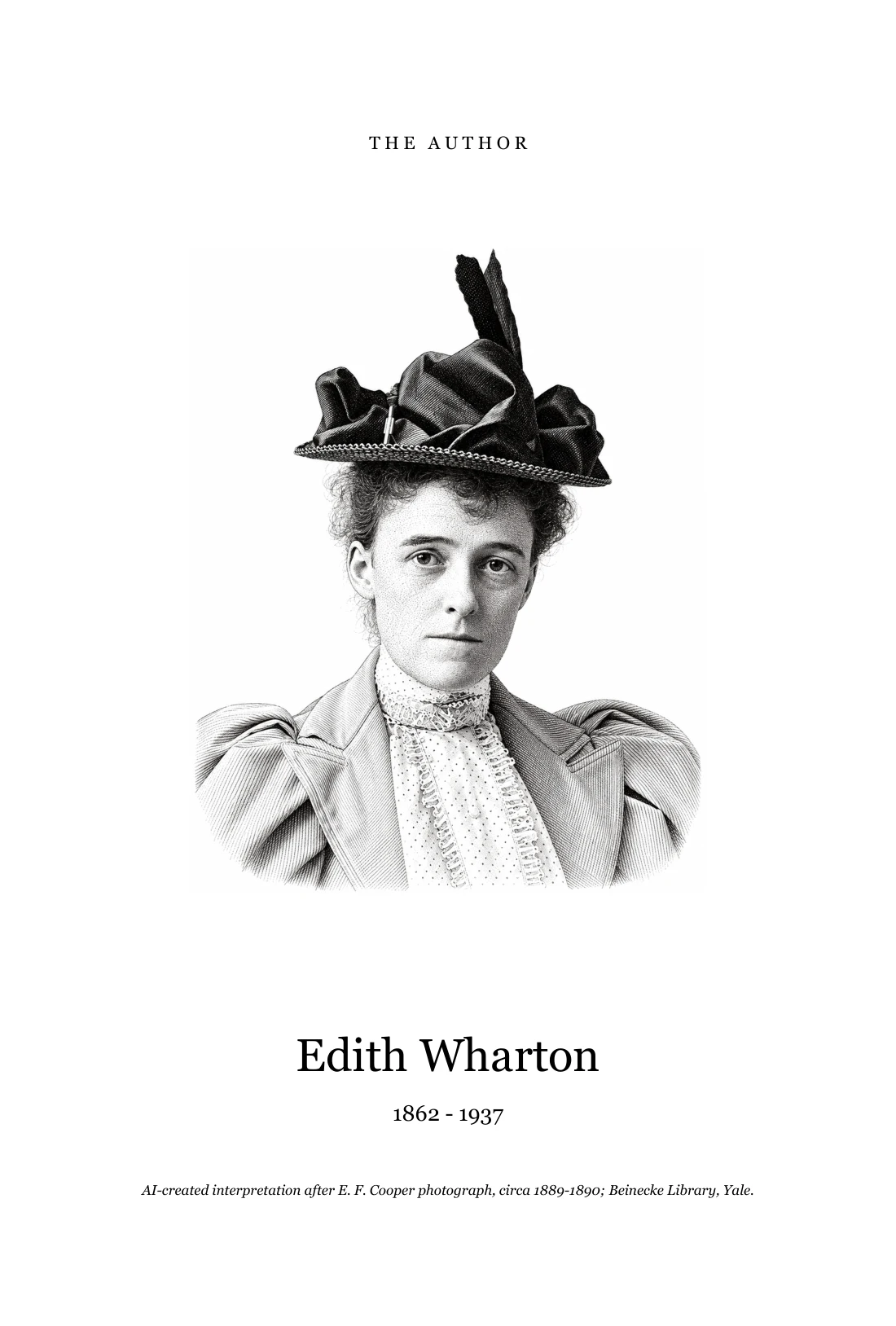
Edith Wharton is filed in most minds under dinner parties, seating plans and the cruelties of old New York. Yet the same writer produced some of the most unsettling ghost stories in American fiction, and the book many readers love best of all hers is not a society novel but a short, bleak tale of a farmer in a snowbound Massachusetts village.
Edith Wharton’s short stories and novellas are the ideal way to meet her. They are quick to read, they show her full range, and in a few hours you can move from a Paris salon to a haunted house in Dorset to a sewing shop on a down-at-heel New York street. Her novels are covered in Did you know Edith Wharton was the first woman to win the Pulitzer Prize for fiction?; this is the other half of her shelf.
Edith Wharton’s ghost stories
Wharton wrote ghost stories throughout her career and gathered several of the best in Tales of Men and Ghosts in 1910. They are ghost stories in the tradition of her friend Henry James: quiet, civilised, set among comfortable people in comfortable rooms, and all the more frightening for it. The supernatural rarely bursts in. It seeps, and what it reveals is usually something the living would prefer not to know about themselves.
The best of them is “Afterward”. An American couple, looking for an old house in the English countryside, settle on one in Dorset and ask a friend whether it has a ghost. Her answer, recalled months later as the December dusk comes in, is the story’s first line:
Oh, there is one, of course, but you’ll never know it.
“Afterward”, in Tales of Men and Ghosts (1910)
The rest of the story works out exactly what that means, and the solution is both clever and chilling. Its companion pieces are almost as good. In “The Eyes”, a group of men smoking after dinner swap tales of the uncanny until their host admits to a visitation of his own. “The Bolted Door” is less a ghost story than a nightmare of a different kind, about a man who confesses to a crime and cannot make anyone take him seriously.
Edith Wharton’s novellas
Wharton’s novellas sit between the story and the novel, and she was a master of the form. Three of them make a perfect introduction, each in a completely different world.
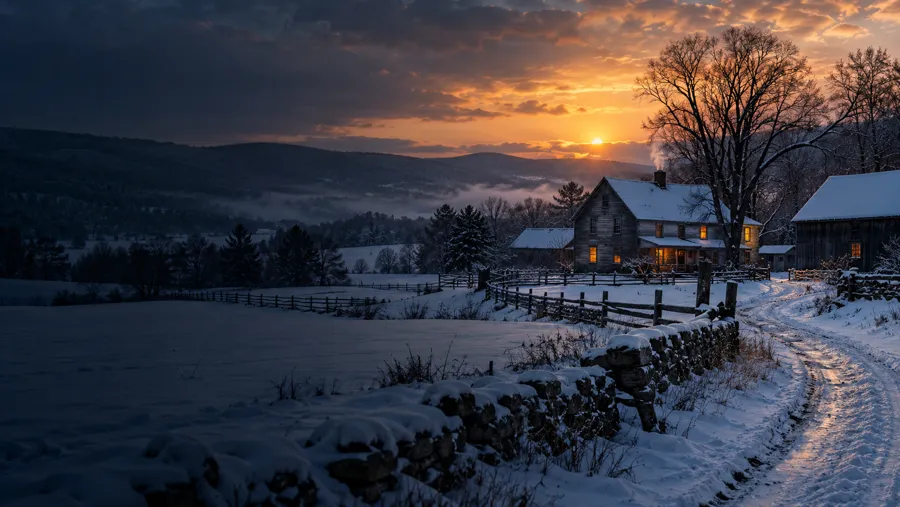
Ethan Frome (1911) is the famous one. A visitor stranded for the winter in Starkfield, Massachusetts, sees a crippled farmer at the post office and pieces together his story from the people who knew him. Wharton began it, remarkably, as a composition exercise in French while improving her French in Paris. Its opening line is a lesson in how to tell a tragedy:
I had the story, bit by bit, from various people, and, as generally happens in such cases, each time it was a different story.
Ethan Frome (1911)
Madame de Treymes (1907) is pure Wharton manners, transplanted to Paris. John Durham, a New Yorker, wants to marry Fanny de Malrive, an American separated from her French aristocrat husband. To be free, she needs a divorce, and for a divorce she needs the goodwill of her husband’s elegant, inscrutable sister. It is a duel between American candour and French family politics, and every line of dialogue carries a second meaning.
Bunner Sisters is the hidden treasure. Wharton wrote it in the early 1890s, but Scribner’s turned it down twice, and it waited until 1916 to appear in the collection Xingu and Other Stories. Two unmarried sisters keep a tiny shop near Stuyvesant Square, selling sewing supplies and a little millinery, until a German clockmaker comes into their lives. It is Wharton’s one great study of genteel poverty, and the most tender thing she wrote.
Where to start with Edith Wharton’s short stories
- $9.99
Madame de Treymes
1907. An American in Paris, a woman who needs a divorce and the sister-in-law who holds the key. Wharton’s society comedy, at novella length.
- $10.99
Ethan Frome
1911. A New England farmer, his ailing wife and her young cousin, snowed in at Starkfield. Short enough for one evening and impossible to forget.
- $10.99
Bunner Sisters
Written in the early 1890s, published in 1916. Two sisters, a basement shop and a suitor who changes everything. Wharton’s quietest heartbreak.
- $16.99
Tales of Men and Ghosts
1910. Ten stories, including “Afterward” and “The Eyes”. Her first collection with ghosts in its title, and the place to start with them.


Begin with Madame de Treymes if you already love Wharton’s novels and want more of that world. Begin with Ethan Frome if you want the most celebrated thing she wrote at short length; it was filmed in 1993 by John Madden, with Liam Neeson in the title role. And keep Tales of Men and Ghosts for a long winter evening.
For more short Wharton, The Touchstone (1900) is an early novella about a man who sells a dead writer’s love letters, and Sanctuary (1903) follows a mother’s fight for her son’s conscience. Readers who enjoy the ghost stories should go on to the master who influenced them, in Where to start with Henry James, and to the wider field in the best classic short story collections.
If you read only one thing tonight, make it “Afterward”, the ninth of the Tales of Men and Ghosts. It takes less than an hour, and you will never hear the phrase “you’ll never know it” quite the same way again.
Questions readers ask
Did Edith Wharton write ghost stories?
Yes. Many of Edith Wharton’s short stories are ghost stories, written throughout her career and collected in Tales of Men and Ghosts (1910) and Ghosts (1937). “Afterward” and “The Eyes” are among the best known.
What is Edith Wharton’s best short story?
“Afterward” is often singled out among her ghost stories. Among her novellas, Ethan Frome is the most celebrated.
Is Ethan Frome a novella?
Yes. Ethan Frome (1911) is a short novel, or novella, that most readers finish in one or two sittings.
Which Edith Wharton book should I read first?
For her short fiction, start with Ethan Frome or Madame de Treymes. For her full-length novels, The Age of Innocence is the usual starting point.
 The Age of Innocence250 pages · $15.99
 The House of Mirth314 pages · $17.99
 The Custom of the Country368 pages · $18.99
 Summer154 pages · $12.99